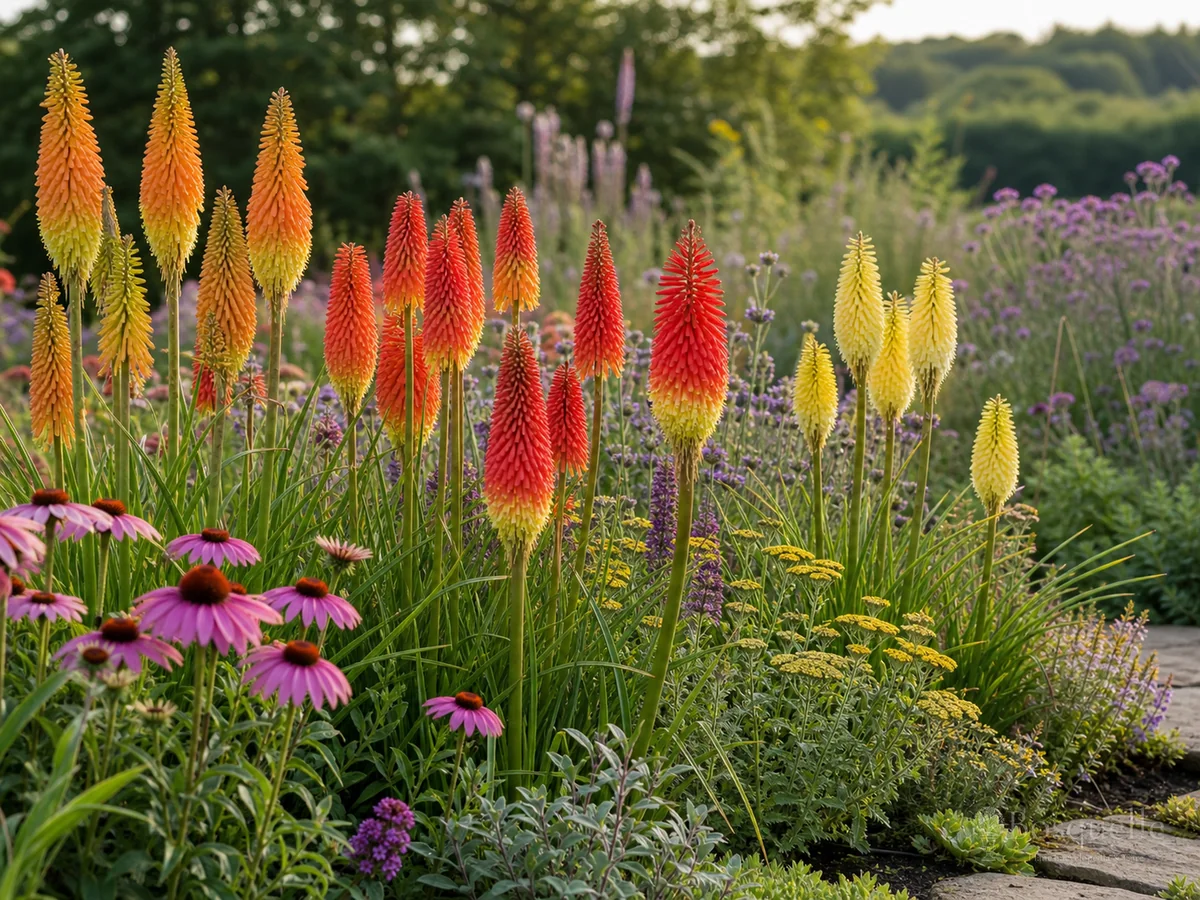
Plant partners that share full sun and draining soil. agapanthus, crocosmia, and ornamental grasses do that job. Compact 'Lemon Popsicle' sits in front of taller 'Flamenco'. Shade-wet hosta does not. Crown drainage stays on How to Grow Red Hot Poker.

What to plant with red hot poker
| Factor | Recommended | Avoid |
|---|---|---|
| Shared site | Full sun, draining soil, drought once established | Moist-shade perennials; winter-wet clay partners |
| Shape | Grasses, agapanthus globes, crocosmia, globe thistle | A dense grass sitting on the crown |
| Offset | Leave a collar so you can deadhead spikes | Smothering the growing point |
Proven Winners: pair with black-eyed Susan, blanket flower, catmint, coneflower, lavender, ornamental grasses, and sedum in a hot, drained bed. Garden UK: grasses, agapanthus, and globe thistle sit naturally with the vertical spike. Keep one taller grass behind compact Popsicle, and leave room to cut spent pokers without flattening a neighbor.
- Same season: crocosmia and sneezeweed bloom with the pokers in heat. agapanthus adds round heads against the spikes.
- Texture: feather reed grass, Mexican feathergrass, Russian sage, globe thistle, and English lavender share sun and grit.
- Compact 'Lemon Popsicle' at the front; taller named hybrids behind. Do not hide the crown under a giant grass.
- Match water to the driest partner. Do not flood the crown for a moisture-hungry neighbor.
Grasses and cool-flower partners
The useful pairing is cultural, not a paint chart. Feather reed grass holds a vertical line after the spikes are cut. Mexican feathergrass is finer at the front. Agapanthus wants the same heat and drainage. Russian sage and globe thistle add cool spikes and globes without extra winter wet.
- Set grasses beside or behind the clump, never on the crown.
- Deadhead access matters: leave a hand’s width so you can snip spikes without flattening crocosmia.
- If the fans still look crowded in year two, the partners sat too close — move them in spring, still in draining soil.
- Type scaling lives on Types of Red Hot Poker: Popsicle wants a low skirt; caulescens can take a taller grass behind it.
Combinations that fail
- Hosta, astilbe, or fern — they need even moisture the poker cannot share.
- A dense grass on the crown — holds winter wet and hides spent spikes.
- Shade under a wall — few flowers, stretched fans.
- Copying a vegetable-garden watering onto the clump — regular soak invites rot.
- Planting on the same grade as a winter puddle — fix drainage before you add more plants.
If clumps rot after a wet winter, fix the crown on How to Grow Red Hot Poker before you add partners. Planting depth lives on Planting Red Hot Poker.
FAQ
What grows well with red hot poker?
Sun and draining-soil partners: agapanthus, crocosmia, ornamental grasses, Russian sage, globe thistle, sneezeweed, and lavender.
Can I plant agapanthus with kniphofia?
Yes — they share heat and drainage. Put agapanthus beside the clump, not on the crown.
What about crocosmia?
A natural summer pair. Same sun, overlapping bloom, offset so both crowns stay dry.
Can I use grasses?
Yes — feather reed grass and similar sun grasses, offset from the growing point.
Should companions get the same water?
Yes — drought once established. Do not flood the crown for a moisture-loving neighbor.
What should I not plant with red hot poker?
Hosta, astilbe, ferns, and anything that needs rich, wet soil in winter.
Do I plant companions at the same time?
Spring is the usual window, in the same draining bed. Crown depth is on Planting Red Hot Poker.
Will grasses crowd it out?
Not if you leave a collar for deadheading. A dense clump on the crown will hold winter wet.
Related guides


Recommended plants
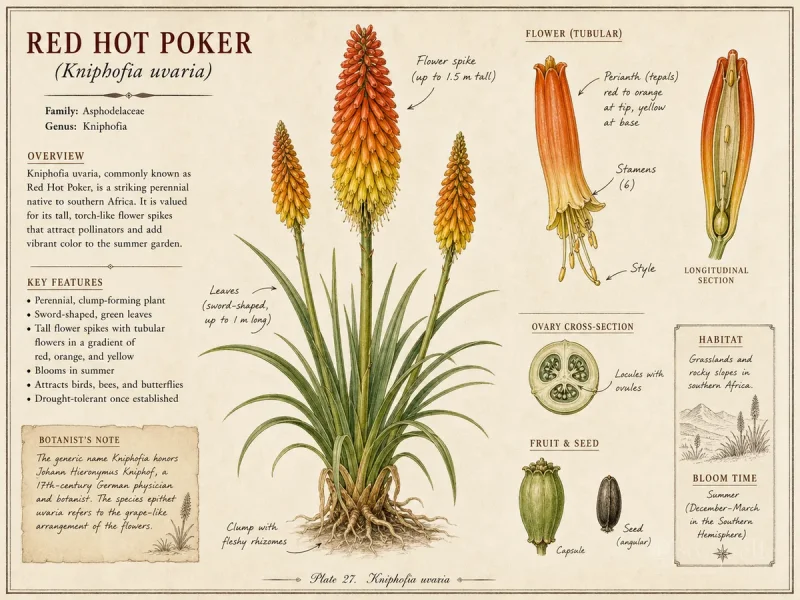
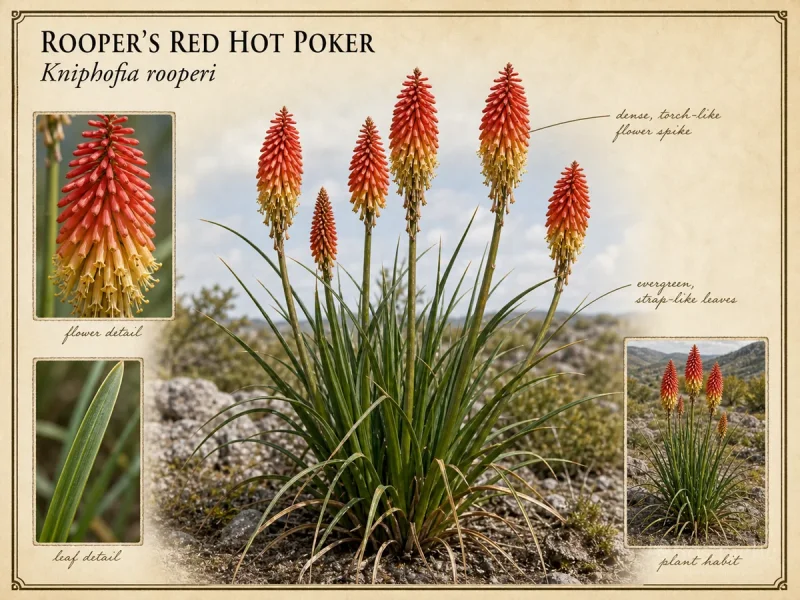


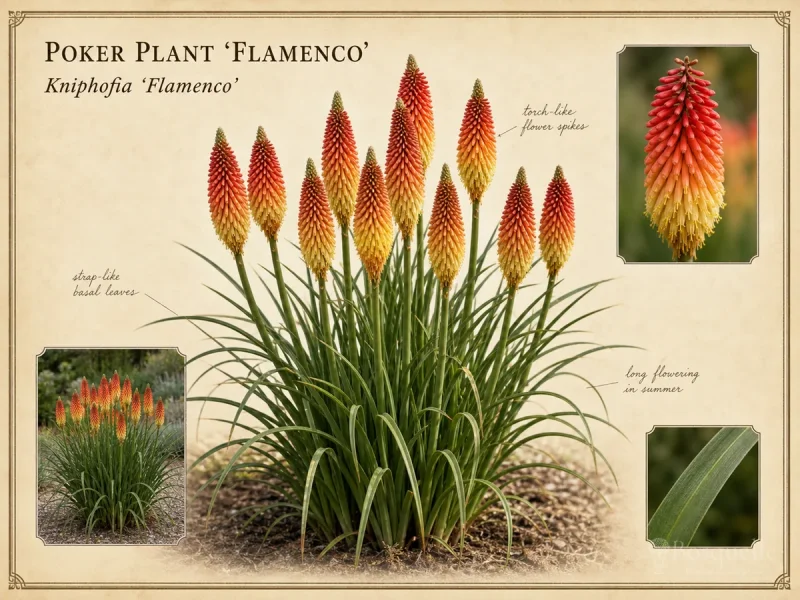

This note is part of Kniphofia Guides.
More neighbour shortlists by plant live in Companion Plant Guides.
Updated: Reviewed by Bosquelle Editors