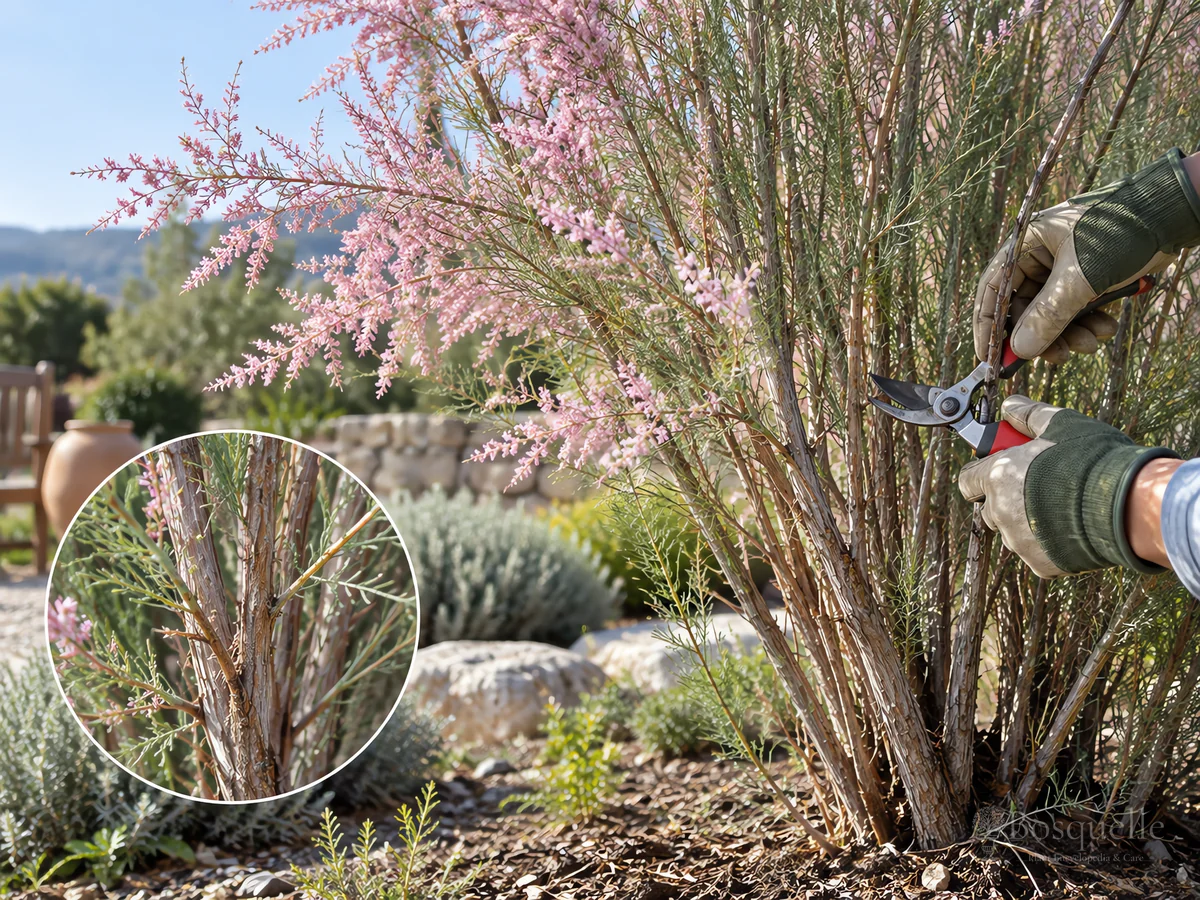
Prune tamarisk hard in late winter, because it flowers on new wood. Bag the prunings so cut stems do not root in wet ground.

Cut it hard in late winter — it flowers on new wood
| Factor | Recommended | Avoid |
|---|---|---|
| When | Late winter or very early spring, before new growth runs | Do not wait until the pink plumes are already forming on this summer's wood |
| How much | A hard cut, even to a few inches from the ground if you want a compact shrub | Do not leave a tall, tangled frame uncut for years |
| Why | Pink plumes form on the current year's shoots | Do not treat it like a spring shrub that flowers on last year's wood |
| Tool | Loppers or a pruning saw on thick stems | Do not shear only the tips and leave a weak shell |
tamarisk grows fast and blooms on the wood it makes after the cut. A late-winter cut, even down to a few inches from the ground, keeps a compact shrub and fresh shoots for summer plumes, the same hard restart people use on butterfly bush. [1] Left alone, the shrub turns loose, irregular, and open, and crowded wood is more likely to canker. [2] If you skip the annual cut, the twigs tangle and the outline gets coarse. [3] For this summer-blooming kind, cut before the buds break. A tag that flowers in spring is a different timing, and that cut waits until the plumes fade. [4] Sun and the noxious-weed check stay on How to Grow Tamarisk.
- Wait until late winter or very early spring, before new shoots run.
- Cut last year's flowering wood back hard, to a low framework or even to a few inches from the ground if you want a small shrub.
- Remove dead, rubbing, or cankered stems at the origin.
- Leave the cut. New shoots will carry this summer's plumes.
When do I prune tamarisk?
In late winter or very early spring, before new growth. It flowers on the wood it makes after that cut.
Can I cut it to the ground?
Yes, in late winter, if you want a compact restart. New shoots come from the base and bloom the same summer.
Bag the prunings so they do not root in wet ground
Cut stems and broken twigs root where they sit in wet soil, and that is one way the shrub spreads along a ditch. Do not dump prunings on a bank, and do not leave a pile where rain can keep the wood wet. Bag the brush with household trash, or burn it where local rules allow. Spent flower plumes also hold tiny seed; clip them before they dry if you do not want seedlings.
- Pick up every cut stem as you work. Do not leave brush on wet ground overnight.
- Bag the prunings. Do not compost them where the species is listed.
- Clip spent plumes before the capsules split, if seed is a problem in your yard.
Can I compost the prunings?
No, not where the shrub is listed. Bag them. Cut stems root in wet ground, and the plumes hold seed.
If the shrub is lanky, cut it hard in late winter and bag the brush so it cannot root in wet ground.
FAQ
What if the tag says it blooms in spring?
Then wait until those plumes fade before you cut. Summer tamarisk flowers on new wood and wants the late-winter cut instead.
Do I have to prune every year?
A yearly late-winter cut keeps a compact shrub and more plumes. If the size still fits, you can skip a year, but do not let the twigs tangle for several seasons.
Related guides
Recommended plants

References
- [1] Missouri Botanical Garden -
https://www.missouribotanicalgarden.org/PlantFinder/PlantFinderDetails.aspx?kempercode=a401 - [2] University of Illinois Extension -
https://web.extension.illinois.edu/shrubselector/detail_plant.cfm?PlantID=457 - [3] BBC Gardeners' World Magazine -
https://www.gardenersworld.com/how-to/grow-plants/tamarisk-tree/ - [4] Promesse de fleurs -
https://www.promessedefleurs.ie/gardening-tips/tutorial/how-to-prune-tamarisk/
This note is part of Tamarix Guides.
More pruning timing notes by plant live in Pruning Guides.
Updated: Reviewed by Bosquelle Editors