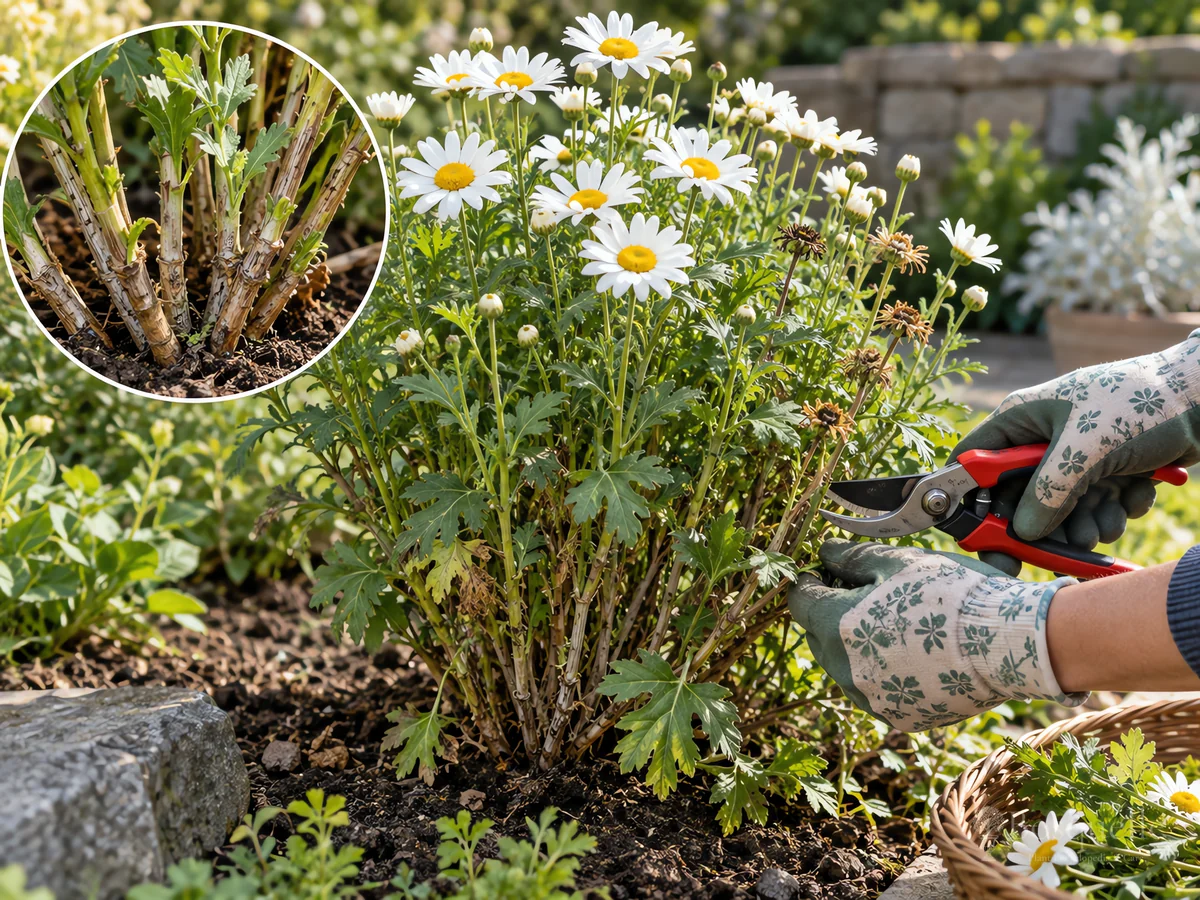
Prune Nippon daisy in spring. Shorten the new shoots, and leave the woody stems standing so the plant stays a sturdy mound for October bloom.

Cut the new shoots in spring, and leave the woody stems
| Factor | Recommended | Avoid |
|---|---|---|
| When | Late April through May, as new shoots lengthen | Do not wait until July for a hard cut |
| How much | Take off about a third of the height, or three to six inches of new growth | Do not cut the plant to the ground |
| Wood | Leave upright woody canes, and pull stems that lie on the ground | Do not treat it like a herbaceous daisy you mow off |
Nippon daisy is a woody clump. Cutting it to the ground every year makes weak new stems that flop under the white heads. Leave the upright canes, and shorten only the new growth in spring so the plant branches and stays compact. [1] Mid to late May is the usual window: take three to six inches off the new shoots, or about a third of the height. [2] A slight spring cut is enough on a plant that already stands well. [3]
- In spring, when new shoots are growing, take off about a third of the height, or three to six inches of new growth. Leave the woody canes.
- Cut out stems that lie on the ground, and thin a crowded clump so air can move through it.
- If you want a thicker top, shear the last four inches in May. Finish that trim by the end of May.
If the stems still flop after a spring trim, check that the plant is in full sun — see How to Grow Nippon Daisy.
Should I cut Nippon daisy to the ground?
No. Leave the woody canes. A plant cut to the ground sends up weak new stems that flop.
Stop trimming by early summer so October buds can form
Flower buds form as the days shorten. A hard cut after May can delay bloom or remove the buds, so finish the spring trim by the end of May. [4] If you missed that window, a light trim in early July is the last chance — do not cut as hard as you would in May. After the white heads fade, you can shear spent flowers to tidy the plant. That does not bring a second flush. Leave the woody stems through winter, and do the next cut in spring.
- Stop the main trim by the end of May.
- If you still need a light cut in early July, take much less than you would in May. Do not cut it hard in July.
- After bloom, shear spent heads if you want a cleaner look. Leave the woody stems until spring.
Can I prune it on July 4?
Use July 4 as a stop date, not a hard-cut date. Finish the spring trim by the end of May. A light early-July trim is the last chance if you missed May.
If the plant is all leaves and no October heads, the last cut was too late — wait until spring, then shorten only the new shoots.
FAQ
Does deadheading make more flowers?
No. Shearing spent heads tidies the plant. It does not start a new flush, because the buds follow day length.
Should I cut it down after frost?
Leave the woody stems. Cut only dead or horizontal wood, and do the real shortening in spring.
Why did it grow and never bloom?
A cut after May, or a hard July cut, can remove the buds. Check that it also has full sun.
Related guides


Recommended plants

References
- [1] Hyannis Country Garden -
https://www.hyanniscountrygarden.com/montauk-or-nippon-daisies/ - [2] 27east / Andrew Messinger -
https://www.27east.com/residence/home-garden/article_624d8c02-d674-5789-a645-a98c46130be9.html - [3] NC State Extension -
https://plants.ces.ncsu.edu/plants/nipponanthemum-nipponicum/ - [4] Ask Extension / University of Maryland Home and Garden Information Center -
https://ask.extension.org/kb/faq.php?id=260710
This note is part of Nipponanthemum Guides.
More pruning timing notes by plant live in Pruning Guides.
Updated: Reviewed by Bosquelle Editors