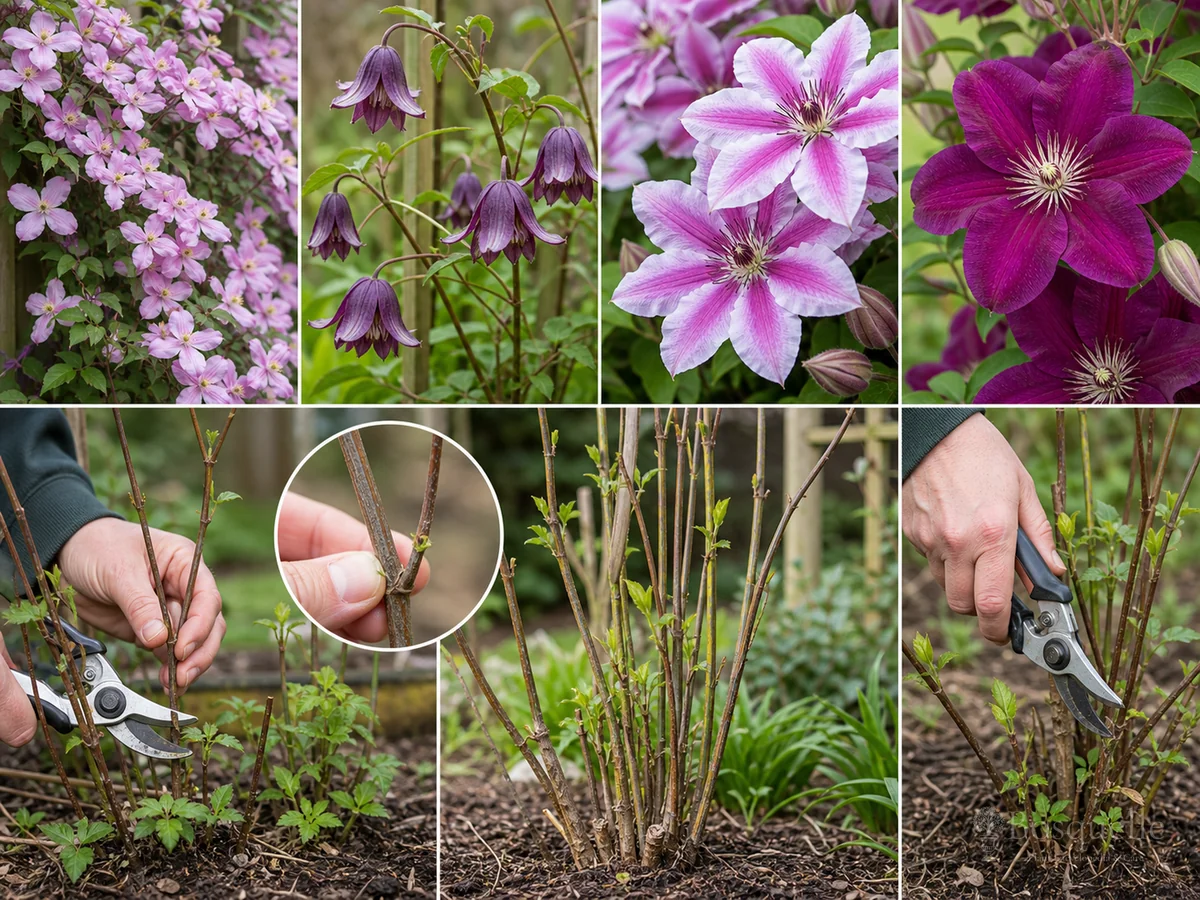
Tools and timing overview
Use sharp bypass secateurs for stems, loppers for thicker wood, and clean tools between plants. Timing follows prune group — not a single "late winter for everything" calendar. Confirm group on Types of Clematis before you cut.
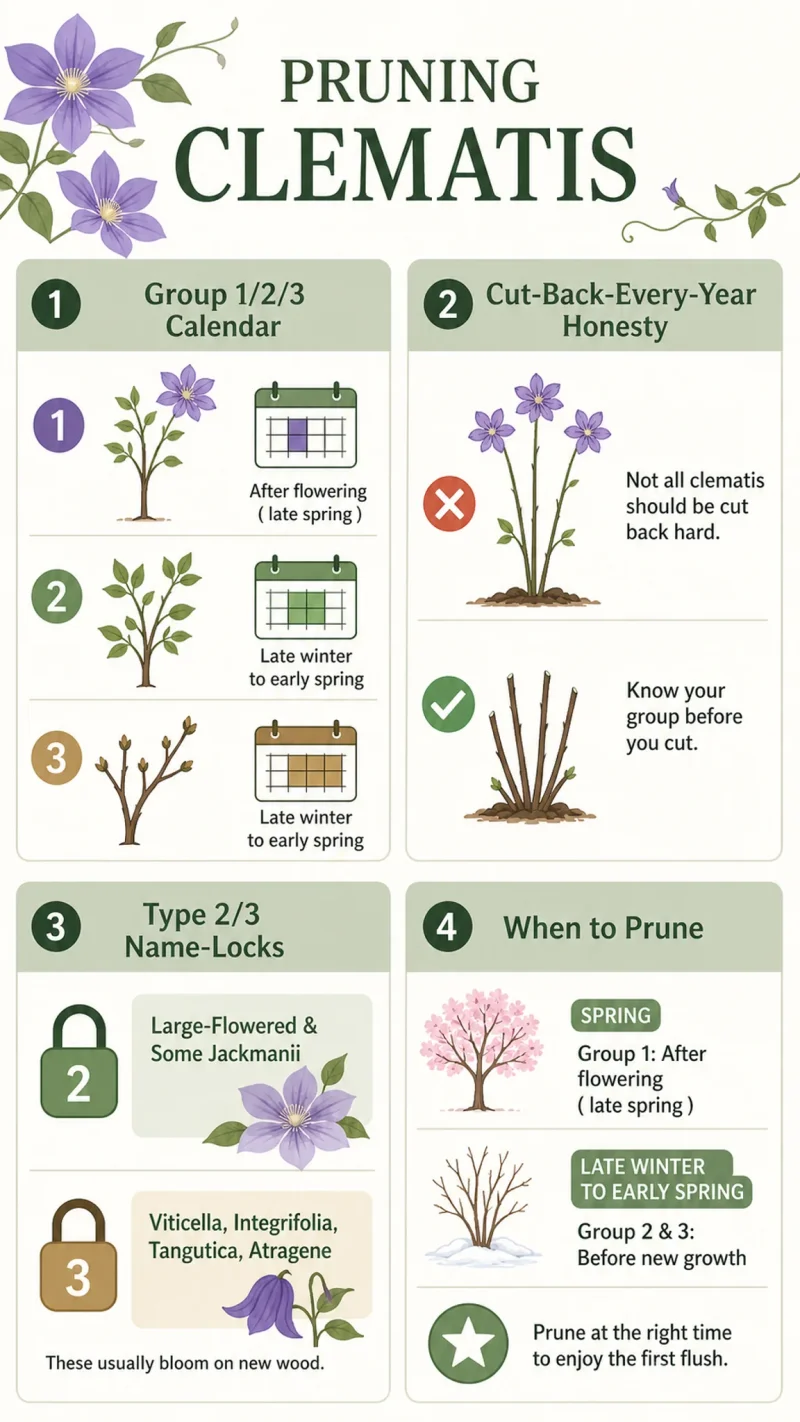
| Prune group | Bloom wood | Main prune window |
|---|---|---|
| Group 1 (early spring) | Old wood | Light tidy after flowering |
| Group 2 (early large-flowered) | Old wood first (+ later flush) | Light spring tidy; reshape after first flush |
| Group 3 (late-flowering) | New wood | Hard prune late winter / early spring |
| Herbaceous / non-climbing | New wood / basal | Cut to a low framework in spring |
Group 1 pruning — Mayleen and early spring types
Group 1 clematis flower early on old wood (montana, alpina, many evergreens). After the main flush, remove dead or tangled stems and lightly shorten where needed — do not cut the whole vine hard in late winter or you remove next year's early flowers. Example: Mayleen.
If you already hard-cut a Group 1 vine in winter, expect a bloom gap — not instant death. Thin after bloom over one or two seasons while buds rebuild on remaining framework. Shared growing rules remain on How to Grow Clematis.
Group 2 pruning — Nelly Moser and early large-flowered
Group 2 early large-flowered types bloom first on old wood, then may give a second flush. In late winter or early spring, remove dead wood and lightly tidy; after the first flush, shorten flowering stems to strong buds. Avoid treating them like hard-prune Group 3 vines. Example: Nelly Moser.
A common Group 2 mistake: hard February cuts remove the first flush entirely. Next year, light spring tidy only, then reshape after the main show.
Group 3 pruning — Polish Spirit and late-flowering types
Group 3 late-flowering clematis bloom on the current season's growth. In late winter or early spring, cut hard to a sturdy pair of buds about 20–45 cm above soil (or to a clear framework on the support). Dead wood can come out anytime. Example: Polish Spirit.
Group 3 is the beginner-friendly hard-cut group — but only if the vine truly belongs here. When in doubt, browse the catalog on Types of Clematis.
Herbaceous clematis pruning — Juuli and non-climbers
Herbaceous and non-climbing types such as Juuli die back or stay low. In spring, cut stems to a low framework of healthy buds near the base — similar in spirit to Group 3 severity, but without training a tall climber framework.
Renovation without guessing
Overgrown Group 3 vines renew easily with a hard dormant cut. Overgrown Group 1 types renew more slowly — thin after bloom over one or two seasons rather than cutting everything to the ground in winter. Overgrown Group 2 vines respond to staged light renewal: remove dead wood first, shorten after the first flush, repeat next year if needed.
Shared growing rules remain on How to Grow Clematis. Winter tidy without wrong Group cuts lives on Clematis Care in Winter.
Identify prune group first, cut on the matching calendar, and keep shared growing rules on the care pillar.
FAQ
Can I prune all clematis in late winter?
No. Group 3 and many herbaceous types yes; Group 1 and classic Group 2 need after-bloom or light-only timing or you risk early flowers.
Do you cut back clematis every year?
Only if it is Group 3 (or herbaceous) — those take a hard late-winter / early-spring cut every year. Group 1 is after-bloom light tidy only. Group 2 is light spring deadwood plus after-flush shaping — not an annual chop to the base.
How do I prune type 2 (Group 2) clematis?
In late winter or early spring, remove dead wood and lightly tidy to strong buds. After the first flush, shorten flowering stems. Do not hard-cut Group 2 like Group 3 or you lose the early show.
How do I prune type 3 (Group 3) clematis?
In late winter or early spring, cut hard to a sturdy pair of buds about 20–45 cm above soil (or to a clear framework on the support). These bloom on new wood, so the annual hard cut is the beginner-friendly schedule — only if the vine is truly Group 3.
Why didn't my Mayleen bloom after I pruned?
Likely a hard late-winter cut removed old-wood buds. Prune Group 1 lightly after flowering next time — expect recovery over seasons.
I cut hard once and lost flowers — is the vine dead?
Usually not. Match future cuts to group, care steadily, and give Group 1/2 time to rebuild bloom wood.
Where is full clematis care?
On How to Grow Clematis — this guide only covers prune timing by group.
Related guides

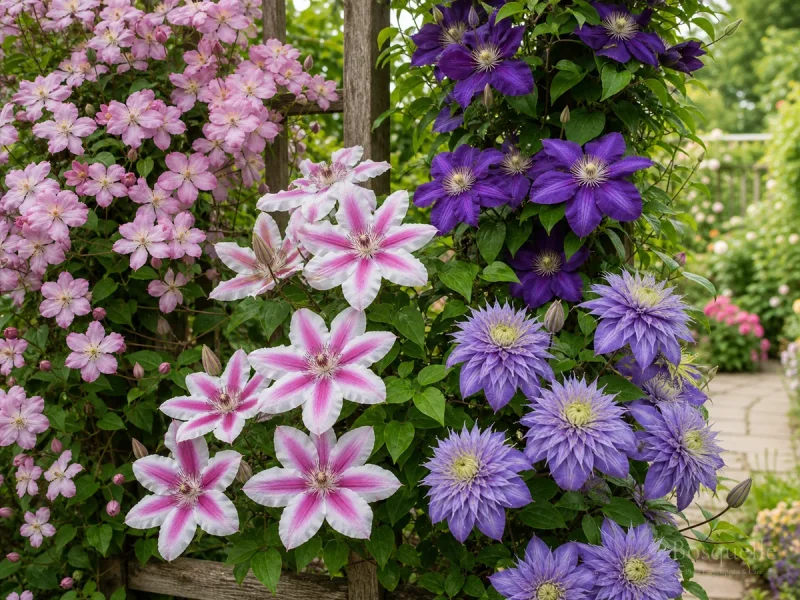

Recommended plants




This note is part of Clematis Guides.
More pruning timing notes by plant live in Pruning Guides.
Updated: Reviewed by Bosquelle Editors