
Prune arborvitae by cutting green sprays. New foliage will not sprout from the brown interior.

Cut only where green sprays remain
| Factor | Recommended | Avoid |
|---|---|---|
| When | Late winter or early spring, before the flush | Do not take feet off the top in one cut |
| Where | Stems that still have green sprays | Do not cut the brown interior (no dormant buds) |
| How | Light shear or a cut back to a green side shoot | Do not carve a hole in old wood with hedge shears |
| How much | No more than about one-third of the live foliage; replace the plant if it has outgrown the spot | Do not top a 20-foot plant to 15 feet |
Arborvitae shade out their own interiors. That brown core has no dormant buds. If you cut into it, the hole stays. Deer-stripped lower stems stay a bare trunk. [1] [2] Shape in late winter or early spring instead of a late summer haircut.
When should I prune arborvitae?
Late winter or early spring, before new growth starts. Remove dead or broken wood any time.
Will arborvitae grow back from brown wood?
No. New growth will not sprout from branches left with no green sprays. Cut only where foliage remains, or replace the plant.
How to prune arborvitae
Stay in the green. Do not renovate into old wood.
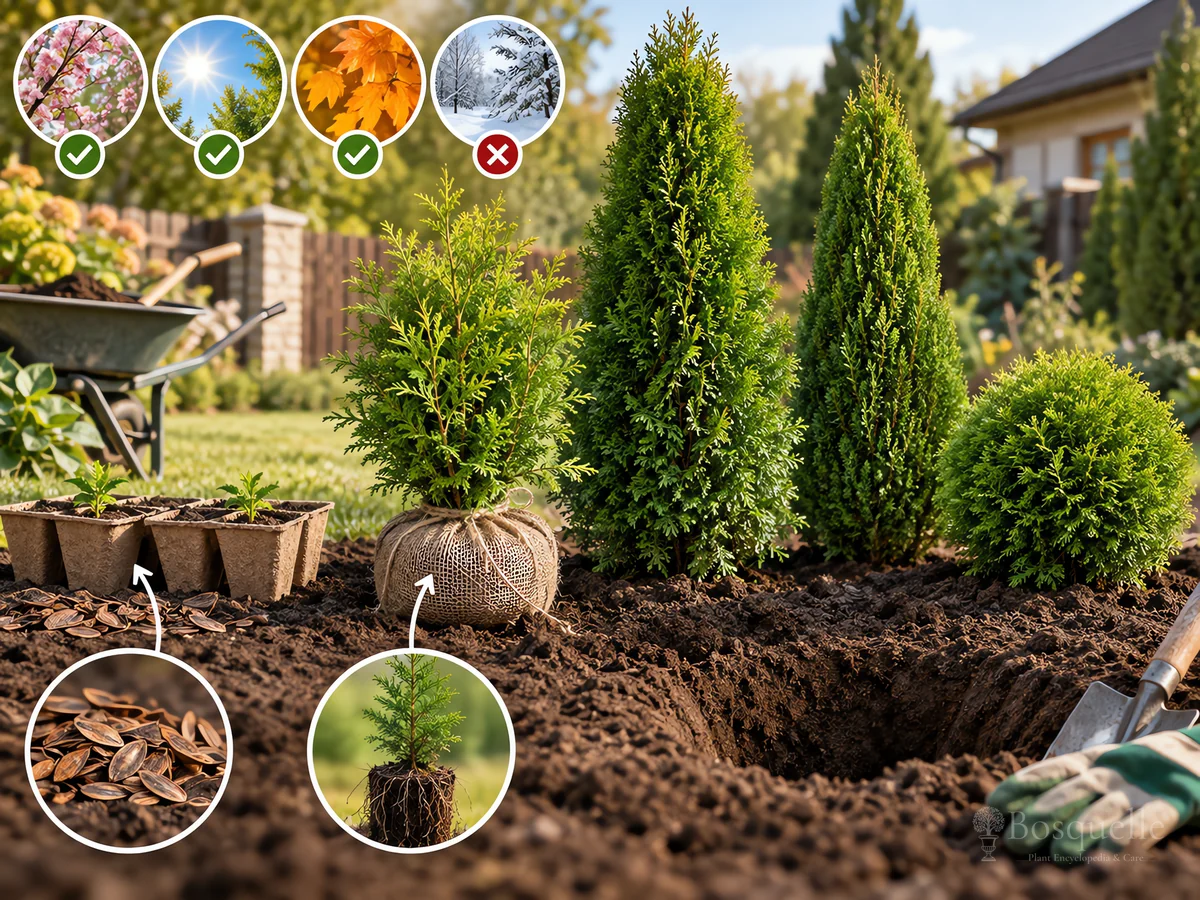
- Wait until late winter or early spring, before the strong flush. [3]
- Find the last green sprays on the stem you want to shorten. Do not go behind that into brown wood.
- For a stray shoot, cut back to a side branch that still has foliage. For a hedge, shear only the outer green shell. [4]
- Do not take more than about one-third of the live foliage in one year. Do not drop a tall plant by several feet.
- Stop. If the plant already fills the bed, pick a smaller kind on Types of Arborvitae rather than topping into the core.
Hedges versus globe mounds
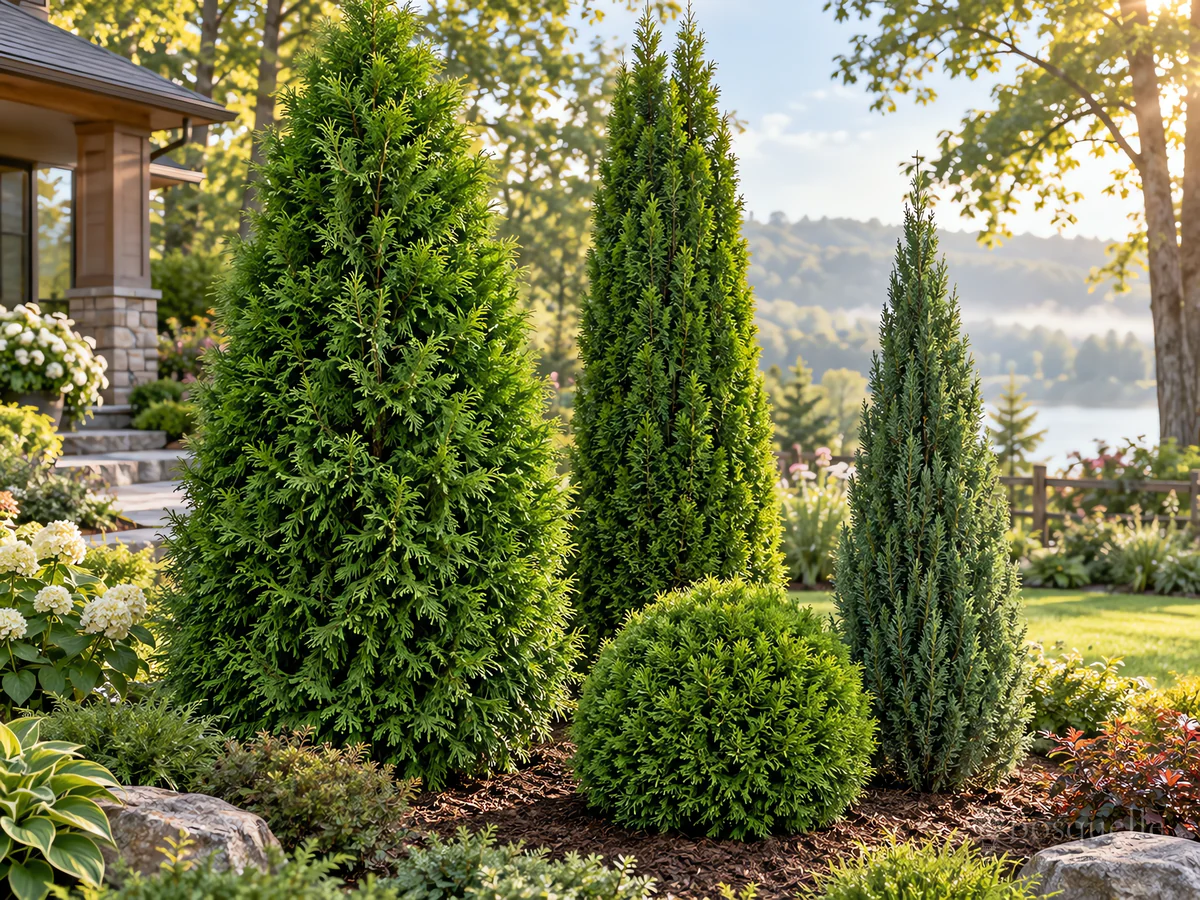
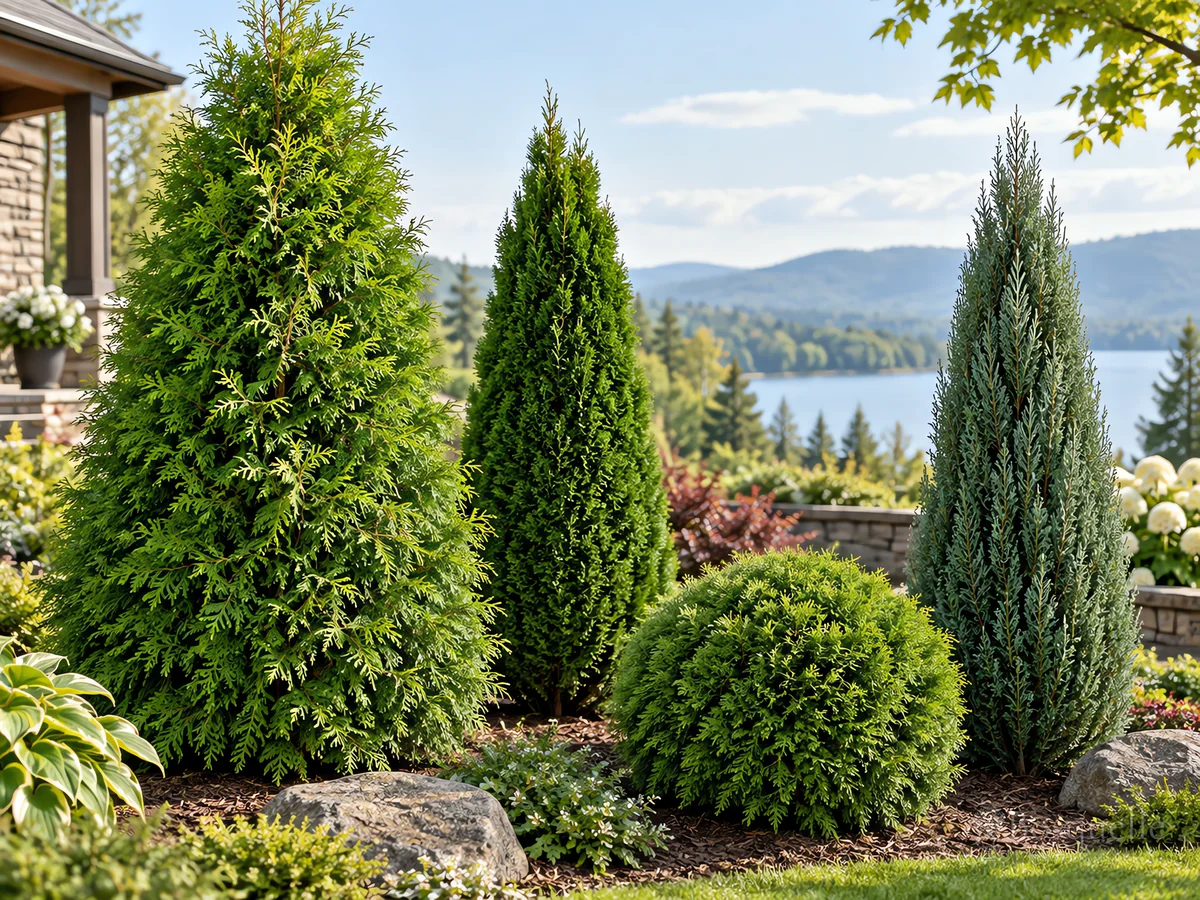
On a hedge column such as Smaragd, light shear holds the outline if every cut still sits on green sprays. On a globe such as Danica, skip routine cutting; do not scoop the ball into old wood. A large screen needs the same rule — tip work, not a renovation into the brown core.
Can I take five feet off the top?
No. That leaves a flat, permanent gap. Choose a smaller kind next time, or live with the height.
If you can see brown wood at the cut, you went too far — stop and leave the remaining green.
FAQ
What if I already cut a hole in old wood?
That gap will not fill with new sprays. Live with it, hide it with a neighbor, or replace the plant.
Can I shear it like a boxwood?
Light shear on still-green growth can hold a hedge. Shearing packs the outer sprays and enlarges the bare core. Do not carve into brown wood.
Related guides
Recommended plants


References
- [1] University of Maryland Extension -
https://marylandgrows.umd.edu/2024/07/16/qa-reduce-the-height-of-an-arborvitae/ - [2] Fine Gardening -
https://www.finegardening.com/project-guides/pruning/how-to-prune-arborvitae - [3] Oregon State University Extension -
https://extension.oregonstate.edu/news/how-plant-care-arborvitae-hedges-oregon - [4] University of Arkansas Division of Agriculture -
https://www.uaex.uada.edu/yard-garden/in-the-garden/reference-desk/pruning/shrubs.aspx
This note is part of Thuja Guides.
More pruning timing notes by plant live in Pruning Guides.
Updated: Reviewed by Bosquelle Editors