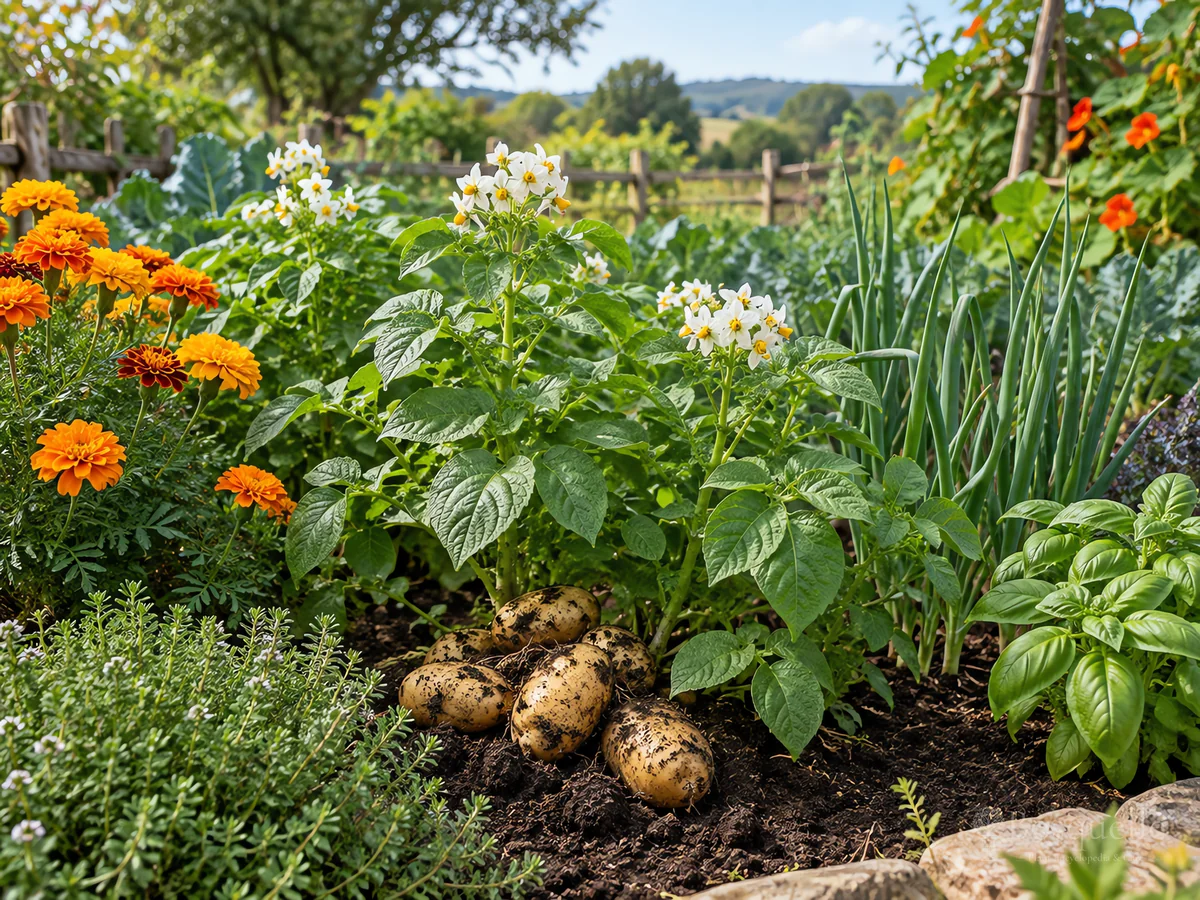
Plant potatoes with beans, corn, or cabbage. Keep tomatoes, squash, and cucumber off that row, because they share pests and diseases with the crop.
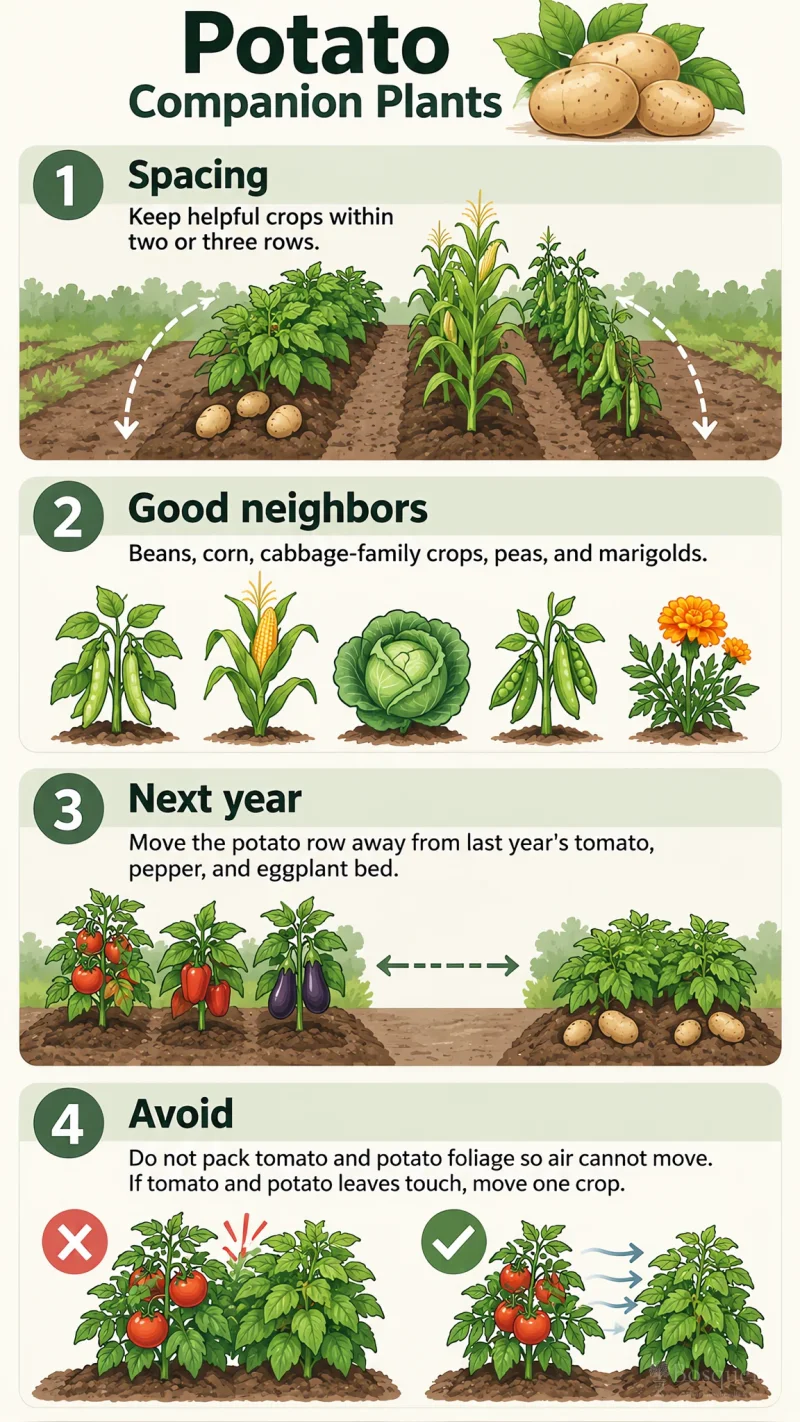
Plant potatoes with beans, corn, or cabbage — not tomatoes
| Factor | Recommended | Avoid |
|---|---|---|
| Good neighbors | Beans, corn, cabbage-family crops, peas, and marigolds | Do not plant tomatoes in the same row this year |
| Spacing | Keep helpful crops within two or three rows | Do not pack tomato and potato foliage so air cannot move |
| Next year | Move the potato row away from last year's tomato, pepper, and eggplant bed | Do not replant nightshades in the same soil for two or three years |
| Horseradish | A traditional edge plant beside Irish potato | Do not let horseradish run through the whole bed |
potato sits well beside beans, corn, the cabbage family, marigolds, horseradish, and peas. Those neighbors share space without matching the same leaf diseases. [1] Tomato and potato should not share a row. They are attacked by the same pests and diseases, so a blight year on one crop moves straight onto the other. [2] Potato, tomato, pepper, eggplant, and tomatillo are the same nightshade family. Give that whole group a fresh bed for two or three years. [3] UMN asks for three or four years away from tomato, pepper, and eggplant, even if you saw no disease last season. [4] Hilling, water, and the seed-piece ritual stay on How to Grow Potatoes and Planting Potatoes.
- Plant beans, corn, or cabbage within two or three rows of the potato hill.
- Keep tomatoes at least two or three rows away this year, and on a different bed next year.
- Leave walking room so you can hill and dig without tearing the neighbors.
- Pull volunteer potatoes in next year's tomato row, because a missed tuber can carry disease into that crop.
Can I plant tomatoes next to potatoes?
Not in the same row this year. They share pests and diseases. Put beans, corn, or cabbage beside the potatoes instead.
Keep squash and cucumber off the potato row too
Pumpkin, squash, cucumber, sunflower, and raspberry are poor neighbors for Irish potato on the same charts that praise beans and corn. Cucumber and squash want room to run, and they sit on the avoid list with tomato. If you still want a mixed bed, put those vines two or three rows away so you can walk the potato hill without stepping on the vines. Corn can share a block with potato; that is a neighbor pairing, not the Three Sisters mound, which starts with corn on Corn Companion Plants.
Can I plant peppers in the same bed the next year?
Wait two or three years before you put pepper, tomato, eggplant, or tomatillo where potatoes just grew. Use beans or cabbage in that soil the following season.
If tomato and potato leaves touch, move one crop. Plant beans, corn, or cabbage beside the potatoes this year, and give nightshades a fresh bed next year.
FAQ
Do beans replace fertilizer for potatoes?
No. Beans can share the row, but potatoes still want fertilizer in the hill. Side-dress when you hill, on How to Grow Potatoes.
What about Colorado potato beetles?
Hand-pick the striped adults and the orange larvae, and crush the yellow egg masses on the undersides of leaves. For the full beetle job, see How to Get Rid of Colorado Potato Beetles.
Related guides


Recommended plants

References
- [1] West Virginia University Extension -
https://extension.wvu.edu/lawn-gardening-pests/gardening/garden-management/companion-planting - [2] Virginia Cooperative Extension -
https://www.pubs.ext.vt.edu/content/dam/pubs_ext_vt_edu/spes/spes-620/SPES-620.pdf - [3] Penn State Extension -
https://extension.psu.edu/potatoes-in-the-garden-and-the-kitchen - [4] University of Minnesota Extension -
https://extension.umn.edu/vegetables/growing-potatoes
This note is part of Potato Guides.
More neighbour shortlists by plant live in Companion Plant Guides.
Updated: Reviewed by Bosquelle Editors