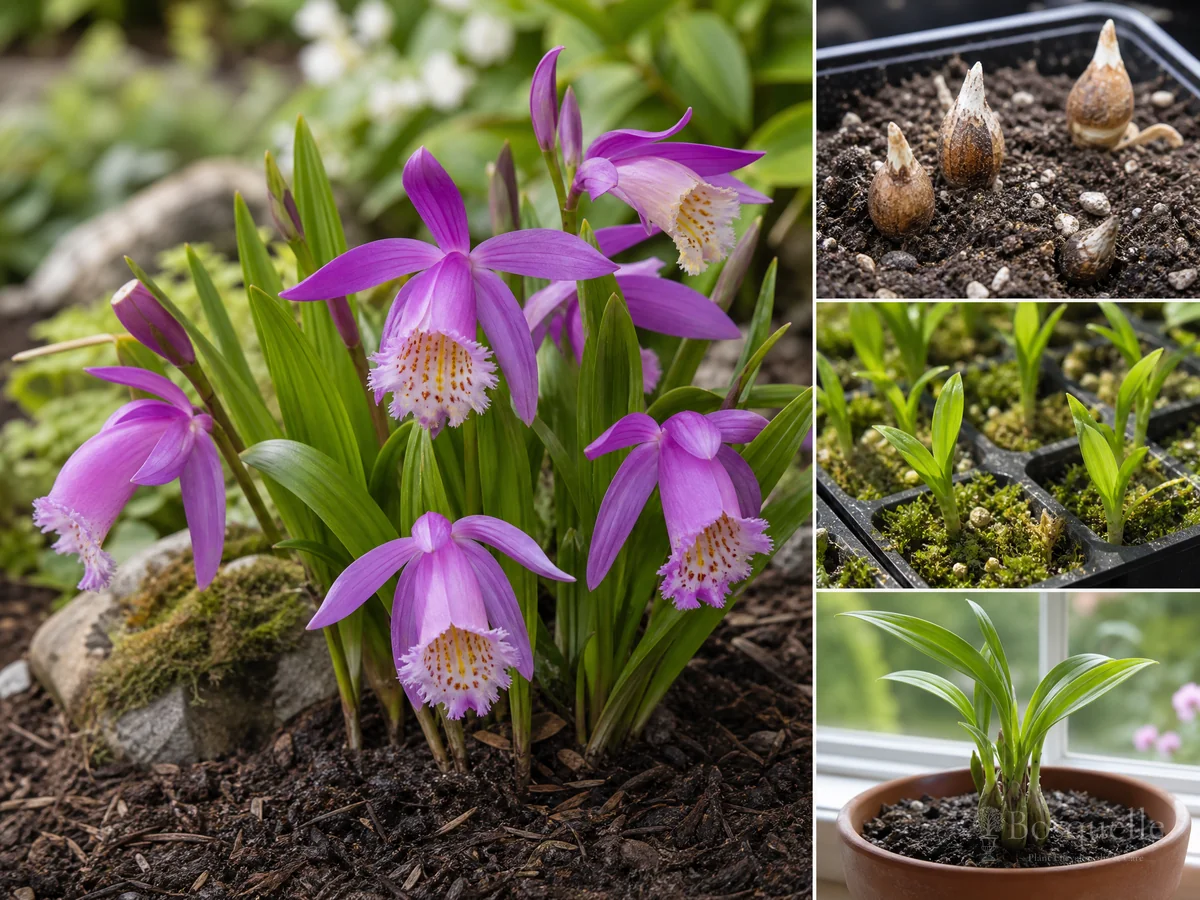
Plant windowsill orchid while it is dormant, and leave the top third of each pseudobulb above the mix.

Set the pseudobulbs so the top third sits above the mix
| Factor | Recommended | Avoid |
|---|---|---|
| When | Anytime the plant is dormant, from fall until new buds swell | Do not wait until shoots are already long in a sealed bag |
| Depth | Set each pseudobulb so the top third sits above the mix | Do not bury the new buds under a deep cover of mix |
| Spacing | About an inch apart, grouped in a shallow pan | Do not plant one lonely bulb in a deep pot of unused wet mix |
| Mix | About half medium fir bark, a little compost, and the rest horticultural pumice, or another open terrestrial mix | Do not use heavy garden soil, or a mix that stays soggy |
Start windowsill orchid from last year's plump pseudobulbs while they are dormant. Use a shallow pan with a hole and an open mix, then leave the top third showing so the new buds are not smothered. [1] Once shoots are up, light and watering live on How to Grow Windowsill Orchid.
How deep do I plant the pseudobulbs?
Leave the top third of each pseudobulb above the mix, and space them about an inch apart in a shallow pan.
When do I pot them?
Anytime they are dormant, from fall until the new buds swell. Do not wait until long shoots are already in a sealed bag.
How to plant windowsill orchid
Fill a draining pan, set the pseudobulbs, leave the top third showing, water once, then wait for roots.
- Fill a shallow pan that drains with an open mix — about half medium fir bark, a little compost, and the rest horticultural pumice, or another light terrestrial mix.
- Trim the old, dead roots back to about an inch so the stubs can anchor the pseudobulb. Throw out the spent, shriveled parent. [2]
- Stand the plump replacements on the mix about an inch apart, then add mix around them until the top third still shows. Do not cover the new buds. [3]
- Water once to settle the mix, then keep the pan cool and almost dry until new roots show. After that, light and watering live on How to Grow Windowsill Orchid.
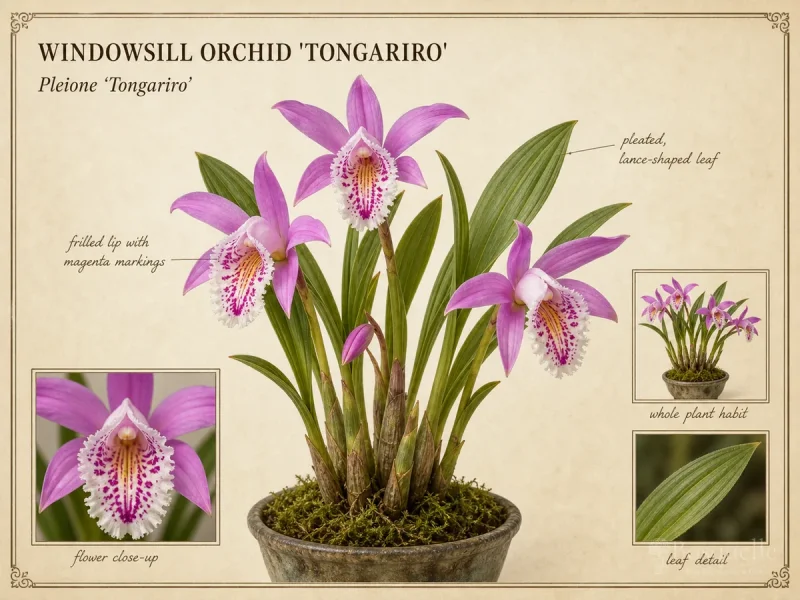
Tongariro uses that same one-third depth and spacing. It is a magenta hybrid, not a second kind of care.
Knock the pot out in winter and keep the plump new pseudobulbs
Each year's flowered pseudobulb shrivels. The plant replaces it with one or two firm new ones. Empty the dry pan in winter and pot only those.
- Tip out the dry mix after the leaf has gone. Pull the clump apart and pick out the firm, plump pseudobulbs.
- Cut old roots back to about an inch. Discard the spent, spongy parent and any soft pieces.
- Pot the plump ones at the same depth, or store them dry and cool in a paper bag until you are ready to pot.
Sow the tiny bulbils in their own pot
The old pseudobulb often makes two or three tiny bulbils at the top. Those are not moth-orchid keiki. Pot them together in a small pan of the same mix.
- Pick the bulbils off when the leaf has died back, and do not break the eye at the base of a flowering pseudobulb.
- Press them into the same open mix so they sit about half in. Keep that small pan with the adults, and wait two or three years for flowering size.
What fails at planting
Pseudobulbs rot when you bury the new buds in wet mix, or when you water a pan that has no roots yet. Leave the top third showing, keep the pan cool, and wait for roots before you water again. [4] Do not leave shipped pseudobulbs sealed in a warm bag.
If a pseudobulb is spent or soft, throw it out and pot only the plump ones with the top third above the mix.
FAQ
Can I grow it from seed?
Seed is a flask job for specialists. A plump pseudobulb, or a divided clump, is the usual start. Tiny bulbils take two or three years to flower.
Can I plant it in garden soil like a daffodil?
Not as a buried bulb. These orchids want a shallow pan, an open mix, and the top third of the pseudobulb in the air. Garden soil that stays wet in winter rots them.
Related guides

Recommended plants

References
- [1] The Pleione Website -
https://www.pleione.info/cultivation---2.html - [2] Orchid Societies Council of Victoria -
https://oscov.asn.au/articles/growing-pleiones-by-alan-hope/ - [3] American Orchid Society -
https://www.aos.org/explore/pleione - [4] Fine Gardening -
https://www.finegardening.com/article/spring-orchids
This note is part of Pleione Guides.
More planting notes by plant are gathered in Planting Guides.
Updated: Reviewed by Bosquelle Editors