
Plant a grafted nursery sapodilla in a warm month you can water, set the mix at grade, and leave 25 feet from buildings and other trees.

Plant a grafted nursery tree, and leave 25 feet
| Factor | Recommended | Avoid |
|---|---|---|
| When | A warm month, so the new roots can run before a dry or cold stretch | Do not plant into dry ground with no hose ready |
| Stock | A healthy grafted tree in about a 3-gallon can, 2 to 4 feet tall | Do not bury the first flare root, and do not buy a large tree jammed in a small can |
| Spacing | 25 feet or more from buildings, power lines, and other trees | Do not crowd it at 8 feet from a wall |
| Grade | Set the mix even with or slightly above the surrounding soil | Do not put a pad of compost in the bottom of the hole |
Buy a grafted nursery tree so you are not waiting on seed. A 3-gallon can, 2 to 4 feet tall, is the usual start. Leave 25 feet from buildings and wires if the tree will grow out. [1] Keep the first flare root at the soil line. Set the mix even with or slightly above the surrounding soil. [2] sapodilla wants full sun and ground that drains, in the warmest part of the yard that does not flood. [3] If the yard ponds after rain, plant on a mound of native soil 2 to 3 feet high. Low, wet ground is a poor crop. [4]
How young a tree should I plant?
A healthy 3-gallon tree, 2 to 4 feet tall, is the usual start. A large tree jammed in a small can often has a circling taproot.
How far from the house do I plant?
Leave 25 feet or more from buildings, power lines, and other trees. A crowded tree shades out and crops poorly.
How to plant a sapodilla tree
- Strip grass from a 3 to 10 foot ring so sod does not compete with the new roots.
- Dig a hole 3 to 4 times the can diameter, and about as deep as the root ball.
- Do not put fertilizer or compost in the bottom of the hole. If you add compost, mix it with the dug soil at no more than half and half.
- Slide the can off, hold the root ball, and set the mix even with or slightly above grade. Keep the first flare root at the soil line.
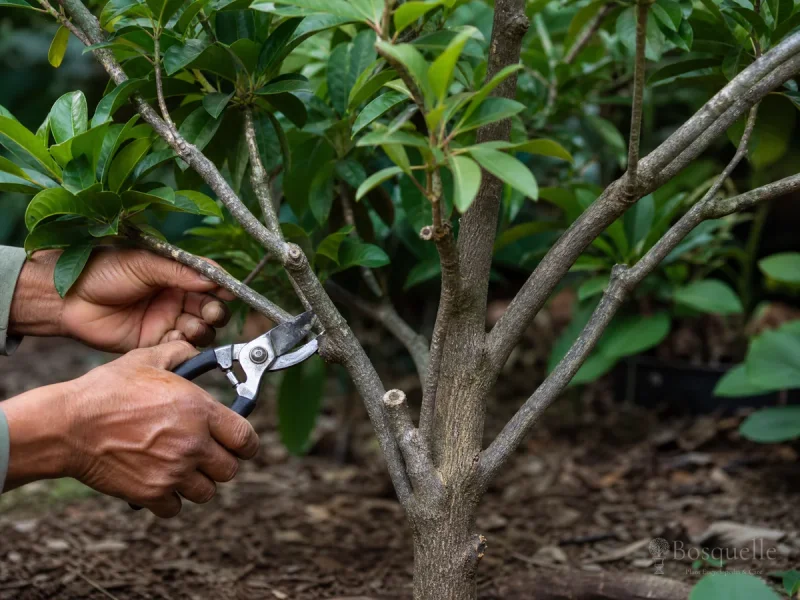
- If a taproot circles the bottom of the can, snip that kink so it can run down.
- Backfill, water to settle air pockets, and keep mulch 8 to 12 inches off the trunk.
- If the site floods, build the mound first, then dig the hole in the mound. Sun and the yearly calendar live on How to Grow Sapodilla.
Can I start with a grocery seed instead of a nursery tree?
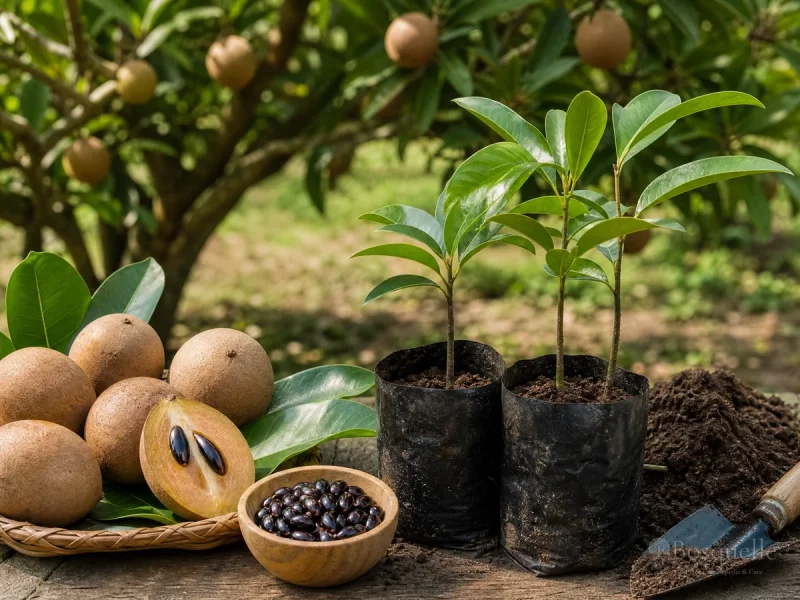
You can sow a seed, but named fruit will not match, and bearing is slow. Buy a grafted tree if you want fruit in a few years, or read How to Grow Sapodilla from Seed if you are starting a curiosity plant.
Water the new tree until it is set, then keep grass off the trunk so the flare root stays sound.
FAQ
Should I fertilize in the hole?
No. Do not put a pad of fertilizer or compost under the roots. Mix compost into the backfill if you want, at no more than half and half.
Do I need two trees?
Some kinds set poorly alone and need another sapodilla nearby. Other kinds set more when a second tree is close. Buy a named grafted tree, and ask the nursery if that kind needs a partner.
Related guides


Recommended plants

References
- [1] UF/IFAS Extension -
https://ask.ifas.ufl.edu/publication/MG057 - [2] UF/IFAS Extension Miami-Dade County -
https://blogs.ifas.ufl.edu/miamidadeco/2022/08/31/tropical-fruit-sapodilla/ - [3] Gardening Know How -
https://www.gardeningknowhow.com/edible/fruits/sapodilla-trees/growing-sapodilla-fruit.htm - [4] California Rare Fruit Growers -
https://crfg.org/homepage/library/fruitfacts/sapodilla/
This note is part of Manilkara Guides.
More planting notes by plant are gathered in Planting Guides.
Updated: Reviewed by Bosquelle Editors