
Sow safflower after the last frost, cover the seed lightly, and leave the taproot where it germinated.

Sow after frost, and do not transplant it
| Factor | Recommended | Avoid |
|---|---|---|
| When | After the last frost, once the soil has warmed to about 65°F | Sowing into cold, wet ground |
| Depth | Cover the seed lightly, about 1/4 to 1/2 inch | A deep hole that holds the seed in cold mud |
| Spacing | Six to twelve inches between plants | A crowded row with no air around the stems |
| Taproot | Sow where the plant will stay | Do not lift and move seedlings |
Wait until frost has passed and the soil is warm — about 65°F is a reliable mark. safflower puts down a taproot fast, so a moved seedling often stalls. [1] [2] Sun and watering for the planted crop stay on How to Grow Safflower.
When do I sow safflower?
Sow after the last frost, when the soil has warmed to about 65°F. Keep the surface moist until it sprouts, then ease off the water.
How to sow safflower
Sow the seed where the plant will stay. Cover it lightly, keep the surface moist until it sprouts, and thin so each plant has room.
- Wait until after the last frost, when the soil has warmed to about 65°F. [3]
- Sow seed about 1/4 to 1/2 inch deep in a firm, draining bed. Space plants 6 to 12 inches apart. [4]
- Keep the surface moist until the seed sprouts in 7 to 14 days. Do not let a crust form over the seed, and do not flood the bed.
- Leave the seedlings where they are. Do not lift and move them. If two sprouts come up in one spot, snip the weaker one at the soil line instead of pulling, so you do not tear the neighbor's taproot.
How deep should I sow safflower seed?
Cover the seed lightly, about 1/4 to 1/2 inch. Sow after frost in warm soil, not into a cold, wet bed.
What fails at planting
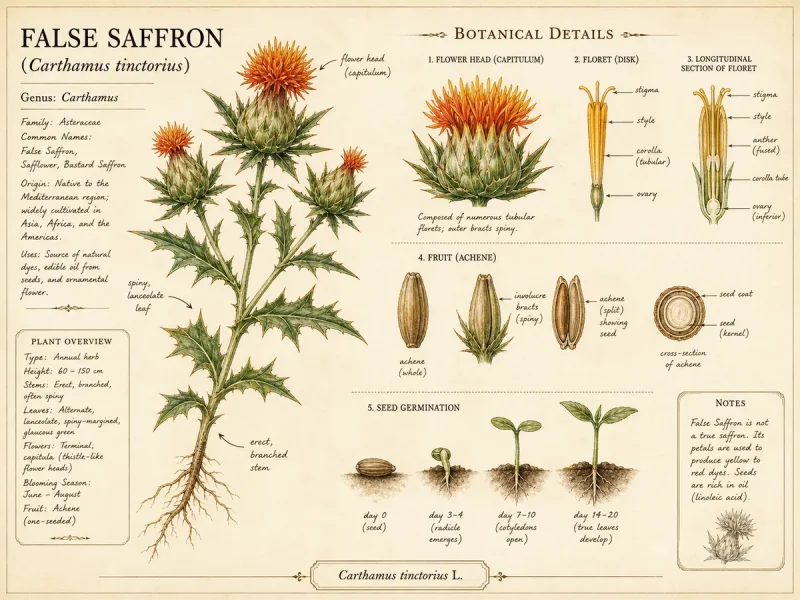
Cold, wet soil is the usual reason a row never comes up. The seed coat sits in mud and rots before the taproot can go down. Wait for warm ground, cover the seed lightly, and sow where the plant will stay. A seedling pulled for transplanting often stalls because that taproot does not like to be moved.
If the row stays empty after two weeks in warm soil, sow a fresh packet — cold mud often rots the first try.
FAQ
Can I start safflower indoors?
Direct sowing after frost is the usual home crop. If you start seed indoors, use a deep cell so the taproot stays intact, and set plants out after frost.
Can I sow birdseed from a feeder bag?
Some bags will sprout, and the seedlings are the same annual. Sow them after frost in a draining bed. A named cut-flower packet is more uniform.
Related guides


Recommended plants
References
- [1] Johnny's Selected Seeds -
https://www.johnnyseeds.com/growers-library/flowers/carthamus/carthamus-key-growing-information.html - [2] Grand Prismatic Seed -
https://www.grandprismaticseed.com/blog/2025/5/15/safflower-growing-dyeing-and-seed-saving - [3] Farm & Folk -
https://www.farmandfolk.com/blog/2024/1/9/natural-dye-cultivation-series-safflower - [4] Eden Brothers -
https://grow.edenbrothers.com/planting-guides/safflower-seeds/
This note is part of Carthamus Guides.
More planting notes by plant are gathered in Planting Guides.
Updated: Reviewed by Bosquelle Editors