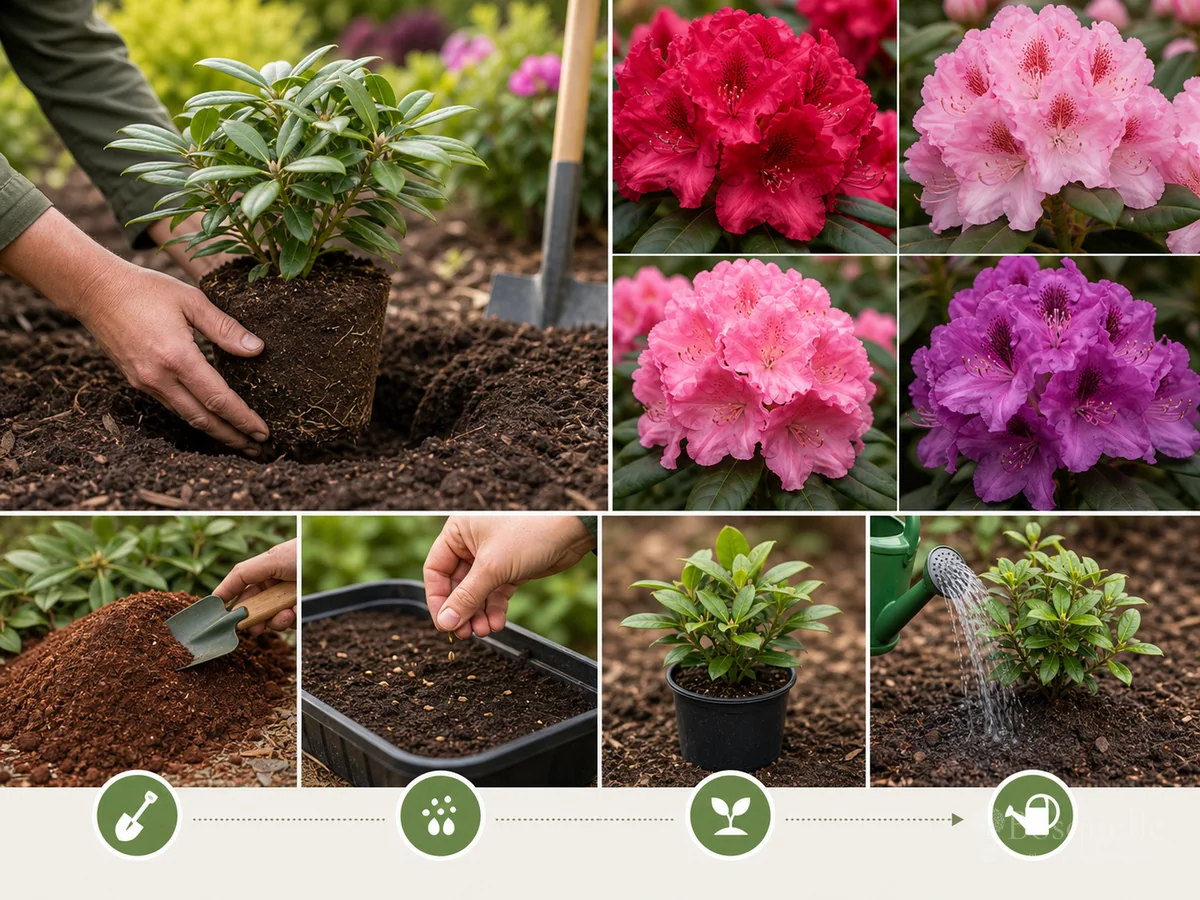
Plant rhododendrons in spring or early autumn, in acid organic soil, with the root ball slightly above grade. Mulch 5–8 cm and keep it off the stem. Light, water, and prune class stay on How to Grow Rhododendrons.
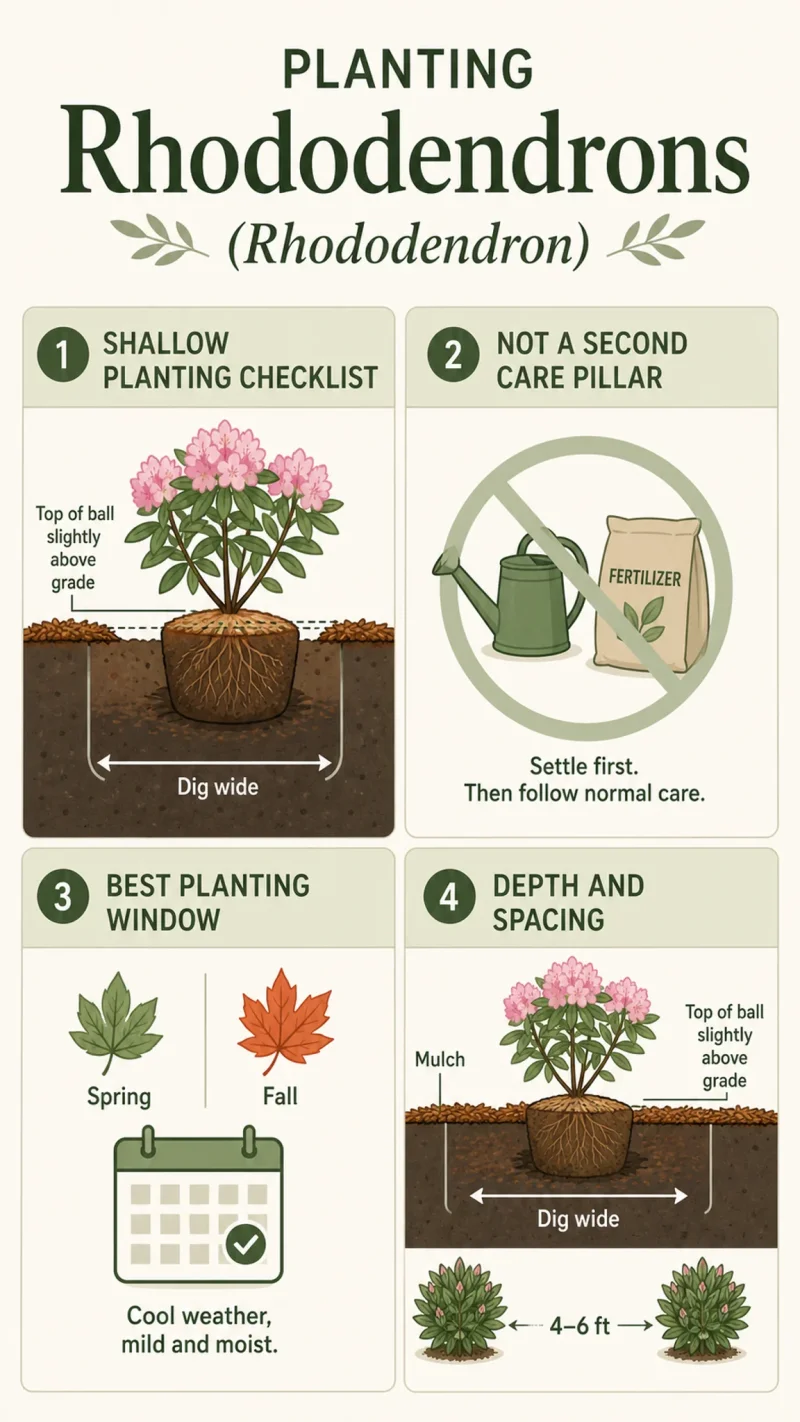
Planting timing — cool soil windows
| Factor | Recommended | Avoid |
|---|---|---|
| Timing | Spring or early autumn into workable soil | Frozen soggy ground; midsummer heat without shade |
| Depth | Top of the root ball slightly above grade | Burying the crown |
| Soil | Acid organic backfill; no lime in the hole | Chalk rubble or sealed wet clay |
| Mulch | 5–8 cm organic, off the stem flare | Volcano mulch against the trunk |
Plant while roots can settle before heat or hard freeze. Evergreen rhododendrons such as Nova Zembla use the same windows as evergreen azaleas. Shared growing rules live on How to Grow Rhododendrons.
Planting depth — shallow roots, never deep
Dig a wide hole — often three to four times the root-ball width — but keep it shallow. Set the top of the root ball slightly above the surrounding soil (about 1–2 cm / a finger-width high). Planting too deep is a common cause of failure. Firm backfill with your hands.
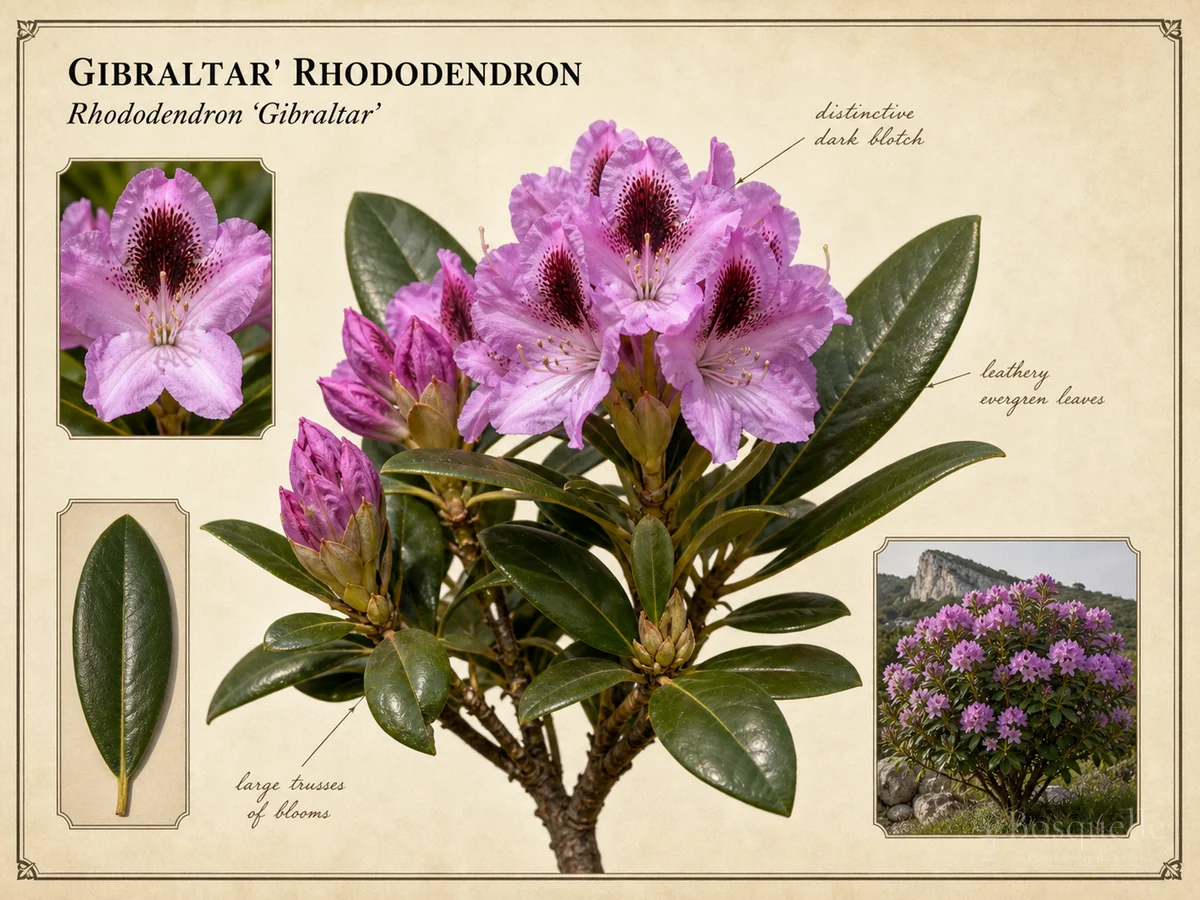
Do not stamp the ball with your foot. Dwarfs such as PJM Elite and deciduous faces such as Gibraltar still follow this shallow rule.
English Roseum, Encore Autumn Bonfire, Flame Azalea, and Cornell Pink do not get a deeper hole because they are a different class. Surface roots are the shared rule.
Acid soil and organic matter
Backfill with acidic organic soil — leaf mould, pine bark fines, or an ericaceous planting mix blended into the native soil if it is not already acid. Do not lime the hole.
On soils near neutral, a raised bed of ericaceous mix about 30 cm deep over free-draining, lime-free material is more reliable than a handful of compost in chalk. Fragrant plantings such as Fragrantissimum still need that chemistry first.
Mulch without burying the stem
After watering in, spread 5–8 cm of organic mulch over the root zone and pull it back from the stem flare. Mulch cools shallow roots. Volcano mulch against the trunk invites rot.
Planting day checklist
- Check morning sun or dappled shade and room for mature width.
- Refuse alkaline rubble in the hole.
- Soak a dry root ball before planting.
- Make a few vertical cuts on circling pot-bound roots.
- Dig wide and plant high — top of the ball slightly above grade.
- Backfill with acid organic mix. Firm with hands, not feet.
- Water thoroughly at the drip line.
- Mulch 5–8 cm. Keep mulch off the stem.
After shoots settle, follow watering and light on How to Grow Rhododendrons. For pots, use Rhododendrons in Containers.
Plant shallow in acid organic soil, mulch without burying the stem, then return to the care pillar.
FAQ
How deep should I plant a rhododendron?
Shallow and slightly high — top of the root ball about 1–2 cm above grade. Never bury the crown.
When should I plant rhododendrons or azaleas?
Spring or early autumn when soil is workable and roots can settle before heat or hard freeze.
What soil should I use?
Acidic organic soil or ericaceous planting mix. Do not lime the planting hole.
Can I plant rhododendrons in clay?
Only if water leaves the hole. Raise the bed or plant high on a mound. Sealed wet clay rots surface roots.
Should I stamp the soil with my foot?
No. Firm gently with your hands. Foot tamping compacts shallow fibrous roots.
Is this the full care guide?
No. This is the planting checklist. Year-round care lives on How to Grow Rhododendrons.
Related guides


Recommended plants




This note is part of Rhododendron Guides.
More planting notes by plant are gathered in Planting Guides.
Updated: Reviewed by Bosquelle Editors