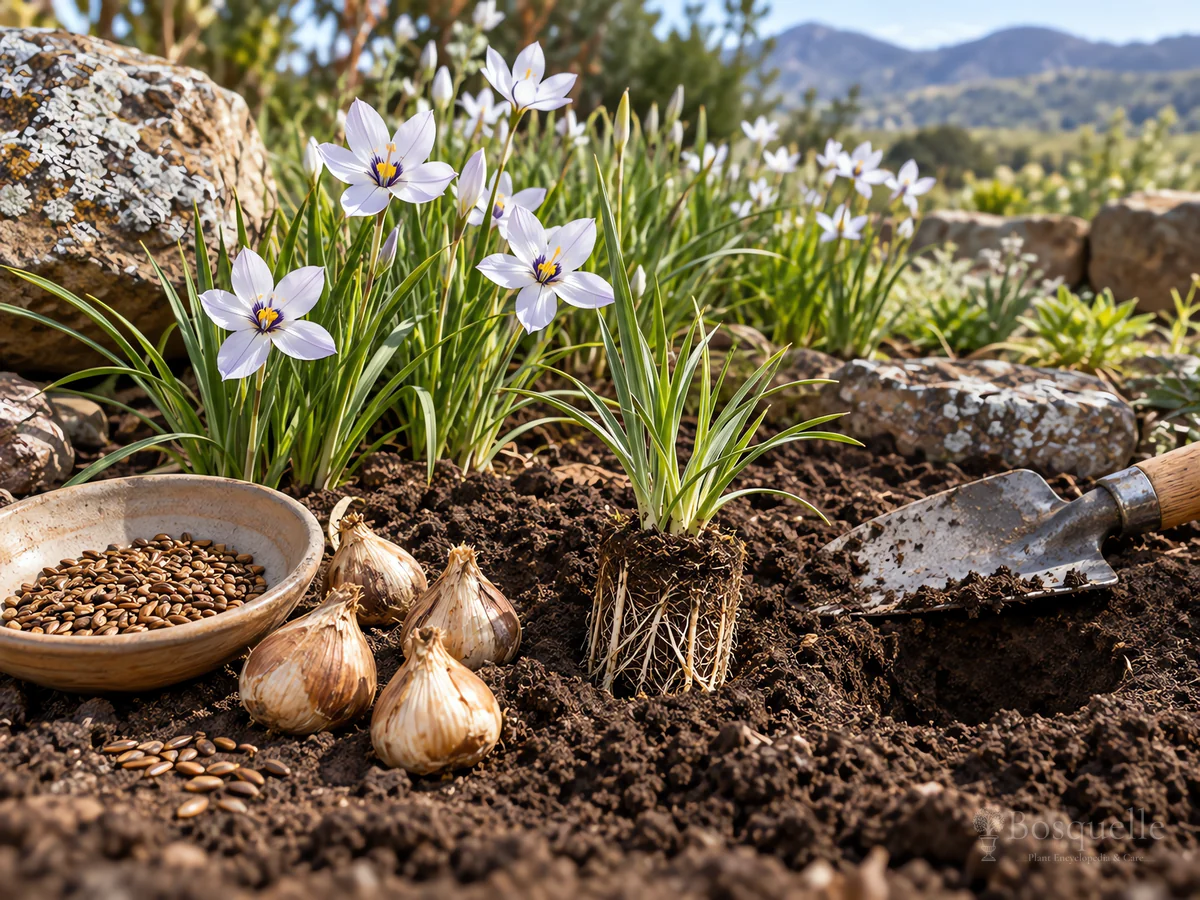
Plant prairie nymph bulbs about 2 to 3 inches deep, about 6 inches apart, in fall in a mild garden, or in a draining trough if you garden colder than zone 7. While the plant is dormant, separate the new offset bulbs to grow more clumps.

Plant the bulbs about 2 to 3 inches deep
| Factor | Recommended | Avoid |
|---|---|---|
| When | Fall, in September or October, in zone 7 and warmer | Do not wait until the bulbs have already sprouted and then move them |
| Depth | Set each bulb about 2 to 3 inches deep, pointed end up | Do not plant it on the surface, upside down, or several inches deeper than that |
| Spacing | About 6 inches apart, in groups so the one-day flowers read as a patch | Do not scatter single bulbs a yard apart |
| Mix | A free-draining mix — garden soil cut with sand, or a trough mix with grit | Do not bury the bulb in a waterlogged pot without a drainage hole |
Prairie nymph grows from a small tunicated bulb, so planting is a fall job in a mild garden: the bulb roots through winter and comes up in spring. Set it about 2 to 3 inches deep — roughly two to three times the height of the bulb — with the pointed end up, and space several bulbs about 6 inches apart so the short bloom reads as a patch, not a single stem. [1] In zone 7 and warmer you can plant in the ground, including heavy soil that still dries in summer. Colder than that, use a draining trough you can move or protect, because a hard freeze in wet ground is what kills the bulb. [2] Water it in once, then follow the season plan on How to Grow Prairie Nymph. [3] [4]
- In September or October, loosen a free-draining spot, or fill a trough that has a drainage hole with a gritty mix.
- Set each bulb pointed-end up, about 2 to 3 inches deep. Space them about 6 inches apart in a small group.
- Water once to settle the soil. Then wait for the cool-season leaves; do not keep the mix wet through a mild winter unless it is actually dry.
- North of zone 7, keep that trough from freezing, or lift the bulbs after the leaves die and store them dry until the next fall planting.
When should I plant prairie nymph bulbs?
In fall, in September or October, in zone 7 and warmer. Colder gardens plant in a trough you can protect.
Separate the offset bulbs while it is dormant
Each bulb usually makes about one new bulb in a season, so clumps build slowly. Lift them after the foliage has died, while the plant is dormant, so you can see the new bulbs without tearing green leaves.
- After the leaves have yellowed and dried, lift the clump with a fork. Work from the side so you do not spear the bulbs.
- Pull the cluster apart. Keep firm, pale new bulbs; discard any that are soft, dark, or rotted.
- Replant the keepers at the same 2-to-3-inch depth, about 6 inches apart, or pot extras in a draining mix.
- Store any extras dry and cool until fall if you are not planting them the same day.
Seed is a different job, with a surface sow and a long wait for the first flower — that is on Growing Prairie Nymph from Seed.
How often should I divide prairie nymph?
Only when the clump is crowded or you want more plants. It makes about one new bulb a year, so you do not need a yearly lift.
If a new planting stays leafless, check depth and drainage first: 2 to 3 inches down, pointed-end up, in a mix that can dry in summer.
FAQ
Can I plant prairie nymph in a container?
Yes. Use a trough with a drainage hole and a gritty mix, especially north of zone 7. Water while it is in leaf, then keep it dry through summer.
Should I plant it pointed-end up?
Yes. The shoot comes from the pointed end. Set that end up, about 2 to 3 inches deep.
Related guides

Recommended plants
References
- [1] Château Pérouse -
https://www.chateau-perouse.com/assets/bestanden/html_EN/02935%20Herbertia%20lahue_EN.html - [2] Plant Delights Nursery -
https://www.plantdelights.com/products/herbertia-lahue-ssp-lahue - [3] Pacific Bulb Society -
https://www.pacificbulbsociety.org/pbswiki/index.php/Herbertia - [4] Edelweiss Perennials -
https://www.edelweissperennials.com/herbertia-lahue-ssp-lahue
This note is part of Herbertia Guides.
More planting notes by plant are gathered in Planting Guides.
Updated: Reviewed by Bosquelle Editors