
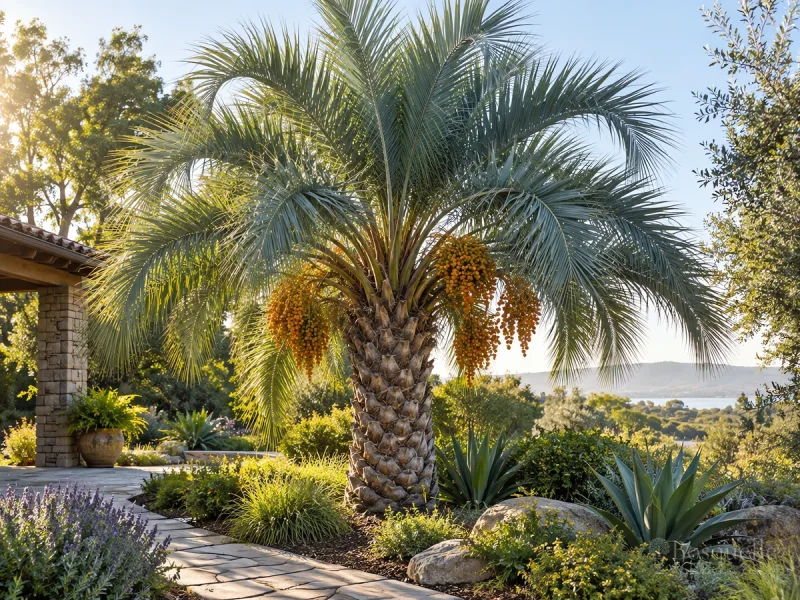
Plant pindo palm no deeper than the root ball. Backfill with the soil you dug out, leave ten feet from pavement, and water through the first warm season.

Plant it no deeper than the root ball
| Factor | Recommended | Avoid |
|---|---|---|
| When | Late spring to early summer, while the soil is warming | Do not plant into a freeze, or into a wet low spot |
| Hole | Wider than the pot, no deeper than the root ball | Do not dig a deep well the palm will sink into |
| Backfill | The soil you dug out, unamended | Do not pack a rich pocket of mix the roots will refuse to leave |
| Depth | The stem at the same depth it sat in the pot | Do not bury the trunk |
pindo palm establishes best as a young plant in ground that drains. Dig the hole wider than the pot so you can pack soil against the whole root ball, and no deeper than that ball. [1] Palms fail when the trunk sits below grade in a soggy well. Set the top of the root ball even with the finished soil. Backfill with the soil you dug out. Do not amend a pocket of mix.
- Water the nursery pot, then slide the plant out. Do not tease the roots apart the way you would a shade tree.
- Set the palm upright in the hole. Check that the stem sits at the same depth it sat in the pot.
- Backfill, water to settle air pockets, then finish the soil.
- Build a low berm just outside the root ball so the first waterings soak that mix, not the lawn.
- Brace a tall, top-heavy palm for the first months if wind will rock it. Do not drive nails into the trunk.
When should I plant pindo palm?
Plant in late spring or early summer, when the soil is warming. Do not plant into a freeze or a wet low spot.
Leave ten feet from pavement, and water through the first warm season
A mature crown is about 10 to 15 feet wide, and ripe fruit drops in a mess, so set the trunk at least ten feet from a walk, a patio, or a drive. [2] The palm is slow and stays in the 15- to 20-foot range, so it can sit under a power line that a taller street palm would hit. [3] Give it 12 to 24 feet of open ground so the arching fronds do not scrape a wall. [4] Keep the berm watered through the first weeks, then often until the palm is in, usually through the first warm season. After that, soak deeply and wait until the soil has dried some. Sun, drain, and fertilizer stay on How to Grow Pindo Palm.
- Measure ten feet from pavement, and room for a 10- to 15-foot crown.
- Water daily for the first two weeks, then every few days, then taper through the first warm season.
- Keep the berm, so water soaks the original root ball.
- Leave the palm in place. Moving an established palm is a separate, riskier job than planting a container plant.
How often do I water a new pindo palm?
Keep the root ball moist through the first warm season: daily at first, then less often. After that, soak deeply and wait until the soil has dried some.
If the palm rocks in wind, add a brace for the first months. Keep water on the original root ball until new roots hold.
FAQ
Should I add compost to the planting hole?
No. Backfill with the soil you dug out. A rich pocket of mix can make the palm sink, and the roots stay in that pocket instead of entering the ground.
Related guides

Recommended plants

References
- [1] UF/IFAS Extension -
https://ask.ifas.ufl.edu/publication/EP001 - [2] UF/IFAS Gardening Solutions -
https://gardeningsolutions.ifas.ufl.edu/plants/trees-and-shrubs/palms-and-cycads/pindo-palm/ - [3] UF/IFAS Extension -
https://ask.ifas.ufl.edu/publication/ST105 - [4] NC State Extension -
https://plants.ces.ncsu.edu/plants/butia-odorata/
This note is part of Butia Guides.
More planting notes by plant are gathered in Planting Guides.
Updated: Reviewed by Bosquelle Editors