
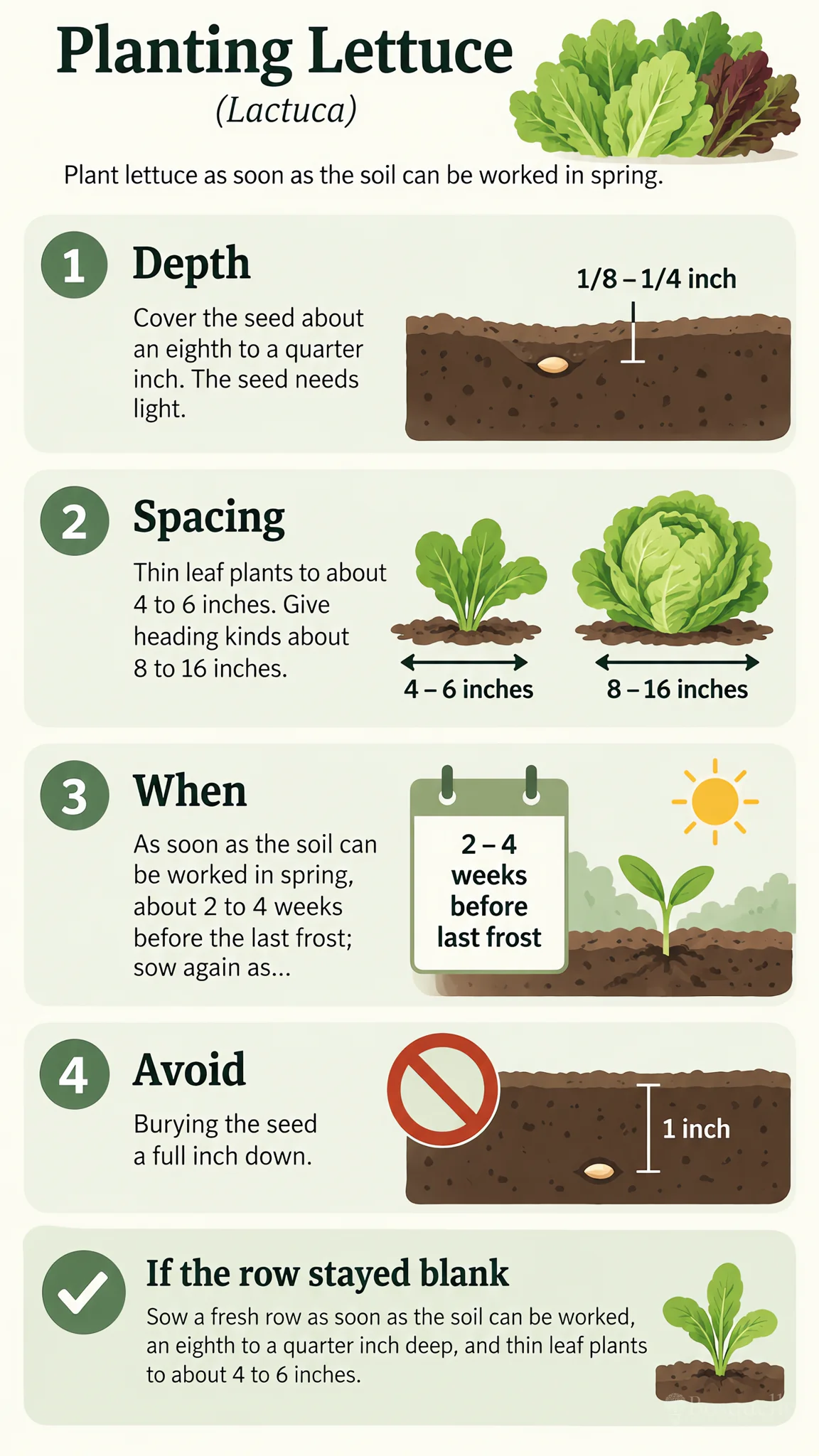
Plant lettuce as soon as the soil can be worked in spring. Sow the seed an eighth to a quarter inch deep, and thin leaf plants to about 4 to 6 inches.
Sow as soon as the soil can be worked, barely covered
| Factor | Recommended | Avoid |
|---|---|---|
| When | As soon as the soil can be worked in spring, about 2 to 4 weeks before the last frost; sow again as nights cool in late summer | Sowing into frozen ground, or into the hottest stretch of midsummer if you still want a leaf crop |
| Depth | Cover the seed about an eighth to a quarter inch. The seed needs light | Burying the seed a full inch down |
| Spacing | Thin leaf plants to about 4 to 6 inches. Give heading kinds about 8 to 16 inches | A tight knot with no air around the stems if you still want a full head |
| Start | Direct sow where the plant will grow, or start indoors 6 to 8 weeks before the last frost and move the seedlings out while they are small | Waiting for warm soil the way you would for beans |
Wait until the soil can be worked, then sow lettuce in a bed that already drains. [1] Cover the seed about an eighth to a quarter inch. The seed needs light, so a deep cover leaves the row blank. [2] Sun and watering after planting are on How to Grow Lettuce.
When do I plant lettuce?
As soon as the soil can be worked in spring, about 2 to 4 weeks before the last frost. Sow it an eighth to a quarter inch deep. Sow again as nights cool in late summer.
How to plant lettuce
Sow as soon as the soil can be worked, cover the seed an eighth to a quarter inch, keep the seedbed moist until it sprouts, then thin leaf plants to about 4 to 6 inches.
- Choose a bed of loam that drains. Mix compost into poor sand so the row does not dry out the week it sprouts.
- Sow as soon as the soil can be worked. Cover the seed about an eighth to a quarter inch, and space it about 1 inch apart in the row. [3]
- Keep the seedbed moist until it sprouts, usually within a week in cool soil. Thin when seedlings are a couple of inches tall so leaf plants stand about 4 to 6 inches apart. Eat the thinnings. Give heading kinds more room, about 8 to 16 inches.
- For a longer leaf harvest, sow a fresh row every 10 to 14 days while the weather stays cool. Skip the hottest midsummer stretch if leaf is the crop. [4]
- Water once to settle. Water through the first weeks so the roots take hold, then follow How to Grow Lettuce.
How far apart do I plant lettuce?
Thin leaf plants to about 4 to 6 inches. Give heading kinds about 8 to 16 inches. Sow as soon as the soil can be worked.
What fails at planting
Burying the seed a full inch down is the main reason a row stays blank, because the seed needs light. Do not wait for warm soil the way you would for beans, and do not sow a leaf crop into the hottest stretch of summer, when the plant rushes to flower before you have much to cut. Old seed also comes up poorly, so start with a fresh packet.
If the row stayed blank, sow a fresh row as soon as the soil can be worked, an eighth to a quarter inch deep, and thin leaf plants to about 4 to 6 inches.
FAQ
Should I start lettuce indoors and transplant?
You can. Start it 6 to 8 weeks before the last frost and move the seedlings out while they are still small. Direct sow is the usual home method, because the seed comes up in cool soil in a few days.
Can I grow lettuce from cuttings?
No. Sow seed. A cutting is not a reliable way to start this salad green.
Related guides

Recommended plants
References
- [1] Old Farmer's Almanac -
https://www.almanac.com/plant/lettuce - [2] NC State Extension -
https://plants.ces.ncsu.edu/plants/lactuca-sativa/ - [3] University of Maryland Extension -
https://www.extension.umd.edu/resource/growing-lettuce-home-garden - [4] Illinois Extension -
https://extension.illinois.edu/gardening/lettuce
This note is part of Lactuca Guides.
More planting notes by plant are gathered in Planting Guides.
Updated: Reviewed by Bosquelle Editors