
Plant a nursery jackfruit in late spring or the rainy season, with the nursery line at the soil.

Plant a nursery tree in the rainy season
| Factor | Recommended | Avoid |
|---|---|---|
| When | Late spring or early summer, early in the rainy season, or any warm month you can water | Setting a tender tree out when a freeze is still likely |
| Start | A grafted nursery tree in about a three-gallon pot, two to four feet tall | A large tree jammed in a small pot, with roots circling the wall |
| Spacing | About 25 to 30 feet from buildings, other trees, and power lines | A tight yard that will shade the canopy |
| Set | Nursery line at the soil, or a little above it; backfill with native soil | Dumping compost into the hole first, or planting deeper than the pot |
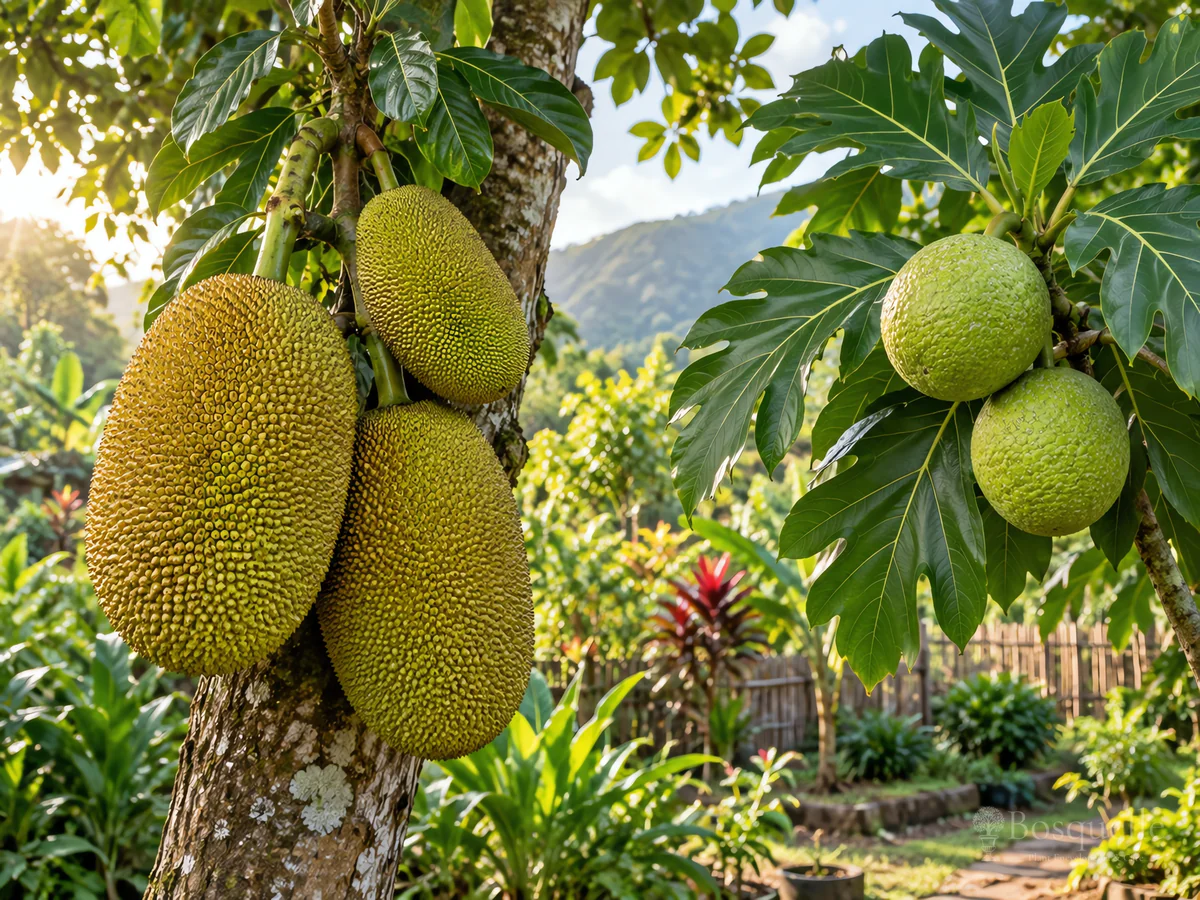
The usual home start is a grafted nursery tree, not a grocery seed. Plant in late spring or early summer, when the ground is warm and rain can settle the roots. You can plant in any warm month if you can water. [1] jackfruit wants that rainy-season set. breadfruit takes the same hole and the same nursery line. [2]
When do I plant jackfruit?
Plant in late spring or early summer, early in the rainy season. In a frost-free yard you can plant any warm month if you can water.
How to plant jackfruit
Choose a healthy nursery tree, then dig a wide hole and set the nursery line at the soil.
- Leave about 25 to 30 feet from the house, other trees, and power lines. If you will prune every year, 20 to 25 feet can work — that cut is on Pruning Jackfruit. [3]
- Dig a hole two to three times as wide as the pot, and no deeper than the root ball. Loosen circling roots. Do not dump compost or bagged topsoil into the hole first. [4]
- Set the nursery line at the soil, or a little above it. Backfill with the native soil and water in once to settle air pockets.
- Keep grass off the trunk. Mulch two to six inches deep, and keep that mulch eight to twelve inches off the bark.
- Sun and water after the tree is in the ground are on How to Grow Jackfruit.
How far from the house should I plant it?
Leave about 25 to 30 feet from buildings, other trees, and power lines. A tree planted too close will shade out and fruit poorly.
Start from a fresh seed if you cannot buy a grafted tree
Fresh seed can sprout, and a seedling may fruit in three to four years. Fruit from seed varies, so a grafted nursery tree is the surer crop. Sow soon; the seed does not keep long, often only about a month.
- Take seed from a ripe fruit and sow it while it is still fresh. Do not dry it on a shelf.
- Plant it in a pot that drains, just covered, and keep the mix moist, not soggy, until it sprouts.
- Move the seedling into the ground with the same nursery-line set as a bought tree. Expect a longer wait to fruit than a grafted plant.
What fails at planting
A root-bound tree in a small pot, or a hole packed with compost that holds water around the roots, is the usual reason a new tree stalls. Set the nursery line at the soil. Do not bury the trunk.
If the trunk sits below the soil line, lift the tree and reset it so the nursery mark is at grade.
FAQ
Can I keep jackfruit in a pot?
Only as a short nursery start. A landscape jackfruit wants open ground. A pot-bound tree establishes poorly once you plant it out.
Related guides


Recommended plants


References
- [1] UF/IFAS Extension -
https://ask.ifas.ufl.edu/publication/MG370 - [2] UF/IFAS Extension Sarasota County -
https://blogs.ifas.ufl.edu/sarasotaco/2025/08/14/suncoast-grown-and-gathered-julys-heavyweight-jackfruit/ - [3] UF/IFAS Extension St. Lucie County -
https://blogs.ifas.ufl.edu/stlucieco/2021/07/01/growing-jackfruit-in-florida/ - [4] Cultivating Flora -
https://cultivatingflora.com/how-to-grow-jackfruit-in-south-florida-yards/
This note is part of Artocarpus Guides.
More planting notes by plant are gathered in Planting Guides.
Updated: Reviewed by Bosquelle Editors