
Plant hardy gloxinia taproots in spring, with the crown at or just above the soil and the thinner neck just under the surface. Set the taproot straight down in a raised bed or a deep pot so it can drain.
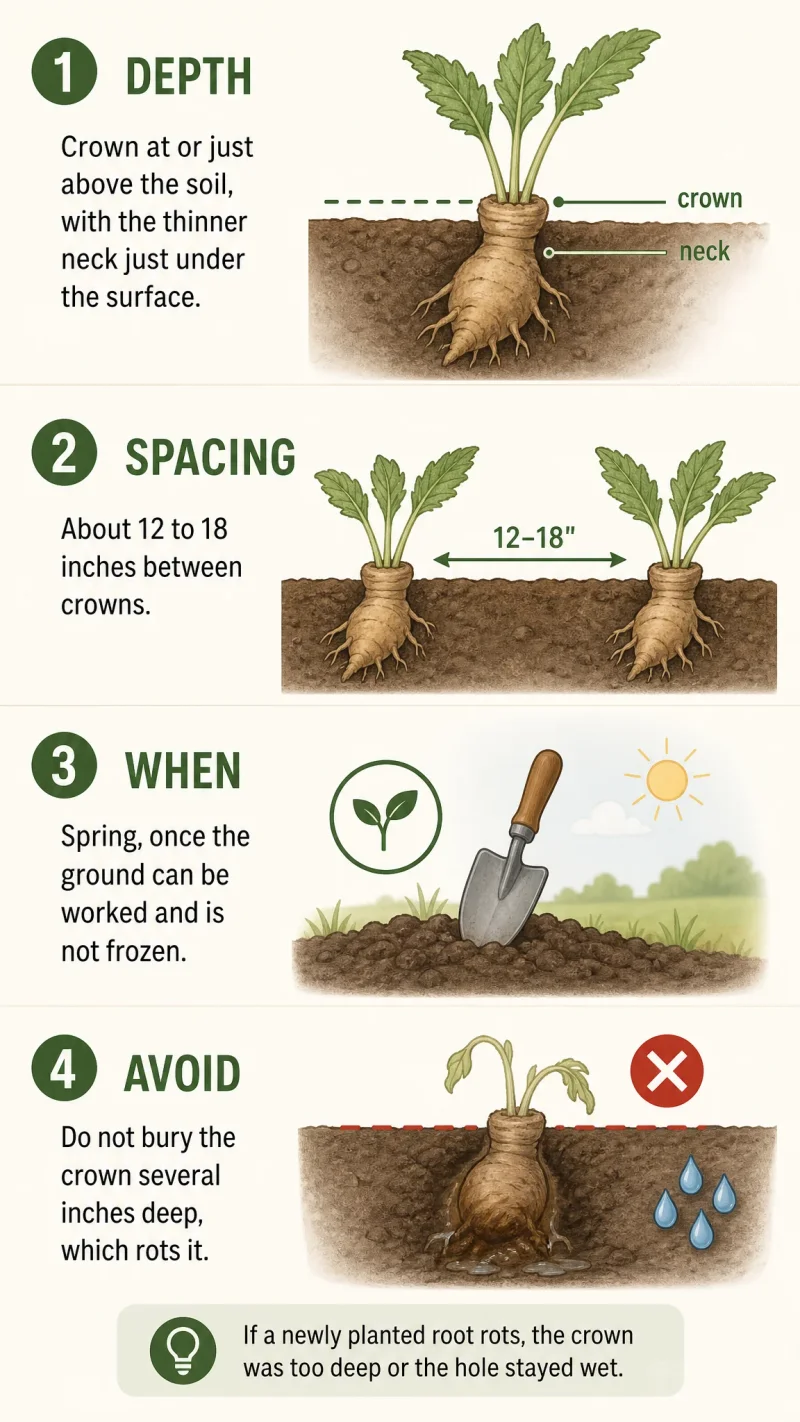
Plant the taproot in spring with the crown at the soil
| Factor | Recommended | Avoid |
|---|---|---|
| When | Spring, once the ground can be worked and is not frozen | Do not plant into frozen or waterlogged soil |
| Depth | Crown at or just above the soil, with the thinner neck just under the surface | Do not bury the crown several inches deep, which rots it |
| Root | Set the taproot straight down in a hole deep enough that it is not bent | Do not fold, twist, or break the taproot; it is brittle |
| Spacing | About 12 to 18 inches between crowns | Do not crowd the plants so the crowns stay wet |
Hardy gloxinia is sold as a dormant fleshy taproot. Plant it in spring, after the soil has thawed, so the new shoot comes up in open ground. The crown sits at or just above the soil, and the thinner neck stays just beneath the surface. If leaves are already showing, leave them in the air. [1] Dig a hole deep enough for the taproot to hang straight. Handle it as brittle, because a snapped root is slow to recover and an established plant resents being moved later. [2] Water it in, then keep the soil a little on the dry side until sprouts show, so the crown does not sit wet before it is growing. The full sun and watering plan for the season is on How to Grow Hardy Gloxinia. [3] [4]
- In spring, dig a hole in well-drained soil deep enough for the taproot to sit straight, with no bend.
- Set the crown at or just above the soil, and the thinner neck just under the surface. If leaves are already up, keep them above ground.
- Backfill so the taproot is in contact with soil on all sides, and space crowns about 12 to 18 inches apart.
- Water it in. Keep the soil just barely moist until sprouts show, then water more as the plant grows.
How deep do I plant hardy gloxinia?
Set the crown at or just above the soil, with the thinner neck just under the surface. Do not bury the crown several inches deep.
Use a raised bed or a deep pot so the taproot can drain
The taproot needs depth and a quick way for water to leave. A raised bed, a rock-garden slope, or a deep pot all work, because they keep winter and storm water from pooling around the crown.
In a pot, choose a container deep enough that the taproot is not curled, with drainage holes, and a sandy, well-draining mix. Set the crown the same way you would in the ground. A pot is also useful where the border stays wet, because you can move it when the weather turns cold. Year-round indoor culture is not the job; this is an outdoor perennial that dies back.
- Pick a raised bed, a slope, or a pot at least deep enough that the taproot hangs straight.
- Use a sandy, well-draining mix, not a heavy garden soil that holds a puddle.
- Set the crown at or just above the mix, and water it in so the mix settles around the root.
- If the border stays wet, keep the plant in the pot so you can move it off winter rain.
Can I grow hardy gloxinia in a pot?
Yes, in a deep pot that drains. Set the crown at the mix surface. It is still an outdoor perennial, not a year-round windowsill plant.
If a newly planted root rots, the crown was too deep or the hole stayed wet. Set the next one at the soil surface in a raised bed or a deep pot.
FAQ
Can I plant it in ordinary garden soil?
Only if that soil drains fast. Heavy clay that holds winter water rots the taproot. Raise the bed or use a deep pot if the ground stays wet.
When should I transplant it later?
Avoid it. The taproot resents moving once it is down. Plant it in its permanent spot while it is still a dormant root.
Should I start it indoors in a small pot?
Only to hold it until the ground thaws. Use a deep pot, keep it cool and just moist, and set it out after frost. Do not grow it as a houseplant.
Related guides


Recommended plants

References
- [1] Harvest to Table -
https://harvesttotable.com/how-to-grow-incarvillea/ - [2] Harts Nursery -
https://www.hartsnursery.co.uk/Incarvillea-Delavayi.html - [3] Netherland Bulb Company -
https://www.netherlandbulb.com/wplant/Incarvillea-delavayi - [4] NC State Extension -
https://plants.ces.ncsu.edu/plants/incarvillea-delavayi/
This note is part of Incarvillea Guides.
More planting notes by plant are gathered in Planting Guides.
Updated: Reviewed by Bosquelle Editors