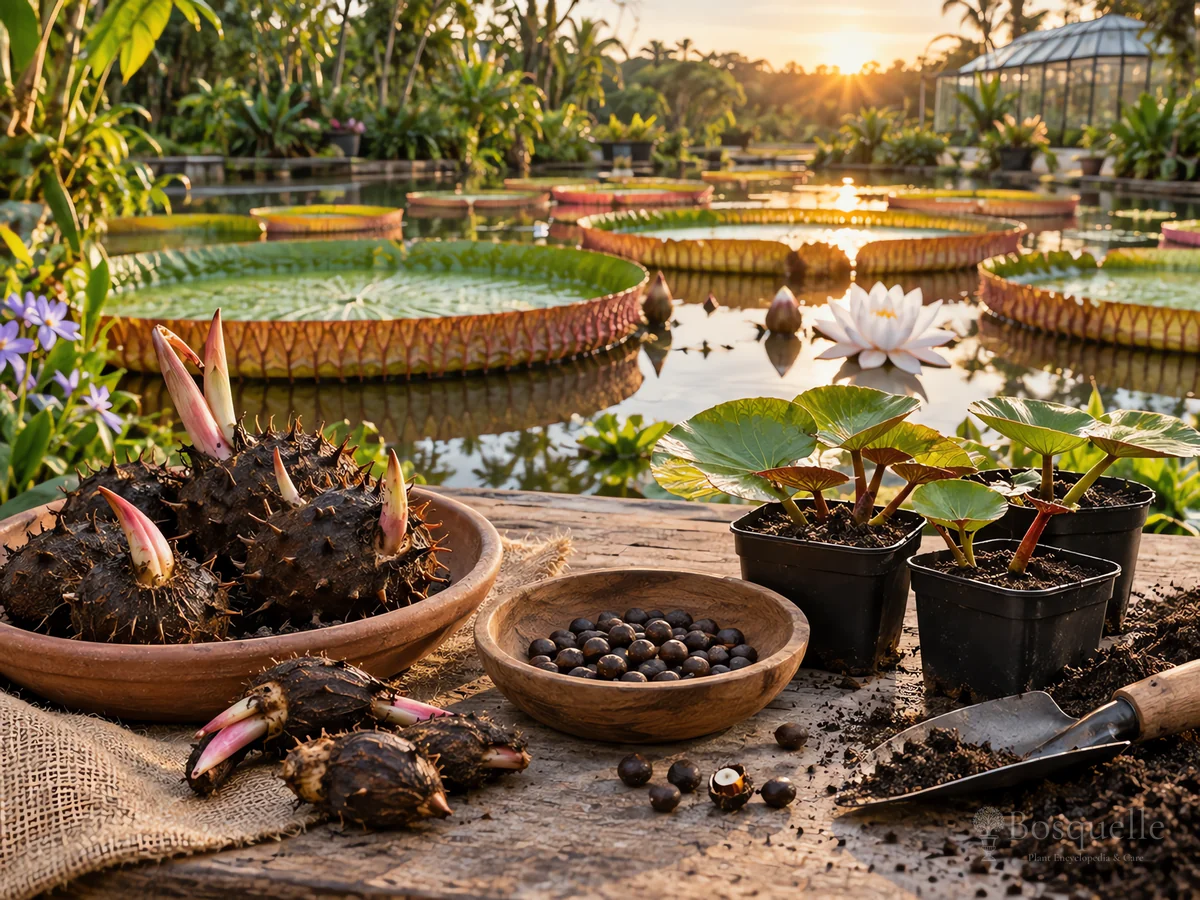
Plant a started giant water lily in a wide, shallow pot with the crown at the soil. Set it out once the pond water is at least about 70 to 72 F.

Set a young plant in a wide, shallow pot
| Factor | Recommended | Avoid |
|---|---|---|
| When | Late spring, once the pond stays at least about 70 to 72 F | Do not drop a young plant into 60 F water |
| Pot | A wide, shallow container, about ten to sixteen inches across for a young plant, then a larger pot as it fills | Do not use a mesh water-lily basket; the crown needs a solid wall and room to grow up |
| Soil | Heavy loam or garden soil, with the crown at the soil surface so you can add soil later | Do not bury the crown deep, and do not use a light houseplant mix |
| Depth | Start with about six inches of water over the crown. Later, in a hot summer, the pot can sit deeper | Do not sink a new plant into two or three feet of cold water |
| Hands | Gloves, because stems and the pad undersides have spines | Do not wait until the plant is huge to move it bare-handed |
A started plant arrives with small pads. Slip the root ball into a wide pot so you disturb it as little as you can. Keep the crown at the soil so you can add mix later as the plant grows up. [1] Amazon water lily and Santa Cruz water lily take the same set. A smaller final pot keeps the pads smaller if the pond is tight. That is a size choice, not a second method. [2]
When do I plant it out?
Wait until the pond stays at least about 70 to 72 F. A young plant dropped into cold water stalls or declines.
How to plant a giant water lily
Work on a warm day. Move the plant while the pads are still small enough to handle with gloves.
- Fill a wide, shallow pot with heavy loam or garden soil, and make a hollow for the root ball.
- Slip the plant out of its nursery pot and set it so the crown sits at the soil surface. Firm the soil around the ball. Leave a little room at the top so you can add soil later. [3]
- Set the pot in still water with about six inches over the crown. In a hot summer you can sink it deeper once pads are growing well. A large still garden can later hold the pot around forty inches down. [4]
- Harden a greenhouse plant into full sun over several days so the pads do not scorch.
- Wear gloves the whole time. Move it while the plant is young; spines get worse as it grows.
How deep should the pot sit?
Start with about six inches of water over the crown. Sink it deeper only after the pond is warm and the plant is growing.
Do I wear gloves?
Yes. Stems and the underside of the pads have spines. Move the plant while it is still young.
What fails at planting
Cold water is the main reason a young plant stalls. A mesh water-lily basket does not hold the crown the way this plant needs. Burying the crown too deep, or leaving it perched high with roots in the air, both slow it. After it is set, sun and warm still water are the next jobs — not a second potting lecture.
If the pond is still cold, wait. A young plant dropped into 60 F water stalls.
FAQ
Can I use a water-lily basket?
Use a wide, solid pot. A mesh basket is made for hardy water lilies, and this crown wants a solid wall and soil you can add later.
Do I plant a tuber like a hardy water lily?
No. This plant starts from seed, then you move a started plant. It does not overwinter as a hardy tuber in the mud.
Should I fertilize in the hole?
Not at planting. Wait until pads are enlarging, then feed — that timing is on How to Grow Giant Water Lily.
Related guides


Recommended plants

References
- [1] International Waterlily & Water Gardening Society -
https://iwgs.org/victoria-waterlily-cultural-information/ - [2] Victoria Adventure -
https://www.victoria-adventure.com/victoria/victoria_cultivation4.html - [3] NC State Extension Gardener -
https://plants.ces.ncsu.edu/plants/victoria-amazonica/ - [4] NC State Extension Gardener -
https://plants.ces.ncsu.edu/plants/victoria-cruziana/
This note is part of Victoria Guides.
More planting notes by plant are gathered in Planting Guides.
Updated: Reviewed by Bosquelle Editors