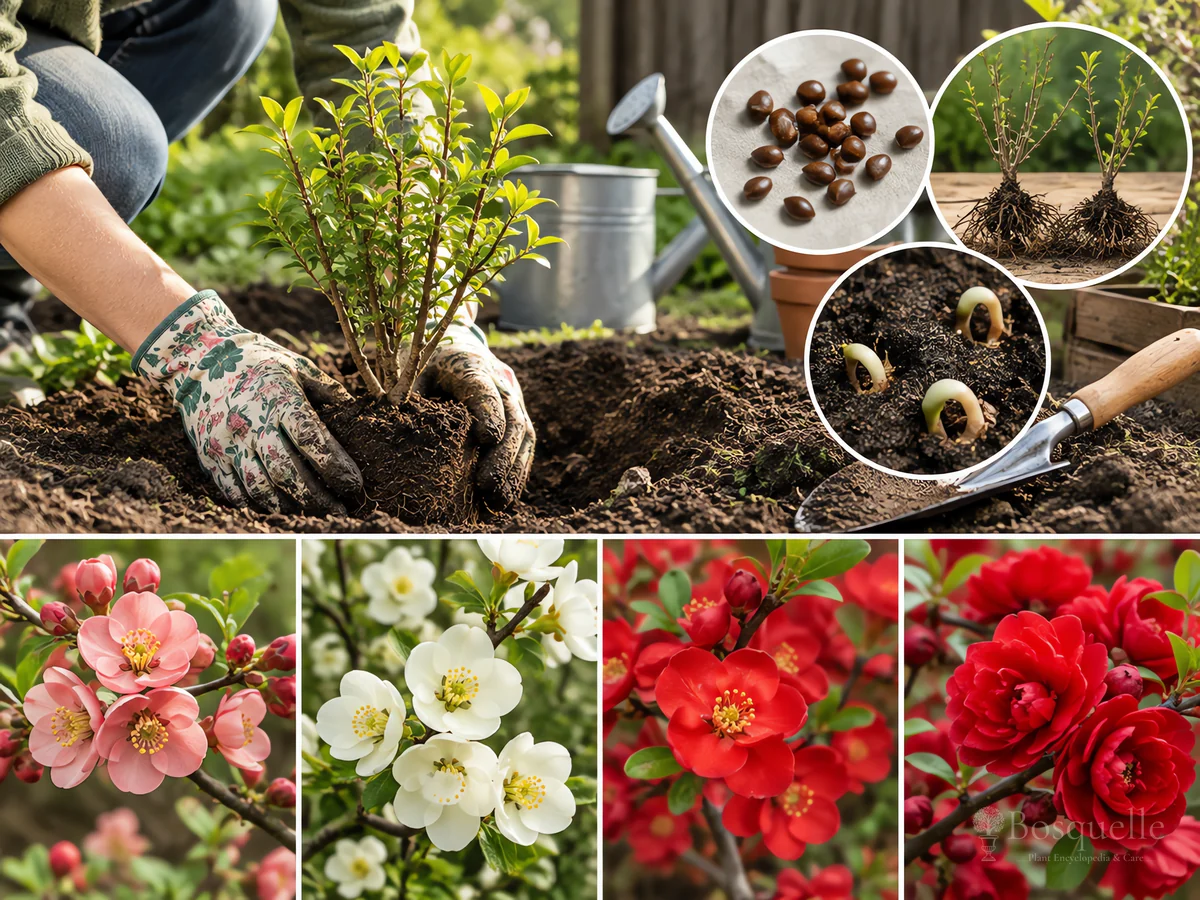
Plant flowering quince while the shrub is dormant. Set the crown at the same depth as the pot, and leave room for the mature width on the tag.
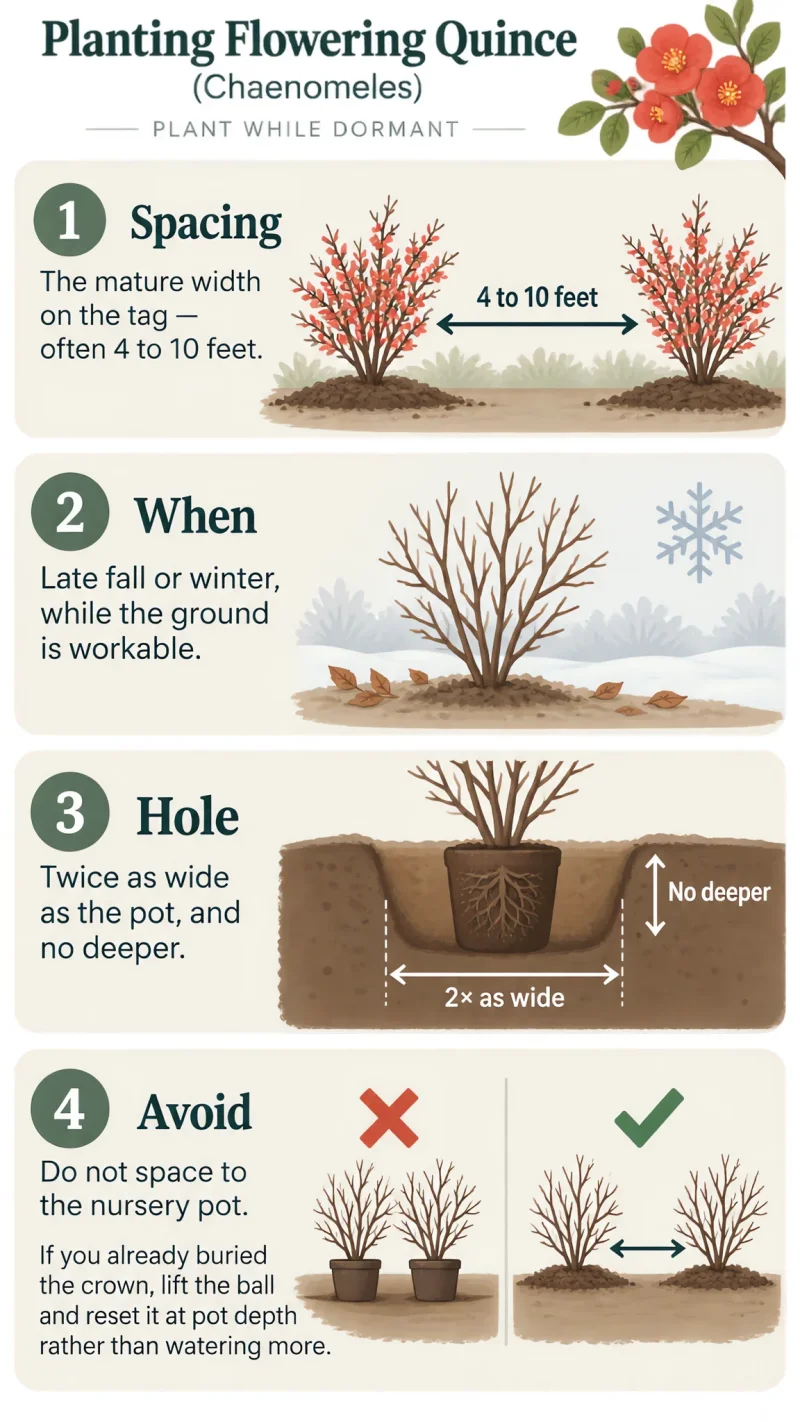
Plant while the shrub is dormant, at the same depth as the pot
| Factor | Recommended | Avoid |
|---|---|---|
| When | Late fall or winter, while the ground is workable | Do not plant into midsummer heat you cannot soak |
| Hole | Twice as wide as the pot, and no deeper | Do not dig a deep pit that buries the crown |
| Height | Top of the root ball at or slightly above the soil | Do not bury the crown |
| Spacing | The mature width on the tag — often 4 to 10 feet | Do not space to the nursery pot |
| Mulch | About 3 inches, kept off the stems | Do not pile mulch against the bark |
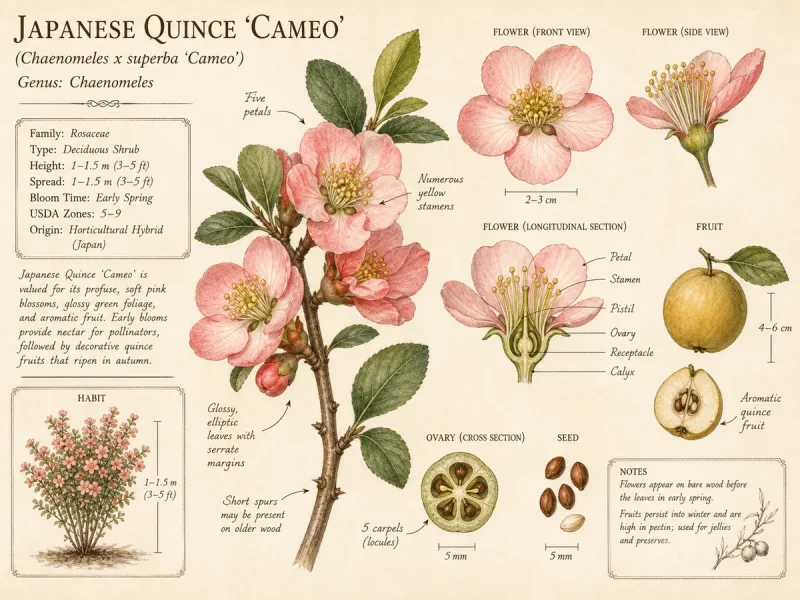
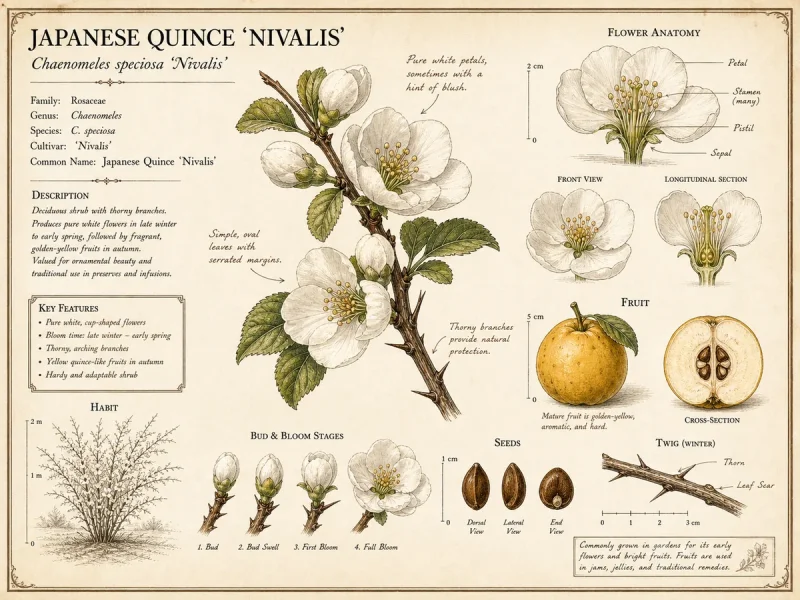
Growth starts early, so a dormant plant in late fall or winter is the easier start. You get flowers the next spring if the roots have time to take. [1] Spring planting can work if you can water through the first heat. Cameo still wants that same pot-depth set. So does Nivalis. [2]
When should I plant flowering quince?
Late fall or winter, while the shrub is dormant and the ground is workable. Spring planting works if you can water through the first heat.
How to plant flowering quince
Work one hole at a time: confirm the mature width, set the crown, then water once.
- Confirm compact hybrid, Chinese shrub, Double Take, or true Japanese quince on the tag so the spacing matches the outline. If the tag is only a cultivar name, match it on Types of Flowering Quince.
- Dig a hole twice as wide as the pot and no deeper than the root ball. The ball should sit on undug soil. [3]
- Slide the plant out. If the roots circle the pot, tease them loose so they do not keep spinning.
- Set the top of the root ball at or slightly above the surrounding soil. Do not bury the crown. [4]
- Backfill with the soil you dug, mixed with a little compost only if the native ground is tight clay. Water in. Mulch about 3 inches, and keep it off the stems.
How far apart should I plant flowering quince?
Space to the mature width on the tag. Compact hybrids often need about 3 to 5 feet; tall Chinese kinds need 6 to 10. A hedge can sit about 4 feet apart, center to center.
Japanese quince is wider than it is tall, so leave the spread, not only the height. Compact hybrids need less room than a 10-foot Chinese shrub.
What fails at planting
A ball set too deep smothers the crown. A hole dug deeper than the pot and then filled with loose mix lets the plant sink. Spacing to the nursery pot, not the tag width, gives you a thicket in three years. Moving a mature tangle is hard work and usually a poor swap for a young nursery plant in the final spot.
If you already buried the crown, lift the ball and reset it at pot depth rather than watering more.
FAQ
Can I plant flowering quince in spring?
Yes, from a container, if you can water through the first heat. Late fall or winter is the easier start.
Should I add compost to the hole?
Backfill with the soil you dug. Mix in a little compost only if the native ground is tight clay. Do not make a rich, wet bucket around the crown.
Can I transplant a mature flowering quince?
Usually no. The roots and thorns make a move hard. Plant a young nursery pot in the final spot. Suckers can be dug in spring after bloom if you want another plant.
Related guides


Recommended plants


References
- [1] Plant Addicts -
https://plantaddicts.com/planting-flowering-quince/ - [2] HGTV -
https://www.hgtv.com/gardening/trees-and-shrubs/how-to-grow-flowering-quince - [3] Garden Design -
https://www.gardendesign.com/shrubs/flowering-quince.html - [4] Wilson Bros Gardens -
https://www.wilsonbrosgardens.com/planting-and-caring-for-flowering-quince.html
This note is part of Chaenomeles Guides.
More planting notes by plant are gathered in Planting Guides.
Updated: Reviewed by Bosquelle Editors