
Plant floating heart in a mesh basket of heavy loam, with the crown at soil level and gravel on top, then sink the basket about one to two feet.
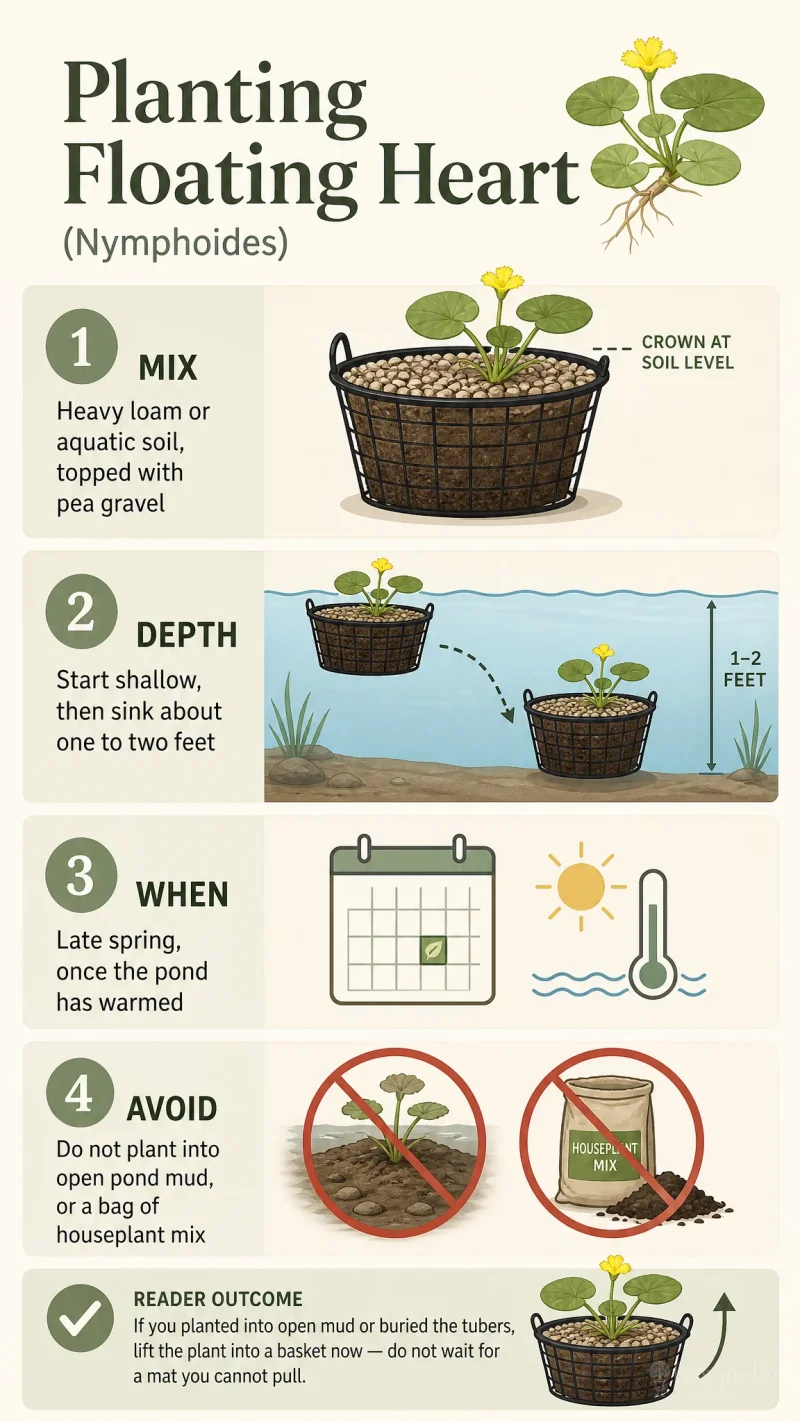
Set the crown in a basket of heavy loam, and sink it one to two feet
| Factor | Recommended | Avoid |
|---|---|---|
| When | Late spring, once the pond has warmed | Do not plant in a hard-frost week you cannot watch |
| Basket | A mesh aquatic basket lined so soil stays in | Do not use light potting mix that floats out |
| Mix | Heavy loam or aquatic soil, topped with pea gravel | Do not plant into open pond mud, or a bag of houseplant mix |
| Depth | Start shallow, then sink about one to two feet | Do not drop a new crown into deep water it cannot reach |
These plants spread by runners if they root in open mud. A basket keeps the crown where you can lift it. Set the crown at soil level, then cap the soil so it does not cloud the pond. [1] [2]
How deep do I sink the basket?
Start in a few inches of water so new pads reach the surface, then lower the basket to about one to two feet. Too deep at first keeps the plant from reaching light.
How to plant floating heart
Work one plant at a time: fill the basket, set the crown, then sink it in still water.
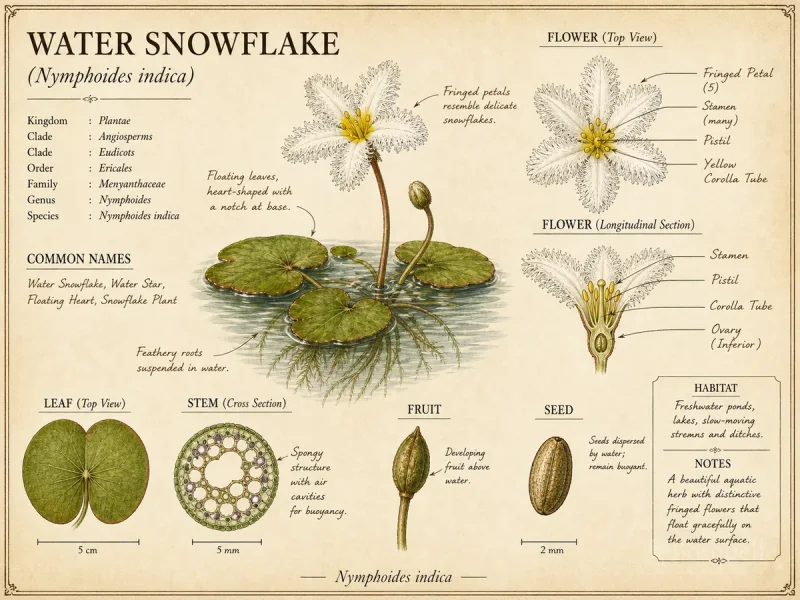
- Confirm banana lily, water snowflake, crested, or yellow on the tag. If the tag is only a shop name, match it on Types of Floating Heart.
- Line a mesh aquatic basket. Fill it with heavy loam or aquatic soil. Leave a little room at the top for gravel.
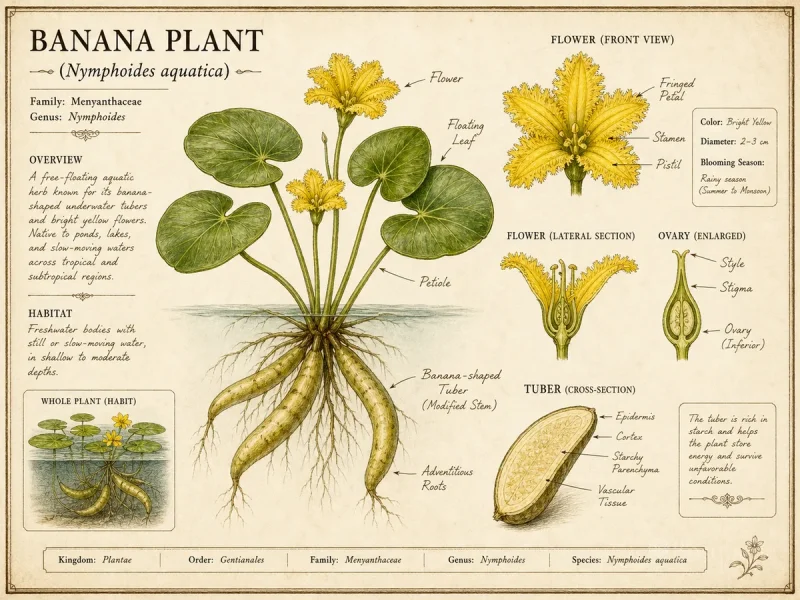
- Set the crown at soil level. For banana lily, rest the banana-shaped tubers on the gravel, or bury only the bottom edge. Burying the whole tuber cluster causes rot. [3]
- Top the soil with a layer of pea gravel so the mix stays in the basket.
- Sink the basket in still water. Start shallow, then move it down to about one to two feet once pads reach the surface. [4]
- Do not plant into the open pond bottom. After planting, sun and keeping extras in the pond are on How to Grow Floating Heart.
When should I plant floating heart?
Late spring, once the pond has warmed, is the usual window. Start the basket shallow so new pads reach the light.
Set a rooted runner in a new basket
A rooted runner or a leaf plantlet can fill a second basket once it has roots. That is faster than seed, and it keeps the new plant in a pot you can lift.
- Find a runner or a leaf plantlet that already has white roots. Do not tear a leafless scrap with no roots.
- Set it in a lined mesh basket of heavy loam, with the crown at soil level and gravel on top — the same set as a nursery plant.
- Start the new basket in a few inches of still water until pads reach the surface, then lower it.
- Bag extra scraps in the trash. Do not toss pieces back into the pond or a nearby ditch.
What fails at planting
Open mud lets runners take the whole pond. Light potting mix floats out and clouds the water. Burying banana-shaped tubers rots the cluster. Dropping a new crown into water it cannot reach keeps pads from forming. A limestone gravel cap is a poor cap if it breaks down in the pond.
Can I plant it in open pond mud?
No. Use a mesh basket of heavy loam with a gravel cap. Open mud is how runners leave the spot you planted.
If you planted into open mud or buried the tubers, lift the plant into a basket now — do not wait for a mat you cannot pull.
FAQ
Can I grow the banana kind in an aquarium?
Yes. Rest the banana-shaped tubers on sand or gravel, and use a rock if the plant floats. Do not bury the tubers. Trim pads if they shade the rest of the tank.
Can I start floating heart from seed?
Not as a garden shortcut. Seed is slow, and seedlings of yellow and crested kinds are a legal problem in many states. Buy a nursery plant, or divide a runner in the basket.
Related guides


Recommended plants


References
- [1] Pond Informer -
https://pondinformer.com/water-snowflake-nymphoides-indica/ - [2] Pond Informer -
https://pondinformer.com/yellow-floating-heart-nymphoides-peltata/ - [3] Aquarium Co-Op -
https://www.aquariumcoop.com/blogs/aquarium/banana-plant-an-unusual-aquarium-plant-for-beginners - [4] NC State Extension Gardener -
https://plants.ces.ncsu.edu/plants/nymphoides-peltata/
This note is part of Nymphoides Guides.
More planting notes by plant are gathered in Planting Guides.
Updated: Reviewed by Bosquelle Editors