
Plant Brunnera in a cool window — early spring or early fall — in part shade with moist, draining soil. Same depth as the pot. Leave 18–30 inches, more for large-leaf types. Jack Frost and Alexander's Great share that placement. Everyday care stays on How to Grow Brunnera.

When and where to plant
| Factor | Recommended | Avoid |
|---|---|---|
| When | Early spring as growth starts, or early fall | Peak summer heat or frozen, waterlogged ground |
| Light | Part shade to full shade; morning sun is fine | A slot that bakes after noon |
| Soil | Moist, well-drained, with compost mixed in | Dry sand, or a low clay dish that ponds in winter |
| Divide | The same cool windows, every few years if crowded | Splitting a wilted clump in July |
Iowa State University Extension: divide in early spring as new growth emerges or in early fall. Garden Design: plant during milder months in spring or fall to avoid stress from extreme heat or cold. Container plants can go in whenever the soil is workable — still pick the moist-shade site first. University of Minnesota Extension: divide in the cool season.
If shade, moisture, or drain fails, stop. Buying the plant first and hunting a hole second is how silver leaves brown by July. Sort mature leaf size on Types of Brunnera before you commit a large-leaf circle. Partners wait until the circle is drawn, on Brunnera Companion Plants.
Set the still-potted plant where you think it will live. Walk the path. Check afternoon sun in summer, not only in April. Only then dig. A short dry-fit prevents a scorched first year. Compact silver types still deserve this check; small pots do not cancel a wrong slot.
Hole, depth, and spacing
Garden Design: loosen the planting area and amend with compost. Dig a hole twice as wide and the same depth as the root ball. Set the top of the root ball level with the surrounding soil. Do not bury the crown. Do not perch the plant on a hardpan shelf — loosen beneath so roots can run.
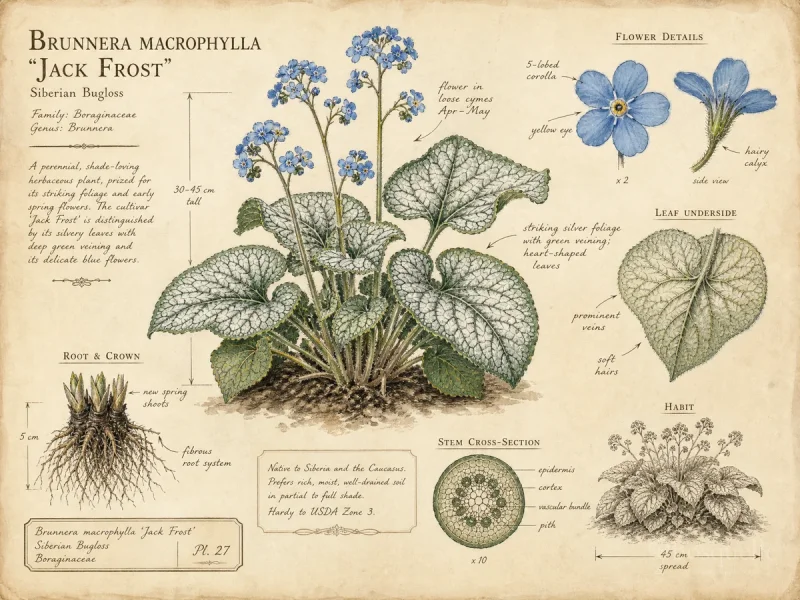
Space plants 18–30 inches apart, depending on the variety (Garden Design). Large-leaf Alexander's Great needs the wide end of that range. Standard Jack Frost can sit nearer 18–24 inches if you want a carpet, still with air at the crown. Do not sandwich Brunnera between plants you lift every year.
Tease circling surface roots. Do not rip the crown to “encourage branching.” Backfill with the native soil plus the compost you already mixed. Skip a fertilizer pit that holds water. Water once to settle air pockets. Mulch 1–2 inches, off the stem.
If the nursery mix is a dense peat plug, loosen the outer sides so water can move into the garden soil. Do not wash the whole ball under a hard tap. Garden clay as the only backfill around a peat plug makes a bathtub — mix some compost so the interface drains without drowning the crown.
How to plant
- Set the pot in place and check mature width against paths, trees, and future hostas. Move the flag, not a rooted plant later.
- Dig the hole. Check that the crown will sit at the old soil line.
- Slide the plant out. Tease circling roots. Keep the crown intact.
- Set it in. Backfill halfway, water once, finish fill. Firm gently — contact without stomping the crown.
- Mulch a ring. Leave a clean collar. Water again until it settles. Empty any saucer if you planted from a patio pot.
Skip the fertilizer tablet. Native backfill, compost, and shade do more than a boutique hole mix. Mark the crown so spring you does not plant a hosta through it.
Work when the mix in the pot is just moist so the ball holds. Keep the cultivar name with the plant if you add a second leaf color later. Bare-root pieces go horizontally with buds up, just below the surface — do not bury them deep like a bulb.
After planting
- Keep moisture even through the first dry spells (Iowa State University Extension). Not a daily puddle.
- Noon wilt in heat can be temporary. Dusk wilt with dry soil needs water.
- Do not fertilize at plant-out. Do not dig to inspect roots.
- Hold partners off the circle until the Brunnera is in and marked.
Iowa State University Extension: established clumps can be divided in early spring or early fall. Each piece needs a healthy portion of crown and roots. Replant immediately and keep watered until it takes. Divide every three to four years if the center thins — not because you want more hosta room.
Treat midsummer relocation as off-limits. If the view is wrong, change neighbors or plant a second clump in the next cool window. Everyday shade, water, slugs, and the pots tip live on How to Grow Brunnera. New leaves in spring are the sign it took. A small first-year clump is normal, not a failed plant-out.
What fails: a noon-sun hole; a winter puddle; 8-inch annual spacing; burying the crown; ripping the clump in July; a rich wet pit. Success is even moisture and shade you can keep. If the first summer is dry, a deep soak beats daily sprinkles on the leaves. If the first summer is wet, check that water leaves the hole. Hold the shovel once the crown is firm and the mix drains. A small first-year clump is still a successful plant-out if the leaves are turgid at dusk and the soil is moist, not soggy.
FAQ
When should I plant Brunnera?
Early spring or early fall, in cool weather, with moist soil that drains.
How far apart should I plant brunnera?
About 18–30 inches. Large-leaf types take the wide end of that range.
How deep should I plant it?
Same depth as the nursery pot. Do not bury the crown.
Should I add fertilizer in the hole?
No. Compost mixed into the native soil is enough.
Can I plant it in fall?
Yes. Early fall, so roots settle before hard freeze, and winter wet will not drown the crown.
When do I divide Brunnera?
Early spring or early fall. Each piece needs crown and roots. Replant at once.
The first year looks small. Did I fail?
No. Keep first-year water. Silver overlay fills as roots settle.
Where is everyday care?
On How to Grow Brunnera.
What if I picked the wrong spot?
Move it in the next cool window, or plant a new one in the right hole. Do not lift it in July heat.
Related guides


Recommended plants


This note is part of Brunnera Guides.
More planting notes by plant are gathered in Planting Guides.
Updated: Reviewed by Bosquelle Editors