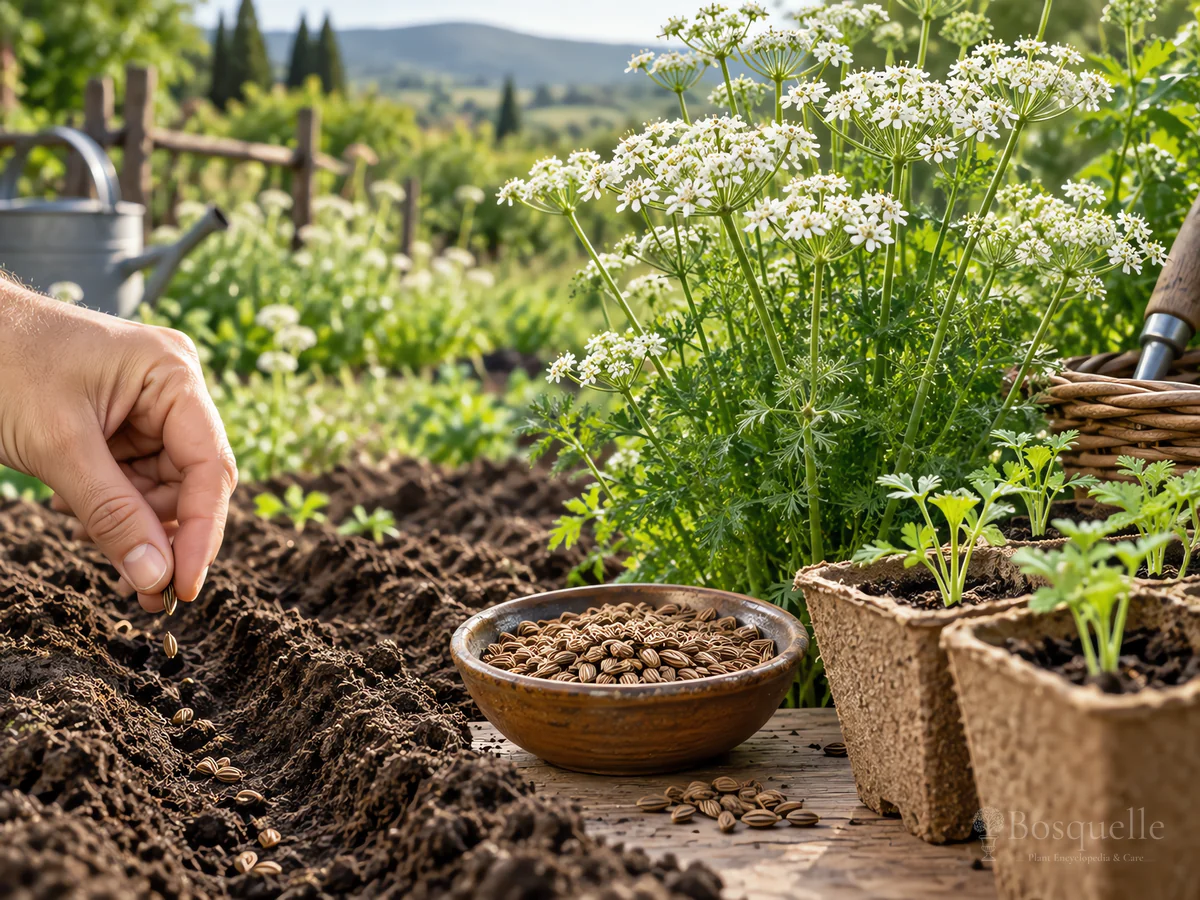
Plant anise after frost, once the soil has warmed. Sow the seed where it will stay, and cover it about a quarter to a half inch.

Sow after frost, barely covered, where it will stay
| Factor | Recommended | Avoid |
|---|---|---|
| When | After the last frost, when the soil is near 70°F | Sowing into cold, wet ground that will rot the seed |
| Depth | Cover the seed about a quarter to a half inch | Burying the seed an inch down |
| Spacing | Thin seedlings to about 6 to 8 inches apart, in rows about 18 to 24 inches apart | A tight knot with no air around the stems |
| Start | Direct sow where the plant will grow, using fresh seed | Moving a seedling with a bent taproot |
Sow anise in a sunny bed that already drains. [1] The taproot does not like a move, so sow it where it will stay. [2] Cover the seed about a quarter to a half inch after frost. [3] Sun and watering after planting are on How to Grow Anise.
When do I sow anise?
After the last frost, when the soil has warmed. Sow it where it will stay.
How to plant anise
Sow after frost, cover the seed about a quarter to a half inch, keep the seedbed moist until it sprouts, then thin to about 6 to 8 inches.
- Choose a full-sun bed of light loam that drains. Work in compost if the soil is heavy clay, so water does not sit on the roots.
- Sow after frost, about one or two seeds per inch. Cover the seed about a quarter to a half inch. Keep the seedbed moist until it sprouts, usually in 6 to 14 days at about 70°F. [4]
- Thin when seedlings are a few inches tall so plants stand about 6 to 8 inches apart, with about 18 to 24 inches between rows.
- Weed by hand while the plants are small, and stay shallow so you do not nick the taproot.
- Water once to settle. Keep the seedbed from drying until the plants take hold, then follow How to Grow Anise.
How deep should I sow anise seed?
Cover it about a quarter to a half inch, in the bed where the plant will stay.
What fails at planting
Moving a seedling with a long taproot is the main reason a transplant sulks. Do not bury the seed an inch down, do not sow stale seed that is several years old, and do not let the seedbed dry out while you wait for sprouts.
If you bent the taproot, sow a fresh row after frost, barely covered, and leave it where it is.
FAQ
Should I start anise indoors and transplant?
Usually no. The taproot hates a move. Sow outdoors where the plant will grow. If the season is short, start in a biodegradable pot and set the whole pot out without bending the root.
Can I grow anise from cuttings?
No. Sow seed. A cutting is not a reliable way to start this herb.
Related guides


Recommended plants

References
- [1] Johnny's Selected Seeds -
https://www.johnnyseeds.com/growers-library/herbs/anise/anise-key-growing-information.html - [2] Harvest to Table -
https://harvesttotable.com/how_to_grow_anise/ - [3] University of Maryland Extension -
https://www.extension.umd.edu/resource/anise - [4] Gardener's Path -
https://gardenerspath.com/plants/herbs/grow-anise/
This note is part of Pimpinella Guides.
More planting notes by plant are gathered in Planting Guides.
Updated: Reviewed by Bosquelle Editors