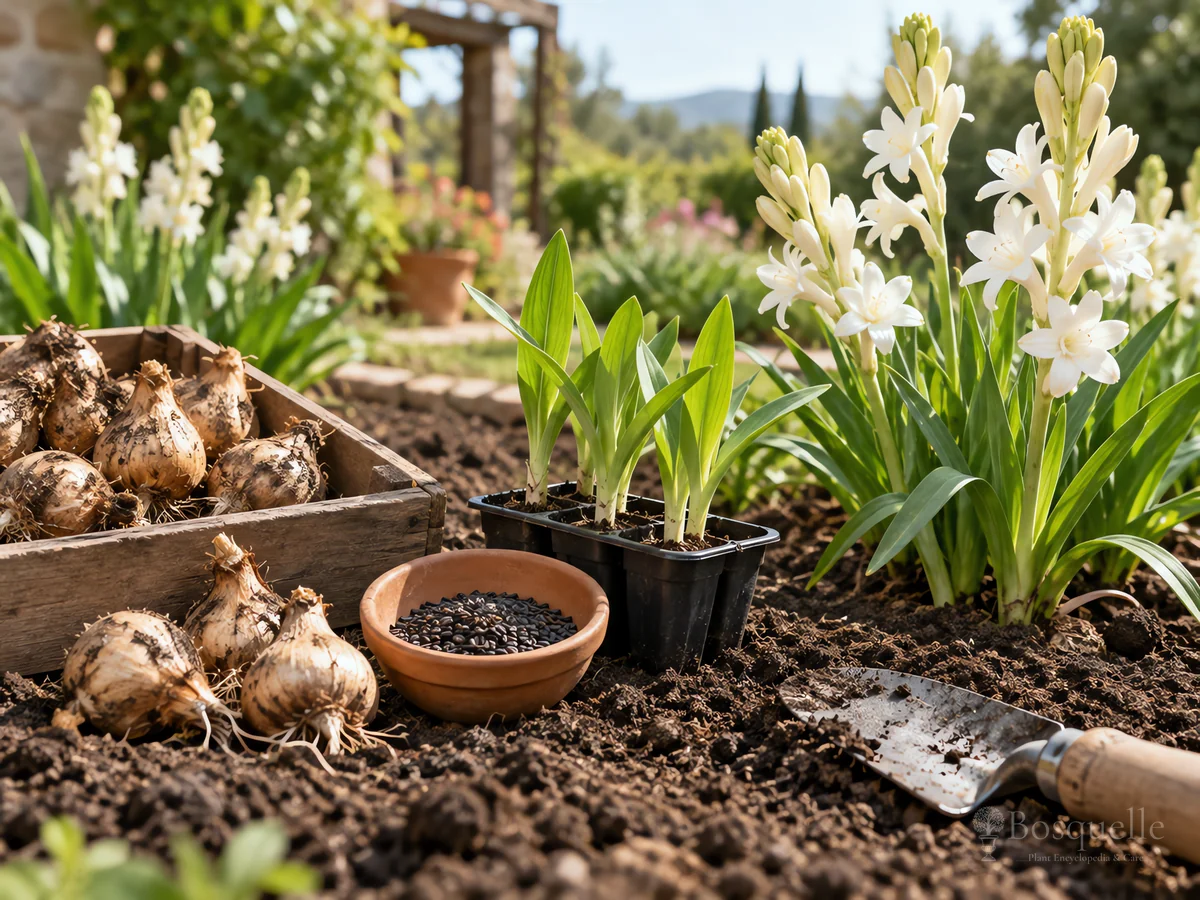
Lift tuberose after the leaves yellow. Dry the rhizomes, then store them cool and dry so they do not freeze.
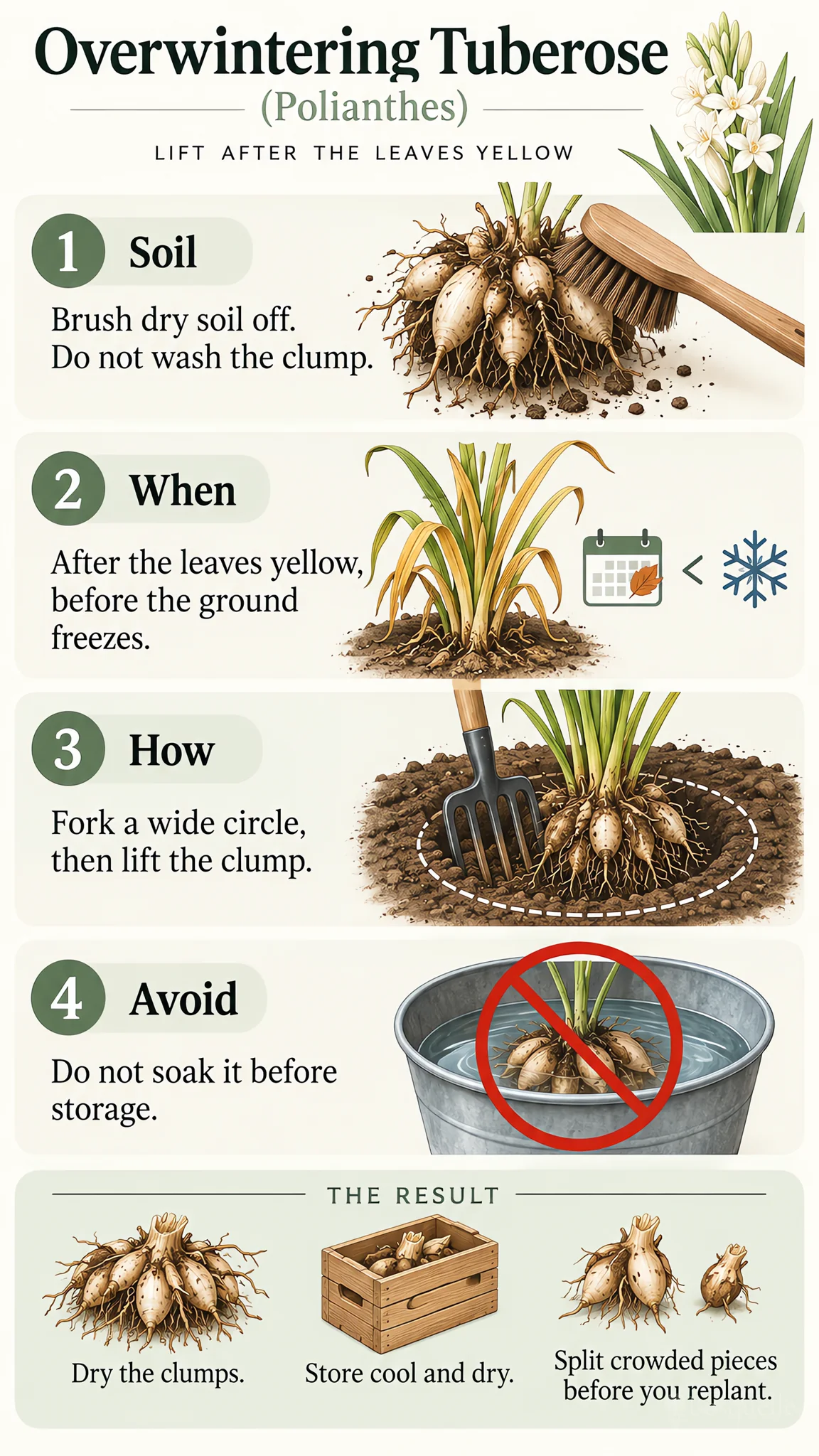
Lift the rhizomes after the leaves yellow
| Factor | Recommended | Avoid |
|---|---|---|
| When | After the leaves yellow, before the ground freezes | Do not cut green leaves off to hurry the lift |
| How | Fork a wide circle, then lift the clump | Do not yank the stem and snap the rhizome |
| Soil | Brush dry soil off. Do not wash the clump | Do not soak it before storage |
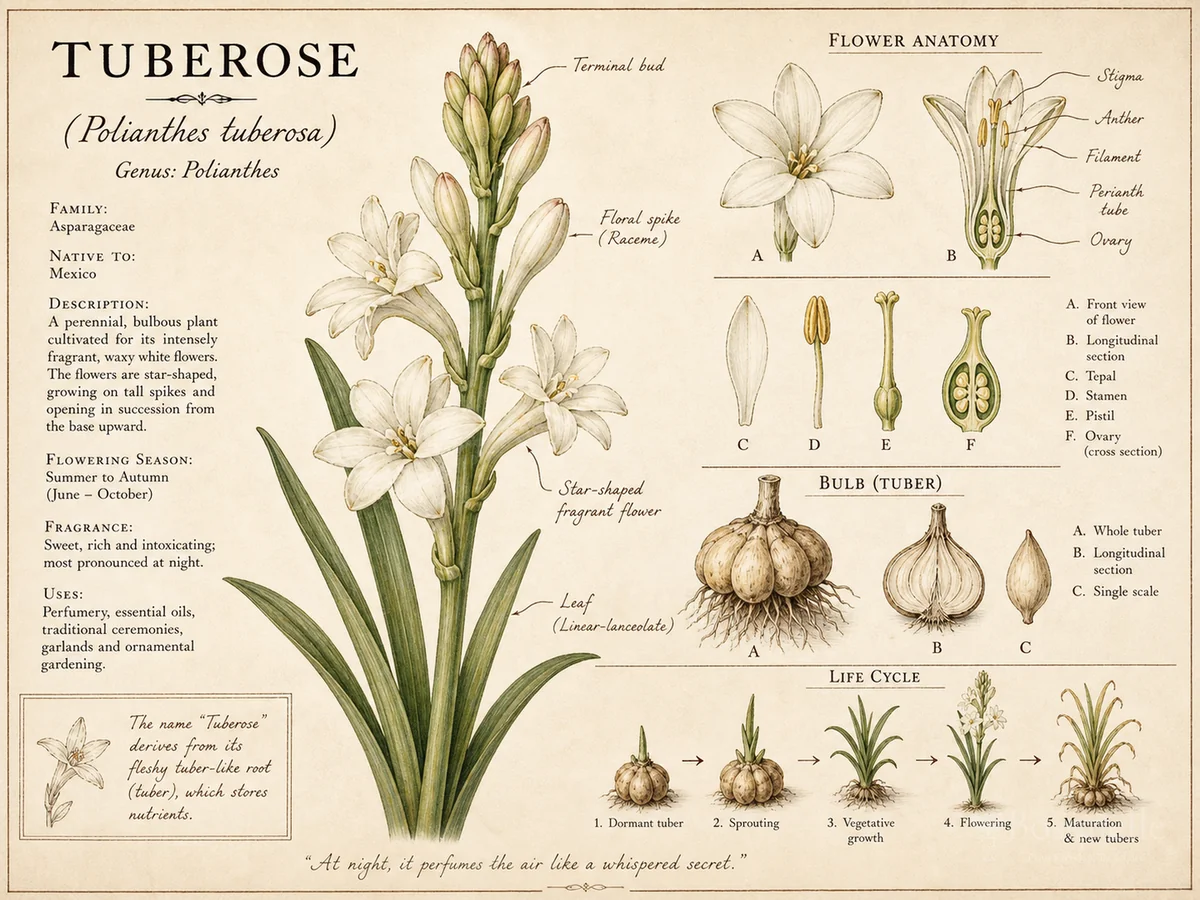
Tuberose stores food in the rhizome while the leaves stay green. Wait until those leaves yellow, or until a light frost blackens them, then lift before the ground freezes. [1] A patio pot can come indoors as a whole pot, or you can knock the clump out and store it the same way.
- Stop heavy watering when the leaves yellow.
- Fork a wide circle so you do not slice the clump.
- Lift it, and brush off loose soil. Do not wash it.
- Trim the leaves back only after they have dried, not while they are still green and sappy.
Do tuberoses come back every year?
They come back if frost never hits the bed, or if you lift and store the rhizomes. Left in frozen ground, they usually die.
Dry them, then store them cool and dry
Cure the clumps in a warm, airy place out of rain for several days, until the skin feels dry and the remaining stems are dry inside. Then pack them in barely damp peat, vermiculite, or dry shavings in a cardboard box or mesh bag. [2] Store them cool and dry, around 50 to 60°F, where they will not freeze. [3] Check once in a while. If they shrivel, mist the packing a little. If they rot, throw out the soft pieces so the rest stay dry. [4]
- Lay the clumps in a single layer to dry for several days, out of rain and not in a sealed plastic bin.
- Pack them so they barely touch, in peat, vermiculite, or dry shavings.
- Store them around 50 to 60°F, dark and dry. Do not let them freeze.
- Replant in spring after frost, on Planting Tuberose.
How do I store tuberose bulbs for winter?
Dry them, pack them in barely damp peat or dry shavings, and keep them around 50 to 60°F. Do not freeze them, and do not seal them in plastic.
Can you leave bulbs in pots all year round?
Only if the pot stays frost-free and the mix stays on the dry side while the plant rests. A frozen saucer on a porch will kill the clump.
Split crowded clumps before you replant
Offsets form around the old piece. Every two to four years, pull the clump apart when you lift it, and replant the largest, firm pieces. Small offsets may take a year or two to spike. Do not smash the clump into every tiny chip on the first try.
- After the clump is dry enough to handle, pull it into pear-sized pieces with a growing point.
- Keep the largest, firm pieces for next year's spikes.
- Grow small offsets on in a pot or a spare row until they fatten.
- Throw out anything soft, moldy, or hollow.
Sun and watering after replanting stay on How to Grow Tuberose.
Lift after the leaves yellow, dry the clumps, store them cool and dry, and split crowded pieces before you replant.
FAQ
Can I leave them in a frost-free bed?
Where frost never reaches the rhizomes, you can leave them in draining ground. Where the soil freezes, lift them.
Should I store them in the fridge?
No. A fridge is too cold and too damp. Use a cool, dry room that stays above freezing.
Related guides
Recommended plants
References
- [1] NC State Extension -
https://plants.ces.ncsu.edu/plants/polianthes-tuberosa/ - [2] Burpee -
https://www.burpee.com/blogs/ornamental-gardening/learn-about-tuberose - [3] Van Zyverden -
https://www.vanzyverden.com/garden-guides/spring-planting/bulbs/tuberosa/ - [4] Tennessee Tuberoses -
https://www.tntuberoses.com/tuberose-growing-tips/
This note is part of Polianthes Guides.
More first-season notes by plant are gathered in How to Grow Guides.
Updated: Reviewed by Bosquelle Editors