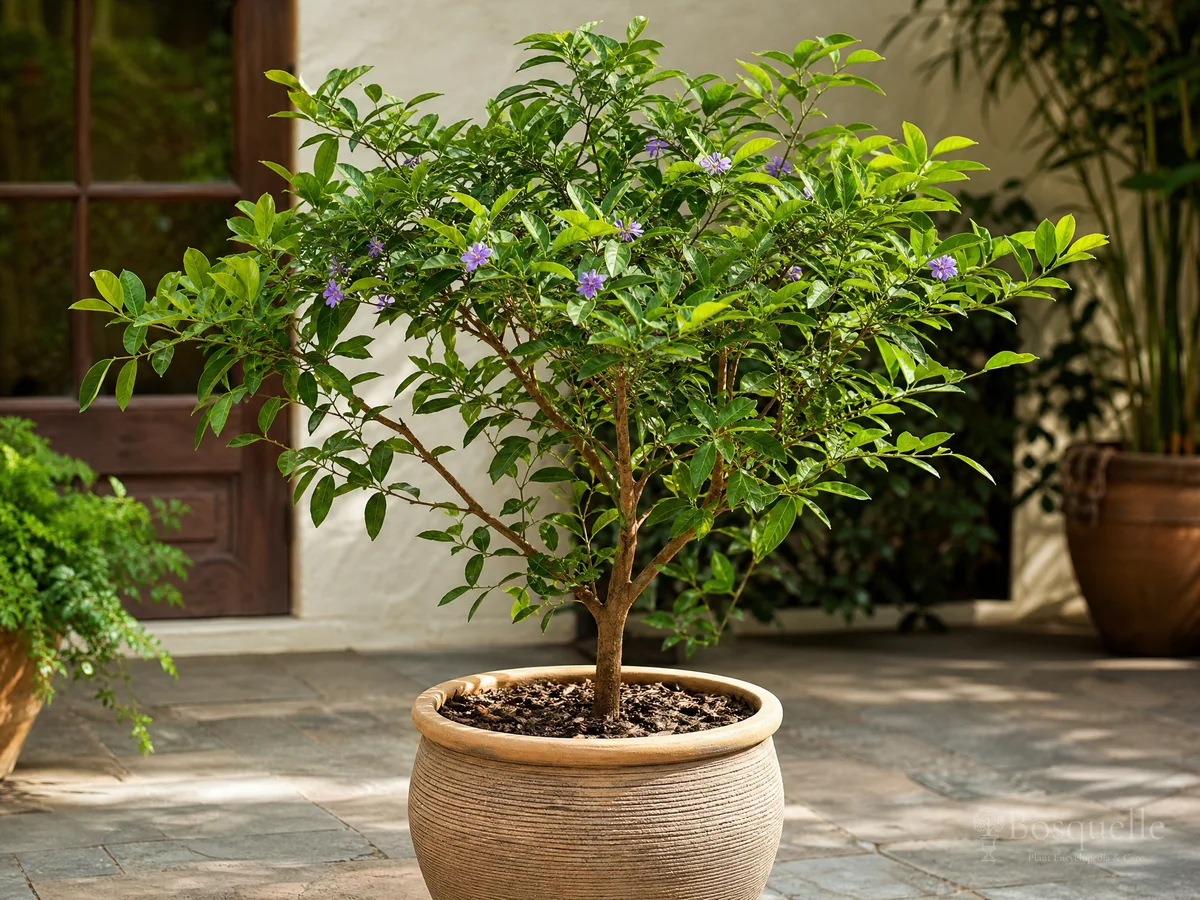
Grow lignum vitae in a wide pot of gritty, fast-draining mix, in full sun. Its slow growth suits a container and a patio, and in a cold climate the pot lets you move it under cover before frost.
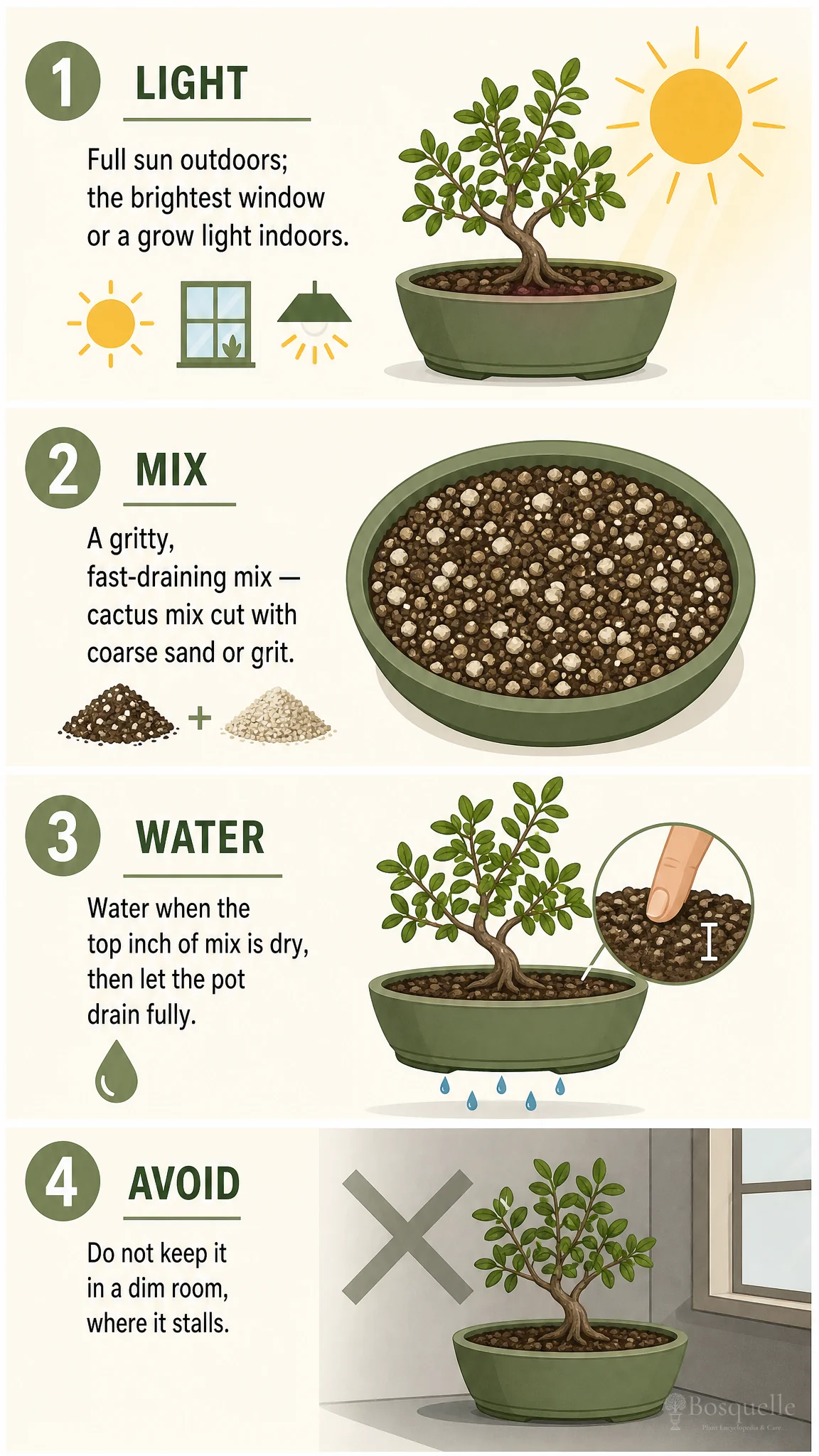
Grow it in a wide pot that drains fast
| Factor | Recommended | Avoid |
|---|---|---|
| Pot | A wide, heavy pot with open drainage holes | Do not use a pot with no drainage, which drowns the roots |
| Mix | A gritty, fast-draining mix — cactus mix cut with coarse sand or grit | Do not use a dense, water-holding potting soil |
| Water | Water when the top inch of mix is dry, then let the pot drain fully | Do not leave the pot standing in a saucer of water |
| Light | Full sun outdoors; the brightest window or a grow light indoors | Do not keep it in a dim room, where it stalls |
lignum vitae is one of the slowest trees in the trade, which is exactly why it grows well in a pot: it takes years to fill one, so you rarely repot. [1] Use a wide, heavy container of gritty, fast-draining mix, water only when the top inch is dry, and let the pot drain fully every time. The same salt and sun tolerance that suits it to the coast makes it an easy patio tree in strong light. [2] Feed lightly in spring and summer, and top-dress or step up a pot size only when the roots fill the one it is in.
How often should I water lignum vitae in a pot?
Water when the top inch of mix is dry, then let the pot drain fully. A pot that never dries out rots the roots.
Move the pot to bright shelter before frost
Lignum vitae is frost tender, so a potted tree outside its warm native range has to come in for winter. Move it before the first cold snap, not after. In a frost-free garden you can skip the pot and grow it in the ground instead — see How to Grow Lignum Vitae. [3]
- Bring the pot indoors, or into a bright greenhouse, before nights drop toward 40 F.
- Set it in the brightest spot you have, or under a grow light, and keep it away from cold drafts and heating vents.
- Water less in winter — only when the top of the mix dries — while growth slows.
- Move it back outside once frost has passed and nights stay mild.
Can lignum vitae live indoors?
It can winter indoors in a bright window or under a grow light, but it needs strong light and is happiest back outside in full sun once frost has passed.
It makes a patient bonsai
That same slow growth and dense wood make lignum vitae a prized bonsai. It flowers even as a small tree and heals well after pruning. [4] Wire young, green shoots to set the shape while they still bend, since older branches turn brittle. Keep it in the same gritty, fast-draining mix, water at the finger-check, and expect a project measured in years, not seasons.
Is lignum vitae good for bonsai?
Yes. Its slow growth, small leaves, and blue flowers suit bonsai. Shape young green shoots with wire before the branches turn brittle.
In a pot, keep lignum vitae in gritty, fast-draining mix and full sun, water at the finger-check, and move it under cover before frost.
FAQ
How often do I repot lignum vitae?
Rarely. The tree is slow, so it can stay in the same pot for years. Step it up only when the roots fill the container.
Does a potted lignum vitae still flower?
Yes, in strong light. Even small potted and bonsai plants carry the bluish-purple flowers when they get full sun.
Related guides

Recommended plants
References
- [1] University of Florida IFAS Extension (EDIS ST286) -
https://edis.ifas.ufl.edu/publication/ST286 - [2] Useful Tropical Plants -
https://tropical.theferns.info/viewtropical.php?id=Guaiacum+sanctum - [3] Institute for Regional Conservation -
https://regionalconservation.org/ircs/database/plants/PlantPage.asp?TXCODE=Guaisanc - [4] Monaco Nature Encyclopedia -
https://www.monaconatureencyclopedia.com/guaiacum-sanctum/?lang=en
This note is part of Guaiacum Guides.
More container notes by plant live in Container Growing Guides.
Updated: Reviewed by Bosquelle Editors