
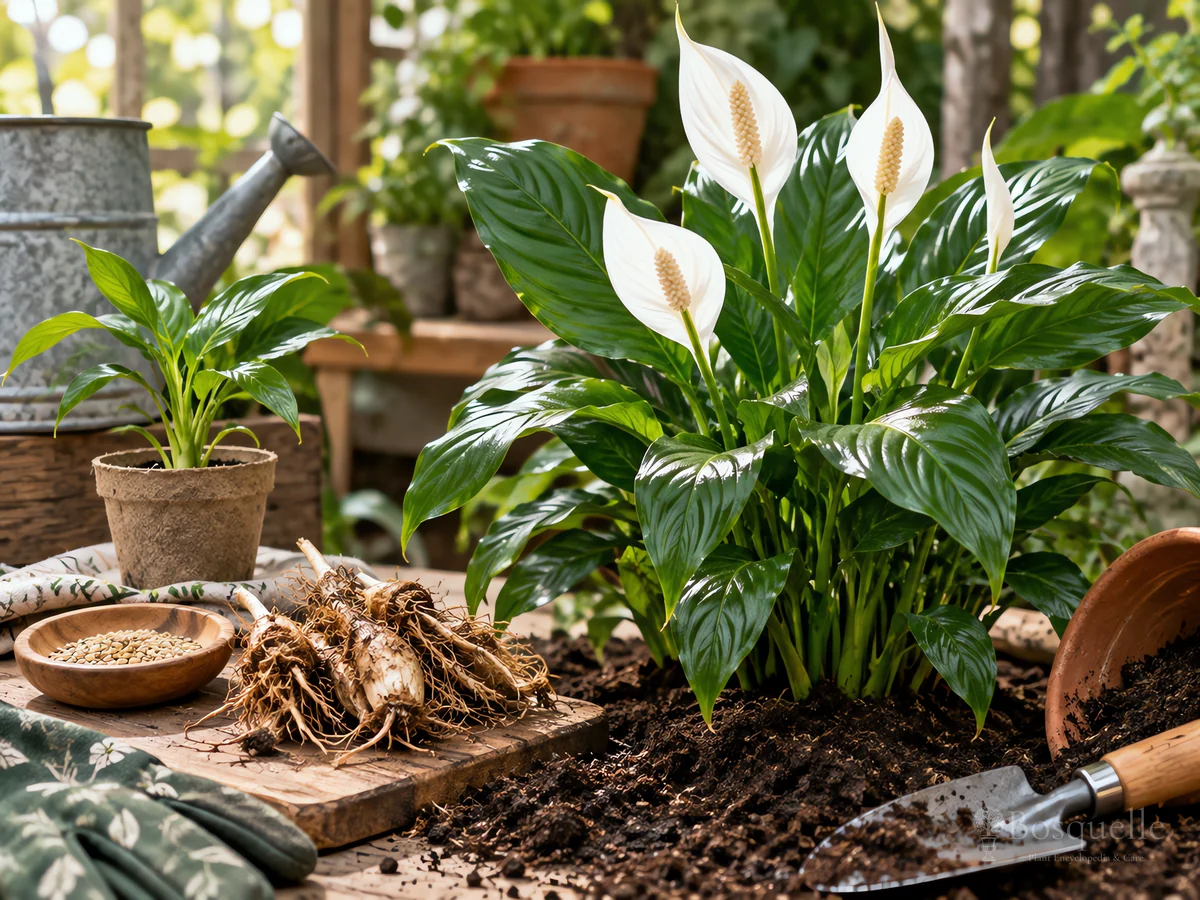
Repot peace lily in the growing season, into a pot only one or two inches wider, with a drain hole. Set it at the old soil line, and leave it a little snug.

Move it up one pot size, in a pot with a hole
| Factor | Recommended | Avoid |
|---|---|---|
| When | Spring or early summer, or when roots pack the pot | Do not repot a brand-new plant the day it comes home |
| Pot | One or two inches wider, with a drain hole | Do not jump to a much larger pot, or pot into a cachepot with no hole |
| Mix | Fresh houseplant mix that holds moisture and still drains | Do not reuse packed peat or garden soil |
| Depth | The same soil line as before | Do not bury the crowns to make the plant sit still |
Peace lily likes a snug pot with a hole, not a tub of wet mix. Choose a container about one or two inches wider than the old one, and keep the crowns at the depth they already sat. [1] It can stay somewhat pot-bound. If water still soaks in and the plant is growing, wait. When you do move it, late winter into spring is the usual window. [2]
- Pick a pot with a hole, only one size up. A decorative pot with no hole is a sleeve: keep the grower pot inside it, and empty the sleeve after you water.
- Use fresh houseplant mix that holds moisture and still drains. Do this in spring when you can. [3]
- Move sooner if roots show through the holes, or circle on top of the mix, and water runs straight through. [4]
How big should the new pot be?
About one or two inches wider, with a drain hole. A much larger pot stays wet around the roots.
How often do I repot?
Every couple of years for most plants, or sooner if roots fill the pot and water will not soak in.
Ease it out, keep the old soil line, and leave it a little snug
Support the root ball from below. Do not yank the leaf stalks. Slide the plant out, check the crowns, and set it back at the old soil line.
- Water the day before so the root ball slides. Tip the pot and ease the plant out. If it sticks, run a knife around the inside of the pot.
- Look at the roots. Trim only roots that are black and soft. Tease circling roots at the bottom. Leave healthy roots in place; a hard tease droops the leaves for days.
- Set the plant in the new pot at the old depth. Fill around the roots, tap the pot to settle, and do not pack the mix hard.
- Water until extra runs out, then empty the saucer. Skip fertilizer for a few weeks. If leaves flop, leave the pot in its old bright spot and wait for new growth.
Once it settles, keep it as a houseplant on How to Grow Peace Lily. If the clump has several crowns and you want more plants, split it on How to Propagate Peace Lily.
Will it droop after I repot?
It often does if the roots were disturbed. Leave it in the same bright spot, keep the saucer empty, and wait for the next flush.
Should I divide it while I have it out?
Only if you want extra plants and the clump already has several crowns. Potting up one size is enough when you just need fresh mix.
Move the next plant into a pot with a hole, only one size up, at the old soil line, and empty the saucer after the first watering.
FAQ
Can I pot it straight into a pot with no hole?
No. Use a pot with a drain hole. A cachepot is only a sleeve. Empty it after you water.
The mix dries in a day. Is that a bigger pot?
Often yes — roots have filled the old pot. Move one size up. Jumping to a much larger pot keeps the extra mix wet.
Related guides

Recommended plants
References
- [1] Clemson Cooperative Extension -
https://hgic.clemson.edu/factsheet/peace-lily/ - [2] NC State Extension -
https://plants.ces.ncsu.edu/plants/spathiphyllum/ - [3] Old Farmer's Almanac -
https://www.almanac.com/plant/peace-lilies - [4] SDSU Extension -
https://extension.sdstate.edu/peace-lily-houseplant-how
This note is part of Peace Guides.
More container notes by plant live in Container Growing Guides.
Updated: Reviewed by Bosquelle Editors