
Repot English ivy when the plant is top-heavy, roots circle, or the mix dries in a day. The new pot should be about one inch larger in diameter — not a tub. Drain holes matter. English ivy in a hanging basket and Gloire de Marengo in a cream-panel pot take the same step-up. Do not bury trailing stems into the fresh mix as a way to hide length.

One inch larger, with drain holes
| Factor | Recommended | Avoid |
|---|---|---|
| Timing | When root-bound, top-heavy, or drying too fast | A yearly upsize on a plant that still holds moisture |
| Pot | About one inch wider; holes in the bottom | A jumbo cachepot that stays wet for a week |
| Mix | Houseplant potting mix that drains; perlite if you hang it | Garden soil; a closed liner with no holes |
| Depth | Same stem depth as before | Burying vines into the mix to “layer” a basket |
Wait until roots circle, the basket tips, or the mix dries in a day. Clemson Cooperative Extension: repot when ivy is top-heavy or root-bound or dries out too rapidly — the new pot no more than 1 inch larger, because a huge pot stays wet and rots roots. Cool-room watering after the move stays on How to Grow English Ivy.
Hanging baskets dry from the sides. Coir or moss liners need more frequent water, not a bigger bowl of mix. Plastic with holes is easier to empty. A decorative cachepot is fine if you lift the grow pot out to drain.
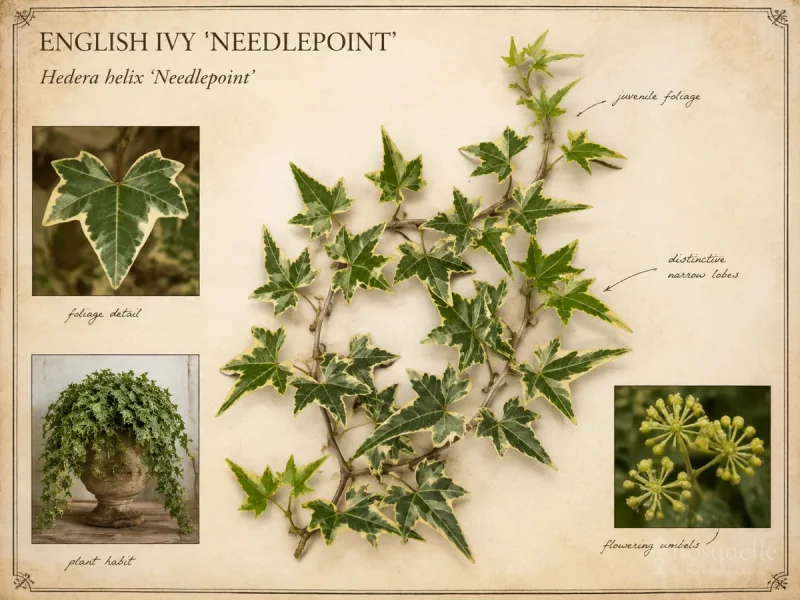
Needlepoint in a 6-inch hoop and Marengo in an 8-inch basket still step up one inch. Leaf size does not pick a two-inch jump. Helix versus Algerian is a types choice on Types of Hedera.
Skip a repot if the mix still holds moisture for several days and roots have not circled. A plant that dries overnight in a coir liner may need more frequent water, not a larger bowl. Feel the root ball first. White circling roots and a basket that tips over are the real cues. A yearly calendar is not.
How to repot English ivy
Work over a sheet you can bag. Live stems on the floor are not a gift to the garden. Gloves if sap bothers you.
- Water the old pot the day before if the mix is dust-dry, so the root ball slides. If it is already soggy, skip that soak.
- Tip the plant out. Support the crown. Do not yank vines until the ball is free. Tease circling roots. Cut mushy black roots. Firm pale roots stay.
- Choose a pot about one inch wider with drain holes. Fill the bottom with fresh mix. Set the plant at the same depth. The crown sits just below the rim, not buried.
- Fill around the sides. Firm lightly. Leave a watering space at the top. Do not pack the mix into a brick.
- Water until it runs out. Empty the saucer. Keep the plant in bright indirect light, not a hot move-in shock, for a week.
- Resume the usual rhythm: water when the top half-inch to inch dries. Do not fertilize the same day. Bag any trimmed stems.
If roots filled the old pot, you can tease the bottom and make a few vertical scores so new mix contacts living roots. Do not carve away a third of a healthy ball as a habit — that is for a badly bound plant, not every spring.
Several small plants in one hanging basket can be split into two baskets instead of one giant pot. Each pot still gets holes and a one-inch step, not a tub.
Work over a sheet you can fold and bag. Live stems on a deck or lawn can root at a node if they stay damp. Tease circling roots with your fingers; a knife is for a solid mat, not every move. Keep the crown at the old depth so stems do not rot in a buried nest. If the old mix is sour or stays wet, shake some of it off and replace it — that is still a one-inch pot, not a new climate.
Hanging baskets, mix, and what fails
What fails: a pot two sizes up; garden soil; leaving the basket in a saucer of ice-cold water; stuffing vines under the mix so they “root along”; repotting a mite-webbed plant into fresh mix and calling it a cure. Rinse mites first. Mix does not remove them.
After a move, the first week is watch-the-water, not a feed. Brown tips can be old mite damage or a wet week. Feel the mix before you add more. A hanging basket on a windy porch dries faster — that is still not a reason to use a two-gallon tub.
Topiary hoops can go back in the same pot with fresh mix if roots are not circling. Same depth. Same drain. Same cool room.
Do not use this move as an outdoor plant-out. A basket on a patio for summer still comes in before a freeze, and clippings still get bagged. Keep it as a container plant.
Hanging hardware must still let you lift the pot to empty water. A cachepot without a way to drain is the usual rot setup after a repot. If you like a ceramic shell, keep the grow pot inside it and dump the shell after every watering. Fresh mix does not excuse a closed cachepot. Topiary hoops go back on after the crown is set, not before — wiring a dry root ball is how you snap stems.
Move English ivy when it is root-bound or dries too fast. Step up about one inch, keep drain holes, and set the crown at the old depth. Empty the saucer. Bag trimmed stems. A jumbo pot stays wet and fails first.
FAQ
When should I repot English ivy?
When it is top-heavy, roots circle the pot, or the mix dries out too fast. Many baskets wait a year or two.
How much larger should the new pot be?
About one inch wider in diameter. A much larger pot stays wet and can rot roots.
What mix should I use?
A houseplant potting mix that drains. Add perlite if a hanging basket stays wet. No garden soil.
Can I repot ivy in a hanging basket?
Yes. Same one-inch step and drain holes. Liners dry faster, so check water more often, do not jump two sizes.
Should I bury trailing stems when I repot?
No. Keep the crown at the old depth. Burying vines to hide length is how stems root into a mess — and outdoors, how ivy escapes.
Do I water right after repotting?
Yes, until it drains, then empty the saucer. Wait to fertilize. Resume watering when the surface dries.
Can I split a crowded ivy basket?
Yes. Two small draining pots beat one oversized tub. Each piece still needs a node-and-root connection.
My ivy dries out every day. Is that a repot cue?
Often yes — roots have filled the mix. Step up one inch and refresh the mix. Also check whether a liner is simply too airy for your room.
Where is watering and mite care?
How to Grow English Ivy. Types of Hedera if you are choosing helix versus Algerian.
Related guides


Recommended plants



This note is part of Hedera Guides.
More container notes by plant live in Container Growing Guides.
Updated: Reviewed by Bosquelle Editors