
Repot Echinopsis every 2 to 3 years in spring into a snug pot of fresh grit mix, and do not water for 7 days after repotting so any cut roots can callus.
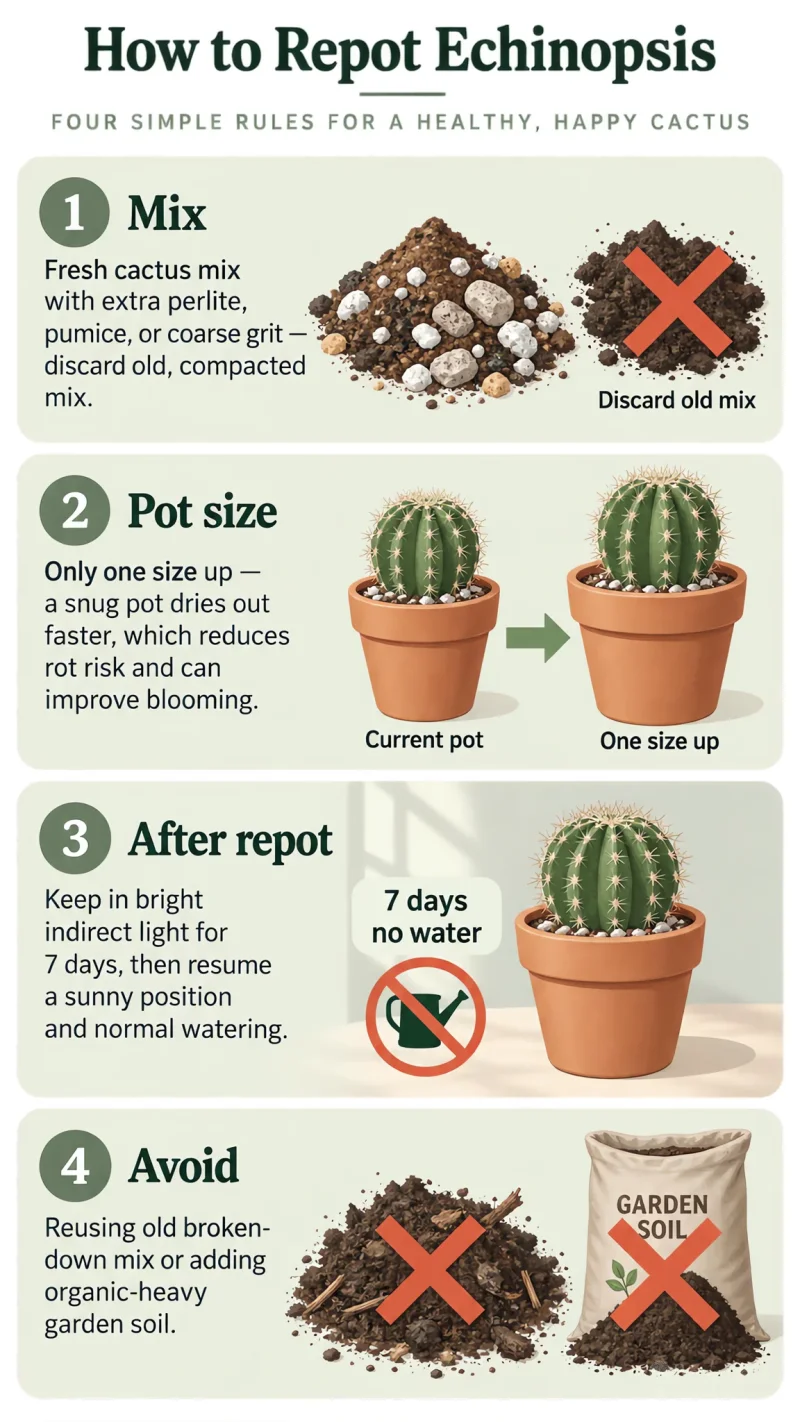
Repot in spring into a snug pot of fresh grit mix
| Factor | Recommended | Avoid |
|---|---|---|
| When | Spring or early summer while the plant is in active growth. Roots recover fastest in warm soil | Repotting in winter dormancy — cold damp soil around cut roots invites rot |
| Frequency | Every 2–3 years, or sooner if roots pack the base or old mix stays wet for days after watering | Repotting every year; annual disturbance slows established plants |
| Pot size | Only one size up — a snug pot dries out faster, which reduces rot risk and can improve blooming | Jumping to a much larger pot: the extra wet mix around the roots rots them |
| Mix | Fresh cactus mix with extra perlite, pumice, or coarse grit — discard old, compacted mix | Reusing old broken-down mix or adding organic-heavy garden soil |
| After repot | Keep in bright indirect light for 7 days, then resume a sunny position and normal watering | Watering the same day — damaged roots absorb water before they callus and rot begins |
Work dry. Do not water the plant for a few days before repotting, and do not water for at least 7 days afterward so any damaged roots can callus before moisture returns. [1] Repot in spring when the plant is in active growth — roots recover fastest then and are not sitting in cold damp mix. [2] Every 2–3 years in a snug pot keeps the mix drying out at the right pace and reduces root rot risk. [3]
- Stop watering the plant 3–5 days before you repot it. Dry roots are less likely to snap and easier to work with.
- Hold the plant with a folded newspaper sling or thick gloves to protect your hands from the spines. Tip the pot and gently ease the root ball out.
- Shake off old mix and inspect the roots. Trim any mushy or dead roots with clean scissors. Let the cut ends dry in open air for 30 minutes before potting.
- Choose a new pot only one size up. Put a thin layer of fresh grit mix in the base.
- Set the cactus so the base sits at the same depth as before. Fill in with fresh cactus mix and firm lightly. Leave a small gap between the mix surface and the pot rim.
- Leave the plant in a bright position out of harsh direct sun for 7 days. Do not water. After 7 days, resume normal watering.
When is the best time to repot Echinopsis?
Spring or early summer. The plant is in active growth and roots heal fastest in warm conditions. Avoid repotting during winter dormancy.
How often should I repot Echinopsis?
Every 2–3 years, or sooner if roots pack tightly at the drainage holes or the old mix stays wet for more than a day after watering.
What fails a repot — a pot too large and watering the same day
Moving to a much larger pot leaves a wide ring of wet mix around the roots with no active root zone to dry it out. Root rot often follows within a few weeks. [4] Watering straight after repotting forces water through damaged root ends before they callus. A 7-day dry period allows any nicked roots to seal before water returns.
My Echinopsis looks shriveled after repotting — is that normal?
Slight shriveling is normal in the first week. Do not water early to compensate; the shriveling will reverse once roots callus and normal watering resumes after 7 days.
Should I water Echinopsis after repotting?
Not for 7 days. Waiting allows any cut roots to form a dry callus that prevents rot.
Spring, snug pot, fresh grit, and 7 days without water — those four rules keep a repotted Echinopsis from rotting.
Related guides

Recommended plants



References
This note is part of Echinopsis Guides.
More container notes by plant live in Container Growing Guides.
Updated: Reviewed by Bosquelle Editors