
A. elatior does not want a new pot every spring. It is slow and it likes to be a little rootbound. Repot in spring when roots show through the holes or the clump is heaving out of the mix — one size up, same depth, drain mix. A cavern of wet soil is how a tough plant rots.

When to repot
| Factor | Recommended | Avoid |
|---|---|---|
| Timing | Spring, when growth is starting; every few years | An annual upsize; midwinter in a cold wet mix |
| Cue | Roots through the holes, or the clump heaving the mix | A snug ball that still makes a few new spears |
| Pot | One to two inches wider, with real drain holes | Two sizes up; a cachepot that holds a pond |
| Depth | The same planting line as before | Buried crown, or rhizomes perched in the air |
| Mix | Houseplant mix that wets and then lets go | Garden clay in a pot; a peat mass that never dries |
The Royal Horticultural Society is plain: keep it in the original pot for several years, until roots appear through the drainage holes, then move it in spring. Many houseplant writers land on every three to five years, or longer if the plant is still putting out a few new leaves. Bob Vila’s five-year divide cadence is the same sitting for a packed clump — not a yearly habit.
- Repot now: roots circling or poking through holes; mix that has collapsed to dust; a pot cracking from rhizomes; growth that has truly stalled for a long stretch.
- Wait: a snug ball with a few new spears each year and mix that still wets and dries evenly.
Spring is the window. A late-winter move just before growth is acceptable. Midsummer heat and a midwinter cold room are not. Water the day before so the ball slides. If the only problem is tired mix and the pot still fits, knock off old soil and return the same clump to the same pot with fresh drain mix. That is a refresh, not a size jump. Outdoor plants in the ground are not this sitting — divide those on How to Propagate Cast Iron Plant, or cut weathered leaves on How to Grow Cast Iron Plant.
One size up, same depth
- Choose a container only slightly larger — about one to two inches in diameter, with real drain holes. Skip tall tubs that leave a column of unused mix.
- Use a drained houseplant mix. The Royal Horticultural Society likes a blend that is not a peat mass. Whatever you buy, it must wet and then let go.
- Tip A. elatior out. Support the leaf bases with your hand. If the ball is stuck, thump the pot — do not yank blades.
- Tease circling roots only enough to see them. You do not have to strip the ball bare unless you are also dividing.
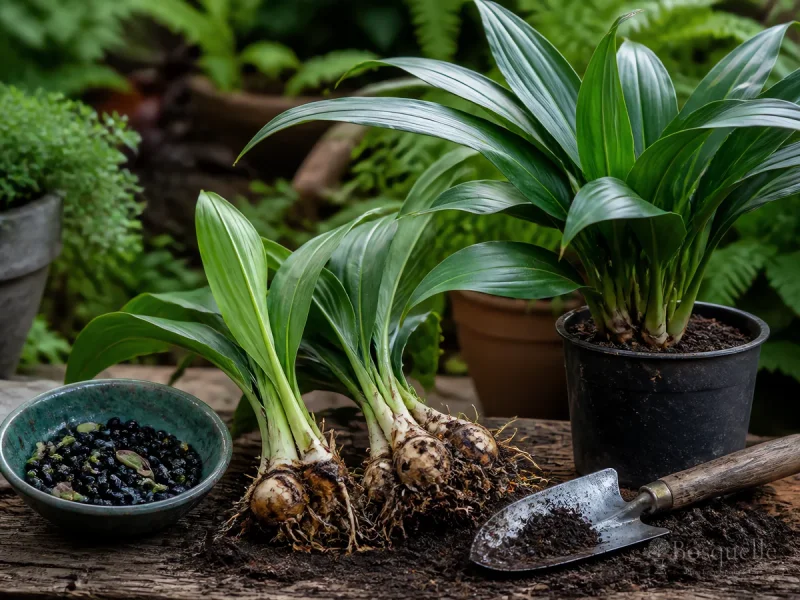
- Set the clump at the same depth it grew. The rhizomes sit just under the surface. Leave about an inch of rim for watering.
- Backfill, firm gently so the heavy leaves do not wobble, water until it drains, and return it to shade — the same north window or dim room it already liked.
Keep the planting line you saw on the old ball. This is not a tuber you perch half-above the mix. It is a clump of rhizomes that wants to sit where it sat. Optional: divide in the same sitting if the ball is a solid rhizome cake and you want extra plants. That split — several leaves per piece, not a leaf cutting — is How to Propagate Cast Iron Plant. If you only wanted fresh mix and a little more room, skip the knife.
Water once, drain, then treat the plant as usual: dry a couple of inches down before the next watering. Do not fertilize for a few weeks. Do not settle it in with daily dribbles. Shade after the move. Wipe the leaves after you work. Dust plus a move is when mites show. Check the saucer the next morning — standing water is still the fastest fail.
What fails a repot
- A pot two or three sizes up — unused wet mix, soft rhizomes, yellow collapse.
- No drain hole — the nickname will not save it.
- Burying the crown — new spears rot at the line.
- Perching the rhizomes in the air — they dry and stall. Same depth as before.
- A south window “to recover” — bleached blades on an already-stressed clump.
- Repotting every spring on principle — slow plants want to stay a little bound.
Success looks like a clump that does not wobble, water that leaves the pot in under a minute, and a new spear in the following weeks. If leaves yellow from the base after a week in a big wet pot, unpot and downsize. Fresh drained mix in a snugger container beats hoping the wet mass will dry. If you cracked a cheap plastic pot because the rhizomes won, that is overdue — not a reason to jump to a ceramic vat. One size up is still the move.
Heavy glazed pots are fine if they drain. Terracotta dries faster; that can help if you overwater, or brown the tips if you forget for too long. Match the pot to how you actually water. Do not add a water-well insert. Do not set the new pot in a cachepot with pebbles that stay flooded. Do not pack mix like concrete around the ball. Firm enough to stand, loose enough to drain. Label the year on the rim so you are not guessing next spring.
FAQ
How often should I repot a cast iron plant?
Every few years, not annually. Wait until roots show through the holes or the clump is packed. Slightly snug is healthy.
What size pot should I use?
Only slightly larger than the current pot — about one to two inches wider. A jump to a huge container leaves wet mix around slow roots.
Can I reuse the same pot?
Yes, if the size still fits and you only needed fresh mix. Clean it, drain holes open, same depth.
Should I water right after repotting?
Yes — one thorough soak, then empty the saucer. After that, wait until the top couple of inches are dry.
Do I divide every time I repot?
No. Divide when you want more plants or the ball is a solid rhizome cake. A simple upsize can leave the clump whole.
What mix should I use?
A drained houseplant mix that wets and lets go. Avoid a peat mass with no grit. Outdoor garden soil in a pot stays wet too long.
Can I repot in winter?
Wait for spring growth. A winter move in a cold wet mix is how rhizomes rot.
The plant looks worse after I moved it.
A week or two of sulk is common. Check that the pot drains and you did not jump two sizes. Shade, not more water.
Should the new pot be deep?
Deep enough for the existing ball plus a little mix under it — not a tall unused column. Width one size up matters more than extra depth.
Can I fertilize the same day?
No. Wait until you see the plant growing again, then feed lightly in the growing season only.
Related guides
Recommended plants

This note is part of Aspidistra Guides.
More container notes by plant live in Container Growing Guides.
Updated: Reviewed by Bosquelle Editors