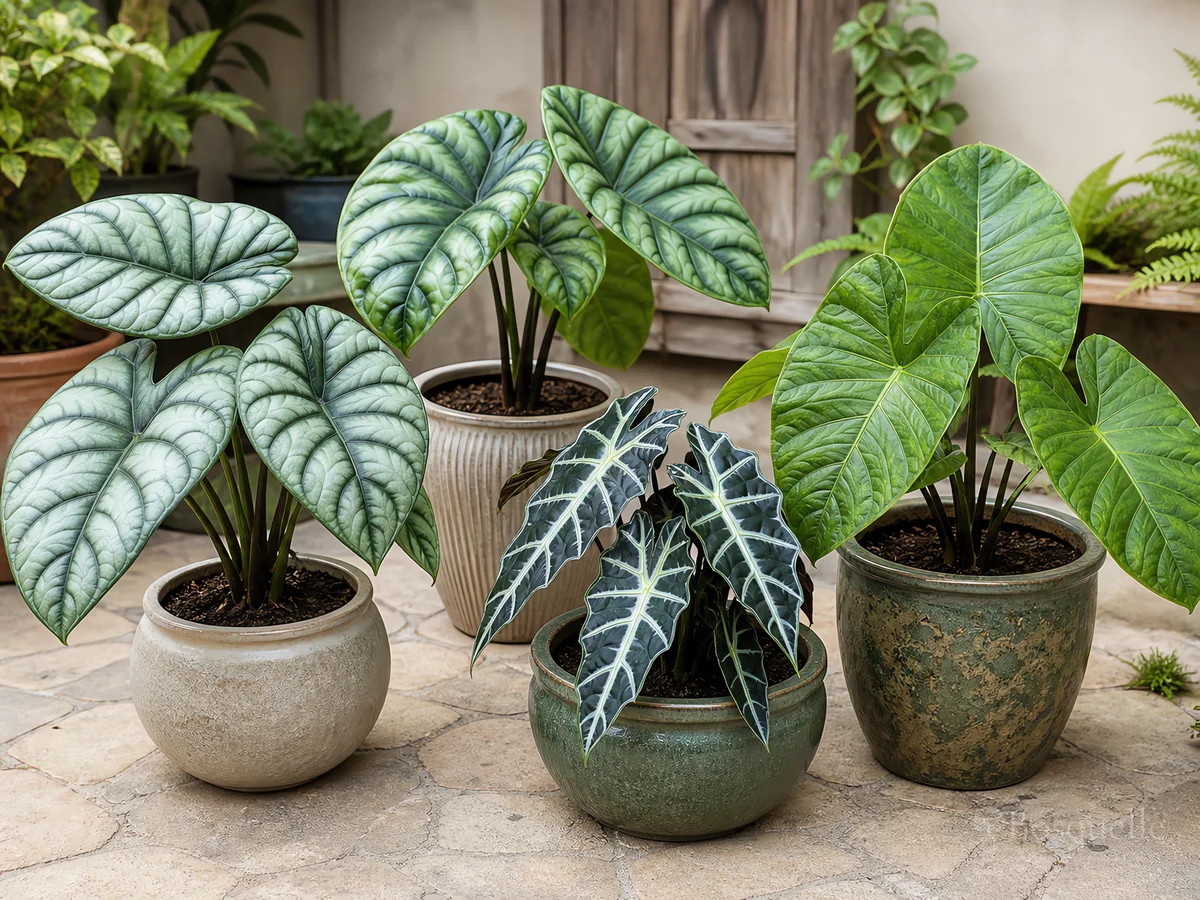
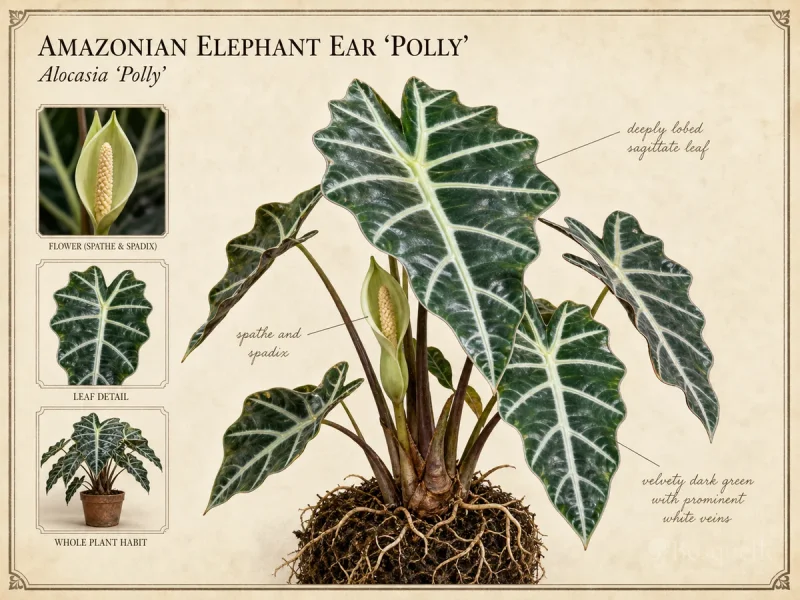
Repot Alocasia when roots circle or the mix stays sour. Go one size up. Use a chunky mix that still drains. Keep the corm at the old depth. Polly fits a 6-inch or 1-gallon start. A. macrorrhizos needs a heavy pot so it does not tip. Empty the saucer.
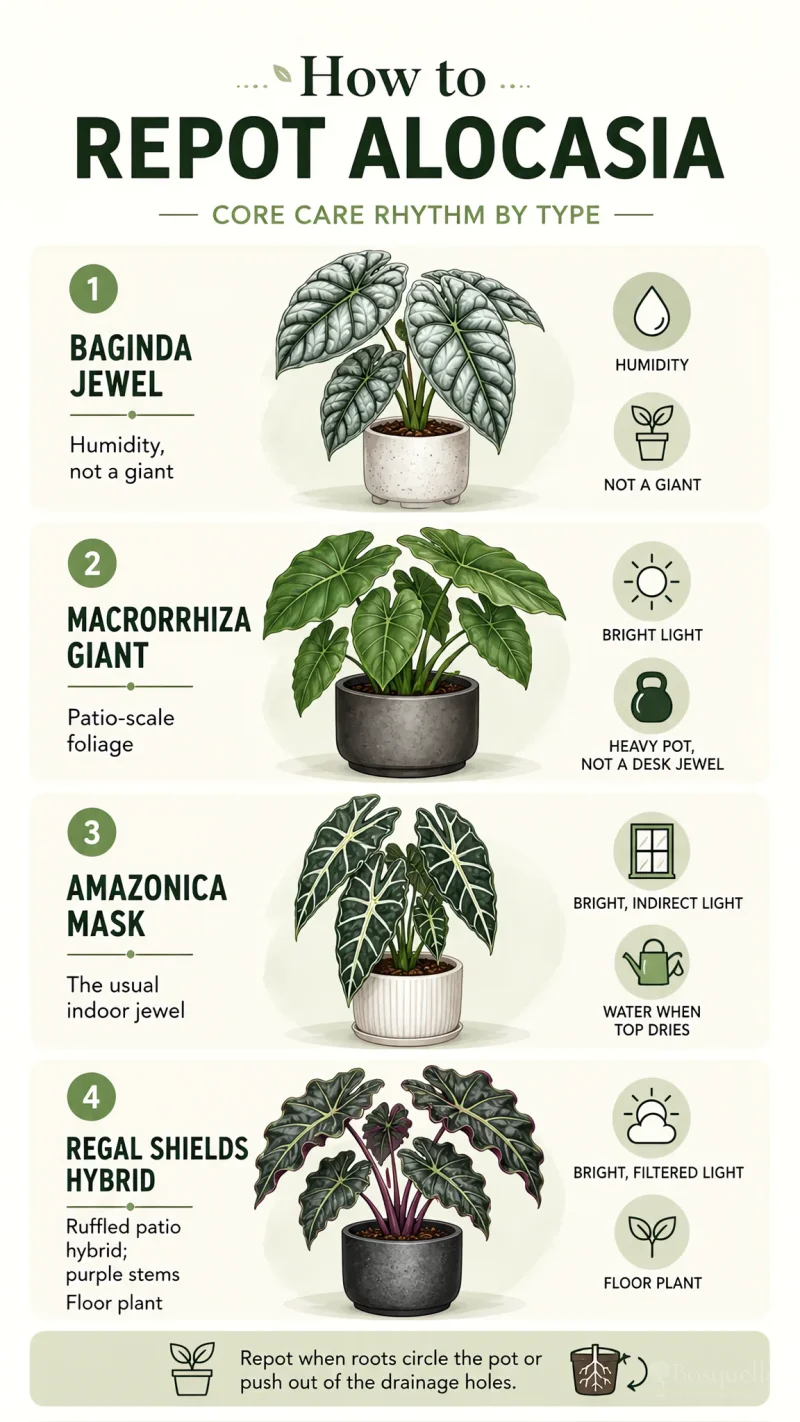
Drain holes, chunky mix, and one size up
| Factor | Recommended | Avoid |
|---|---|---|
| When | Spring; roots circling or poking the holes | A midwinter move unless rot forces it |
| Pot | Holes; one size up (about 1–2 inches wider) | A huge tub of wet peat around a small root mass |
| Mix | Bark, perlite, and a peat or coir base | Garden clay, or a cachepot with no way out |
| Depth | Corm at the old level; crown unburied | Burying petiole bases under extra mix |
Patio Alocasia fails first from wet unused volume. University of Wisconsin Extension: want water and drainage while in growth. In a pot that means holes you can see and a mix that lets extra water leave. Choose pot size from the root mass, not the leaf span. A 1-gallon can is enough for a compact start. Year-round rules live on How to Grow Alocasia.
- Wait until spring unless the mix is sour. Roots circling the bottom once can wait a season. A solid root mass with no mix left moves now.
- Pick a pot 1 to 2 inches wider, with open holes. A 6-inch pot or 1-gallon nursery can holds a compact plant. Giants need weight, not just width.
- Mix bark, perlite, and a peat or coir houseplant base. Do not pack garden soil. Stir, do not layer.
- Set the corm at the old depth. Do not bury the crown in extra mix. Leave petiole bases at the surface.
- Water once to settle. Empty the saucer. Wait until the top inch is dry before the next watering.
- Sort compact vs giant on Types of Alocasia before you drop macrorrhizos into a cup.
Do not add a pebble layer in the bottom. It does not make drain. It can perch water higher in the pot. Pot feet that lift the holes work. A sealed cachepot does not.
How to repot Alocasia
Work warm. University of Florida Extension: indoor Alocasia wants moist, draining mix as a houseplant. Slide the root ball out. Shake loose mix. Look for firm cormels to pot separately later. Do not strip every healthy root to make it look clean.
- Water the day before if the mix is bone dry, so the ball slides. If it is soggy, skip that watering.
- Tip the pot. Support the crown. Ease the ball out. Wear gloves.
- Tease circling roots. Trim only black mush. Keep firm white roots.
- Fill a little mix in the new pot. Set the plant so the corm sits at the old line. Backfill. Firm lightly. Do not stamp a pan.
- Water until it runs out the holes. Empty the saucer. Return to bright indirect light. Skip fertilizer for a month.
- Keep extra humidity while it settles. Do not recut leaves to “balance” the pot. The plant needs those blades.
If you find rooted pups, split them only if they have their own roots. Otherwise tuck them back. A 12-inch pot for a compact Polly is too much wet volume. Step up one size. Terracotta dries faster than a glazed bowl. In winter, do not let the mix ice into a wet block. When roots circle again, step up one size more, or split a rooted piece back into the same pot.
Saucer, crown, and what fails
What fails: no holes; one giant leap in pot size; burying the crown; a pebble layer that perches water; watering every day after the move; repotting a resting plant in a cold room; leaving a wet saucer; packing clay; skipping gloves. Gift wrap that hid a soaked liner is the same job — unwrap, empty the liner water, give holes.
After the move, wait. Roots need to find the new mix. The first week is settle, not a feed. Empty the saucer after every watering. Keep the crown at the surface. A 1-gallon pot is enough to start a compact plant. Giants need a wide, heavy base so wind or a cat does not tip them. Do not solve tip with a deeper wet column. Add weight, not unused peat. Replant the same day you lift. Do not work frozen mix. Keep children from chewing. Mark the pot so you do not trash a firm winter corm later.
Move Alocasia in spring, one size up, into chunky mix with holes. A 6-inch or 1-gallon pot starts a compact plant. Keep the corm at the old depth. Water once, empty the saucer, then wait. Skip fertilizer for a month. Do not bury the crown. Do not jump to a tub of wet peat. Terracotta dries faster than a glazed bowl. Giants need weight, not unused volume. Year-round rules live on How to Grow Alocasia. Names live on Types of Alocasia. Look for firm cormels while you unpot. Replant the same day. Do not work frozen mix. Keep the hose off a sealed cachepot. Holes come first. Skip a pebble layer in the bottom. It can perch water. Use open holes and chunky mix. Choose pot size from the root mass, not the leaf span. A solid root ball with no mix left moves now. Roots circling once can wait until spring. Keep extra humidity while it settles. Do not recut leaves to balance the pot. The plant needs those blades. Look for firm cormels and pot them separately if you want extras. Soft sour pieces go.
FAQ
What size pot should I use?
One size up, about 1 to 2 inches wider. A 6-inch or 1-gallon pot is enough for a compact start. Match the root mass, not the leaf span.
When should I repot Alocasia?
Spring, when roots circle or poke the holes, or when the mix stays sour. Wait in winter unless rot forces it.
What mix should I use?
Chunky mix: bark, perlite, and a peat or coir base. It should stay moist and still drain.
How deep does the corm go?
At the old depth. Keep the crown at the mix surface. Do not bury petiole bases.
Do Alocasia like to be rootbound?
They tolerate a snug pot because extra mix stays wet. Move when roots are a solid mass, not because leaves are large.
Should I water right after repotting?
Once to settle, then wait until the top inch is dry. Empty the saucer.
Can I repot in winter?
Only if rot forces it. Cold plus a huge new wet volume fails. Wait for growth if the corm is firm.
What about pebble drainage layers?
Skip them. They can perch water. Use open holes and chunky mix instead.
Where is division?
How to Propagate Alocasia covers offsets and cormels.
Do giants need a bigger jump?
They need a heavier, wider pot, still one size up. Do not fill a barrel of wet peat around a small root ball.
Related guides

Recommended plants










This note is part of Alocasia Guides.
More container notes by plant live in Container Growing Guides.
Updated: Reviewed by Bosquelle Editors