
Propagate stephanotis from a stem cutting. Cut just below a node, stand it in a mix that drains, and keep it warm and humid until roots form. A seed pod can sprout; a cutting is the usual start.
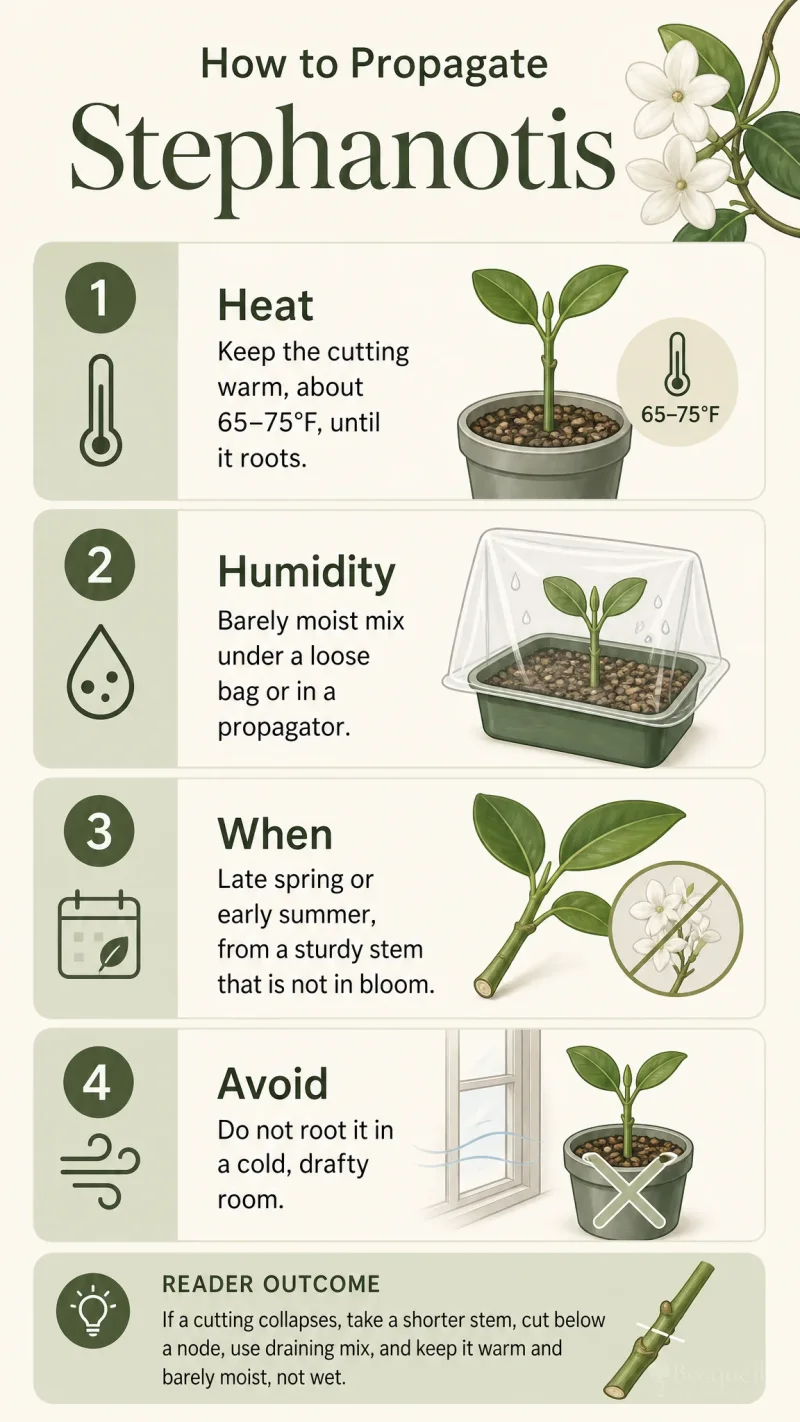
Take a stem cutting just below a node
| Factor | Recommended | Avoid |
|---|---|---|
| When | Late spring or early summer, from a sturdy stem that is not in bloom | Do not take cuttings from a cold, yellowing plant |
| Stem | About 4 inches, cut just below a node, with the lower leaves removed | Do not bury a leafy, flowering tip in wet mix |
| Heat | Keep the cutting warm, about 65–75°F, until it roots | Do not root it in a cold, drafty room |
| Humidity | Barely moist mix under a loose bag or in a propagator | Do not seal a dripping bag against the leaves |
stephanotis roots from a stem. Stem cuttings are the usual home start. [1] Take a section in warm weather, from April into June, when the plant is growing. [2] Light and later watering stay on How to Grow Stephanotis.
Can stephanotis be propagated?
Yes. A stem cutting is the usual way. Cut just below a node, stand it in draining mix, and keep it warm and humid.
When do I take stephanotis cuttings?
In late spring or early summer, from a sturdy stem that is not in flower. A cold, yellow plant is a poor parent.
Keep the cutting warm and humid until it roots
Work with a clean snip. Rooting hormone is optional. Warmth and humidity matter more than a powder.
- Cut a sturdy stem about four inches long, just below a node. Strip the lower leaves so they will not sit in the mix.
- Dip the cut in rooting hormone if you have it. Fill a small pot with peat-free mix cut with horticultural sand or perlite.
- Insert one node below the surface. A two-node cutting with one node buried roots more reliably than a leafless stub. [3]
- Water so the mix is barely moist. Cover loosely with a clear bag, or use a heated propagator, and set it in bright light without harsh midday sun.
- Keep it warm. Roots usually form in four to six weeks. Pot on once new growth shows, then treat it like an established vine.
Should I cover the cutting?
Yes, loosely. A bag or propagator holds humidity around the stem. Open it if water runs down the plastic onto the leaves.
A seed pod can sprout; a cutting is the usual start
A happy vine may set a pear-shaped pod that is not edible. When it browns and splits, the fluffy seed can be sown fresh in warm, barely moist mix. [4] Pods are uncommon indoors, and a cutting gives you a plant sooner, with the same white trumpets.
If a cutting collapses, take a shorter stem, cut below a node, use draining mix, and keep it warm and barely moist, not wet.
FAQ
Can I graft it onto another vine?
Home growers do not graft this plant. A warm, humid stem cutting is the usual start.
Can I layer a stem?
A low stem can be pinned into mix until it roots, but a short cutting below a node is cleaner. Layering is not the usual start.
Will seed match the parent?
Species seed comes close. If you want the same plant you already like, take a cutting.
Related guides
Recommended plants

References
- [1] NC State Extension -
https://plants.ces.ncsu.edu/plants/stephanotis-floribunda/ - [2] BBC Gardeners' World -
https://www.gardenersworld.com/how-to/grow-plants/how-to-grow-stephanotis/ - [3] NC State hortscans -
https://hortscans.ces.ncsu.edu/uploads/s/t/stephano_51e40f167cb7b.pdf - [4] Gardening Know How -
https://www.gardeningknowhow.com/ornamental/vines/stephanotis/stephanotis-plant-care.htm
This note is part of Stephanotis Guides.
More notes on making another plant live in Propagating Guides.
Updated: Reviewed by Bosquelle Editors