
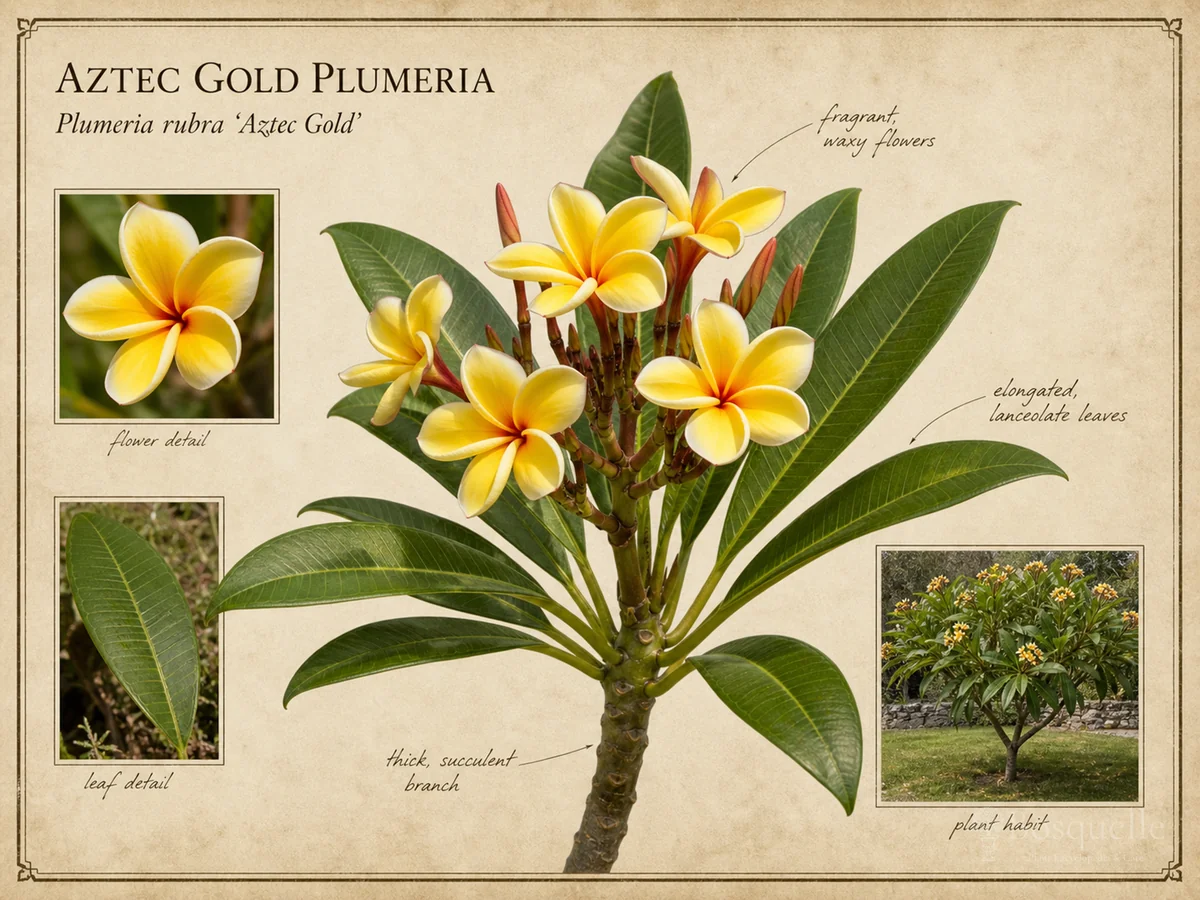
Propagate frangipani from a woody tip cutting after the cut calluses — not from a water jar and not from a wet fresh cut. P. rubra and named colors such as ‘Aztec Gold’ use the same ritual.
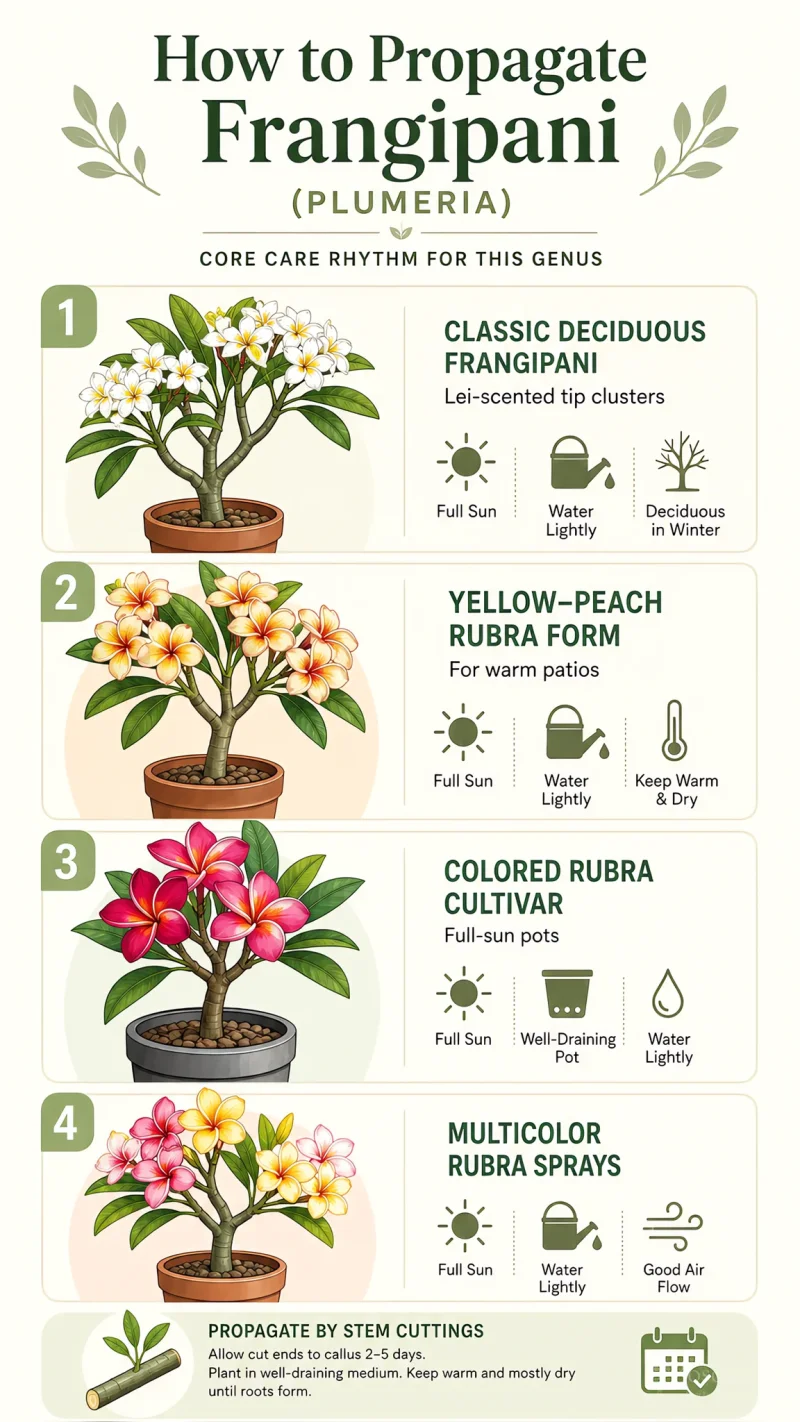
Take a 1–2 ft cutting and let the cut callus
| Factor | Recommended | Avoid |
|---|---|---|
| The stick | A 1–2 ft tip or branched cutting of firm wood | A leaf, a green twig, or a mushy base |
| Callus | Dry, shaded air until the cut is sealed and firm — often two to three weeks | A two-day succulent wait, or a humidity bag |
| Not this plant | Callus in air, then draining mix | A water jar, or potting a wet fresh cut |
| After it leaves | Full sun and dry-between water | Summer-watering a stick that has not leafed out |
Take a one- to two-foot tip, remove leaves cleanly, and let the cut end callus in a cool shaded spot — often two to three weeks. Do not leave the base sitting in water. [1]
How do I root plumeria cuttings?
Take a one- to two-foot tip, remove leaves cleanly, and let the cut end callus in a cool shaded spot — often two to three weeks. Pot in draining mix and keep it dry between waterings until new leaves appear.
How to pot a callused cutting
- Cut a 12–24 inch healthy tip. Wear gloves. Cut petioles — do not rip leaves. Sanitize the blade between plants.
- Set the stick in a warm, dry, shaded, airy place until the cut feels dry, firm, and sealed. Glossy or tacky means wait. Mushy means recut to firm wood and start again. [2]
- Optional: dust the sealed end with rooting hormone. Hormone will not save a wet cut.
- Plant two to four inches deep in cactus mix in a draining pot. Stake if it wobbles. Strong light after potting.
- Water once if the mix is bone-dry, then wait until it is dry again. New leaves are the root signal — often many weeks. Newly potted cuttings often look like leafless sticks at first. [3]
Can I root plumeria in water?
No. Do not leave bases sitting in water. That invites rot. Callus in air, then a dry mix.
What fails a frangipani cutting
- A water jar or a wet fresh cut — this wood rots that way.
- A two-day succulent callus — thick stems need longer.
- A humidity dome — trapped moisture keeps the wound wet.
- A deep peat pot — unused wet mix sits around the base.
- Summer-watering a stick with no leaves — wait for new growth.
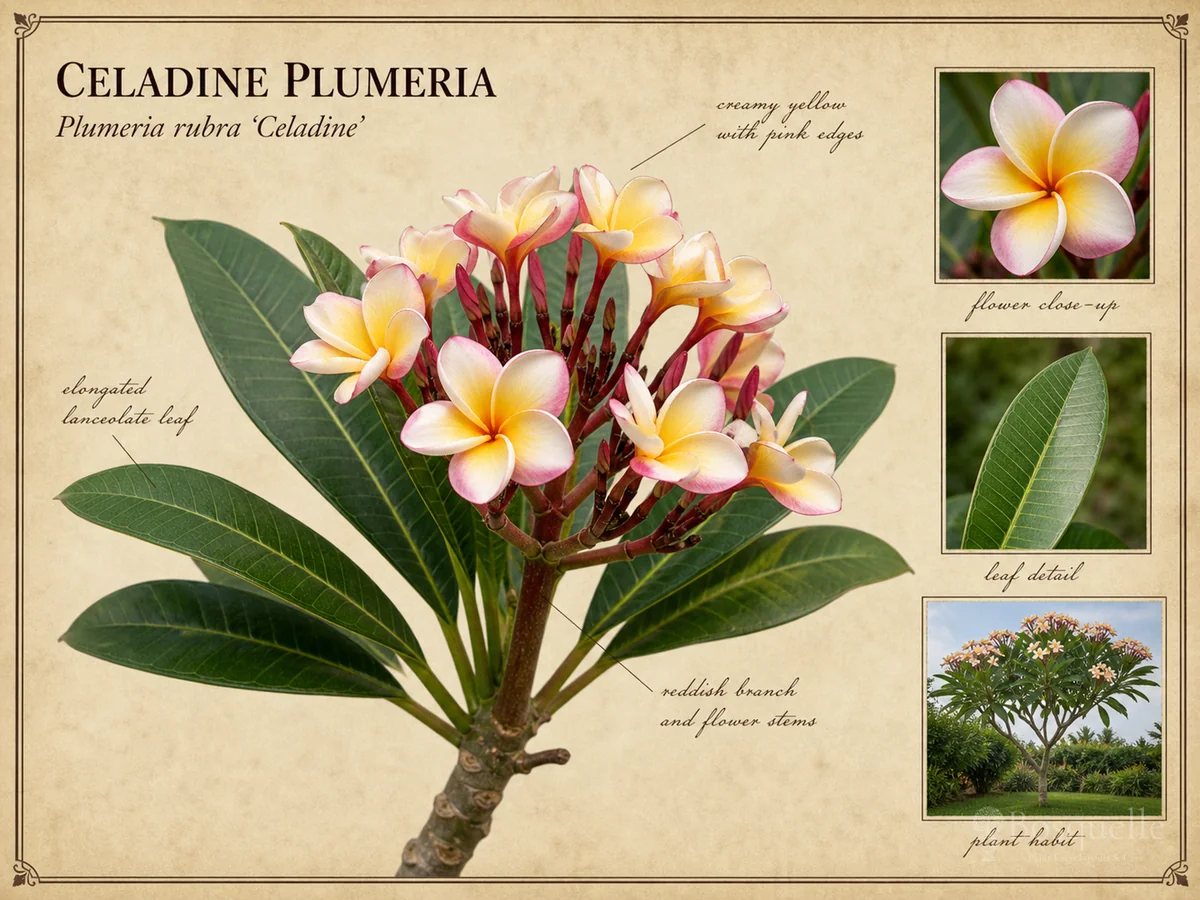
Named colors are clones. Seed is slower and may not match the parent. Bloom from a cutting is often one to three years. [4] After it leaves, sun and dry-between water return to How to Grow Frangipani. A packed mother is a different job on How to Repot Frangipani.
Callus a 1–2 ft cutting, then pot it in draining mix.
FAQ
When is the best time to take cuttings?
Spring, on leafless wood if you can. Fall harvest of mature wood also works. Avoid potting into cold, wet mix.
Do I need rooting hormone?
Optional. Callus and a dry mix matter more. Hormone will not save a mushy stick.
How long until I see leaves?
Often many weeks. New leaves are the usual sign that roots have formed. Do not water on a calendar before that.
Will a cutting bloom the first year?
Sometimes buds already on the stick open. New blooming from a rooted cutting is often one to three years.
Will seed give me the same named color?
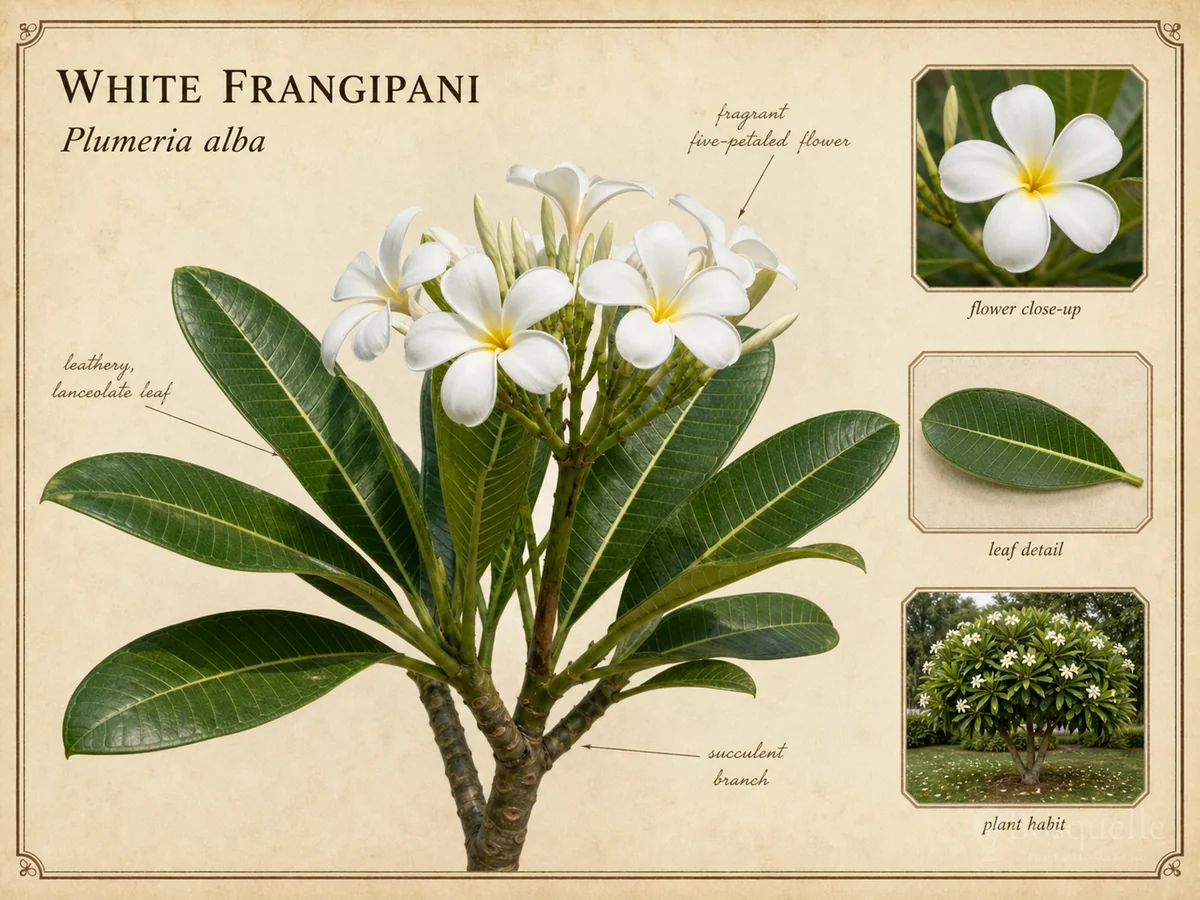
Usually no. Cuttings keep named selections. White, red, and yellow seedlings stay closer; pinks and mixes wander.
Can I propagate oleander the same way?
Do not mix the two. Oleander is a different, more toxic shrub. This page is Plumeria cuttings.
Related guides
Recommended plants




References
- [1] University of Hawai‘i CTAHR -
https://www.ctahr.hawaii.edu/oc/freepubs/pdf/OF-67.pdf - [2] Wisconsin Horticulture -
https://hort.extension.wisc.edu/articles/plumeria/ - [3] UF/IFAS Gardening Solutions -
https://gardeningsolutions.ifas.ufl.edu/plants/ornamentals/plumeria/ - [4] Almanac -
https://www.almanac.com/plant/plumeria
This note is part of Plumeria Guides.
More notes on making another plant live in Propagating Guides.
Updated: Reviewed by Bosquelle Editors