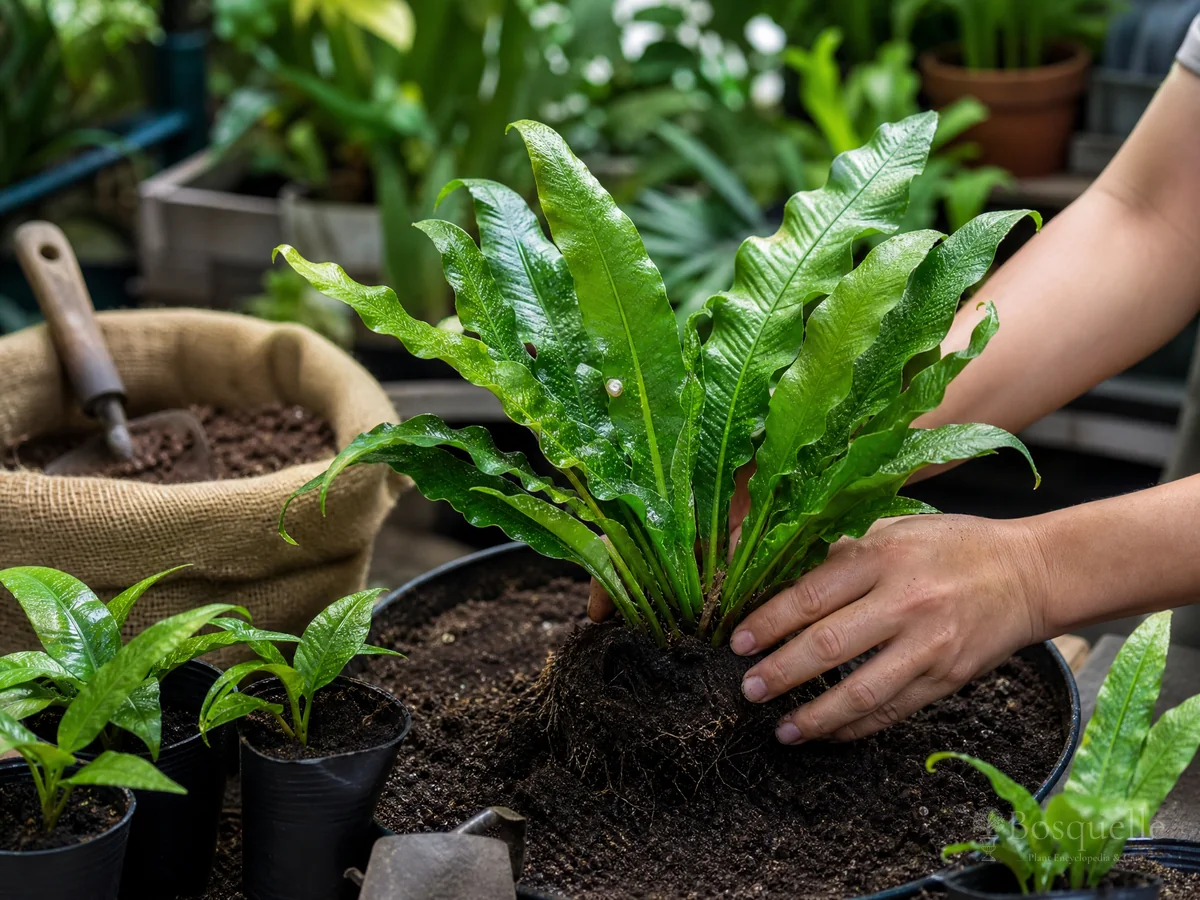
Propagate crocodile fern by dividing a rhizome in spring. Pot the piece with the rhizome barely covered, and keep it humid until new fronds show.

Divide a rhizome in spring, and barely cover it
| Factor | Recommended | Avoid |
|---|---|---|
| When | Spring or early summer, as new fronds start | Do not divide it in winter, or just before a freeze |
| Piece | A rhizome section with several healthy fronds and a share of roots | Do not pot a leafless scrap of rhizome and expect it to take |
| Depth | Set the rhizome just below the mix, covered by about an inch | Do not bury the rhizome deep, where it stays wet and rots |
| Aftercare | Bright, indirect light, even moisture, and humid air until new fronds show | Do not set a fresh division in hot sun, or let the mix go bone-dry |
The usual start is a rhizome division, not spores. [1] Slip the plant from the pot in spring. Tease the root ball so you can see the creeping rhizome, then cut a section that already holds several fronds and a share of roots. Pot that piece in a small draining pot of loose, peat-based mix. Lay the rhizome just below the surface and cover it with about an inch of mix. Do not pack it, and do not bury it deep. [2] Water the mix, empty the saucer, and set the pot in bright, indirect light. Keep the air humid until new fronds show. Then water it as you would an established plant on How to Grow Crocodile Fern.
- Wait until spring or early summer, when new fronds are starting.
- Slip the plant from the pot. Cut a rhizome section that already has several healthy fronds and roots. Use clean scissors.
- Fill a small pot with moist, loose peat-based mix. Set the rhizome just below the surface and cover it with about an inch of mix. Do not bury it deep.
- Water until it runs out, empty the saucer, and keep the pot in bright, indirect light with humid air. When new fronds show, treat it like an established plant.
How do you propagate crocodile fern?
Divide a rhizome in spring, pot the piece with the rhizome barely covered, and keep it humid until new fronds show.
When do I divide it?
In spring or early summer, when new fronds are starting. Do not divide it in winter.
Spores are slow; a division is the usual start
Spores sit in round cases on the underside of mature fronds. You can sow them on moist mix in a covered pot, but they take months, need high humidity, and mold easily. [3] Indoor plants often make no sori at all. A division already has a frond, so it is the usual start. [4] Leave spore-sowing for a later project unless you want that experiment. Do not wait for plantlets on the fronds; those belong to Java fern, not this houseplant.
Can I grow it from spores?
You can, but a rhizome division is the usual start. Spores are slow and need even moisture in a covered pot.
Divide a rhizome in spring and barely cover it. Spores can wait.
FAQ
How long until a division takes?
New fronds in several weeks if the piece had fronds and stayed evenly moist in humid air. Wait for that growth before you treat it like an established plant.
Can I divide when I repot?
Yes. Spring is the usual time. Slip it from the pot, cut a rhizome section that has fronds, and pot each piece with the rhizome just below the surface.
Related guides

Recommended plants

References
- [1] NC State Extension -
https://plants.ces.ncsu.edu/plants/microsorum-musifolium/ - [2] Guide to Houseplants -
https://www.guide-to-houseplants.com/crocodile-fern.html - [3] NParks Singapore -
https://www.nparks.gov.sg/florafaunaweb/flora/3/7/3747 - [4] Gardening Know How -
https://www.gardeningknowhow.com/ornamental/foliage/crocodile-ferns/crocodile-fern-care.htm
This note is part of Microsorum Guides.
More notes on making another plant live in Propagating Guides.
Updated: Reviewed by Bosquelle Editors