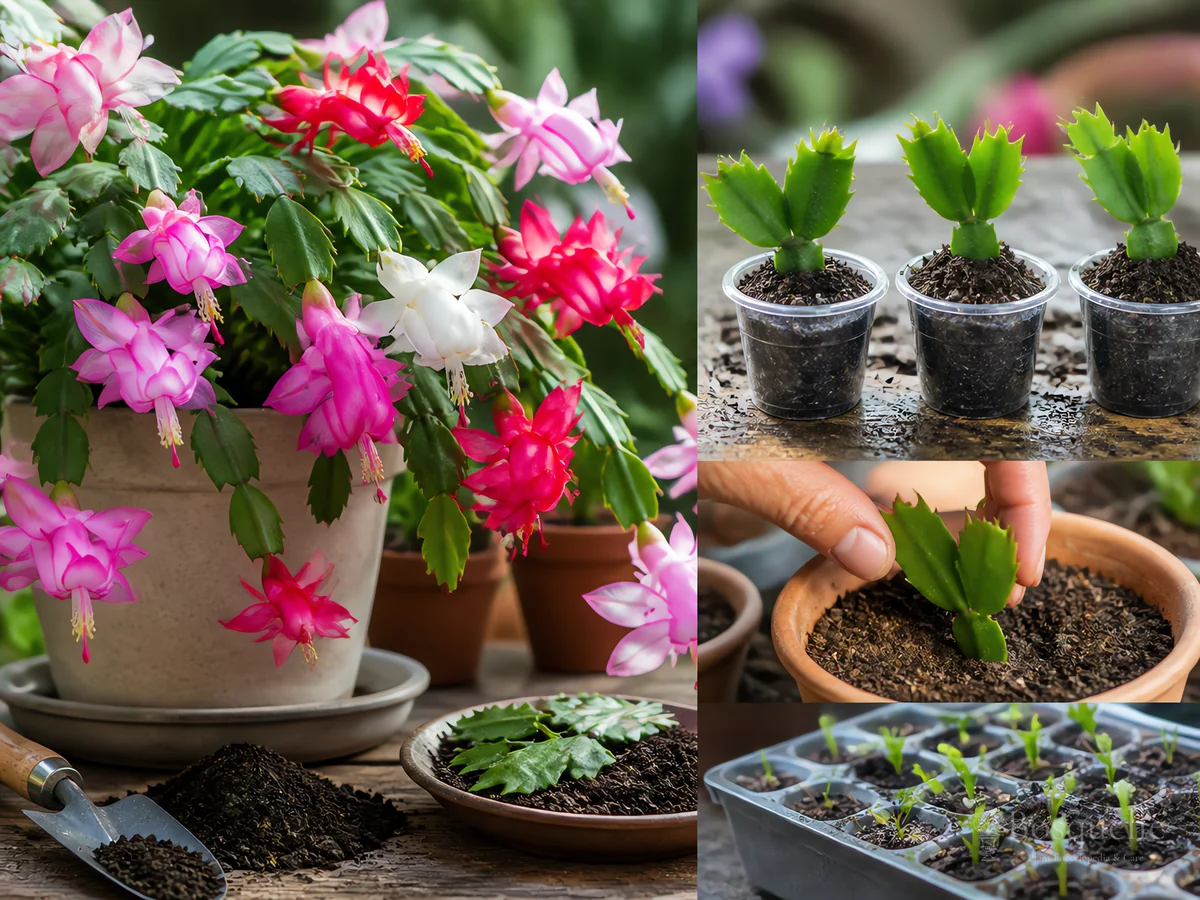
Clone holiday cactus from 2–5 stem segments pinched at a joint. Let the cut callus overnight, then set it about an inch deep in draining mix (Iowa State University Extension). Christmas cactus and Thanksgiving cactus take the same cut. Everyday light and water stay on How to Grow Christmas Cactus.

Pick 2–5 segments at a joint
| Factor | Recommended | Avoid |
|---|---|---|
| Cutting | 2–5 flattened stem segments, pinched at a joint | Tearing through the middle of a pad; a single bruised scrap |
| When | Spring or early summer (Clemson Extension: May–June) | Stripping a plant that is in full bloom unless you must |
| Callus | Overnight, or a day or two in shade | Sticking a wet fresh cut into soggy mix |
| Depth | About one inch in perlite, coarse sand, or draining mix | Burying half the chain; a sealed mug of wet peat |
Iowa State University Extension: remove 2–5 flattened stem segments. Cut or pinch at a joint. Clemson Extension: 3–5 phylloclades (the flattened pads), taken in May or June. University of Florida Extension: two or three jointed sections. RHS: a couple of segments in May, snapped at a joint. A flower in a jar is not the method. Pad shape — rounded vs saw-tooth — does not change the cut. That choose lives on Types of Schlumbergera.
Twist or cut at the joint so the pad stays whole. A ragged tear through green tissue rots. Take extras; not every cutting roots. Do not strip the parent to a stump in one sitting. Healthy, firm pads root better than a yellow, thin, or mushy chain. Skip a pad with scale or rot. Spring and early summer match new growth on the parent (Clemson Extension). A midwinter cut from a plant you are forcing into bloom is possible, but you are stealing flower tips and the house is darker — wait if you can.
Take the cutting from the tip of a chain, not a woody old base pad. Two segments is the Iowa State University Extension floor; five is a useful ceiling so the piece stands without burying half the chain. One bruised scrap usually dies. If the parent has only a few pads, take one short cutting and leave the rest to bloom. Label rounded vs saw-tooth on the pot if you root both — the joint method is the same, but you will want the pad ID later.
Callus, then an inch in draining mix
- Pinch or cut 2–5 healthy segments at a joint (Iowa State University Extension).
- Lay the cuttings in shade until the cut dries — overnight (Iowa State University Extension) or a day or two (Clemson Extension / RHS).
- Fill a pot with perlite or coarse sand, or a draining cuttings mix. Water and let it drain (Iowa State University Extension).
- Insert the callused end about one inch deep. Firm so it stands. Clemson Extension: three cuttings in a 4-inch pot, or five in a 6-inch. Do not pack them against each other.
- Set in bright, indirect light. Water when the mix begins to dry. Roots in about six to eight weeks (Iowa State University Extension). When roots are about an inch long, pot into a well-drained mix.
Clemson Extension: a clear bag can hold humidity. Bright, indirect light. A hot sealed bag on glass cooks the pads. Vent if you see mold. University of Florida Extension: keep the mix moist until roots and new growth appear — moist, not a puddle. RHS: water very sparingly; cuttings can take three to twelve weeks. Do not fertilize a cutting. Wait until it is potted on. A gentle tug after six weeks tells you if roots have caught. No resistance yet means wait, not a flood. Shriveling means the mix went too dry; limp plus wet mix means rot — discard that cutting and start another with a longer callus.
Some gardeners start the cut in a jar of water. If you do, pot into draining mix as soon as roots show. A forever vase goes sour. Mix is the job that matches the parent. Change the water if you use a jar, and keep leaves out of the water. Do not leave a cutting in a dark cupboard; it still needs bright, indirect light to push roots.
What fails a clone
- A wet fresh cut — skip the callus and the pad rots at the line.
- Garden soil or a soaked peat cube — the cut sits wet and dies.
- Deep shade plus wet mix — no roots, then mold.
- A mid-pad tear — pinch at the joint.
- Crowding twenty pads in one mug — they stay wet against each other.
The parent’s spring repot is on How to Repot Christmas Cactus. Light and long nights after the cutting is a plant stay on How to Grow Christmas Cactus. Pad shape does not change the joint. Rounded and saw-tooth cuttings both callus and both rot if the mix stays wet.
Black or mushy tissue at the buried end is rot. Cut back to firm green, recallus, and start in fresh perlite. Do not reuse a soggy peat cube. No new pad after three months in mix that stays wet means start over, not a dose of fertilizer. Once a cutting has an inch of roots, pot it into the same draining mix the parent uses, not into a gallon of unused peat. The first winter it can stay in that small pot. Long nights for bloom wait until it is a plant with several chains — a new cutting does not need a closet yet.
FAQ
Can I grow a Christmas cactus from a stem segment?
Yes. Iowa State University Extension: 2–5 segments, callus overnight, one inch in perlite or coarse sand.
Do I need rooting hormone?
No. A callused joint in draining mix is enough. Hormone is optional.
How long until roots form?
About six to eight weeks in mix (Iowa State University Extension). RHS: three to twelve weeks.
Can I root Thanksgiving cactus the same way?
Yes. Same joint, same callus, same depth.
Should I use a plastic bag?
Optional humidity (Clemson Extension). Vent if it molds. Do not cook the pads on a hot sill.
When should I take cuttings?
Spring or early summer. Clemson Extension: May–June.
Where is everyday care?
On How to Grow Christmas Cactus.
When do I pot the rooted cutting on?
When roots are about an inch long, into a draining mix. A larger repot later is on How to Repot Christmas Cactus.
Related guides
Recommended plants


This note is part of Schlumbergera Guides.
More notes on making another plant live in Propagating Guides.
Updated: Reviewed by Bosquelle Editors