
Grow yew in well-drained soil, in sun or part shade. Japanese yew is the usual US shop name.
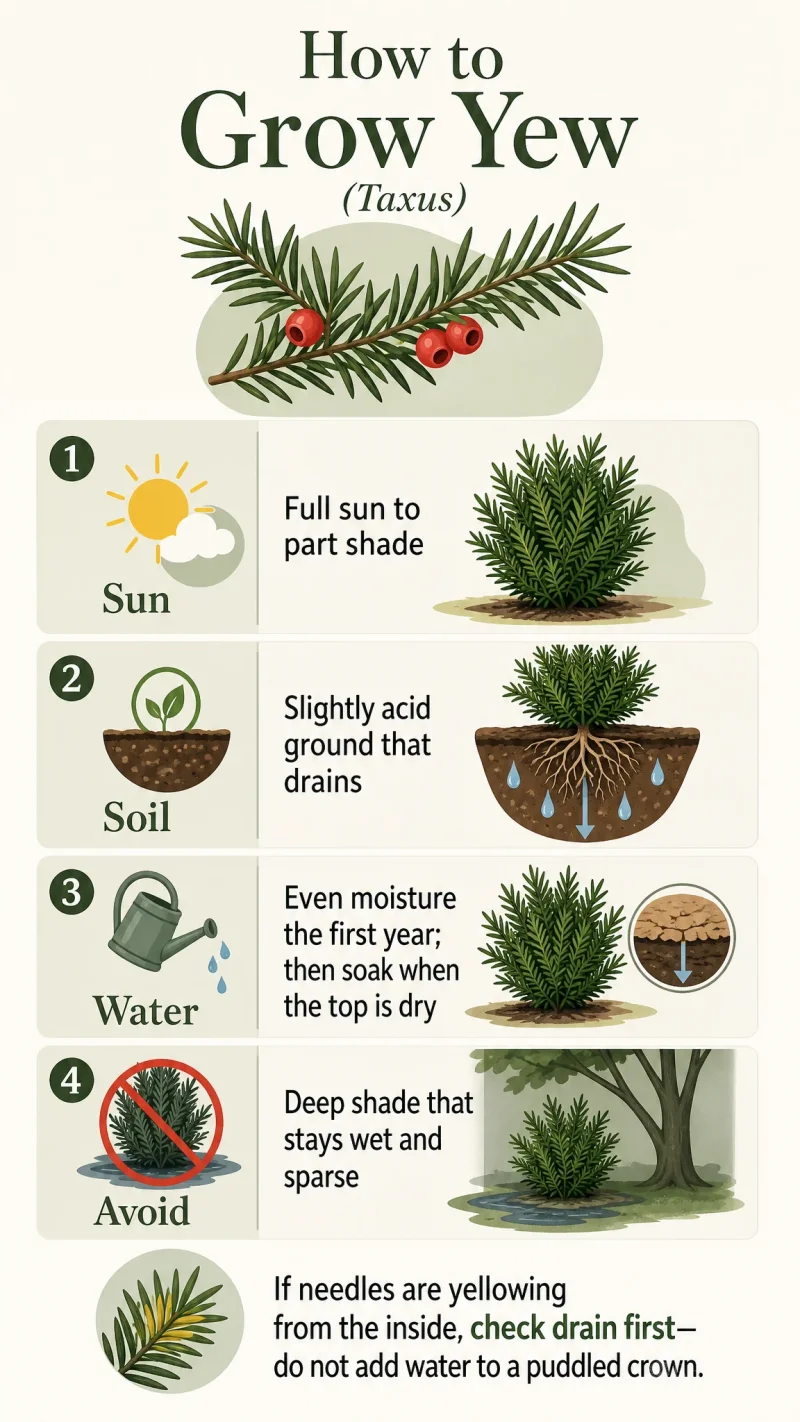
Give it well-drained soil and sun to shade
| Factor | Recommended | Avoid |
|---|---|---|
| Sun | Full sun to part shade | Deep shade that stays wet and sparse |
| Soil | Slightly acid ground that drains | A low spot, a clay cup, or a downspout bed |
| Water | Even moisture the first year; then soak when the top is dry | Standing water around the roots |
| Wind | A site with some shelter | A winter blast that browns the tips |
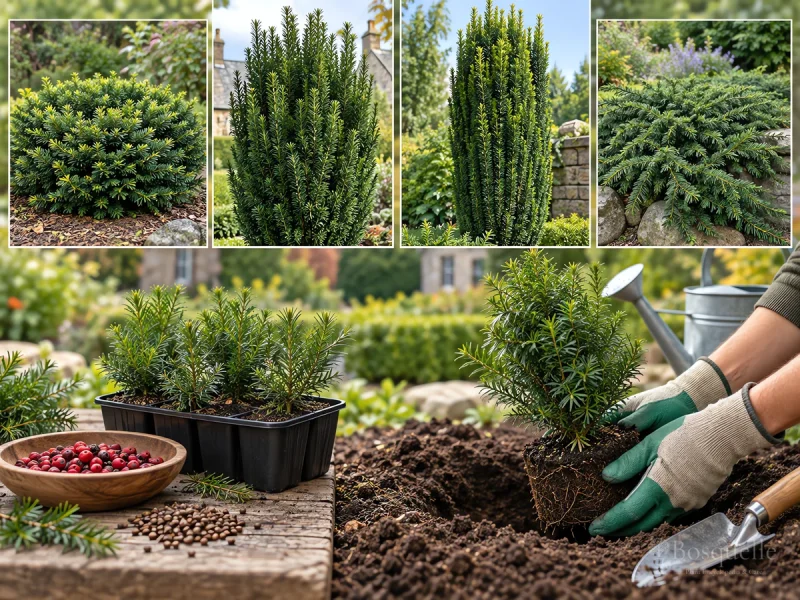
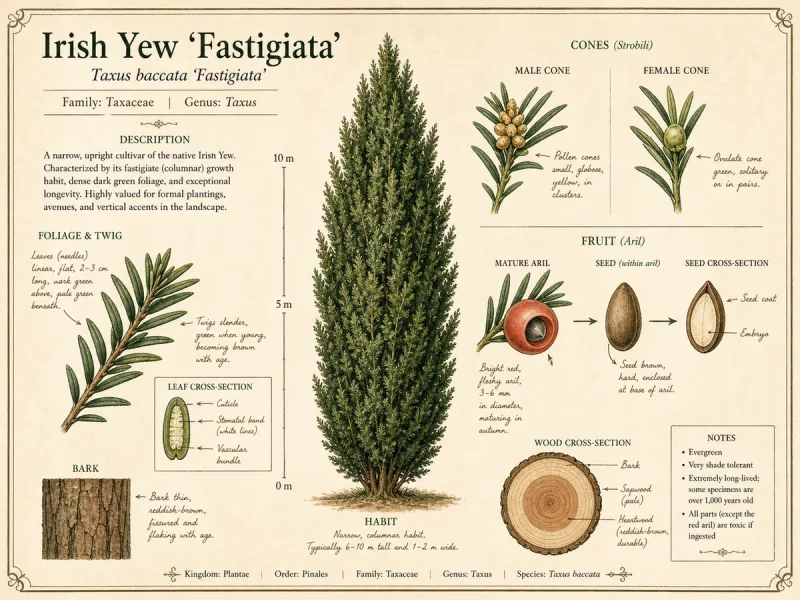
Yew roots rot in soggy ground. Give it a bed that drains, in full sun to part shade. Deep shade slows growth and thins the interior. [1] [2] A mound such as Densiformis or a column such as Hicksii wants that same drain. Match kind on Types of Yew.
Does yew need full sun?
Full sun to part shade is the usual site. Deep shade makes it sparse. Wet shade is where the roots rot.
Water the first year, then soak when the top is dry
A new plant needs water so roots leave the nursery ball. An established yew takes missed rain better than a puddle.
- Water thoroughly after planting. Keep the root ball moist — not soggy — through the first growing season.
- Once roots have taken, soak when the top few inches of soil are dry. Skip extra water when the soil is already wet.
- Water at the soil, not over the needles, so the foliage dries.
How often do I water yew?
Keep a new plant moist for the first year. After that, soak when the top of the soil is dry. Soggy soil around the roots is the primary cause of root rot.
Shelter it from winter wind
Dry wind pulls water from the needles faster than frozen ground can replace it. Tips turn brown, especially on an open, exposed side.
- Site it where a building or other evergreen breaks the wind.
- Water well before a hard freeze if the soil is dry.
- Mulch the root zone lightly, kept off the stems.
Grow a compact kind in a draining pot
Open ground that drains is the usual home. A compact kind can sit on a patio if the pot drains and you water it through summer heat. Roots in a pot freeze harder than roots in the ground, so move it out of drying winter wind.
- Choose a pot with drain holes, at least 18 inches deep. Do not use a saucer of standing water.
- Use potting mix, not garden soil from a wet bed.
- Water when the top of the mix is dry. In winter, shelter the pot from wind and keep the mix from staying soggy.
Can I grow yew in a pot?
A compact kind can sit in a draining pot if you water it in summer and keep the mix from staying wet. Open ground that drains is the usual home.
Not yew pine — and not plum yew
Tags that say Japanese yew or yew pine may be Podocarpus, a different genus. See How to Grow Podocarpus. Plum yew is Cephalotaxus, not Taxus. Canada yew is sometimes called ground-hemlock; it is still yew, not hemlock.
Is Japanese yew the same as yew pine?
No. Yew pine is Podocarpus. Japanese yew in a US shop is usually Taxus — often an Anglo-Japanese hedge, not yew pine.
If needles are yellowing from the inside, check drain first — do not add water to a puddled crown.
FAQ
Can I use it as a hedge?
Yes. Match the finished height on the tag — a Densiformis mound is not an Irish column. See Types of Yew.
Are yew berries poisonous?
Needles, bark, and the seed inside the red aril are toxic if eaten. The red flesh around the seed is the exception, but do not snack on it. Keep pets and livestock from chewing foliage.
Related guides


Recommended plants




References
- [1] Virginia Cooperative Extension -
https://www.pubs.ext.vt.edu/content/dam/pubs_ext_vt_edu/3010/3010-1500/3010-1500.pdf - [2] NC State Extension Gardener -
https://plants.ces.ncsu.edu/plants/taxus/common-name/yew/ - [3] Gardener's Path -
https://gardenerspath.com/plants/ornamentals/grow-yew/ - [4] University of Missouri IPM -
https://ipm.missouri.edu/MEG/2020/6/yews-DT/
This note is part of Taxus Guides.
More first-season notes by plant are gathered in How to Grow Guides.
Updated: Reviewed by Bosquelle Editors