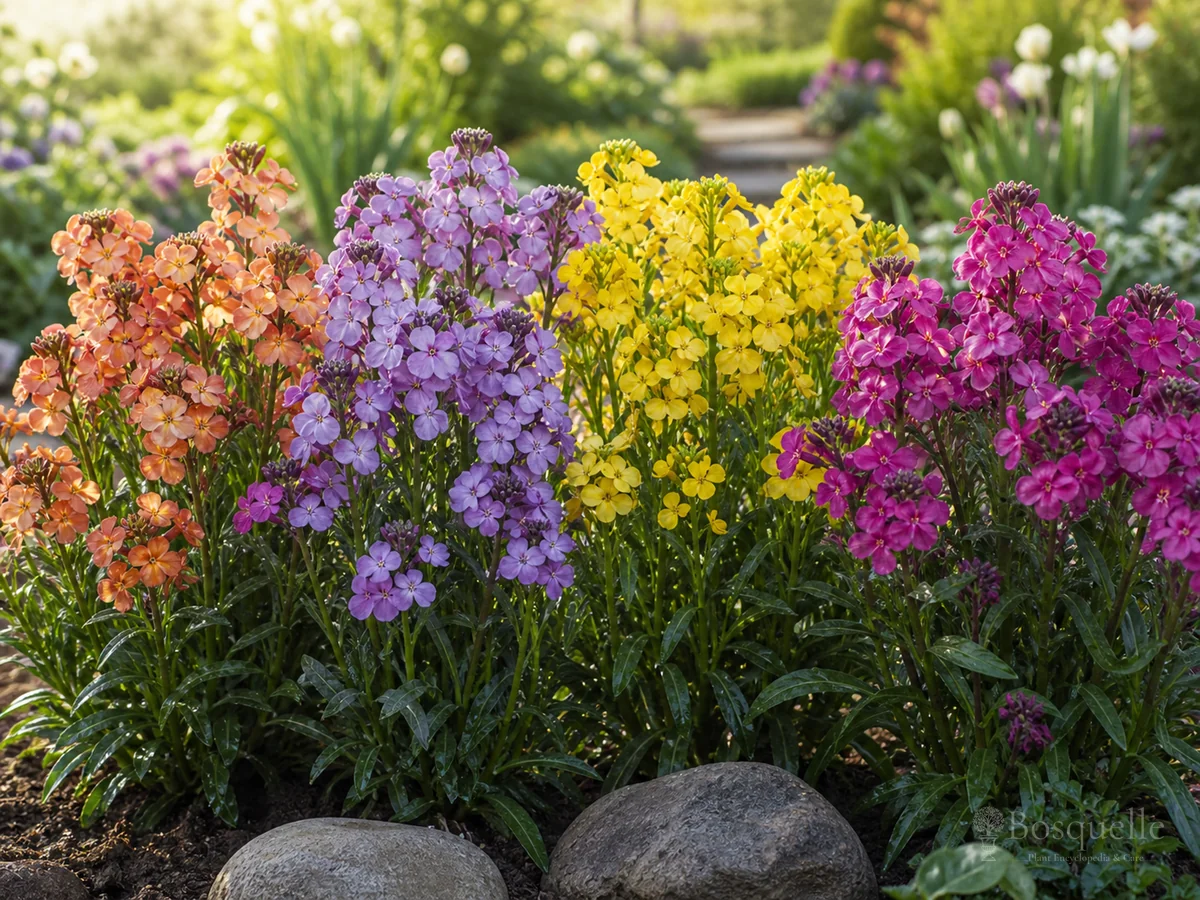
Wallflower (Erysimum) wants full sun and soil that drains — the rocky wall niche in the name. Cool spring is the bloom peak. Many kinds are short-lived perennials or biennial bedding, not a woody shrub. Bowles's Mauve is the usual mauve border plant. Heat, wet clay, and a nitrogen feed are the usual fail.
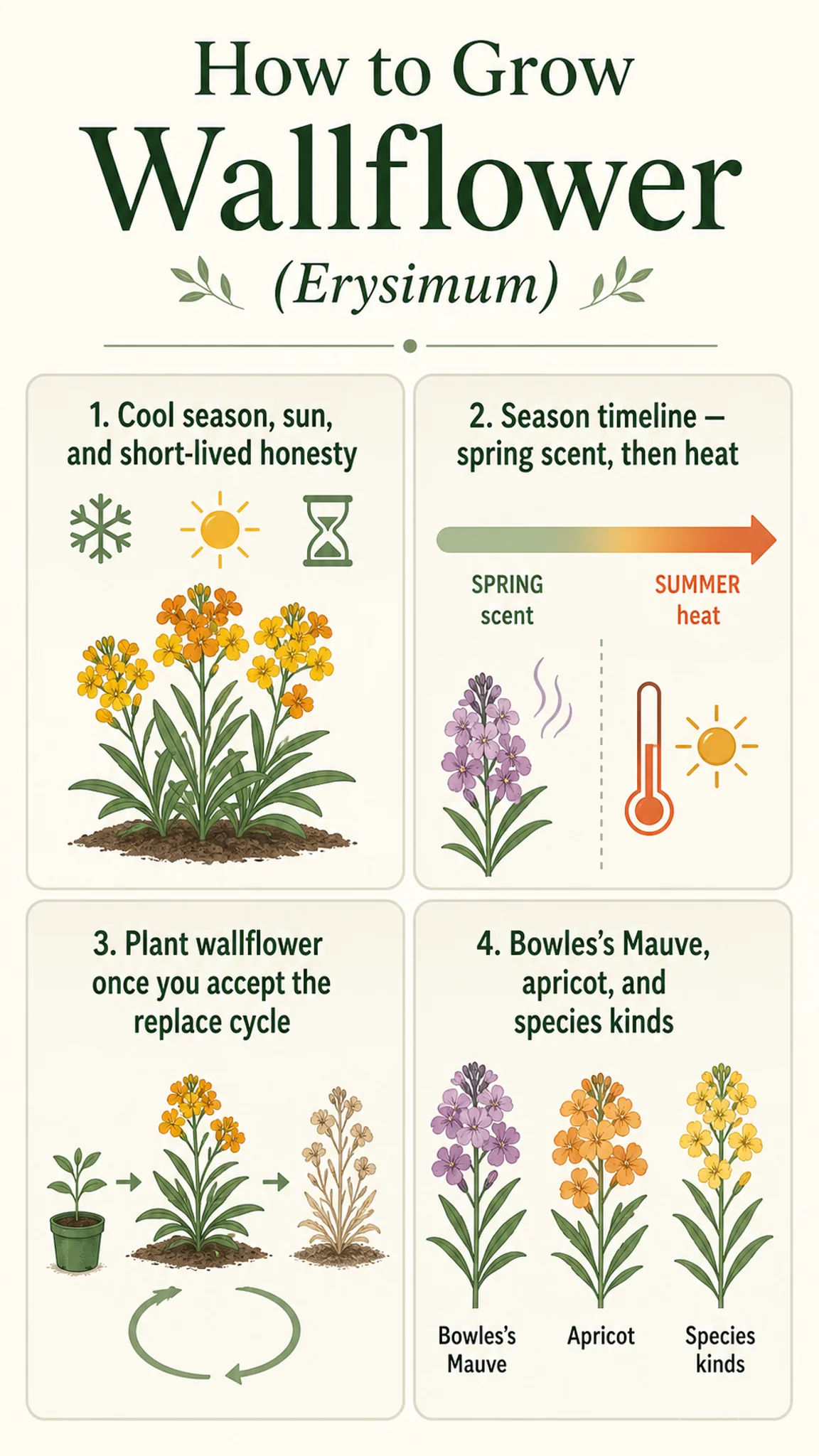
Sun, drain, and a short life
| Factor | Recommended | Avoid |
|---|---|---|
| Light | Full sun; light afternoon shade only in brutal southern heat | Deep shade that stretches stems and thins bloom |
| Soil | Sandy, gritty, or raised; neutral to alkaline; lean is fine | Wet clay that holds winter water on the crown |
| Water | Soak to establish, then ease off | Standing water; a rich weekly feed |
| Lifespan | Short-lived perennial, or biennial bedding you replace | A peony-style clump that stays for a decade |
| Season | Cool spring peak; some rebloom in a mild fall | Expecting midsummer tropical bedding in a hot border |
North Carolina Extension: classic wallflower wants a wall or rocky drain and no heavy feed. Hybrid kinds are short-lived and a cool-season plant in the South. Linifolium types get leggy in year two and are best treated as annual or biennial refresh. Missouri Botanical Garden: Erysimum cheiri is often biennial, self-sows, and needs stone-wall drainage. The Spruce: full sun, sandy well-drained soil, drought-tolerant once established — wet roots are the decline.
The common name is the site. Cracks in stone, a gravel strip, a raised bed that dries after rain. Rich, wet loam makes soft stems and rot. Mississippi State Extension treats Siberian wallflower as a cool-season orange-yellow display — same sun and drain, still not a summer tropical. In hot inland gardens, a little afternoon shade is fine. Deep shade is not.
Do not overfeed. Average to poor ground beats a nitrogen schedule that makes floppy growth and a weak winter. Wallflower often likes neutral to slightly alkaline soil; a lime-rich wall pocket is closer to the native niche than a peat-heavy mix. Water new plants until they root, then let the top inch dry. Ice water on the crown in freeze-thaw clay is a faster kill than a missed watering in May.
Plan replacements. Take cuttings of named kinds. Or pick a heat-proof perennial for the exact hot strip. Year one often looks tighter than a nursery photo. Give sun and drain a full cool season before you decide the plant failed.
- Full sun. Grit or a raised bed. No wet crown.
- Cool-season peak. Heat slows bloom; that is season, not a failed plant.
- Replace or take cuttings. Do not wait for a decade clump.
How to plant wallflower
- Pick full sun and sharp drain. Raise sticky clay with grit or a low berm so winter water runs off the crown. Rocky edges, raised beds, and wall pockets are classic. Skip bogs and lawn drip.
- Plant in fall or early spring. Set the crown at soil level, not buried. Space so air moves — about 10–12 inches for compact kinds, a little more for a wide mauve mound.
- Water to settle, then lean. A light grit mulch is fine. Do not bury stems in a wet bark blanket.
- Enjoy the cool-season peak. Deadhead spent spikes on display plantings. On biennial types, leave seed only where you want volunteers.
Biennial English wallflower is a two-year cycle. Sow in late spring or early summer in a spare row or trays, grow the plants on, and move them to the flowering spot in late summer or fall so they bloom the next spring. Pinch the tips when you have a few pairs of true leaves so the plant bushes. Named perennial kinds such as Bowles's Mauve go in as nursery plants in fall or early spring — they are not that seed cycle.
Common fails: deep shade; waterlogged clay; treating wallflower as hot-summer bedding; overfeeding; expecting one crown to fill the same circle for a decade. If stems lean, check sun and nitrogen before you buy a stake.
Firm plants in well. A loose, rocking crown in a wall pocket dries out or snaps. Water the day you plant, then ease off once you see new growth. Fall plantings want time to root before a hard freeze. Spring plantings want to be in before heat arrives.
Deadhead, shear, and cuttings
The Spruce: pinch spent blooms so the plant stays full. After the main flush, or in early spring in mild winters, cut stems back by about half so they do not go leggy. In colder gardens, a harder cut in fall to a couple of inches is a tidy option. Do not cut into old bare wood — it seldom resprouts.
- Deadhead spent spikes through the main flush if you want a longer show.
- After that flush, shear about a third to a half of the growth on a dry morning. Leave green leaf on the stems.
- Take semi-ripe cuttings of named plants in summer if you want the same color next year. Cut a 3–4 inch non-flowering shoot and strip the lower leaves. Seed of Bowles's Mauve will not come true.
- Stick cuttings in a gritty mix. Keep the mix just moist in bright shade until roots form.
- Replace worn-out crowns. Short life is normal, not a failed plant.
GardenersNet matches the halfway cut after bloom to keep the plant from stretching. Soft tips after a nitrogen feed attract aphids — hose them in the morning rather than feeding again. Collapse after a wet winter is drainage and lifespan, not a mystery virus.
Biennial display plants can be pulled and composted when the show ends. Perennial kinds get a shear and another year if the crown is still firm. If the center is woody and bare, take cuttings and start fresh rather than waiting on that stump.
Bowles's Mauve, bedding, and species
Sun and drain are shared. Lifespan and habit still differ. Sort that after the site is right, not before.
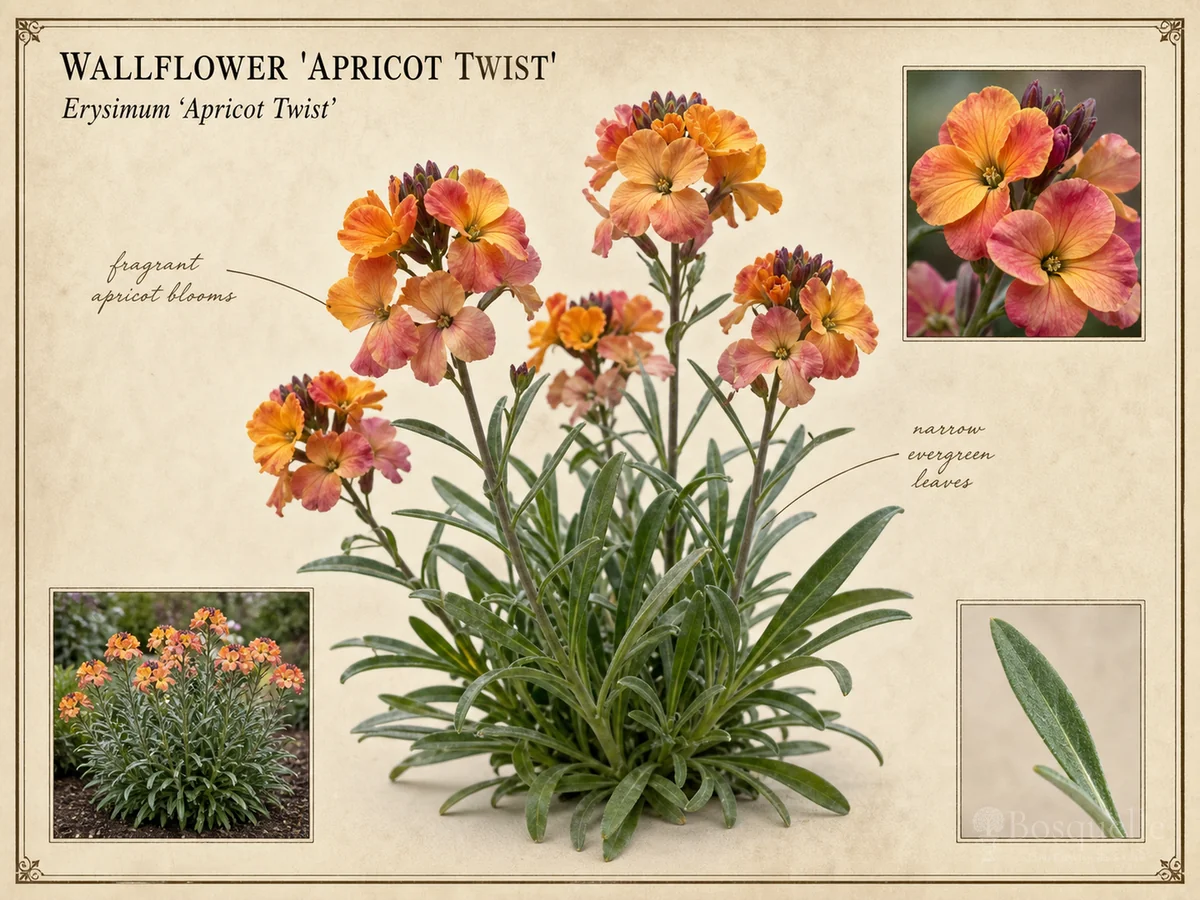
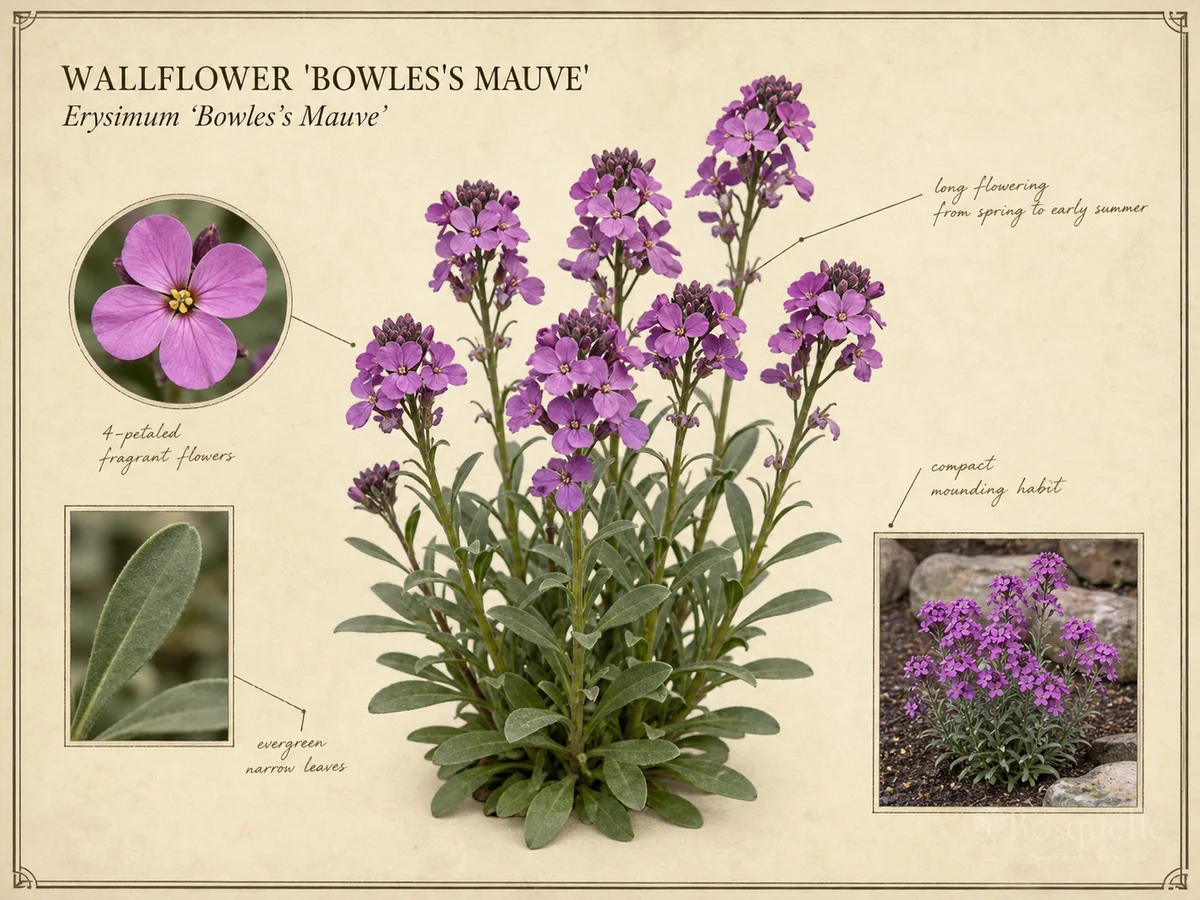
- Bowles's Mauve and apricot — Bowles's Mauve is the classic long-bloom mauve. Apricot Twist is warmer apricot on the same cool-season habit. Flower color does not buy heat tolerance.
- Fragrant sunshine and magenta — Walberton's Fragrant Sunshine and Magenta Glow push brighter yellow-to-magenta with scent still in the wallflower lane.
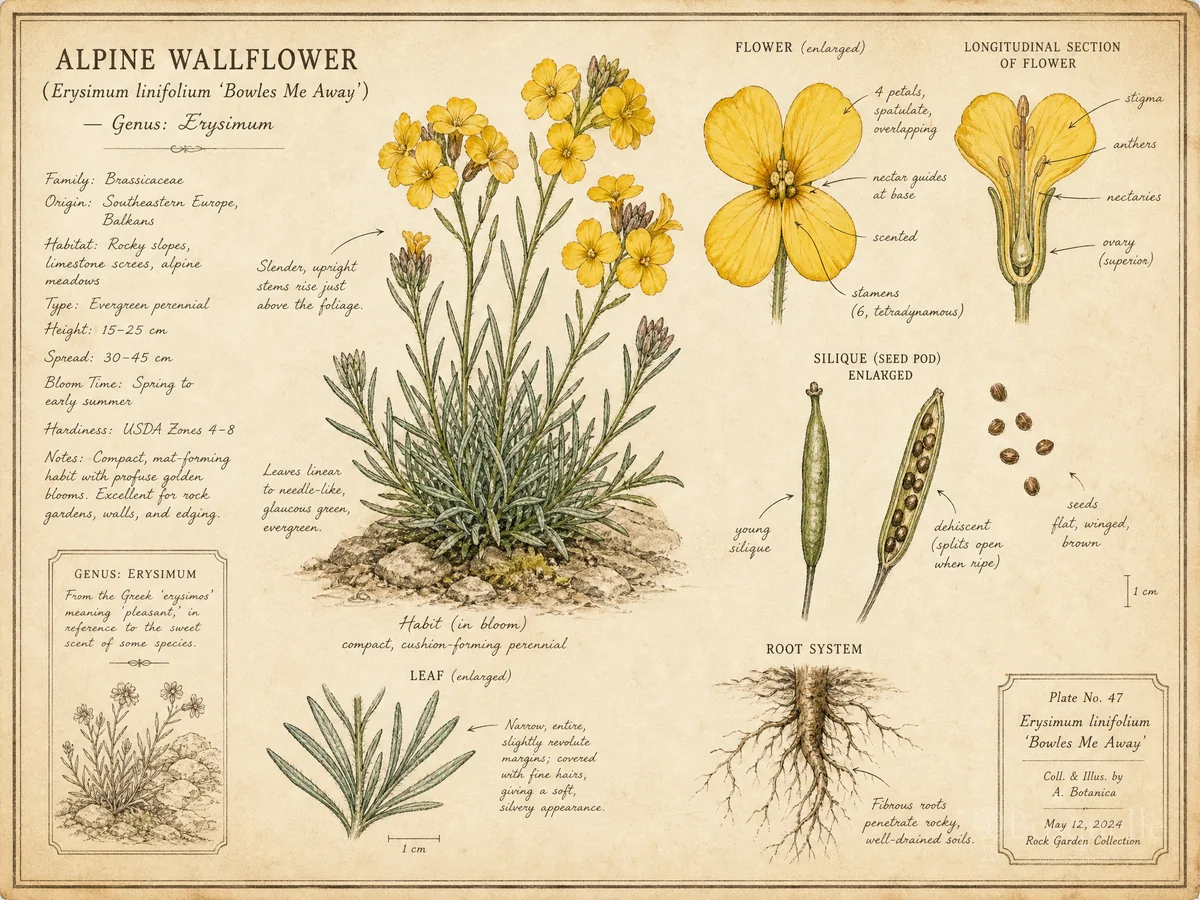
- Species and linifolium — E. capitatum is a western native / rock-garden plant. Bowles Me Away shares sun and drain and often gets leggy — treat it as a refresh plant, not a hedge.
Siberian wallflower is a related cool-season orange or yellow bedding type, often sold with pansies. Same sun and drain. Switching from Bowles's Mauve to that orange sheet is a display choice, not a shrub upgrade. Choose scent and a replace plan first, then color.
If the tag says wallflower and shows a woody mauve mound, treat it as a short-lived perennial. If it shows a spring orange pack with pansies, treat it as biennial bedding. Check the habit before you buy.
Pots, partners, and pests
| Factor | Recommended | Avoid |
|---|---|---|
| Pot | A drained container in full sun; empty the saucer | A pot of garden soil with no drainage through summer heat |
| Partners | Spring sun plants that share drain — pansies, bulbs, lean rock-garden kinds | Bog ferns or a lawn drip that keeps the crown wet |
| Pests | Hose aphids; watch flea beetles (brassica relative) | A nightly mist that never dries |
A large pot works for a cool-season scent show. Use an open mix, full sun, and no standing water. Expect to refresh rather than keep one crown through a hot summer on paving. Check the top inch; water thoroughly when it is dry. Heat on a patio dries the mix fast — that is more water, still not a wet saucer.
Partners: spring scent with Bowles's Mauve or Walberton's Fragrant Sunshine; a warm apricot pocket with Apricot Twist; a rock-edge strip with E. capitatum or Bowles Me Away where the soil stays lean. Skip deep shade. Skip a moisture-loving neighbor you irrigate until the wallflower rots.
Aphids cluster on soft tips. A strong hose blast in the morning usually settles them. As a cabbage relative, flea beetles can pit leaves in some regions. Wet crowns invite rot far more often than those insects. Hungry deer may still sample — do not buy wallflower as a guaranteed deer-proof hedge.
Give wallflower full sun and sharp drainage, enjoy the cool spring peak, shear after the flush, and plan cuttings or replacements — it is not a forever shrub.
FAQ
Is wallflower a perennial?
Often a short-lived perennial, or treated as biennial bedding. Plan cuttings or replacements rather than one permanent clump.
Does wallflower need full sun?
Yes for the stockiest stems. In hot southern summers, light afternoon shade can help. Deep shade stretches growth and thins bloom.
Does wallflower like wet soil?
No. Very well-drained soil is essential. The common name nods to rocky wall pockets. Wet crowns rot.
When does wallflower bloom?
Cool spring is the peak. Mild climates may see a longer show or some fall interest. Do not expect reliable midsummer tropical bloom.
What is Bowles's Mauve wallflower?
A classic long-bloom mauve Erysimum on the same sun, drainage, and short-lived care as other garden wallflowers. Preserve it with cuttings.
Can I grow wallflower in a pot?
Yes in a large, draining container in full sun. Refresh or take cuttings rather than keeping one crown through summer heat.
Will wallflower survive hot summers?
Many kinds struggle in prolonged heat. Treat them as cool-season plants with a replace plan in hot climates.
How long do wallflowers live?
Many perennial kinds are short-lived — a few seasons of peak bloom. Sharp drain and cuttings extend useful years. Replacements are normal.
When should I plant wallflower?
Fall or early spring into well-drained soil in full sun, crown at soil level. Biennials are sown earlier and moved in fall.
Should I deadhead wallflower?
Deadhead spent spikes for a tidier, longer show. After the main flush, shear about a third to a half. Do not cut into old bare wood.
Why did my wallflower disappear after a year or two?
Short-lived habit, wet winters, or summer heat. Check drainage and lifespan before blaming the cultivar.
Is Siberian wallflower the same plant?
It is a related cool-season Erysimum bedding type, often orange or yellow, sold for spring color. Same sun and drain. Still not a forever shrub.
Are wallflowers deer resistant?
Often browsed less than tender annuals, but hungry deer still sample. Do not treat it as a guarantee.
What companions work with wallflower?
Other full-sun spring plants that share drainage — pansies and cool-season bedding, or lean rock-garden plants. Not bog or deep-shade partners.
Recommended plants


More first-season notes by plant are gathered in How to Grow Guides.
Updated: Reviewed by Bosquelle Editors