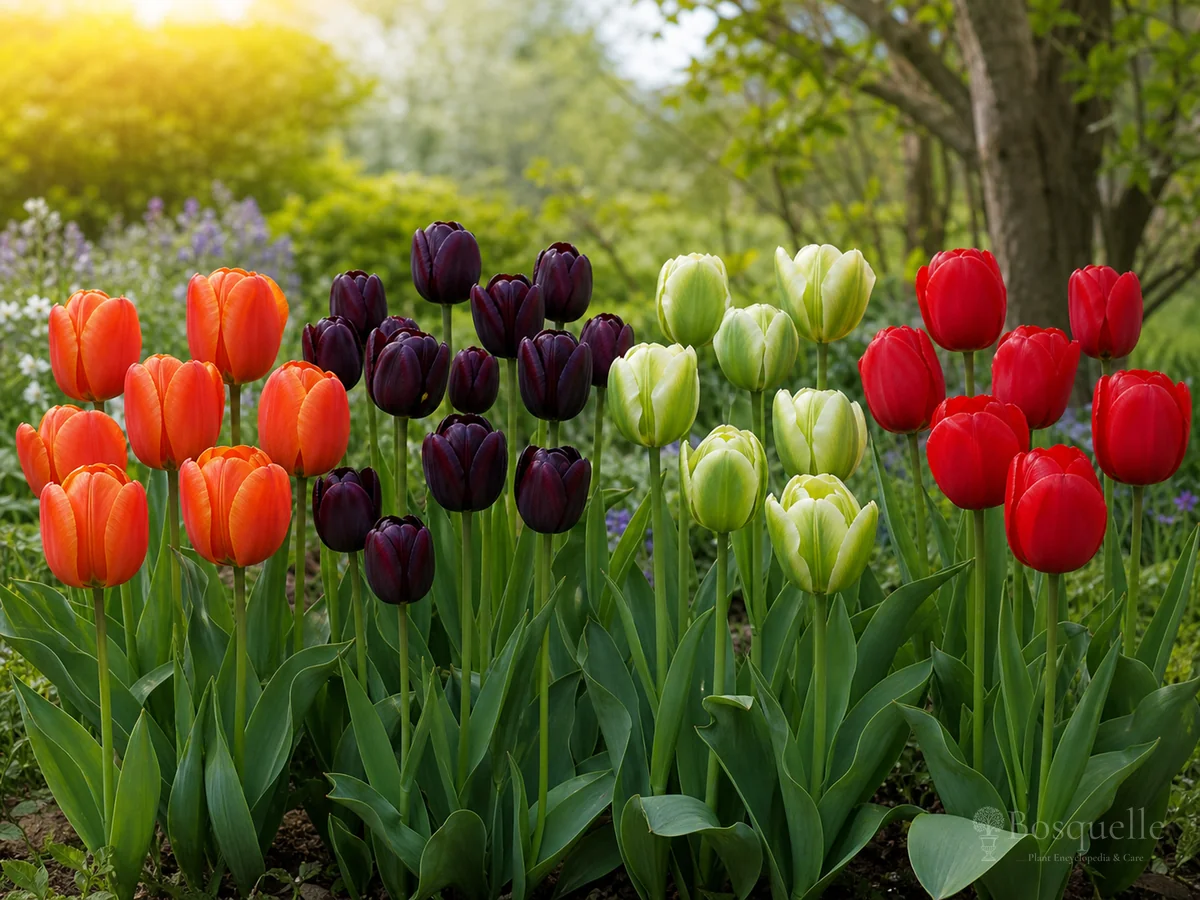

Tulip quick reference
- Light: aim for about six or more hours of sun for strong stems and colour — deep shade stretches and weakens blooms.
- Soil: well drained; bulbs rot in winter-wet clay. Raise beds or add grit where water ponds.
- Planting: autumn, when soil cools — about three times the bulb’s height deep (often 15–20 cm / 6–8″ for large bulbs; shallower for species types; pointy end up). Detail checklist on Planting Tulip Bulbs.
- Chill: cold winters usually finish buds in the ground; mild winters often need pre-chilled bulbs or an annual mindset.
- Water: modest after planting if autumn is dry; steady moisture as shoots and buds grow in spring.
- After bloom: deadhead spent flowers; leave leaves until they yellow so bulbs can recharge.
Chill needs — cold ground vs mild winters
Tulips are not “plant once, forget forever” in every garden. Where winters reliably chill the soil, autumn-planted bulbs usually complete flower initiation underground. Where winters stay mild, buy pre-chilled bulbs, chill them yourself in a cool place before planting, or treat bedding cultivars as a one-season display. Confirm each cultivar on its plant profile — do not assume a showy parrot such as Caribbean Parrot will return without chill and sharp drainage. (Example: tall bedding types such as Apeldoorn follow the same chill rule as early cups.)
Site and soil for drifts
Choose an open, sunny bed with sharp drainage. Plant in informal drifts rather than single lonely bulbs so stems have air movement. Tall bedding types such as Apeldoorn and Queen of Night need that room; compact botanical types such as Little Beauty suit rock edges and front rows.
In heavy clay, raise the bed or improve structure with grit and organic matter so water does not sit on the bulb. In sandy ground, add compost so spring moisture does not flash away. Mulch lightly after the soil cools — keep mulch from burying the nose of the bulb too deep.
Planting — autumn, depth, and orientation
Plant when soil has cooled in autumn — not in summer heat and not into frozen ground. A practical depth rule of thumb is about ~3× the bulb height of soil above the nose (pointy end up) — for large bedding bulbs that often means ~15–20 cm (6–8″); compact botanical and species types such as Little Beauty sit shallower (~8–13 cm / 3–5″). A large Apeldoorn-class bulb sits deeper than a small Little Beauty. The full autumn checklist — timing, depth, spacing, chill — lives on Planting Tulip Bulbs so this pillar stays the year-round method, not a second planting essay.
- Timing. Wait for cool soil in autumn. In mild winters, pre-chill or buy prepared bulbs before planting.
- Hole and orientation. Dig to depth, set the pointy end up, space roughly two bulb-widths apart for drifts, backfill, and water once if the soil is dry.
- First spring. Water as growth starts; protect emerging shoots from late hard freezes with a light cover if needed.
Watering through spring growth
After autumn planting, bulbs usually sit quiet until soil warms. Water once if the autumn stays bone-dry. In spring, soak when shoots lengthen and buds swell — especially in sandy beds and windy sites. Avoid daily misting; deep soaks train roots downward. Container tulips dry much faster — see Tulips in Containers.
After bloom — deadhead and let foliage ripen
- Deadhead faded flowers so energy does not go into seed.
- Leave the foliage until it yellows and softens — cutting green leaves early starves next year’s bloom. If the yellowing looks messy, that is the recharge phase, not a failure — hide it with Tulip Companion Plants skirts, do not shear green.
- Lift optional: in wet summers or crowded beds, lift and store dry after foliage dies; many gardeners leave hardy bulbs in place if drainage stays sharp.
Return bloom — perennial vs seasonal
Some species and well-sited garden types return for years. Many fancy bedding cultivars — doubles, fringed parrots, tall dark stems — are happiest as a planned spring display, especially where chill is short or summers stay wet. That is a culture choice, not a failure. Replant autumn drifts when you want the show again; favour botanical types such as Turkestanica and compact Little Beauty when you want stronger return odds.
Deer, rodents, and pets
Tulips are a favourite browse for deer and rodents in many temperate gardens. If pressure is high, use fencing, repellents, or plant where browsing is light — catalog pages rarely mark tulips as reliably deer-proof. Cultural care (sun, drainage, depth, chill) still comes first.
Pets: tulip bulbs and plants are toxic if chewed — keep bulbs out of reach of dogs and cats during planting, and do not treat the bed as a snack garden. Fragrance near a path is fine; chewing is not. If you need scent without temptation for pets, shortlist carefully and site out of reach — see Fragrant Garden Tulips.
Seasonal rhythm
- Autumn: plant when soil cools; mulch lightly after.
- Winter: bulbs chill in cold ground (or via pre-chill in mild winters); watch winter-wet sites for rot.
- Spring: water as growth starts; enjoy early types such as Red Emperor and Orange Emperor; deadhead after peak.
- Early summer: let foliage ripen; then lift or leave per drainage and crowding.
Growing tulips in containers?
Pots change chill, drainage, and watering. Compact types and deep containers can put spring colour on a patio, but this pillar stays focused on in-ground care. For pot size, compost, chill, and after-bloom steps, use Tulips in Containers.
Common mistakes: planting in hot soil or soggy clay; setting bulbs too shallow; cutting green foliage after bloom; expecting mild-winter gardens to perennialise every bedding cultivar without chill; pasting this whole pillar onto every cultivar page.
Choosing form first? See Types of Tulips. Want scent near a path? See Fragrant Garden Tulips. Spring partners for underplanting live on Tulip Companion Plants.
Plant cool and deep in drained sun, honour chill, water through spring growth, let foliage ripen, and open child guides for planting checklists, pots, types, companions, and fragrant shortlists.
FAQ
Do tulips need a cold winter to bloom?
They need a chill period to finish flower buds. Cold winters usually supply it in the ground after autumn planting; mild winters often need pre-chilled bulbs or annual replacement.
How deep should I plant tulip bulbs?
About three times the bulb’s height of soil above the nose — often 15–20 cm (6–8″) for large bulbs and 8–13 cm (3–5″) for species/miniatures. See Planting Tulip Bulbs for the checklist.
Do tulips need full sun?
Aim for about six or more hours of sun for strong stems and full colour. Deep shade stretches stems and thins blooms. Light shade under deciduous trees can work if the bed is bright during the spring leaf window.
How do I care for tulips after blooming?
Deadhead spent flowers, then leave the foliage until it yellows and softens so the bulb can recharge. Cutting green leaves early is a common reason bedding tulips fail to return well.
Do tulips come back every year?
Some species and well-sited garden types perennialise; many fancy bedding cultivars are treated as seasonal displays, especially where chill is short or summers stay wet.
Are tulips toxic to people or pets?
Yes — tulips contain tulipalin. Repeated handling of bulbs can irritate skin (tulip finger), and the plant is toxic if eaten, especially to dogs and cats. Wash hands after handling and keep pets away from bulbs.
Where do I plant bulbs in autumn?
Planting Tulip Bulbs for the autumn checklist; this pillar for year-round growing rules; Tulips in Containers for pots.
Why did my tulips not return for a second year?
Most modern hybrid tulips are bred for a single spectacular display and decline after year one. Species tulips (T. sylvestris, T. sprengeri) and some Darwin hybrids naturalise reliably. For returning bulbs: allow foliage to ripen fully, choose naturalising varieties, and avoid rich fertile soil.
When should I lift tulip bulbs?
In formal beds, lift once foliage has died back (usually June). Store dry in a cool, ventilated place until replanting in autumn. In informal borders where other plants cover the space, bulbs can be left in well-drained soil — choose varieties labelled as naturalising or perennial.
Related guides



Recommended plants


This note is part of Tulip Guides.
More first-season notes by plant are gathered in How to Grow Guides.
Updated: Reviewed by Bosquelle Editors