
Grow stenocactus in full sun, in a mix that drains, and water when the mix is dry. It is Stenocactus multicostatus, a small globe cactus sold as brain cactus for its many wavy ribs.

Give it full sun, a mix that drains, and water when the mix is dry
| Factor | Recommended | Avoid |
|---|---|---|
| Light | Full sun; light shade in the hottest afternoon | Do not keep it in a dim room if you want tight ribs and flowers |
| Water | In growth, soak when the mix is dry, then let the pot drain | Do not keep the mix wet between waterings, especially in winter |
| Soil | Gritty cactus mix with extra pumice or coarse sand | Do not use packed potting soil that stays wet |
| Warmth | Keep it frost-free; a cool, dry rest in winter | Do not leave it wet in a cold room or outdoors in frost |
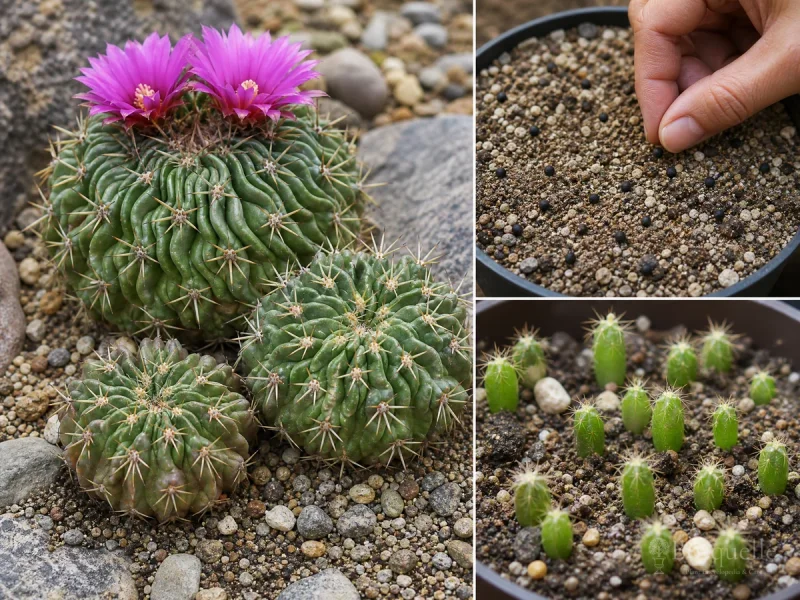
stenocactus is Stenocactus multicostatus, a small globe cactus from Mexico, about three to five inches tall. The body is grey-green to deep green, with dozens of thin, wavy ribs packed so close they look folded. Short spines sit on felted areoles. In spring it can open white to pink or violet funnel flowers with a darker stripe on each petal. [1] Give it full sun and a cactus mix that sheds water. While it is growing, water when the mix is dry, then empty the saucer. Keep the pot almost dry in winter, and add only a spare watering if the body wrinkles hard. [2] Soft, collapsing tissue is usually rot from a wet mix, not a missed watering. Sow seed on How to Propagate Stenocactus.
How do I care for stenocactus?
Give it full sun, a gritty mix with a drainage hole, and water only when the mix is dry. Keep it frost-free, and do not leave the mix wet in winter.
How often should I water stenocactus?
In summer growth, soak the mix when it is dry, then let the pot drain. In winter, keep it almost dry and water only if the body wrinkles hard.
When does stenocactus bloom?
It flowers in spring from the crown, after a cool, dry winter. A wet, warm rest is the usual reason it skips bloom.
Keep it cool and almost dry in winter
This cactus wants a rest, not a freeze. Bring the pot indoors before nights turn to frost. Keep it bright, and water much less. A cool, wet mix in winter is the usual collapse. A windowsill rest that stays dry and above about 50°F is safer than a wet porch. [3]
Can stenocactus stay outdoors in winter?
Only where nights stay frost-free and the mix stays dry. In a cold garden, bring the pot in before frost, keep it bright, and water less until spring.
Grow it in a snug pot that drains
The usual home is a pot, a bright sill, or a patio table, not a wet garden bed. Roots stay small, so a snug pot with a hole dries faster than a deep tub. Unglazed clay dries faster than plastic. Empty the saucer. Wait to size up until the body crowds the rim, often every two or three years.
- Choose a snug pot with a drainage hole. Empty the saucer after you water.
- Fill it with cactus mix cut with pumice, coarse sand, or grit. Do not use packed houseplant soil.
- Set the plant no deeper than it grew in the nursery pot. Firm the mix around the body without burying the ribs in wet mix.
- Water once to settle the mix, then wait until the mix is dry before you water again.
- Wait to move it into a larger pot until the body crowds the rim. A jump into a deep, wet tub is the usual rot.
Can I grow stenocactus in a pot?
Yes. Use a snug pot with a hole, a gritty mix, and full sun. Empty the saucer. It is not a dim indoor foliage plant.
Not the crested ladyfinger sold as brain cactus
A shop tag that says brain cactus is often a crested ladyfinger cactus, Mammillaria elongata with fan-like folds, not this ribbed globe. This plant is Stenocactus multicostatus: a round body with dozens of thin, wavy ribs. Older tags may say Echinofossulocactus; that is the same plant, not a second kind. [4]
Crested ladyfinger care lives on How to Grow Pincushion Cactus. Coral cactus is a crested Euphorbia with milky sap, not a true cactus — see How to Grow Euphorbia. A barrel cactus is a much larger globe — see How to Grow Barrel Cactus. Chin cactus and grafted moon cactus live on How to Grow Chin Cactus and How to Grow Moon Cactus. Stenocactus is one shop card here. Extra species names on a listicle are not extra kinds we list.
Is this the same as the grocery-store brain cactus?
Often not. Grocery-store brain cactus is usually a crested ladyfinger cactus with fan-like folds. This plant is a small globe with many thin, wavy ribs.
If the body goes soft, move the pot into brighter light, let the mix dry, and water only when the mix is dry. Bring it in before frost.
FAQ
Do I prune it?
You do not shape it like a shrub. Cut out a soft, rotting piece so the rest stays dry. New growth comes from the remaining body.
Do you list other Stenocactus species?
No. This shop card is Stenocactus multicostatus. Other species names belong to collector lists, not extra cards we list.
Is it safe around pets?
It is not known to be toxic if eaten, but the spines still hurt. Keep pets from chewing or rolling on it.
Is Echinofossulocactus a different plant?
No. Echinofossulocactus is an older name for this same cactus, not a second genus to grow.
Related guides
Recommended plants

References
- [1] Royal Horticultural Society -
https://www.rhs.org.uk/plants/327544/stenocactus-multicostatus/details - [2] Llifle Succulent Encyclopedia -
https://www.llifle.com/Encyclopedia/CACTI/Family/Cactaceae/1730/Stenocactus_multicostatus - [3] Tula House -
https://tula.house/blogs/tulas-plant-library/stenocactus-multicostatus - [4] Wikipedia -
https://en.wikipedia.org/wiki/Stenocactus_multicostatus
This note is part of Stenocactus Guides.
More first-season notes by plant are gathered in How to Grow Guides.
Updated: Reviewed by Bosquelle Editors