
Statice is Limonium grown for papery clusters that hold color fresh and dried. Full sun and sharp drainage keep the crown from rotting. wavyleaf statice is the classic warm-season cut flower; broad-leaved sea lavender is a longer-term perennial sea lavender. Match annual versus perennial before you copy a neighbor’s watering.

Full sun, sharp drainage, and crown rot
| Factor | Recommended | Avoid |
|---|---|---|
| Light | Full sun (six or more hours) | Shade that softens stems and thins clusters |
| Soil | Sandy loam or a raised bed that drains fast | A wet clay bowl; standing water at the crown |
| Water | Settle new plants, then moderate; drought-tolerant once rooted | Constant soggy soil; evening overhead soak |
| Kind | Annual cut flower versus hardy perennial sea lavender | One care recipe for every Limonium tag |
North Carolina Extension and Missouri Botanical Garden: light, well-drained sandy loam in full sun; do not overwater. Crown rot and root rot follow wet soil and still air. Cornell: droughty ground is fine once plants are in. Salt tolerance on some coastal species is real. It is not a pass to drown an inland bed. Plants can struggle in high heat and humidity even when the soil drains — air around the stems matters as much as grit in the hole.
- Water the soil, not the foliage, and let the surface dry between waterings after the first weeks. New plugs need that settle-in moisture; established crowns do not want a daily soak.
- Leave air around the crown. Crowded, damp foliage is how rot starts on perennial clumps.
- On clay, raise the bed or add grit so water leaves in minutes. Do not plant in a compost bathtub.
- A patio pot works if the mix drains and the saucer is empty. Gritty mix and full sun beat a cachepot of standing water. Annual kinds are the usual pot crop; large perennial clumps belong in open ground.
Light feeding helps a hungry annual cut bed. Heavy nitrogen in shade makes soft stems that flop in the vase. If plants collapse from the crown, fix drainage before you blame the tag. Established perennial clumps want the same dry-to-medium moisture as the annual crop, just on a longer clock — a weekly lawn spray on the rosette is still the usual killer.
Annual wavyleaf vs perennial sea lavender
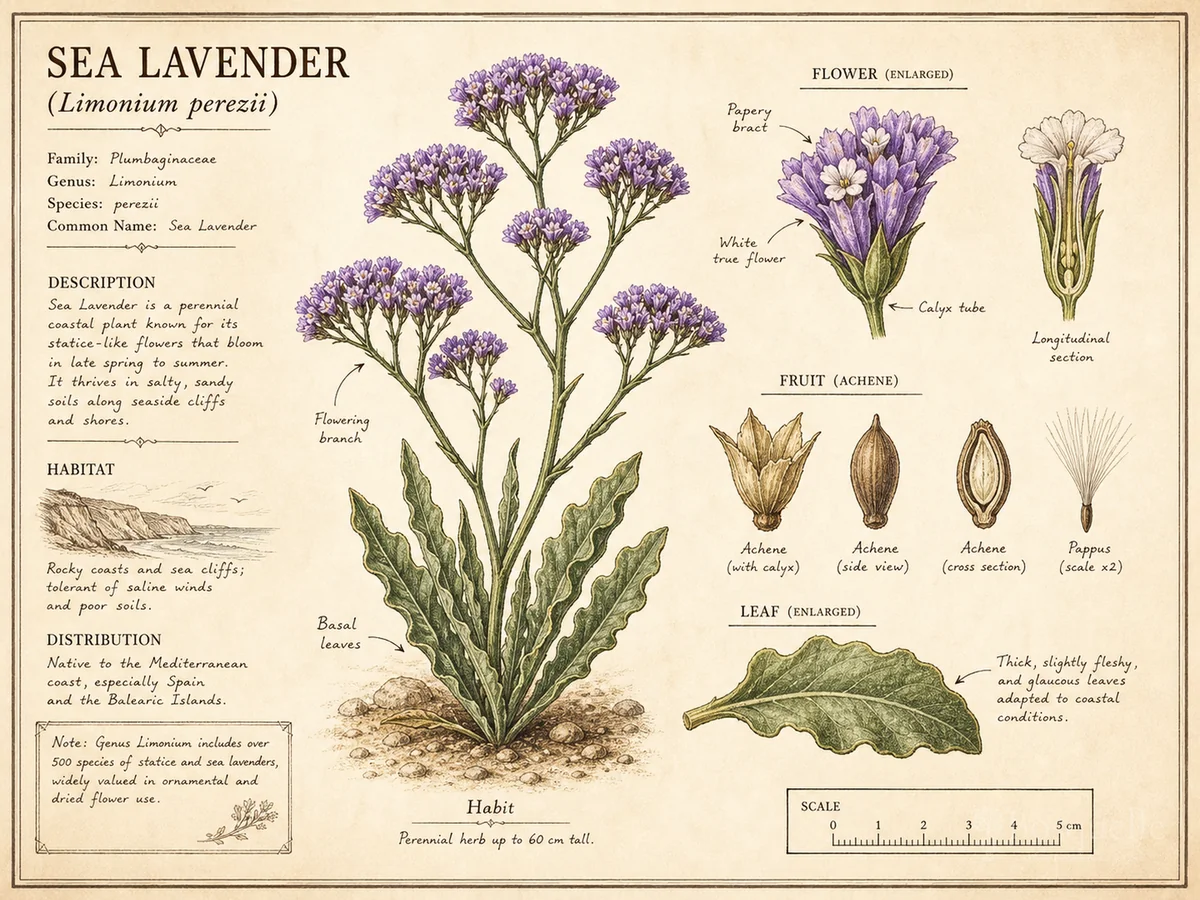
Gardeners search “statice” for the cut-and-dry flower and “sea lavender” for longer-lived clumps. Both are Limonium. The botanical name on the tag tells you which calendar you bought. Annual wavyleaf is a warm-season crop in cold-winter gardens, often 12–30 inches with winged stems and mixed calyx colors. Perennial sea lavenders return where winters match the species, usually as a basal rosette and a cloud of wiry stems. Perez's sea lavender is showier and often needs milder winters than Siberian or broad-leaved kinds.
- Annual cut flower — wavyleaf statice (L. sinuatum). Papery clusters in mixed colors on winged stems. One long bloom in a warm season. Deadheading does not restart a second flush like a petunia. Harvest for the vase and for drying.
- Garden perennial — broad-leaved sea lavender (broad-leaved) and Siberian statice. Clump-forming sea lavenders for a drained sun border. Missouri Botanical Garden: space for air; crown rot if wet. Stems are excellent fresh and dried. Tall clumps in clay may need a stake.
- Mild-winter show — Perez's sea lavender. Larger, brighter heads. Treat it as tender where hard freezes are routine. Same sun and drainage as the rest of the genus.
- Coastal natives — California sea lavender and Carolina sea lavender. Salt-meadow plants. North Carolina Extension: Carolina sea lavender is native on the eastern coast. Inland they still need sun and drainage, not a bog, and they will not turn a wet clay yard into a marsh garden.
Switching colors inside wavyleaf is a palette choice. Planting wavyleaf as if it were hardy broad-leaved sea lavender is a cultural mistake. A coastal species in an inland puddle still rots. Read height and life cycle on the tag before you plan a 3-foot perennial slot or a one-season cutting row. The six kinds in this library cover those forks; they do not share one winter or one harvest calendar. Read the tag.
- Hard-cutting a perennial for one florist flush — perennial clumps are not a disposable annual bed.
- Salt-tolerant as wet feet — salt meadows still drain. Inland clay that stays wet kills crowns.
- Shade for “softer color” — sun builds the stems and the clusters. Shade thins both.
- Deadheading as a rebloom engine — wavyleaf makes one long bloom. Cut for drying when clusters are fully open.
How to plant, and how to dry the stems
Plant tender annuals after frost, or start seed indoors eight to ten weeks ahead (Cornell). Keep seed warm, about 70–75°F, and barely cover it. Hardy perennial kinds go in during cool spring or fall, into soil that already drains. Do not set a wavyleaf plug into cold, wet clay in March and expect a midsummer dried-bouquet photo. Perennial clumps may look modest the first summer, then return thicker once the crown is settled and dry.
- Read the tag. Wavyleaf is the annual cut crop. Broad-leaved, Siberian, Perez, California, and Carolina kinds are the perennial or coastal fork.
- Choose full sun and sharp drainage. Sandy loam or a raised bed on clay. Skip wet shade.
- For annuals, sow after frost or transplant hardened seedlings. Set plants 12–18 inches apart so air can move. Perennial clumps need more room as they widen.
- Set the crown at grade. Water to settle, then lean dry. Do not bury the rosette in a compost mound.
- Optional: pinch young annuals once for a bushier frame (Cornell). Do not pinch a perennial clump as if it were bedding.
- Keep mowers and wet mulch off the crown. A gravel or thin organic mulch several inches off the stems is enough.
Harvest when clusters show strong color and before they brown. Cool-morning cuts hold better. Strip lower leaves, bunch loosely, and hang upside down in a dark, airy place until papery and dry (Cornell). Leave some bloom on the plant if you still want garden color. Annual wavyleaf will not throw a second huge flush after you cut; that harvest is the crop. A test bunch hung at peak color tells you whether you cut too early (stems wilt) or on time (calyx stays bright).
- Cut stems in full bloom, in the cool of the day.
- Strip leaves that would sit in the bunch.
- Hang in a dark, ventilated room or shed. Direct sun fades color.
- When stems are stiff and dry, store out of damp. Use in wreaths and vases.
- Do not fertilize a stressed, wet plant. Fix water first.
- Containers: gritty draining mix, full sun, empty saucers. Move tender kinds if a hard freeze is coming.
- Winter: annuals finish. Hardy perennials go dormant. Do not mulch into a wet collar on the crown. Cut spent wiry stems in late winter if you want a tidy clump; leave a few if you like the dried look in the border.
Partners that share sun and drainage
Pair statice with plants that want the same dry-to-medium sun strip. A cut-and-dry patch is wavyleaf statice with other sharp-drainage annuals you harvest in the same week — strawflower, gomphrena, and similar papery stems that dry on the same hang. A perennial border is broad-leaved sea lavender or Siberian statice as wiry color beside lean-sun perennials — not next to thirst-first shade plants. Coastal California sea lavender or Carolina sea lavender belong where salt and sand already match the species, still with drainage. The partner test is simple: if you would not water the neighbor that way, do not plant it in the same short row.
- Good neighbors: other full-sun cut flowers, gravel-garden perennials, and coastal plants that dry between waterings.
- Poor neighbors: bog primulas, lawn-edge irrigation, and deep-shade annuals in one small pot. The drainage plant loses.
- Do not mix a wavyleaf annual bed and a perennial sea-lavender clump in the same weekly soak. The annual wants a season of cuts; the perennial wants a dry crown for years.
If two plants cannot share one watering, they cannot share one short bed. Put the cut patch where you can harvest without walking on perennial crowns, and put perennial clumps where you will not till every spring. A gravel edge or a raised strip makes that split obvious at plant-out, so you are not guessing in July.
FAQ
Is statice a perennial?
It depends on the species. Wavyleaf (L. sinuatum) is usually a warm-season annual in cold-winter gardens. Other Limonium sea lavenders are longer-lived where winters match.
Is statice the same as sea lavender?
Sea lavender is a common name for many Limonium species. Growers often search “statice” for the cut-and-dry flower. Check the botanical name.
Does statice need full sun?
Yes. Full sun makes the strongest stems and clusters. Shade softens stems and thins the show.
How do you dry statice?
Cut stems at peak color, strip lower leaves, and hang upside down in a dark, airy place until papery and dry.
Does deadheading help statice?
For annual wavyleaf, plants usually make one long bloom. Deadheading is optional for tidy stems, not a rebloom engine. Harvest for drying when flowers are fully open.
When should you plant statice?
After frost for tender annuals, or start indoors eight to ten weeks ahead. Spring or fall for hardy perennial kinds, into drained soil.
Can you grow statice in pots?
Yes — gritty draining mix and full sun. Never leave pots sitting in water.
Why did my statice rot?
Usually wet soil or crowded damp foliage. Improve drainage, raise the bed, and water at the base.
Does statice like salt?
Some coastal sea lavenders tolerate salt where that species belongs. Salt on a tag does not excuse poor drainage inland.
What soil does statice need?
Sharply drained soil in full sun. Raised beds help on clay. Avoid stagnant wet crowns.
What is the difference between L. sinuatum and L. platyphyllum?
Sinuatum is classic annual cut-flower statice. Platyphyllum is a perennial broad-leaved sea lavender for a longer-term border where winters allow.
Will annual statice come back next year?
Not reliably after a hard freeze. Replant seed or plugs each warm season, or grow a hardy perennial sea lavender instead.
Do I need to fertilize heavily?
No. Light feeding for a hungry cut bed is enough. Heavy nitrogen without sun makes soft, floppy stems.
Recommended plants



More first-season notes by plant are gathered in How to Grow Guides.
Updated: Reviewed by Bosquelle Editors