
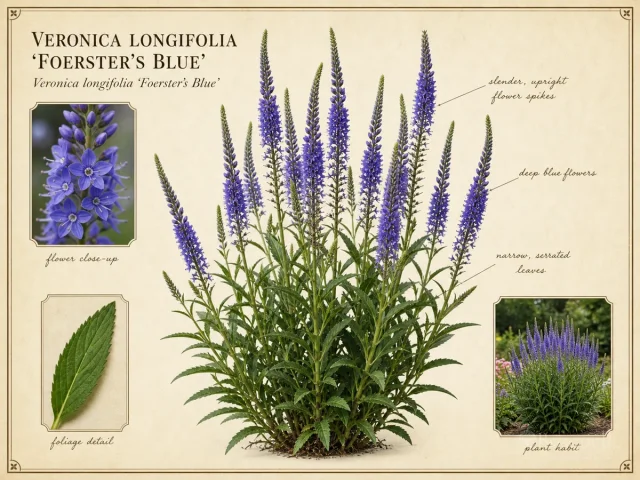
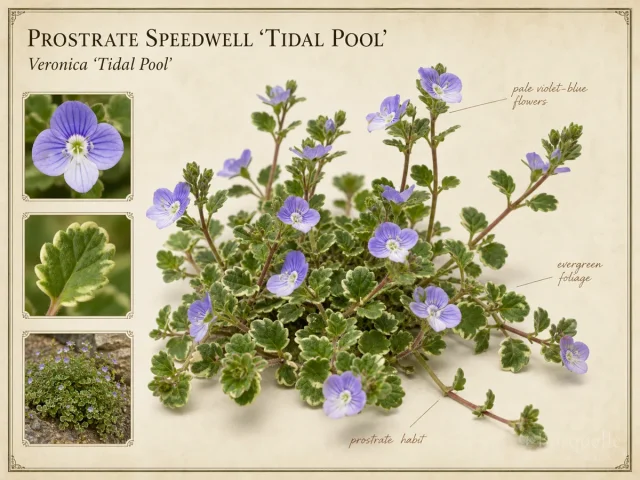
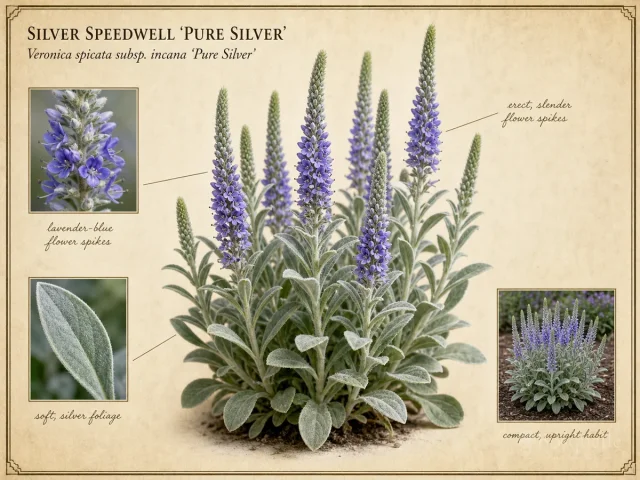
Speedwell (Veronica) is a hardy summer perennial. Give it full sun and soil that drains. Upright kinds throw flower spikes. Creeping kinds stay a low mat. Sunny Border Blue is the usual border spike. Tidal Pool is a path-edge mat. A wet crown rots upright types faster than cold does. Once established, most garden kinds take a short dry spell. Habits on Types of Speedwell. Partners on Speedwell Companion Plants. Timing on Planting Speedwell.
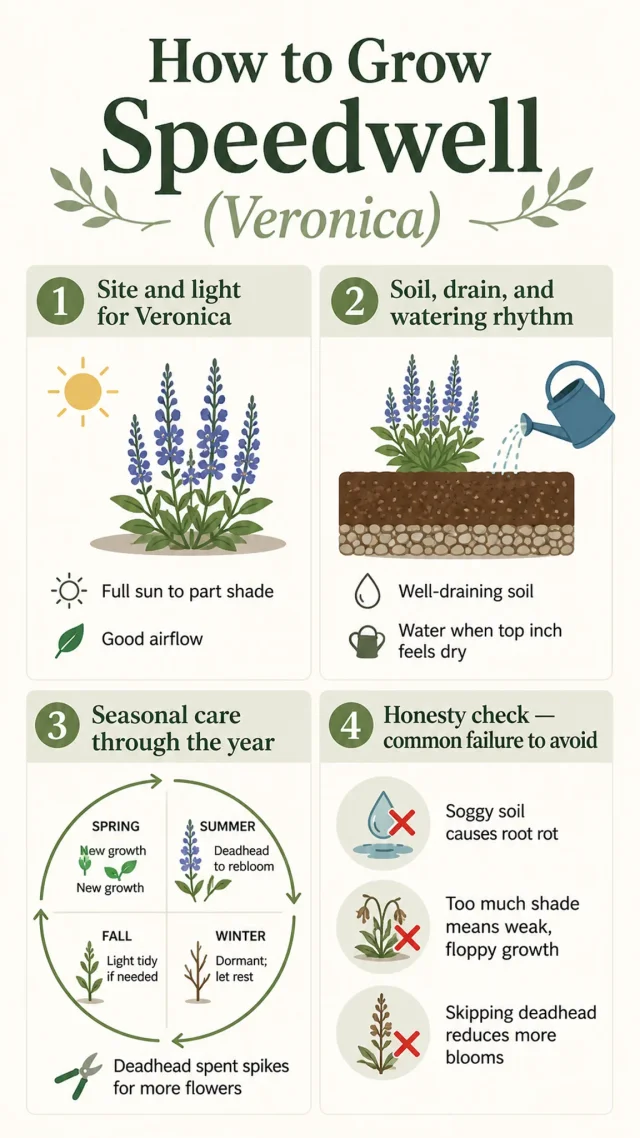
Sun, drain, and spike vs mat
| Factor | Recommended | Avoid |
|---|---|---|
| Light | Full sun, six hours or more | Shade that stretches stems and thins bloom |
| Soil | Average, well-drained; raise sticky clay | A winter-wet crown on an upright clump |
| Habit | A spike for the border, or a mat for a path edge | Buying on the flower photo and planting the wrong job |
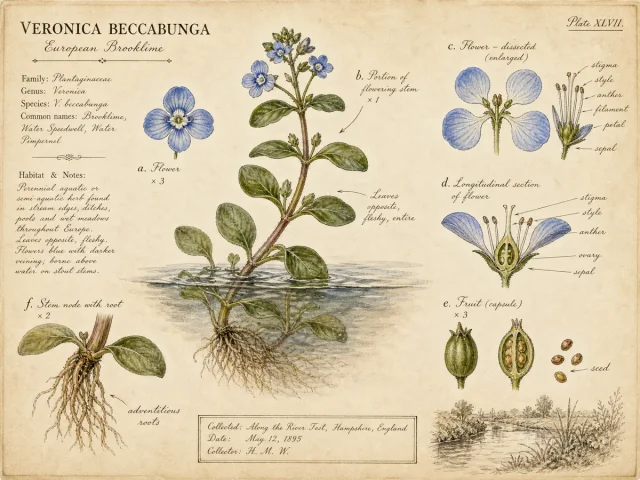
| Wet site | Brooklime (V. beccabunga) at a pond margin | A dry-border spike in standing water |
| Feed | A light compost top-dress in spring | A heavy nitrogen schedule that makes floppy spikes |
Iowa State University Extension: most garden speedwells want full sun and well-drained soil, and they take short dry spells once established. A few native wetland kinds exist, but they are not the showy nursery spikes. The Old Farmer's Almanac: plant after frost, keep the crown at soil level, and water weekly until rooted. Birds and Blooms: high light, soil that is not heavy clay, and no soggy roots.
Upright spikes and creeping mats share that sun and drain. They do not share a job. A spike fills a vertical slot. A mat fills a path, a rock garden, or the gap between pavers. V. beccabunga is the one catalog plant that wants the opposite moisture — a pond margin or bog, not a dry border.
Part sun is a fallback in hot summers, not the target. Expect a looser habit and fewer flowers. If stems lean, check sun before you buy a stake. Tall longifolia types flop sooner in shade than compact hybrids. Six hours of direct light is the working minimum for a tight clump; morning sun with a high canopy in the afternoon is still better than a north wall.
The common name speedwell covers both jobs at the nursery bench. Read the habit line, or the Latin, before you match the flower photo to a hole in the border. A mat in the middle of a bed leaves the ground plane filled and the skyline empty. A spike as path edging leaves a gap at ankle height all season.
Birds and Blooms: plant after frost into early summer, water until established, and deadhead for more flowers. Clay that never dries is the usual kill, not a missed fertilizer. If you only have a damp north strip, pick a different perennial.
- Full sun. Soil that drains after rain. Crown not in a puddle.
- Pick spike or mat before you pick color.
- Brooklime only where the soil stays wet.
Water and feed
Water new plants regularly for three to four weeks so roots leave the nursery ball. Then ease off. Established spikes and mats take a short dry spell. They do not want a daily shallow sprinkle that keeps the crown wet. Water at the base. Let the top inch dry between soaks. In the first summer, if rain is less than about an inch a week, give a deep soak rather than a mist.
A light compost top-dress in spring is usually enough for the year. Heavy feed pushes soft, floppy growth on spikes and makes a mat run faster than you can edge it. If a clump looks pale in full sun, check shade from neighbors and winter wet before you add fertilizer. Upright spikes bloom better with a little compost in poor ground; they still fail in a soggy low spot.
Brooklime is the exception: keep that site wet. Do not “fix” brooklime by raising a bed. Do not “fix” a border spike by planting it where brooklime belongs. Clay that puddles after rain needs grit or a raised strip for every habit except brooklime. Sand that dries in a day still wants a deep soak at planting, then a lighter rhythm once roots are out.
Deadhead, cut back, and divide
The Old Farmer's Almanac: deadhead spent spikes to stretch bloom. Some kinds push a second, lighter flush. Iowa State: divide every three to five years as needed. Stems die back in winter; clean them up before new growth in early spring.
- Cut a spent spike back to the top pair of healthy leaves once most of the flowers have gone. Do not wait for every last bud.
- After frost, or in early spring, cut dead stems to about two inches above the crown. Mulch after the ground is cold, not against a wet stem.
- Shear creeping mats lightly after the main flush to tidy them. You do not need to deadhead each tiny flower.
- Lift a thin or woody-centered clump in spring. Split rooted pieces. Replant at the same depth. Discard a rotten center. Named kinds come true from division, not from seed.
Skipping deadhead does not kill the plant. It trades a second flush for a brown seed stand. Crowding and still air matter more than a missed cut. Full spacing lives on Planting Speedwell. In windy sites, tall longifolia types may need a discreet stake; full sun and a wider gap usually do more than string. After the second flush fades, you can leave a little structure until the winter cut, or shear earlier if you want a tight clump going into cold.
Mildew, slugs, and winter
Powdery mildew is a grey-white film on leaves, usually where plants are crowded, air is still, or foliage stays wet. Thin the clump. Water at the base. Chicago Botanic Garden trial notes: upright speedwells often show seasonal stem decline after bloom — that is typical, not a mystery virus. Floppy early stems are shade, wet feet, or too much nitrogen. Space so morning sun dries the foliage. Overhead evening water is a common way mildew starts.
Slugs graze low mats near damp mulch. Keep mulch off the crown. Aphids may hit soft tips after a wet spring; a hose blast in the morning is usually enough. Most garden kinds are listed as less tempting to deer and rabbits. Hungry seasons still sample — do not treat that as a fence.
A dry crown survives cold that a wet crown does not. Confirm drainage before the ground freezes. A few specialty species run tender; read that profile rather than assuming every speedwell shares one winter story. Culver's root is Veronicastrum, a different genus, with a different moisture and scale. If a wet winter site is the only slot you have, choose brooklime or a different perennial — do not hope a spike will adapt. Move it to drain, or plant brooklime in that wet slot.
Pots, partners, and planting
| Factor | Recommended | Avoid |
|---|---|---|
| Pot | A compact spike or mat in a large, draining container in full sun | Garden soil with no drainage through summer heat |
| Partners | Sun plants that share drain — catmint, yarrow, coneflower, lavender | Hostas, ferns, or a lawn drip on the crown |
| Planting | After last frost, or early fall with six weeks to root | A midsummer move with no water plan |
Smaller kinds hold a season in a pot. Use an open mix, full sun, and a pot with a real drain hole. Empty the saucer. Heat on paving dries the mix fast — water more often, still not a wet saucer. Refresh rather than keeping one crown through a wet winter in a plugged container. Bees and butterflies work the spikes. Some taller kinds draw hummingbirds.
Partners and spacing stay on Speedwell Companion Plants and Planting Speedwell. Pick the habit first, then the partner list. A mixed container can hold a compact spike in the middle and a mat at the rim if both get the same sun and drain. Check the mix twice a week in heat; a small pot dries faster than a border strip.
Give speedwell full sun and drainage, match spike or mat to the job, deadhead spent spikes, and keep the crown dry in winter. Replace or divide when the center thins — that is normal maintenance, not a failed plant. Cut dead stems in spring if you left them for winter structure. Leave a dry crown through winter.
FAQ
Is speedwell a perennial?
Yes. Garden speedwell is a hardy herbaceous perennial. Stems die back in winter and resprout from the crown.
Does speedwell need full sun?
Yes for the tightest habit and the most bloom. Six hours or more. Part sun is a fallback in heat, not the target.
Why did my speedwell rot at the crown?
Usually winter wet, not cold. Upright spikes want soil that drains even though it stays moist in summer.
When should you cut back speedwell?
Deadhead spent spikes in summer for a second flush. Cut dead stems to about two inches after frost or in early spring.
When should you plant Veronica?
After last frost in spring is the safest window. Early fall works if roots get six or more weeks before hard frost.
Why is my speedwell not blooming?
Too much shade, a wet crown, or a heavy nitrogen feed. Full sun and drain first. Deadhead spent spikes for a second flush.
Should I choose a spike or a mat?
A spike for a border column and cut flowers. A mat for a path edge or rock garden. They are not swaps.
Can I plant Veronica beccabunga in a border?
No. Brooklime wants a pond margin or bog. Planted dry, it fails. A border spike fails in that wet site.
Is speedwell drought tolerant?
Once established, most spikes and mats take short dry spells. New plants still need regular water for the first few weeks.
Why is my speedwell mildewing?
Crowding, still air, or wet foliage. Thin, water at the base, and give sun. Do not start with a spray.
Can I grow speedwell in a pot?
Compact spikes and mats hold a season in a large, draining pot in full sun. Empty the saucer.
Is speedwell deer resistant?
Often listed that way, along with rabbits. Hungry seasons still browse. It is a tendency, not a fence.
Related guides
Recommended plants


This note is part of Veronica Guides.
More first-season notes by plant are gathered in How to Grow Guides.
Updated: Reviewed by Bosquelle Editors