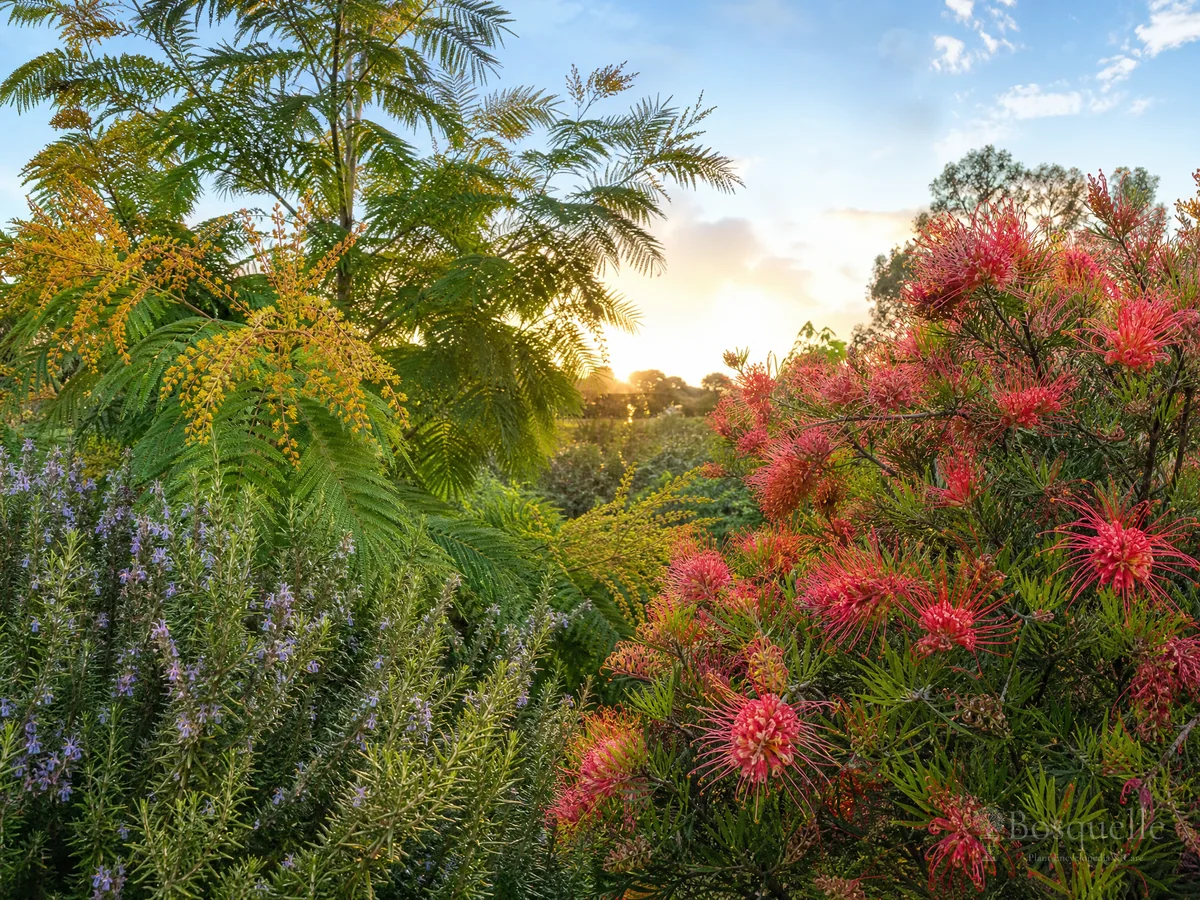
Grow silk oak in full sun, with room for a 50–80 ft tree. It is Grevillea robusta, not a true oak, and it does not belong next to a house.

Give it full sun and room for a 50–80 ft tree
| Factor | Recommended | Avoid |
|---|---|---|
| Sun | Full sun in a large, open landscape | Do not tuck it against a house or under a dense canopy |
| Soil | Sandy or loamy ground that drains | Do not plant in a wet pocket — wet soil brings mushroom root rot |
| Water | Water until the tree is established, then ordinary drought is enough | Do not keep the root zone wet in heat |
| Size | About 50–80 ft tall and 25–30 ft wide, sometimes more in a long warm season | Do not site it under wires or beside a driveway you need clear |
| Salt | Inland or a sheltered yard | Do not count on it at the beach — aerosol salt is poorly tolerated |
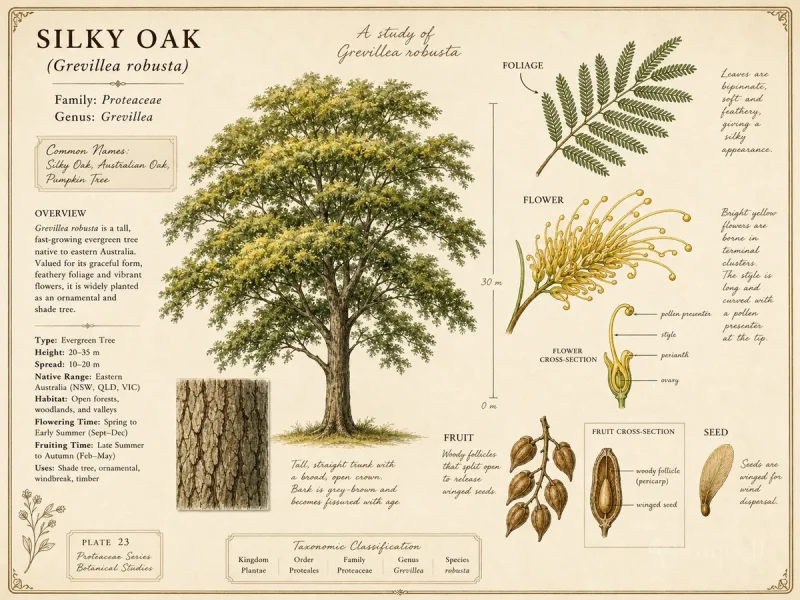
silky oak is a fast evergreen with ferny leaves that are silvery underneath and golden-orange toothbrush flowers in spring. [1] Wood turns brittle as the tree ages, and tops can snap in wind. It is still Proteaceae, so skip phosphorus fertilizer the same way you would on a grevillea shrub.
How tall does silk oak get?
Plan on 50–80 ft, with a 25–30 ft spread. In a long warm season some trees reach 100 ft. It is not a 6 ft border shrub.
Plant away from houses, wires, and wet ground
Plant in spring, in full sun, on ground that drains. Give the tree a wide opening. Do not put it next to a house — the size, leaf drop, and brittle wood all work against a tight yard. [2]
- Choose an open site well away from buildings, wires, and play areas. Tops snap in high wind as the wood ages.
- Dig a hole as deep as the root ball and twice as wide. Set the flare at grade. Do not bury the stem, and do not fill the hole with compost.
- Water until you see new growth, then let the soil dry between soaks. Wet, poorly drained ground brings mushroom root rot.
- Grow it with one strong leader. It needs little other pruning.
Can I grow silk oak next to the house?
No. The tree is too large, the wood is brittle, and it drops leaves and seed capsules through the year. Site it as a specimen in open ground.
Not a true oak — and not a grevillea shrub
Silk oak is silky oak (Grevillea robusta), in the protea family. True oaks are Quercus. The wood looks a little like oak, which is where the name comes from — it is not an oak. [3] See How to Grow Oak for oaks.
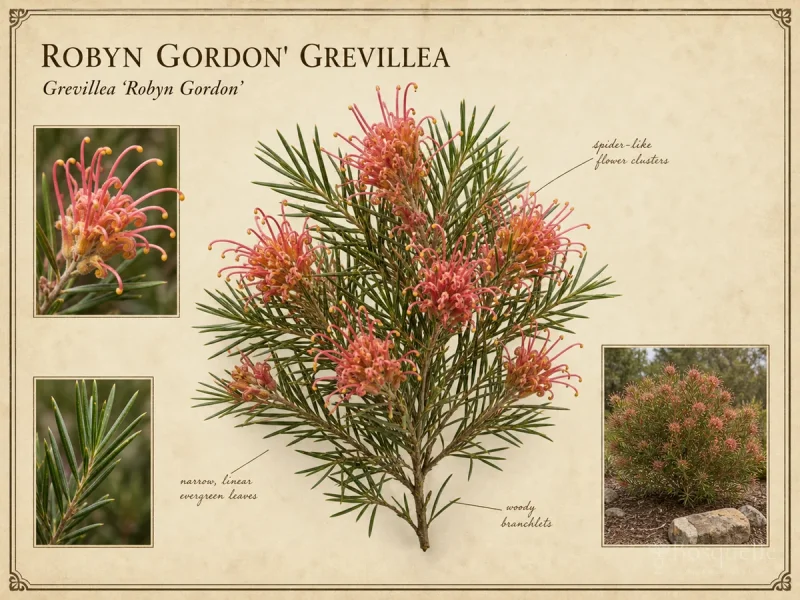
Most grevilleas in the genus are shrubs, not trees. [4] Border kinds such as rosemary grevillea stay 5–8 ft with needle or divided leaves and spider clusters. For those shrubs, see How to Grow Grevillea.
Is silky oak a real oak?
No. Silky oak is Grevillea robusta. True oaks are Quercus. Read the Latin on the tag.
FAQ
Does silk oak drop a lot of leaves?
Yes. A heavy drop comes in spring before new growth, and leaves and leathery seed capsules fall through the year. Site it where litter is acceptable.
Is silk oak invasive?
It has naturalized in Hawaii and parts of southern Florida. Check local guidance before you plant it there. In Florida landscapes that can take the size, it is still sold as a specimen tree.
How do I start silk oak?
Start from seed. Take seed from mature, unopened follicles and sow it soon. Named shrub hybrids in this genus come from cuttings; this tree is the seed kind.
Does silk oak cause a rash?
Sap, flowers, and sawdust can irritate skin. Wear gloves when you prune or saw. People who react to poison ivy should be careful with the flowers.
Related guides

Recommended plants

References
This note is part of Grevillea Guides.
More first-season notes by plant are gathered in How to Grow Guides.
Updated: Reviewed by Bosquelle Editors