
Grow sensitive fern in part shade, in soil that stays moist to wet. Sensitive fern is Onoclea sensibilis, also sold as bead fern — not a sensitive plant and not ostrich fern.
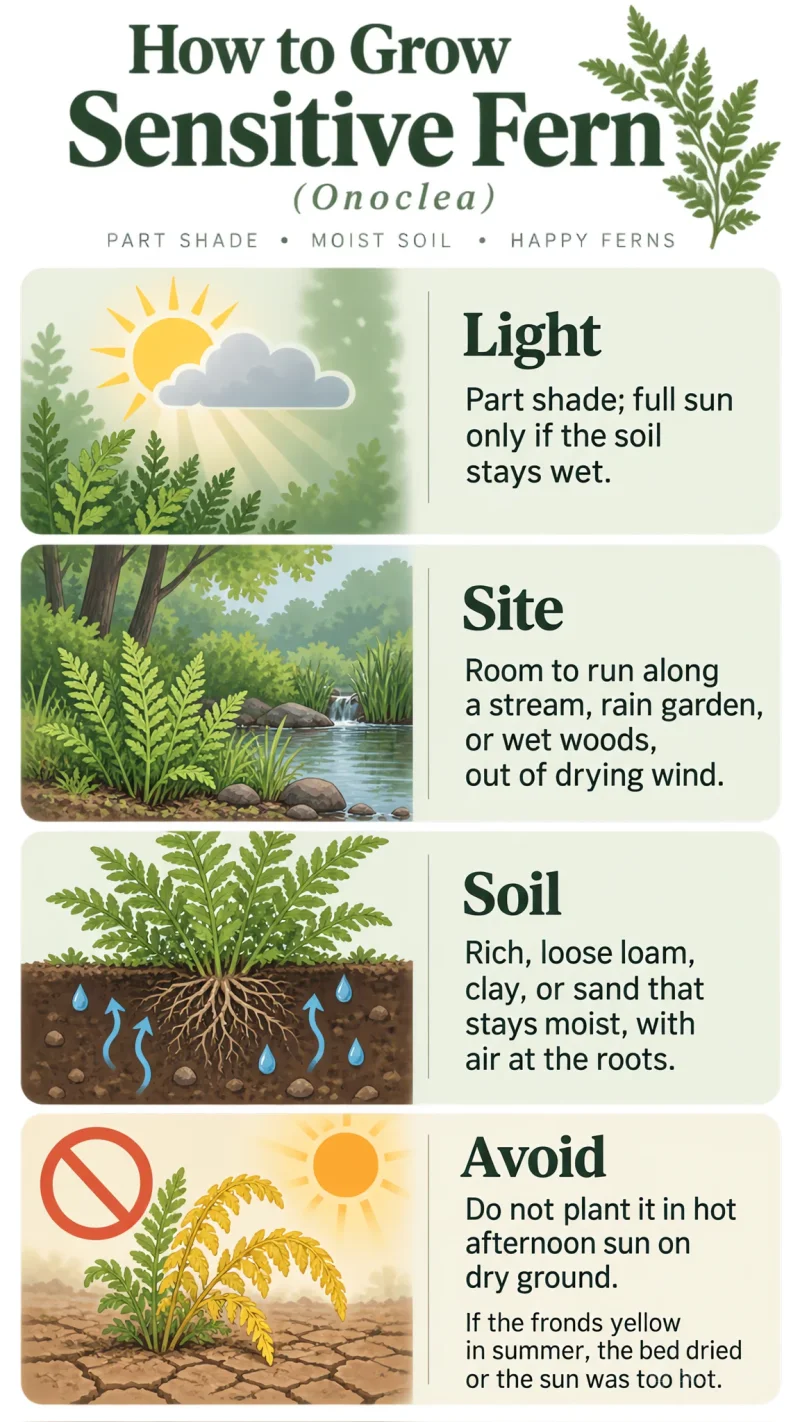
Give it part shade and soil that never dries
| Factor | Recommended | Avoid |
|---|---|---|
| Light | Part shade; full sun only if the soil stays wet | Do not plant it in hot afternoon sun on dry ground |
| Water | Keep the soil moist to wet all season | Do not let the bed dry, even for a week |
| Soil | Rich, loose loam, clay, or sand that stays moist, with air at the roots | Do not plant it in sour, stagnant clay |
| Site | Room to run along a stream, rain garden, or wet woods, out of drying wind | Do not squeeze it into a tiny mixed bed you want to stay tidy |
| Winter | Leave the rhizomes in the ground; sterile fronds blacken at the first frost, and the bead stalks stay | Do not lift the rhizomes into a dry pot |
sensitive fern is Onoclea sensibilis, a native wetland fern with coarse triangular fronds about 2 to 4 feet tall. It wants shade overhead and soil that stays moist, with the rhizomes free to creep. [1] Give it part shade. Full sun works only when the ground stays wet; dry heat yellows the fronds. Keep the soil moist to wet all season, in a spot with air at the roots, not a sour puddle that never drains. [2] A humid site out of drying wind keeps the fronds from scorching. The first frost blackens the green fronds, which is why the plant is called sensitive fern. New fronds return from the rhizomes after spring frost has passed. [3] The hole, the rhizome depth, and the spacing sit on Planting Sensitive Fern.
How much sun does sensitive fern need?
Part shade. Full sun only if the soil stays wet. Hot afternoon sun on dry ground yellows the fronds.
How wet should the soil stay?
Moist to wet all season. A dry week browns the fronds. Wet soil is fine when the roots still have air.
Cut brown fronds after frost
The sterile fronds are deciduous. Once frost has blackened them, cut them at the base so the bed does not pack down under a wet mat. You can wait until late winter, just before the new fiddleheads show. Leave the brown bead stalks if you want winter interest; they hold spores until spring. [4] Do not cut green fronds in summer to tidy the plant. Those fronds are still feeding the rhizomes.
- After frost, or in late winter before new fiddleheads, cut brown sterile fronds at the soil line.
- Leave the brown bead stalks standing, or cut them when they shatter in spring.
- Do not cut green fronds in summer.
When do I cut the brown fronds?
After frost, or in late winter before new fiddleheads. Leave the bead stalks if you want them through winter.
Not a sensitive plant — and not ostrich fern
A tag that says sensitive plant is often a Mimosa with leaflets that fold when you touch them, and pink pompoms — see How to Grow Sensitive Plant. Sensitive fern does not fold when touched. A tag that says ostrich fern, or Japanese ostrich fern, is often a tall vase of shuttlecock fronds with a U-groove on the stalk — see How to Grow Ostrich Fern. Netted chain fern is shorter, with alternate toothed leaflets and chain-like sori — see How to Grow Chain Fern. Cinnamon fern has woolly fiddleheads — see How to Grow Cinnamon Fern.
Is this a sensitive plant?
No. A sensitive plant is Mimosa, with leaflets that fold when touched. This fern keeps its fronds still. The name refers to frost, not touch.
Is this ostrich fern?
No. Ostrich fern is a tall vase with a U-groove on the stalk. Sensitive fern has broad wavy lobes and separate brown bead stalks.
If the fronds yellow in summer, the bed dried or the sun was too hot. Keep the soil wet and add shade, then cut brown fronds after frost.
FAQ
Are there other kinds of sensitive fern?
The plant sold as sensitive fern is Onoclea sensibilis. Bead fern, sympathy fern, and Japanese ostrich fern on a tag are usually the same rhizome, not a second type.
Can I grow it in a pot?
A large pot that stays wet can hold it for a season, but the rhizomes want a wet bed they can run in. It is not a patio plant that dries between waterings.
Can I grow it indoors as a houseplant?
No. It is a deciduous wetland fern. A dry room and a mix that dries in a day brown the fronds. Grow it outside in moist shade.
Can I eat the fiddleheads?
No. Do not eat this fern. The spring crop people cook is ostrich fern. Confirm that plant before you pick anything.
Does it come back after frost?
Leave the rhizomes in the ground. The green fronds blacken at frost, the bead stalks stay, and new fronds return after spring frost has passed.
Is it toxic to pets?
Keep pets from chewing the fronds. Do not use this fern as a forage crop.
Related guides
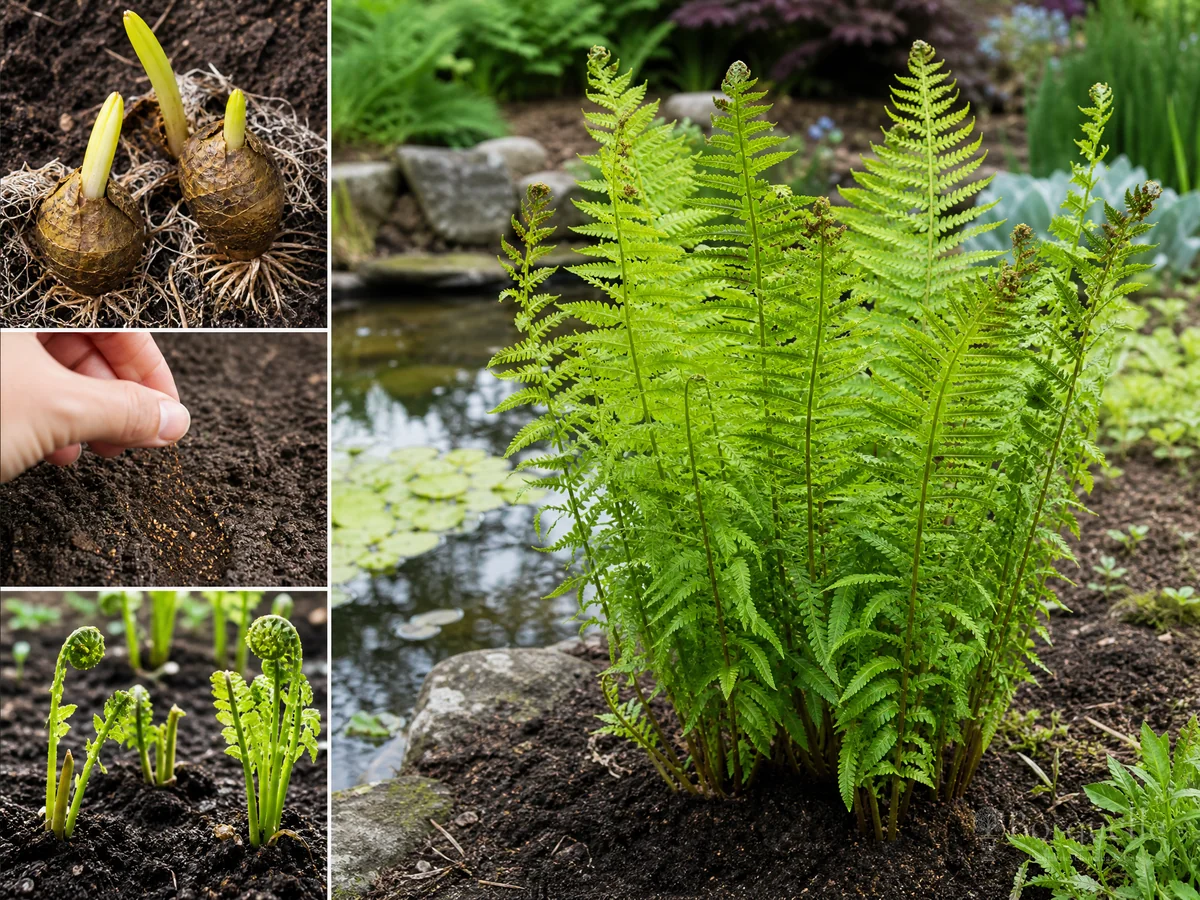
Recommended plants
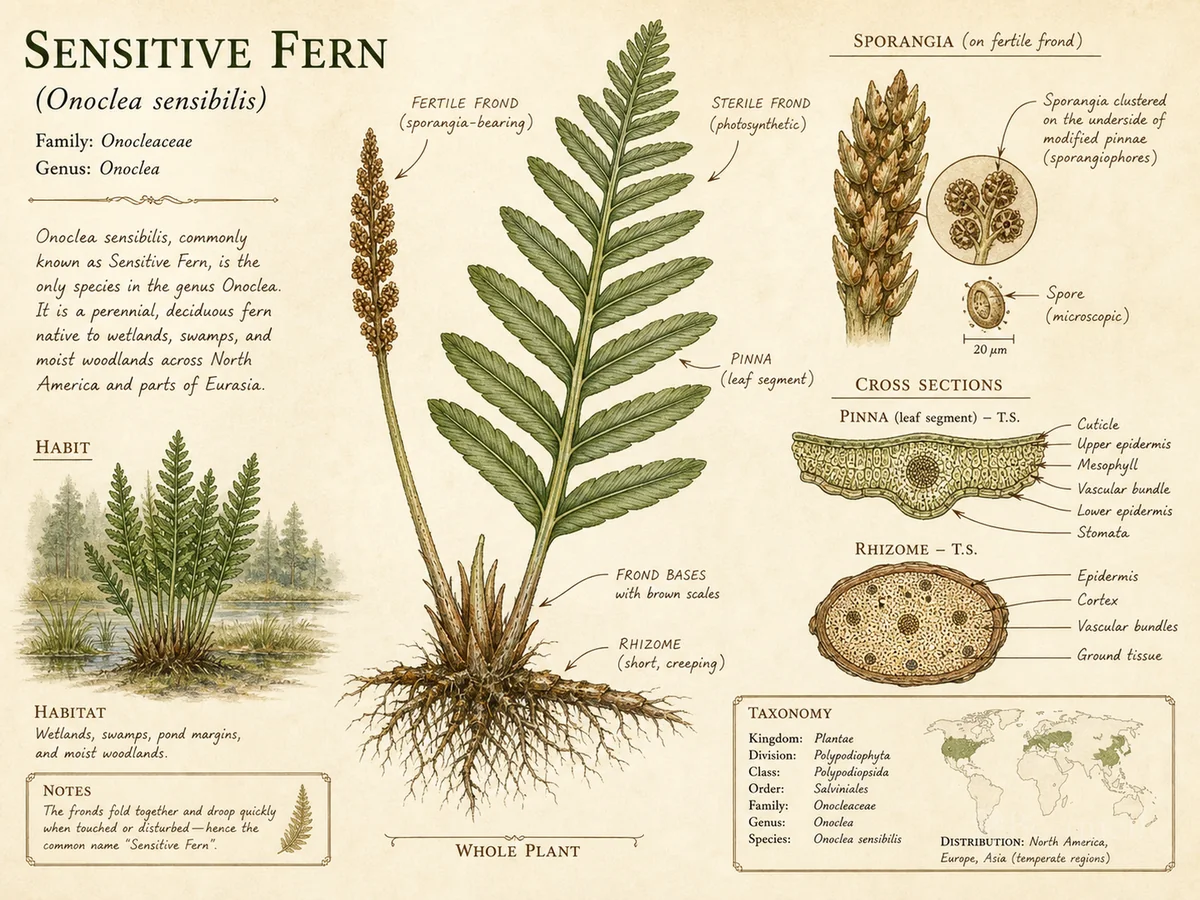
References
- [1] NC State Extension -
https://plants.ces.ncsu.edu/plants/onoclea-sensibilis/ - [2] Lady Bird Johnson Wildflower Center -
https://www.wildflower.org/plants/result.php?id_plant=ONSE - [3] Illinois Wildflowers -
https://www.illinoiswildflowers.info/grasses/plants/sensitive_fern.htm - [4] Clemson Cooperative Extension -
https://hgic.clemson.edu/factsheet/hardy-ferns/
This note is part of Onoclea Guides.
More first-season notes by plant are gathered in How to Grow Guides.
Updated: Reviewed by Bosquelle Editors