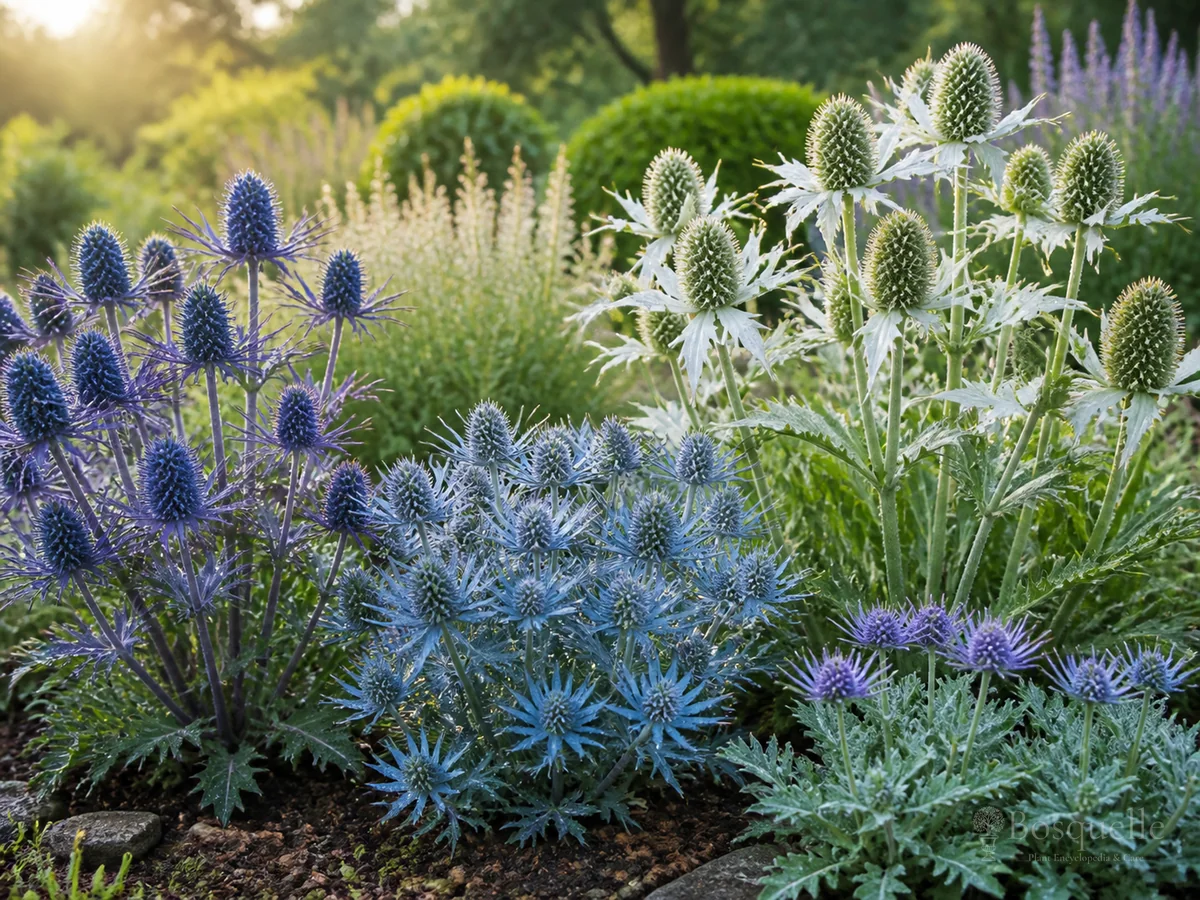
Sea holly (Eryngium) is a sun perennial for sharp drainage and lean soil. Give it six or more hours of light. Water to establish, then ease off. The taproot resents moving. Rich, wet clay is the usual fail.

This is not holly (Ilex) and not a weedy thistle. Some types are biennial silver ghosts; most garden blues are longer-lived. Sort that on Types of Sea Holly. The hole lives on Planting Sea Holly.
Full sun, sharp drainage, and lean soil
| Factor | Recommended | Avoid |
|---|---|---|
| Light | Six or more hours of direct sun | Shade that sprawls stems and thins blue |
| Soil | Sandy, gravelly, or raised grit in clay | Rich wet clay that sits all winter |
| Water | Deep soaks to establish, then little extra | Weekly irrigation on a settled clump |
| Site | A permanent hole; do not transplant later | Moving a mature taproot |
Sea holly colors in sun. Shade plus rich feed makes floppy green stems. A south or west bed that sheds water is the usual site. Salt and wind are fine on coastal types. A low bowl that ponds after rain is not.
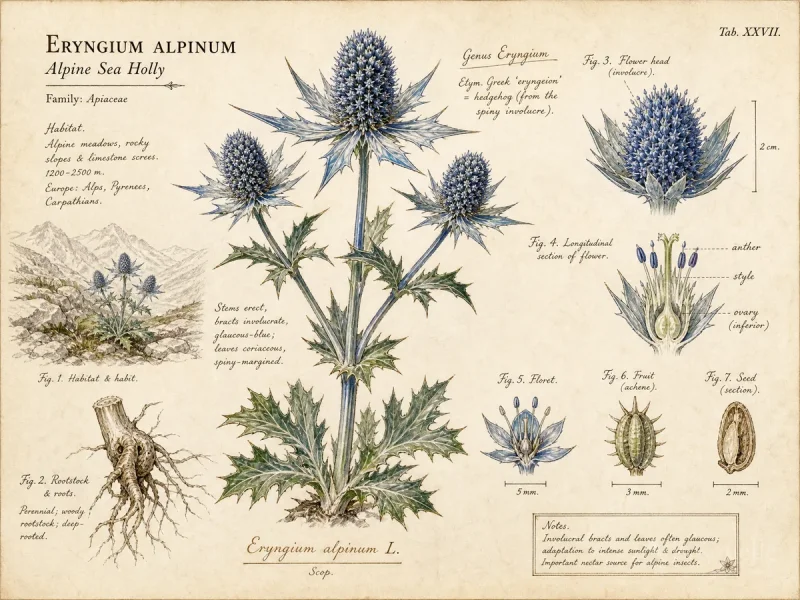
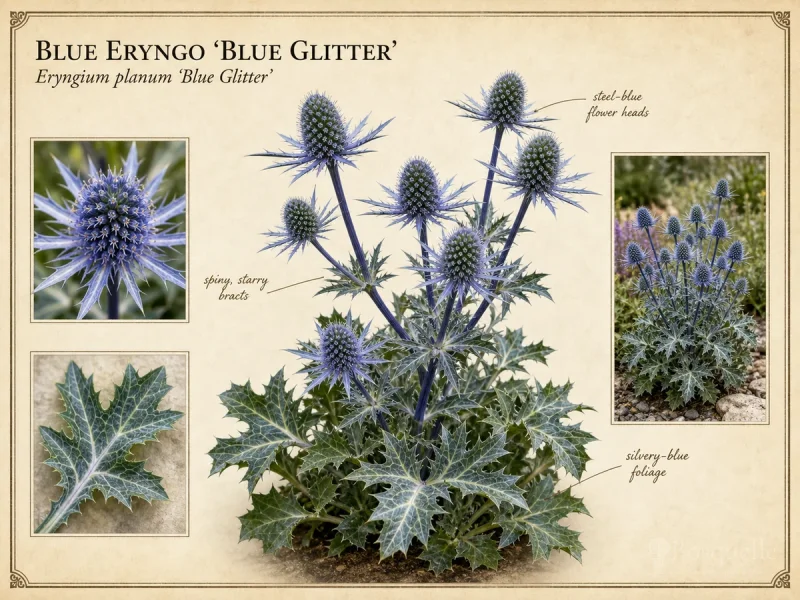
Example: Eryngium alpinum and Blue Glitter want the same sun and drainage. Height differs. Color does not rewrite the taproot. Compact types such as Blue Hobbit still fail in a winter puddle.
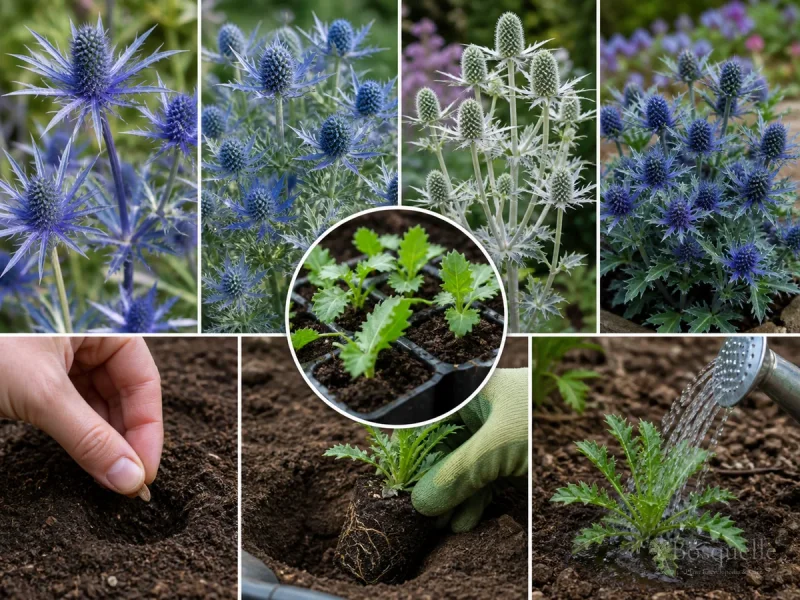
Work grit into clay and plant on a slight mound so water leaves the crown. Do not pack compost as a wet sponge under the root. A little organic matter in the top layer is enough. Extra fertilizer sprawls the plant.
Browse size and life cycle on Types of Sea Holly before you buy by blue alone.
Spines are real. Wear gloves when you cut or weed close. This is not a play-path plant for bare feet. Deer usually leave it alone; that is not a reason to site it in wet shade.
A thin gravel mulch sheds splash and keeps the crown dry. Bark fines packed wet against the stem are the wrong mulch. Keep a collar of open grit so winter rain does not sit on the crown.
If you garden in clay that stays wet after a two-day rain, raise the planting or pick a slope. Sea holly fails from a soaked crown more often than from a missed watering. A raised strip of grit along a drive or the high shoulder of a bed is a better home than a pretty low spot you already irrigate for lawn. Do not add a soaker hose as a fix; change the soil and the grade so water leaves.
Coastal wind and salt do not rewrite the drainage rule. They only mean the plant can take exposure. A seaside type in a wet clay bowl still rots. Match the hole to grit first, then enjoy the wind.
Taproot — plant once and leave it
The root goes deep. Seedlings move. A mature clump does not. Choose the hole before you buy. If you might redo the bed in two years, pick another plant. Digging an established sea holly is how the crown dies.
Year one is often a modest rosette. The ruff and stems fill in later. Do not judge a first summer as a fail and lift the plant. Keep sun and drainage. Blue on the stems builds with age and light.
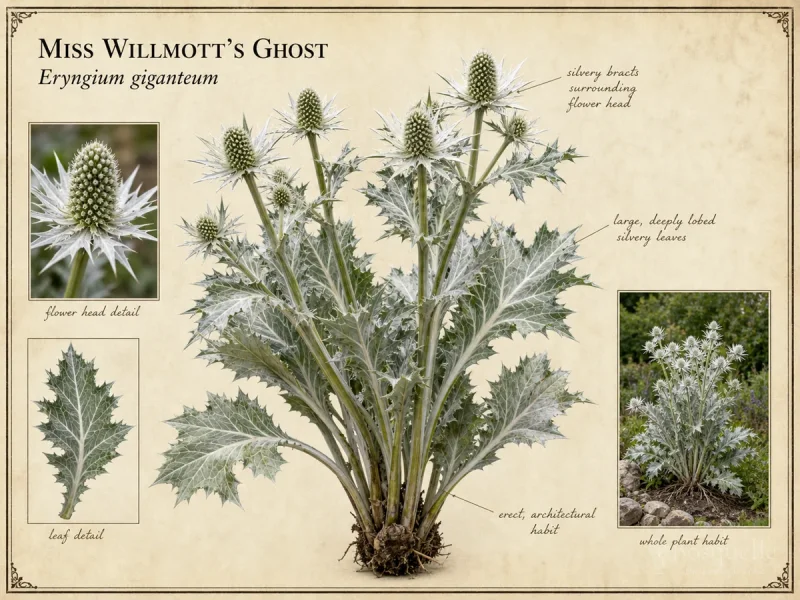
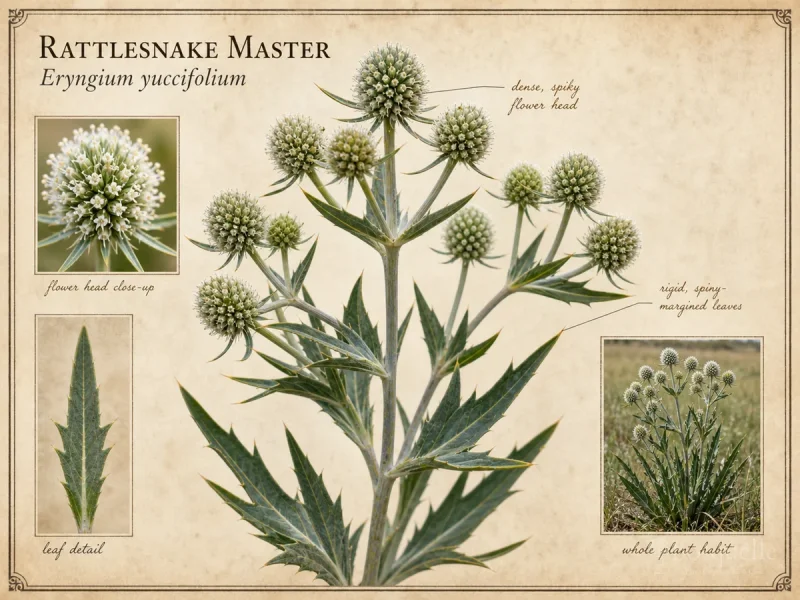
Picos Blue and Big Blue are garden perennials in drained sun. Miss Willmott's Ghost (Miss Willmott's Ghost) is usually a short-lived silver biennial that self-sows if you leave seed. Do not treat every silver head as a permanent clump. Rattlesnake master (rattlesnake master) is a prairie species with the same sun and drainage, a different silhouette.
Water new plants until the taproot is down. Then water only in a long drought, deeply at the base. Overhead spray on a settled clump is wasted. Pots work only if they are deep, drained, and in full sun. Shallow bowls cook or rot. Beds are the better home.
Giant moisture-loving types exist in specialist lists. They are not the default. If a tag says pandanifolium or wet meadow, that plant is not this dry-border recipe. Confirm on the types page.
A nursery gallon that has circled for two seasons is already a warning. Tease the taproot down into a deep hole the day you plant, then stop thinking of it as portable stock. If you need a plant you can lift for a patio redesign, choose a different genus. Sea holly is a stay-put perennial or a short-lived silver that reseeds — not a shrub you slide around.
Division is not the usual way to make more. Seedlings and young pots are. If a clump looks crowded, you still do not split a mature taproot the way you would a daylily. Plant a new young plant beside it instead, and leave the old crown where it is.
Water, cut stems, and winter
Cut stems for the vase when the bracts have color. They last a long time fresh and dry well hung in a dark, airy place. Wear gloves. Leave some heads if you want winter structure or seed. Deadhead if you do not want volunteers.
Cut back in late summer or when the show is over if the bed must look tidy. Leaving dried heads is optional, not required. Do not cut green foliage hard in a wet autumn if the crown is already sitting cold — drainage still matters more than a haircut.
Self-sown seedlings appear in grit. Move them while small. Named hybrids often do not come true. Buy named plants if you need the same blue. Pull extras in the path.
Powdery mildew and flop track shade and rich soil, not a missing feed. More sun and less water fix more than another soluble dose. Aphids can sit on soft new growth; they are uncommon on a hard, dry plant.
For dried bunches, cut in the cool of the day when bracts have full color and the stems feel firm. Strip lower leaves, bundle loosely, and hang upside down out of sun. The steel-blue holds if you keep the bunch dark and airy. Do not store stems in a damp shed where mold sits on the bracts. Wear gloves the whole time — the spines catch fabric as easily as skin.
Winter stems are optional ornament. If snow loads smash them, cut them. If you want seed, leave a few heads until they brown and shatter. Pull volunteer seedlings from the path in spring while they are still small enough to lift with a trowel. Named blues from a garden-center pot are the reliable way to keep a color you liked.
What sea holly is not
Sea holly is not English holly. It is not Canada thistle. Named garden Eryngium are ornamental. Follow local rules on wild thistles. A grocery holly wreath is Ilex, a different genus.
It is not a wet-border delphinium or a rich-soil peony. Partners that share this sun and drainage live on Sea Holly Companion Plants. The hole and the no-move rule live on Planting Sea Holly.
If plants stayed green and sprawled, the usual causes are shade, rich soil, or winter wet. Move the next plant into sun and grit. Do not keep watering a flopped clump in clay.
Keep a short note: type (blue, alpine, giant/biennial, prairie), cultivar, and plant year. Next year that note beats buying a biennial ghost when you wanted a returning clump.
When two instincts compete — chase every blue versus master one drained hole — master the hole. Color is easy to swap. A wet clay bed wastes every type.
If bloom was poor after a year you irrigated weekly, stop the extra water this cycle and judge again next summer. Replacing a starved crown without changing drainage repeats the same fail.
Label the row the day you plant. Mixed blues look the same in leaf by June. You will not remember which bag was the dwarf when they spike. Write it on a stake that survives winter.
Soil without a ritual is enough: sun, grit, a dryish rest after establishment. Extra nitrogen makes foliage at the cost of a firm stem. Watch the form you chose — compact front, mid-border blue, or silver biennial — and cut when the bracts have color.
Indoor overwintering is not the job. These are outdoor plants. A dim garage invites rot on a wet pot. Leave hardy types in drained ground. Move only a container that you can keep dry at the crown.
Wind on an open gravel bed is fine. It dries the foliage. A still, humid courtyard with drip irrigation is a poorer site than a windy drive edge with sand.
If a neighbor tells you sea holly is “just a thistle” and you should pull it, check the Latin. Garden Eryngium is sold as an ornamental. Canada thistle and other listed weeds are a different problem and a different law. Do not treat a named cultivar as a reason to ignore local weed rules, and do not treat a weed rule as a reason to skip a legal garden plant.
When the ruff stays green and never steels, the usual fix is more sun and less water, not a different bottle of feed. Give it a second summer in a drained hole before you replace it. If the crown is mush after a wet winter, plant the next one higher, in grit, and do not reuse the same puddle.
Keep one care sentence for the whole genus in this bed: full sun, sharp drainage, water to establish, then little extra, and do not move the taproot. Types, partners, and the hole have their own pages. This page is that sentence, expanded so you can site and keep the plant.
FAQ
Does sea holly need full sun?
Yes. Six or more hours. Shade sprawls stems and thins the blue.
Can I transplant sea holly?
Not once the taproot is down. Plant young plants in a final hole. See Planting Sea Holly.
How often should I water sea holly?
Water to establish. Then little extra except in a long drought, deeply at the base.
Is sea holly the same as holly?
No. Sea holly is Eryngium. Holly is Ilex. Different plants.
Why is my sea holly floppy?
Usually shade, rich soil, or too much water. Give sun and drainage. Stop extra feed.
Can I grow sea holly in a pot?
Only a deep, drained pot in full sun. Beds are the better home for the taproot.
Is Miss Willmott's Ghost perennial?
Usually a short-lived biennial that self-sows. See Types of Sea Holly.
Can I cut sea holly for drying?
Yes. Cut when bracts have color. Hang in a dark, airy place. Wear gloves.
Does it need fertilizer?
No rich feed. Lean, drained soil. Extra nitrogen sprawls stems.
Where is planting detail?
Planting Sea Holly — linked above.
Related guides

Recommended plants




This note is part of Eryngium Guides.
More first-season notes by plant are gathered in How to Grow Guides.
Updated: Reviewed by Bosquelle Editors