
Grow red valerian in full sun on lean, draining ground. The tag may also say Centranthus. It is not medicinal valerian.
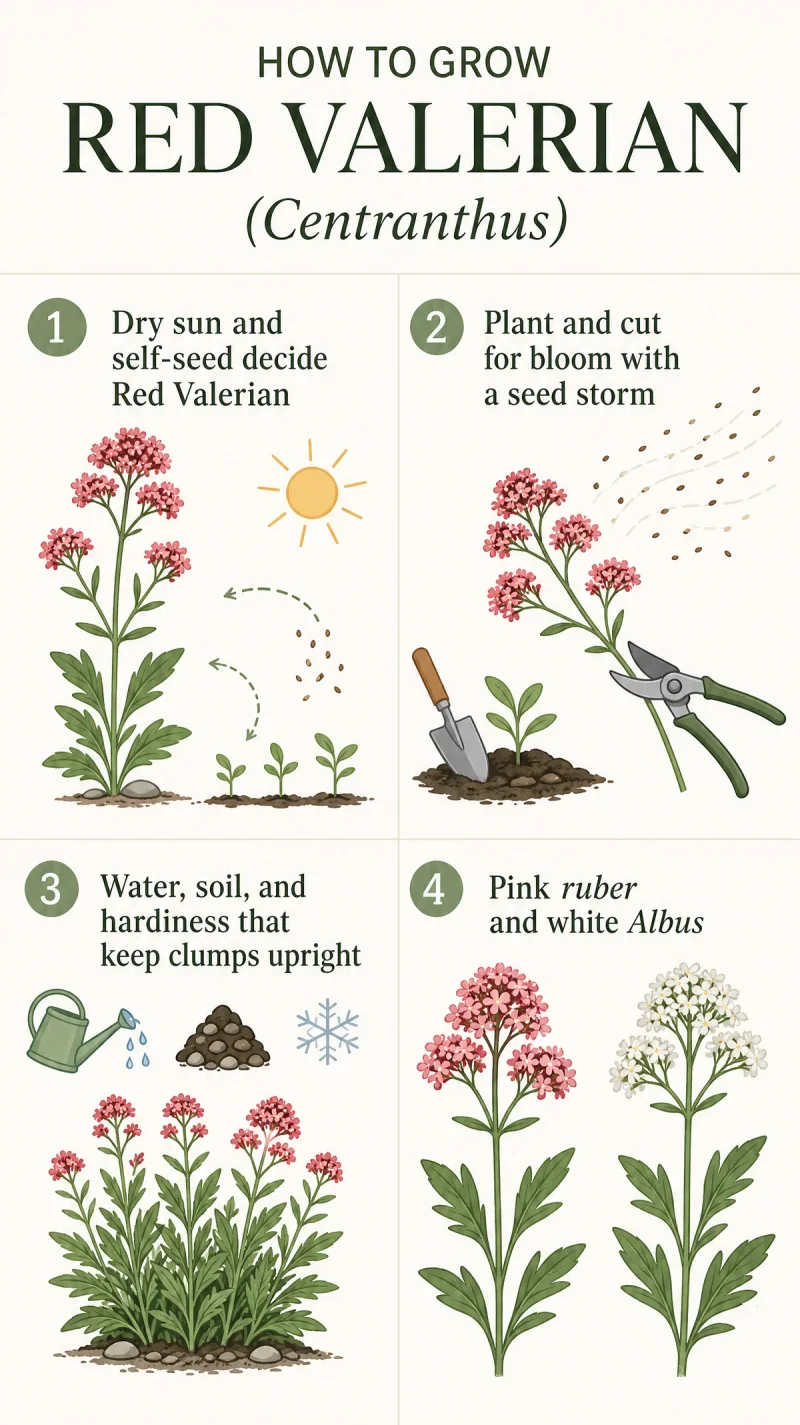
Give it full sun, lean drainage, and a plan for the seed
| Factor | Recommended | Avoid |
|---|---|---|
| Light | Full sun for sturdy stems and dense clusters | Shade that stretches growth and cuts bloom |
| Soil | Lean, alkaline to neutral sand, gravel, or a wall crevice | Rich, wet clay that stays cold at the crown |
| Water | Water to establish, then let the soil dry between soaks | Constant drip on a moist border |
| Seed | Deadhead before the heads turn fluffy, or welcome a colony on a bank | Ripe wind seed over a tidy lawn or a listed wild edge |
| Climate | Cool-summer heat and sharp drain | Hot, humid summers that weaken the clump |
Red valerian wants heat and drain, not a rich wet bed. Slightly alkaline or limed lean soil in full sun keeps stems upright. Spent clusters turn into fluffy, dandelion-like seed that wind carries into cracks. Some counties list it as invasive, and it is weaker in hot, humid summers. [1] Established clumps take drought. Wet roots are the usual crown-rot fail. [2] On a hot, sunny western site, bloom can run from early summer into fall if you keep removing spent flowers. [3] In California it is a plant to watch along roadsides — still cut old flowering stems if you do not want seedlings. [4]
- Check local guidance before you sow a bank or a wall.
- Give it full sun and ground that drains after rain.
- Deadhead before the seed turns fluffy if you want color without a colony.
- Pull extra seedlings while they are small.
- Water new plants through the first dry spells, then ease off.
Is red valerian easy to grow?
Yes in full sun and draining ground. It fails in wet shade and in hot, humid summers.
Is red valerian invasive?
It self-seeds freely and is listed in some counties. On the West Coast it naturalizes on roadsides and walls. Check local lists; deadhead if you want to keep it in the bed.
Does red valerian come back every year?
Yes where winters are not wet at the crown. It is a perennial. Tops may die in a freeze; new shoots return from the woody base if drainage held.
Does red valerian spread?
Yes, mostly by wind-blown seed, and slowly by a widening clump. Deadhead if you want one plant.
Where is the best place to plant red valerian?
A full-sun bank, wall base, gravel strip, or raised bed that drains. Skip low wet ground.
Does Jupiter's beard prefer sun or shade?
Full sun. Light shade may hold a plant in a cool climate, but bloom thins.
Is Jupiter's beard invasive?
Same plant, same seed. Check local lists and deadhead if you do not want volunteers.
Is Jupiter's Beard a perennial plant?
Yes. It returns from the woody base where drainage is sharp.
Pair it with other dry-sun plants
Partners should want the same sun and lean water: other xeric perennials, ornamental grasses, or wall plants you can still weed around. Do not mix it on the same hose with moisture-loving borders.
Plant the crown at the same depth as the pot
Plant in spring or early fall when the soil is workable. Set the crown at the same depth it sat in the nursery pot, and water once to settle.
- Confirm red valerian (Centranthus), not medicinal valerian.
- Pick full sun and draining ground you can still edit for seedlings.
- Wait until the soil is workable in spring, or plant in early fall where winters stay mild.
- Water the pot, then slide the root ball out intact.
- Dig a hole no deeper than the pot. Set the crown at the same depth as the nursery mix.
- Backfill with the soil you dug, and water to close air pockets.
Use a draining pot if you want a specimen
A free-draining mix and an empty saucer keep the crown from sitting wet. Deadhead pots the same way you deadhead a bank, or seed still falls into nearby beds.
Sow in place, or start seed 6–8 weeks before frost
Scatter seed on a prepared dry bank and press it in, or start it indoors six to eight weeks before the last frost and transplant after that date. Many plants bloom the first year. Keep new seedlings watered until roots take.
How do I plant red valerian seeds?
Press seed onto draining mix, keep the surface moist until it sprouts, and move plants after frost. Or scatter it where you want a colony and press it in.
Deadhead, then cut the plant back about a third
Cut faded clusters before the seed turns fluffy. That stops a seed storm and often brings another flush. In a long season, cut the plant back by about a third in midsummer for bloom into fall. In late winter or early spring, cut dead stems before new basal growth crowds them.
- Shear spent clusters as they fade if you want color without a colony.
- In midsummer, cut bulky stems back by about a third for another flush.
- Leave a few heads only where seedlings are welcome and legal.
- Cut dead winter stems before new shoots fill the crown.
Should I cut back red valerian?
Yes — cut spent flowers for more bloom and less seed. A midsummer cut of about a third helps in a long season.
How do I prune my red valerian plant?
You are not training wood. Deadhead, then cut about a third if the clump is bulky. Tidy dead stems in late winter.
Do you cut back Jupiter's beard in the fall?
You can leave structure until late winter, then cut dead stems. Fall cutting does not stop seed you already let ripen.
Not medicinal valerian, and not Jacob's ladder or heliotrope
Medicinal valerian is Valeriana officinalis — sometimes sold as garden heliotrope. It wants moister, richer ground and is grown for the root, not for this dry-sun cluster. Jupiter’s beard is the same plant as red valerian. Jacob’s ladder is Polemonium (Greek valerian): cool moist shade, not a gravel bank. Garden heliotrope in the bedding sense is Heliotropium — a different plant with a different care job.
Is Jupiter's beard the same as red valerian?
Yes. Jupiter’s beard, Spanish valerian, and spur valerian are common names for Centranthus ruber.
Is red valerian the same as medicinal valerian?
No. Sleep-herb valerian is usually Valeriana officinalis. Red valerian is Centranthus.
Pink-red Jupiter's beard or white Albus
Sun, drain, and deadheading are shared. The face differs. Do not treat a shop list of extra names as a different plant.
C. ruber is the classic pink-to-red cluster for banks and gravel. C. ruber ‘Albus’ is the white selection on the same culture. White seedlings can appear beside pink parents if both are present, so edit what you keep.
What are the different types of valerian?
For this garden plant, the useful split is pink-red Jupiter’s beard versus white Albus. Medicinal valerian is a different genus. Extra shop names such as Coccineus are color forms, not extra catalog plants here.
Site it in full sun with lean drain, deadhead before the seed turns fluffy, plant the crown at pot depth, and skip it if your county lists it.
FAQ
Are extra shop names extra plants?
No. Names such as Coccineus, Roseus, or Rosenrot use the same sun, drain, and deadheading. This page covers the two catalog plants.
What is Centranthus?
Centranthus is the Latin genus for red valerian, also listed as Valeriana rubra.
Can I eat red valerian?
Garden culture is the job here, not a food essay. Do not treat it as the sleep-herb crop.
Is this the sleep herb?
No. Sleep-herb searches belong to Valeriana officinalis. Red valerian is Centranthus.
Can I grow it from cuttings?
Basal cuttings can root, and old clumps can be divided. Most gardeners still get new plants from seed.
Is it a good cut flower?
The clusters hold in a vase. Cut stems still need the same sun and drain in the bed.
Recommended plants

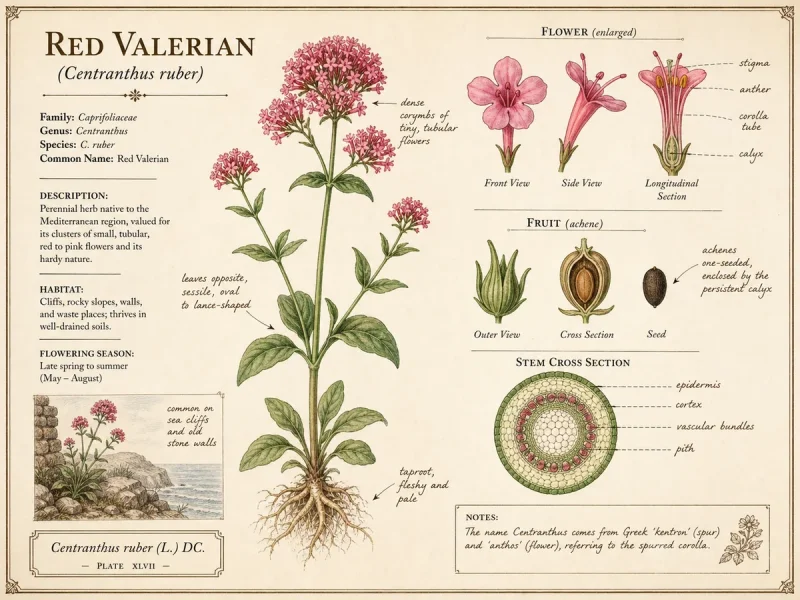
References
- [1] NC State Extension -
https://plants.ces.ncsu.edu/plants/valeriana-rubra/ - [2] UC Master Gardeners of Napa County -
https://ucanr.edu/blog/napa-master-gardener-column/article/jupiters-beard-dedicated-pollinator - [3] Colorado Springs Utilities -
https://www.csu.org/water-wise-plants/red-valerian - [4] PlantRight -
https://plantright.org/watch/centranthus-ruber
More first-season notes by plant are gathered in How to Grow Guides.
Updated: Reviewed by Bosquelle Editors