
Grow red fescue as a fine-leaf lawn, not as a blue ornamental mound. Red fescue is Festuca rubra, a creeping turf for shade — not tall fescue.

Seed a fine-leaf lawn, not a blue ornamental mound
| Factor | Recommended | Avoid |
|---|---|---|
| Use | A shady or low-input fine-leaf lawn | Do not plant this as a 10 in silver border puff |
| Seed | About 4 pounds per 1,000 square feet, ⅛ inch deep | Do not bury the seed deep |
| Mow | About 2½ to 4 inches, with a sharp blade | Do not scalp it below 2 inches |
| Feed | Low nitrogen, mostly in fall | Do not pour summer nitrogen on a heat-tired lawn |
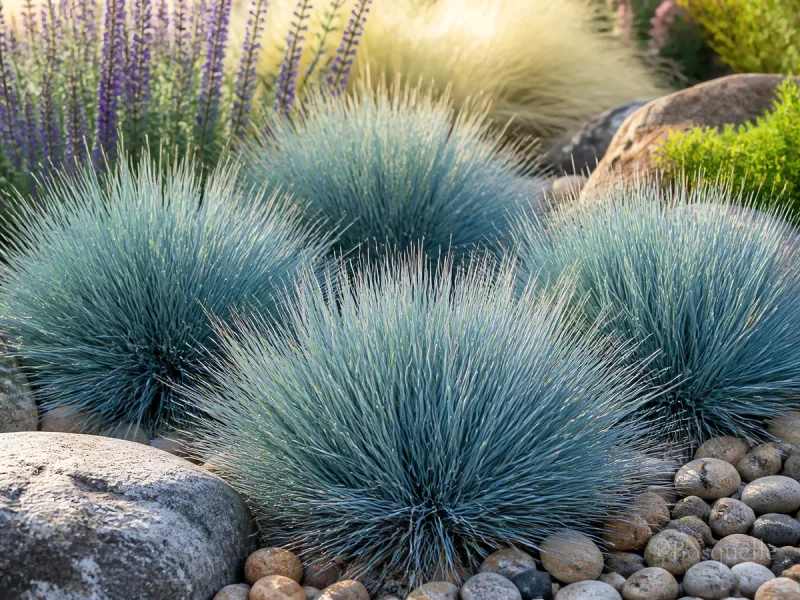
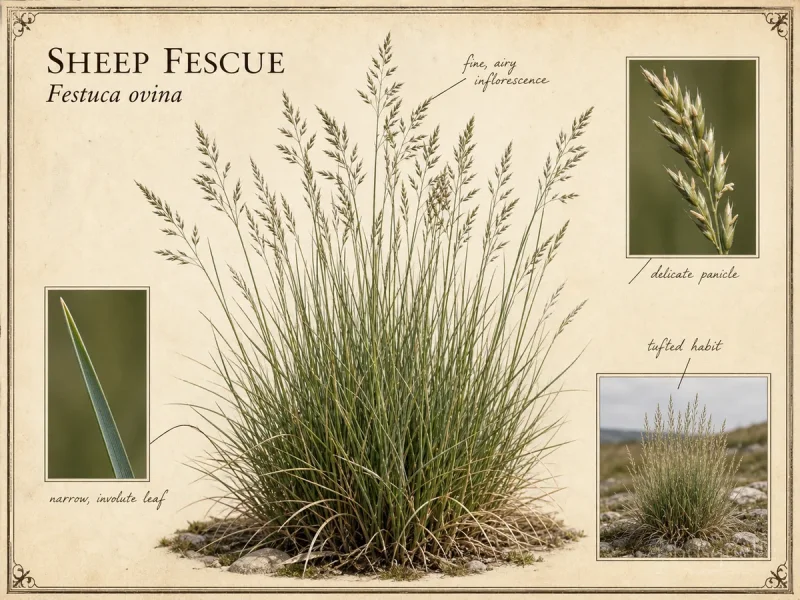
Red fescue is a creeping fine-leaf turf. Seed it when you want a lawn in shade or a low-input mix, not when you want a silver mound in a rock garden. That mound is compact blue fescue — see How to Grow Blue Fescue. [1] red fescue is Festuca rubra. sheep fescue shows up in unmowed or low-mow mixes; it is not a substitute for a blue border clump. [2]
Is red fescue a lawn or a mound?
A lawn. Red fescue is creeping Festuca rubra. Compact blue fescue is the 10 in ornamental mound.
How to seed and mow red fescue
Late summer into fall is the reliable window. Keep the surface moist until the seedlings take, then mow high.
- Seed in late summer or early fall, when nights are cool. Spring works; summer heat is a harder start.
- Sow about 4 pounds of seed per 1,000 square feet, and press it about ⅛ inch deep. Keep the surface moist until it germinates, usually in one to two weeks.
- Mow at about 2½ to 4 inches once the stand fills. Leave clippings. Do not remove more than a third of the blade at one cutting.
- Feed lightly in fall. Skip heavy summer nitrogen. [3]
How short can I mow red fescue?
Keep it at about 2½ to 4 inches. Scalping below 2 inches thins a fine-leaf lawn.
Not tall fescue — and not a blue mound
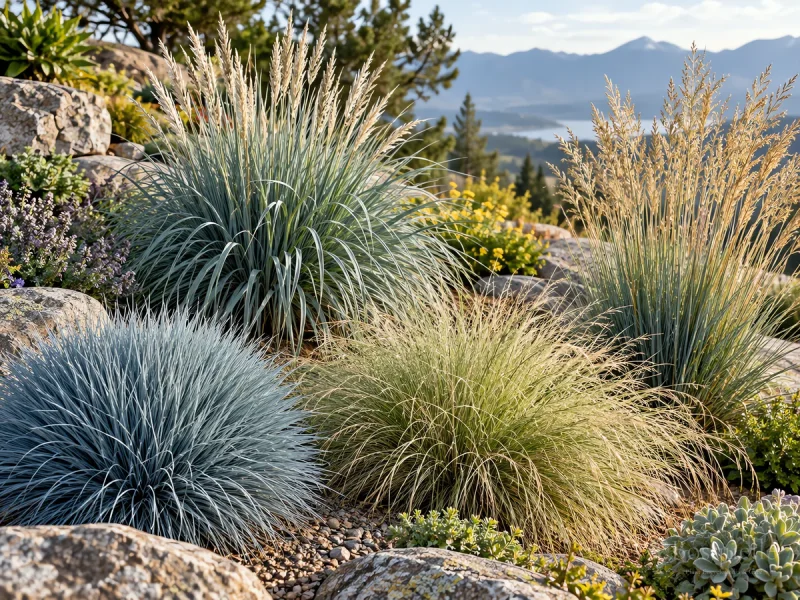
Tall fescue is a coarse lawn now placed in Schedonorus (often sold as KY-31). It is not this fine-leaf red fescue, and it is not compact blue fescue. Purdue treats blue fescue as the ornamental, not as turf. [4] Pick compact blue, Atlas, or a native bunchgrass on Types of Blue Fescue when the job is a clump, not a lawn.
If you bought a silver mound for a border, you want compact blue fescue, not this lawn.
FAQ
Can I mix red fescue with Kentucky bluegrass?
Yes. Fine fescue is often sold in a sun-and-shade mix with bluegrass or ryegrass. Read the bag; Chewings and hard fescue in that mix are not plants we list as cards.
Is this a no-mow lawn?
You can let a fine-leaf stand grow taller and mow it once in fall. It is still a lawn, not a blue ornamental mound.
Related guides

Recommended plants

References
- [1] University of Minnesota Extension -
https://extension.umn.edu/garden-and-home/yard-and-garden/lawns-and-landscapes-in-minnesota/planting-and-maintaining-a-fine-fescue-lawn - [2] Gardening Know How -
https://www.gardeningknowhow.com/lawn-care/specific/red-fescue-grass/red-fescue-planting.htm - [3] Colorado State University Extension -
https://extension.colostate.edu/resource/fine-fescues-for-lawns/ - [4] Purdue Extension -
https://www.extension.purdue.edu/extmedia/TURF-63-W.pdf
This note is part of Festuca Guides.
More first-season notes by plant are gathered in How to Grow Guides.
Updated: Reviewed by Bosquelle Editors