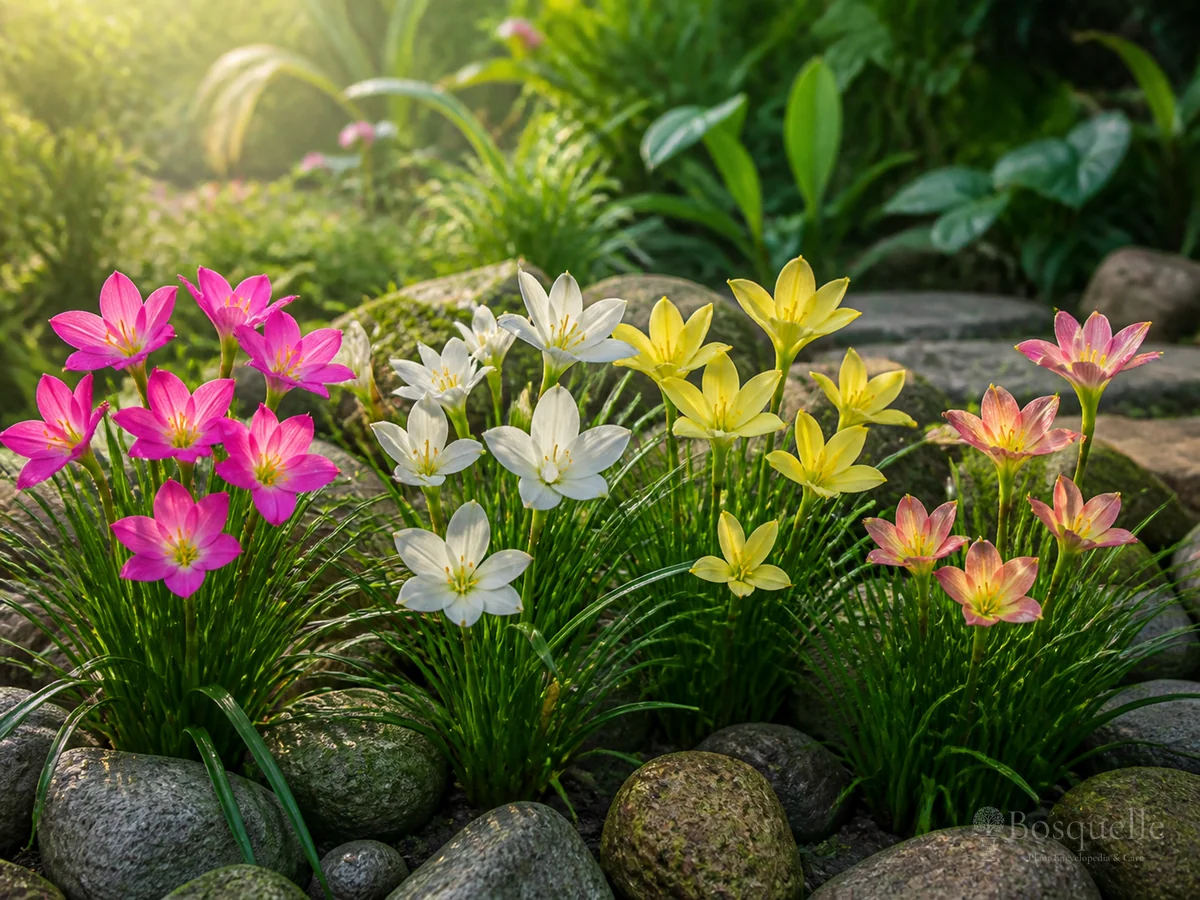
Grow rain lily in full sun in soil that drains, and water deeply after a dry spell so the bulbs flush. Tags also say zephyr lily or fairy lily — it is Zephyranthes, not a true Lilium.
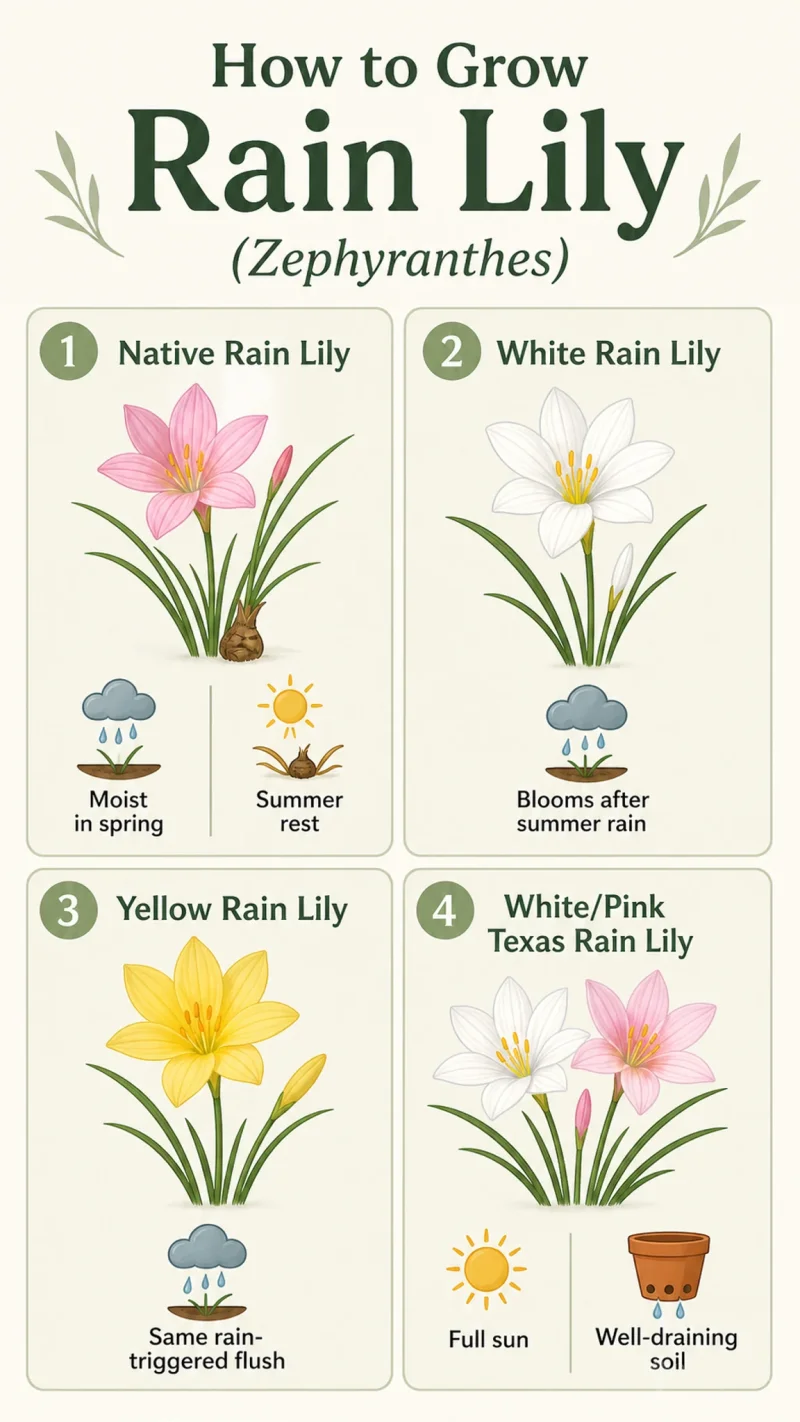
Full sun, drainage, and a soak after a dry spell
| Factor | Recommended | Avoid |
|---|---|---|
| Light | Full sun, about six hours; a little afternoon shade in extreme heat | Deep shade that thins the flush |
| Soil | Ground that drains after rain | A clay hollow that stays wet through winter |
| Water | Let the soil dry, then soak — or wait for a real rain | A permanent bog, or never watering after a long drought |
A dry spell then a soak is what cues the flush — in the garden you can copy that by watering deeply after the soil has dried, instead of keeping a bowl that never dries. [1] Garden kinds often bloom without a strict drought, but they still flower more readily after a soak. [2] Native wet ground still drains between storms; it is not the same as a frozen-wet clay ditch.
Why won’t my rain lily bloom?
Usually too little sun, or the soil never dries before you water. Give a dry spell, then a deep soak, and wait a season or two for a young clump to settle.
Does rain lily need full sun?
Yes for the strongest flush. A little afternoon shade is fine in extreme heat. Deep shade keeps the grass and cuts the flowers.
Should the soil stay wet all the time?
No. Let it dry, then soak. Standing water around cold bulbs is the usual rot.
How to plant rain lily bulbs
Spring after frost is the usual window. In a mild-winter garden you can also plant in fall, once the bed already drains.
- Read Zephyranthes on the tag — true lilies (Lilium) and Habranthus rain lilies are different plants.
- Choose full sun and soil that drains. In extreme heat, a little afternoon shade is fine.
- Set the top of the bulb about 1 inch under the soil. Space bulbs 2 to 4 inches apart so they make a grassy clump. [3]
- Water once to settle, then let the surface dry between soaks.
How deep do I plant rain lily bulbs?
About 1 inch of soil over the top of the bulb — not the deep planting used for tall true lilies.
When should I plant rain lily bulbs?
After frost in spring, or in fall where winters stay mild. A nursery pot can go in whenever the soil can be worked.
Leave the bulbs in, lift them, or move the pot
Where winters stay mild, leave the bulbs in draining ground and mulch before a hard freeze. Where a hard frost will hit the bed, lift after the leaves die back, or grow them in a pot you can move. Keep a winter pot almost dry — water only enough that the mix does not go bone dry. [4]
- Mild winter: leave bulbs in place. Add a light mulch if a hard freeze is coming, and keep the crown out of standing ice water.
- Hard frost: lift after the foliage dies, dry the bulbs, and store them cool until spring.
- Container: move the pot to a frost-free place before the first freeze. Water rarely until spring.
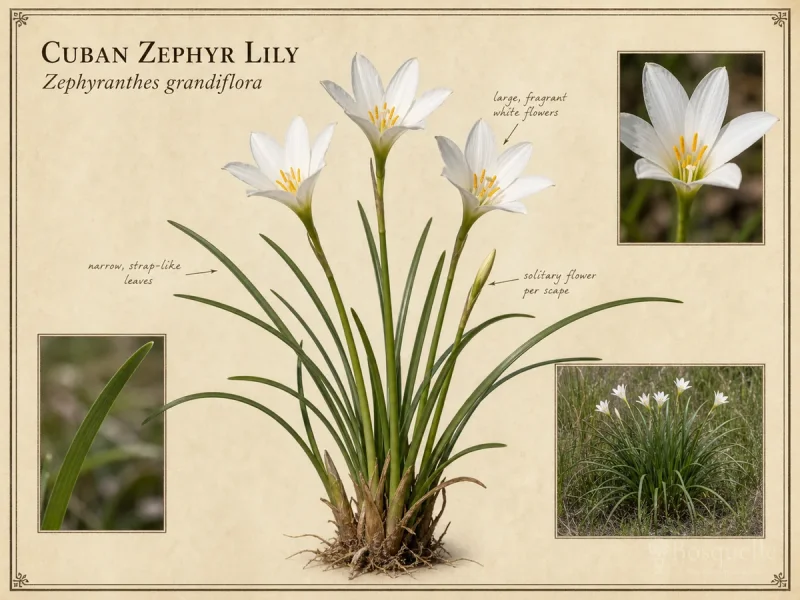
Pink kinds such as Z. grandiflora are the ones gardeners most often lift or pot in cold gardens. White and yellow kinds follow the same winter choice.
How do I overwinter rain lilies?
Leave them if winters stay mild. If a hard frost will hit, lift and store cool, or move the pot frost-free and keep it almost dry.
Can I leave rain lily bulbs in the ground?
Yes where frost is light and the bed drains. Do not leave tender bulbs in a frozen-wet clay bowl.
Each cup lasts only a day or two. The show is the flush after rain — or after you water — which can repeat through the warm season.
FAQ
Is rain lily a true lily?
No. It is Zephyranthes — a small amaryllis-family bulb. Shared “lily” names do not mean Lilium height or Lilium planting depth. Habranthus is a close cousin, not this genus.
Can I grow rain lily in a pot?
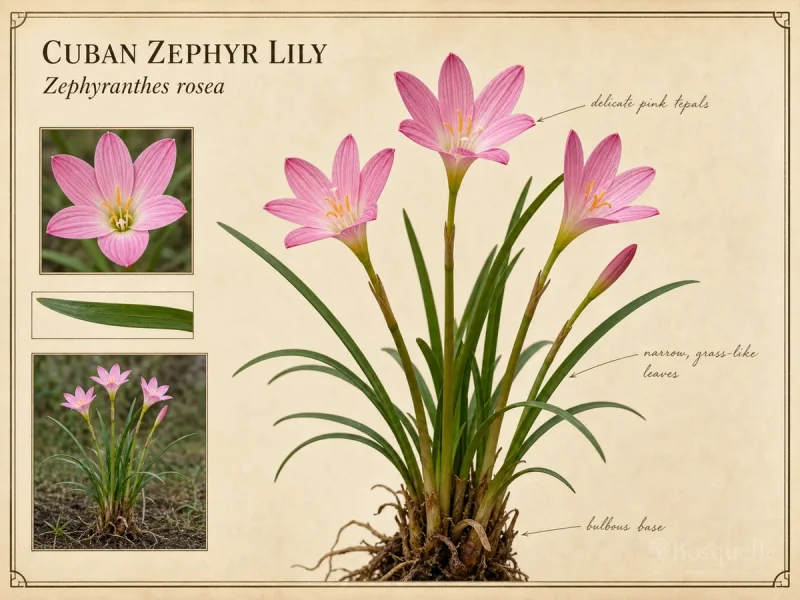
Yes in a draining container in full sun. Crowd the bulbs so they sit snug — Z. rosea is a fair patio pink. Empty the saucer, and soak after the mix dries.
Are pink rain lilies different to grow from white ones?
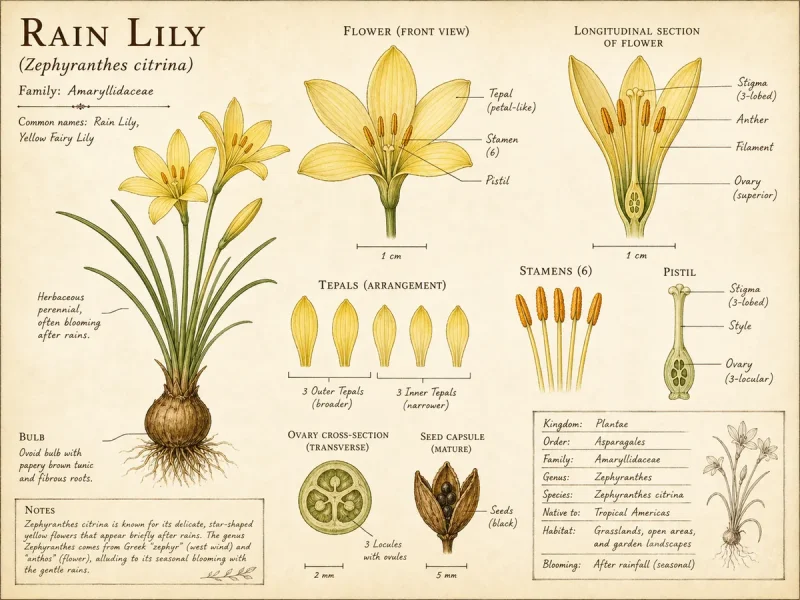
Color is not a different method. White Z. candida and yellow Z. citrina share sun, drainage, and a soak after dry with pink Z. grandiflora.
Are rain lilies toxic to pets?
All parts can cause digestive upset if eaten, especially the bulbs. Keep pets and kids from chewing them.
When should I divide rain lilies?
When the clump is crowded, usually in spring. Split offsets and replant at the same shallow depth. Leave a young planting alone for a season or two.
What is Atamasco lily?
Z. atamasca — a white native rain lily, often a spring flush. Same sun and drainage as the rest of this set.
Is Cooperia the same as Zephyranthes?
Some evening rain lilies, including Z. drummondii, still carry older Cooperia names. Treat them as rain-lily care on this page.
Recommended plants



References
- [1] UF/IFAS Extension -
https://ask.ifas.ufl.edu/publication/FP621 - [2] NC State Extension -
https://plants.ces.ncsu.edu/plants/zephyranthes/common-name/rain-lily/ - [3] University of Wisconsin Horticulture -
https://hort.extension.wisc.edu/articles/pink-rain-lily-zephyranthes-grandiflora/ - [4] NC State Extension -
https://plants.ces.ncsu.edu/plants/zephyranthes-candida/
More first-season notes by plant are gathered in How to Grow Guides.
Updated: Reviewed by Bosquelle Editors