
Pulmonaria, or lungwort, is a low shade perennial grown for spotted or silver leaves. Early spring flowers are a short bonus. Site it in moist shade. Keep the root zone evenly moist through summer heat.

Dry soil is the usual trigger for powdery mildew and tired midsummer foliage.
Moist shade and spotted silver decide Pulmonaria
| Factor | Recommended | Avoid |
|---|---|---|
| Light | Moist shade, morning sun, or dappled woodland edge | All-day hot sun; cave-dry shade with no water plan |
| Soil | Humus-rich, moist, free-draining | Bone-dry sand; sealed waterlogged clay at the crown |
| Water | Even moisture at the roots through heat | Letting the root zone bake dry, then flooding the leaves |
| Season product | Spotted or silver foliage after the flower window | Buying only for midsummer bloom like a bedding annual |
| Air | Space so air can move between clumps | Sealed thatch that holds humidity on dry-stressed leaves |
Two facts decide Pulmonaria before you plant. Keep the soil moist in shade. Treat spotted or silver foliage as the season-long crop; the early blue-to-pink sprays last only a few cool weeks. BBC Gardeners' World sites lungwort in partial to full shade with moist, well-drained soil — that matches the table above.
Blue Ensign is the cultivar many gardeners mean by “that early blue lungwort.” Other selections change leaf silvering or flower colour. They do not change the moist-shade rule.
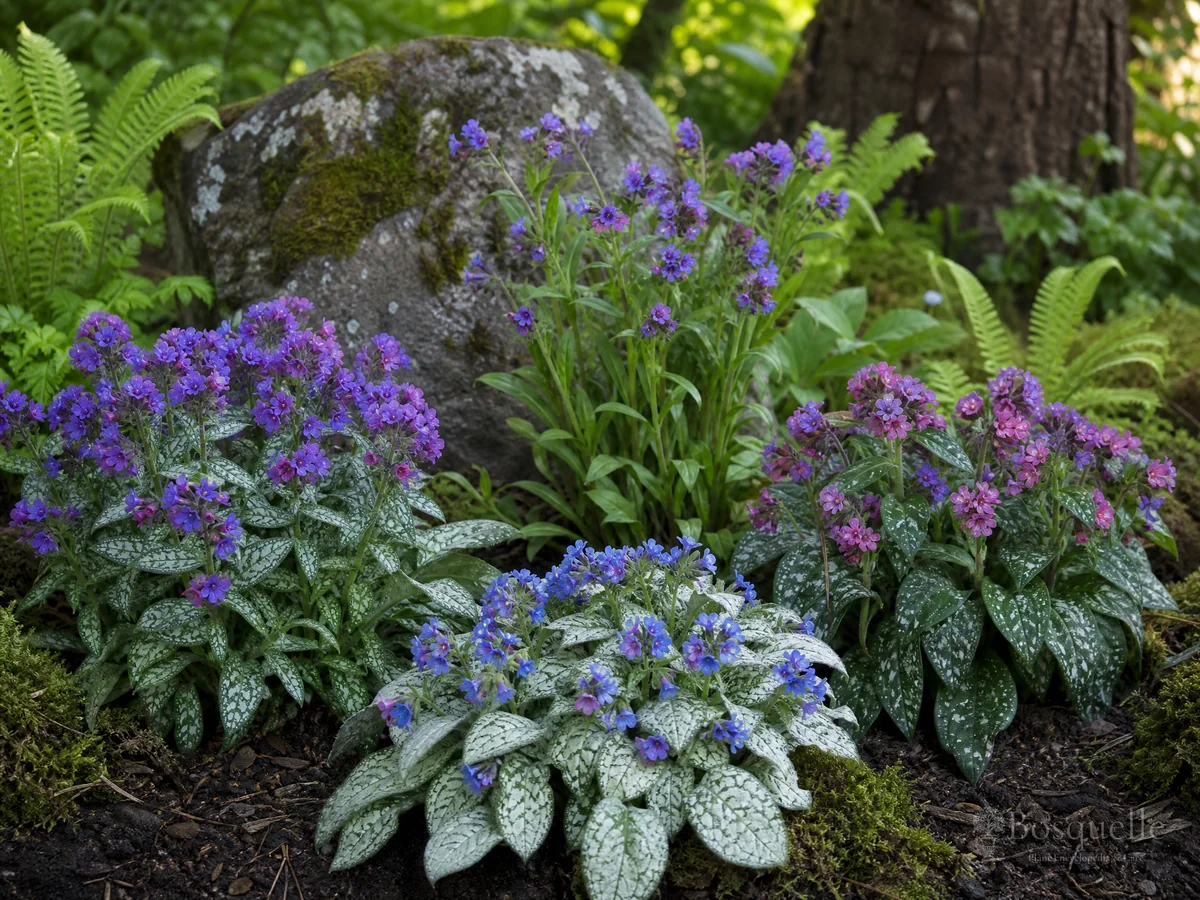
Light: a north- or east-facing border, morning sun with afternoon shade, or high canopy woodland all work. Harsh midday sun scorches thin silver leaves and dries the canopy. Deep dry shade under greedy tree roots stalls growth unless you water extra.
Soil: mix in compost or leaf mould so moisture holds without a stagnant bowl under the crown. Pulmonaria copes with clay if water can still drain. Raised dry sand that bakes every week does not.
Use it along woodland edges, under high trees, and as a spotted or silver skirt in front of hostas. Skip it if you need a dry-sun silver carpet or a midsummer flower machine.
The names Pulmonaria, lungwort, and Bethlehem sage point to this genus. Confirm the cultivar for silver versus spotting versus flower colour on the tag. Plant and divide in cool weather — the full calendar is on Planting Pulmonaria.
Deer often leave the foliage alone. Still protect soft spring growth from slugs. Bees may visit the early flowers.
Keep soil moist to limit mildew and summer fade
Water so the root zone stays evenly moist from spring through summer heat. In heavy soil, let the surface dry slightly between waterings. In pots and raised edges, water when the top inch of mix is dry. Do not run a fixed flood that sours the crown.
Powdery mildew — a dusty white film — often follows dry roots, crowded air, or both. Restore even moisture first. Thin old thatch so air can move. Water at soil level. Avoid a midday leaf shower that leaves wet foliage into cool evenings.
After the flower window, you may cut tired leaves to the crown to refresh the carpet, if you can keep the new growth moist. Do not shear the whole clump to the ground in peak heat unless you will water the soft regrowth.
Older leaves may yellow or thin by midsummer even when the crown is alive. Cut those blades if they bother you. That midsummer look is calendar, not always a failed cultivar.
Mulch after the soil is warm enough to hold moisture. Keep mulch off the crown collar so slugs lose cover and wet organic matter does not sit on new buds.
Feed lightly. Compost at planting is often enough in rich ground. A dilute balanced liquid in containers supports leaf size. Heavy nitrogen without moisture control makes soft tissue that mildew and slugs use.
Group Pulmonaria with other moist-shade foliage — Brunnera, hostas, heucheras, ferns — not with Mediterranean herbs on the same valve. Partner roles: Pulmonaria Companion Plants.
Brown crispy margins usually mean drought or hard noon sun. Mushy crowns mean sealed wet cold. Tiny pale clumps mean deep dry shade plus neglect. Fix site and water before you replace every cultivar.
- Moist shade carpet — water through heat so roots never bake dry
- Bright part shade — watch noon scorch on thin silver leaves
- Containers — check the top inch; empty saucers after heavy rain
- Dry Mediterranean strip — wrong watering group; move Pulmonaria out
Slugs and the early spring flower window
Slugs and snails chew soft new leaves in wet shade — the same moisture the plant needs. Hand-pick at dusk. Use barriers. Keep dense thatch off the crown so pests lose cover. Soft spring growth is the vulnerable window on every selection, including Blue Ensign.
Flowers open in the cool weeks as leaves expand: blue, pink, or raspberry sprays. Deadhead spent sprays for a tidier leaf carpet, or leave seed if you accept seedlings that may not match the parent. Flower colour may shift from blue toward pink as blooms age. That is cultivar behaviour, not a watering error.
In early spring, remove winter-damaged, mildew-scarred, or slug-torn blades so new spotted or silver leaves can rise clean. Save the hard cut-to-the-crown refresh for right after flowering, not for a hot dry July.
Pests beyond molluscs are usually secondary. If leaves look dusty white after a dry spell, treat mildew as a moisture-and-air problem first. If margins brown while soil is wet, check for sun scorch rather than adding more water.
High Contrast and Silver Bouquet still need the same spring slug watch. Bold spots and silver leaves are not a summer flower show if the root zone dries out.
Plant and divide in the cool window
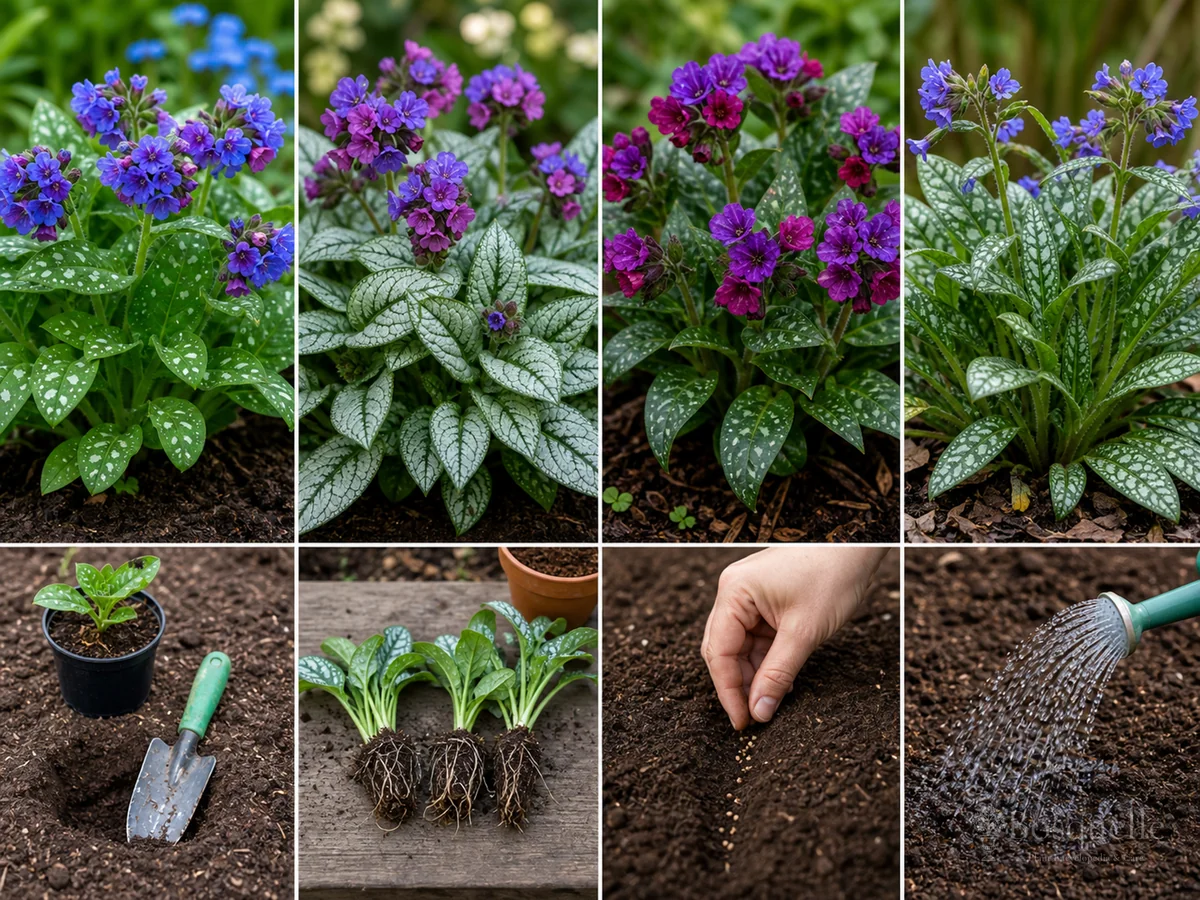
- Choose moist shade to bright part shade.
- Mix compost into the pocket so soil stays moist but drains.
- Set the crown at the same depth as the nursery pot.
- Space 30–45 cm so air can move between clumps.
- Water once to settle soil around the roots.
- Mulch lightly; keep mulch off the crown collar.
- Divide congested clumps in early spring or early autumn.
- Water new plants through the first summer dry spells.
Flower volume and silvering may look thin until roots settle. Summer fade can still appear in heat in year one. Keep moisture even. Do not judge the cultivar by one hot dry June.
Full plant and divide calendar, spacing, and first-year aftercare live on Planting Pulmonaria.
Drained pots with moisture-retentive mix work for smaller plants. Water when the top inch dries. Do not leave saucers flooded overnight in cool weather.
Browse spot, silver, and blue-pink faces
Nine catalog selections are enough to choose by foliage or flower job. They are not nine separate care essays. Skim bands here. Open Types of Pulmonaria for the full choose-by- spot-silver-flower table before you buy.
Blue flower lane: Blue Ensign and Bertram Anderson keep early cobalt sprays for the cool window. Give them moist shade. Dry heat invites mildew and fades leaves after bloom.
Silver foliage lane: Majeste and Silver Bouquet push near-solid silver drifts. Same moist-shade contract; drought dulls silver fast.
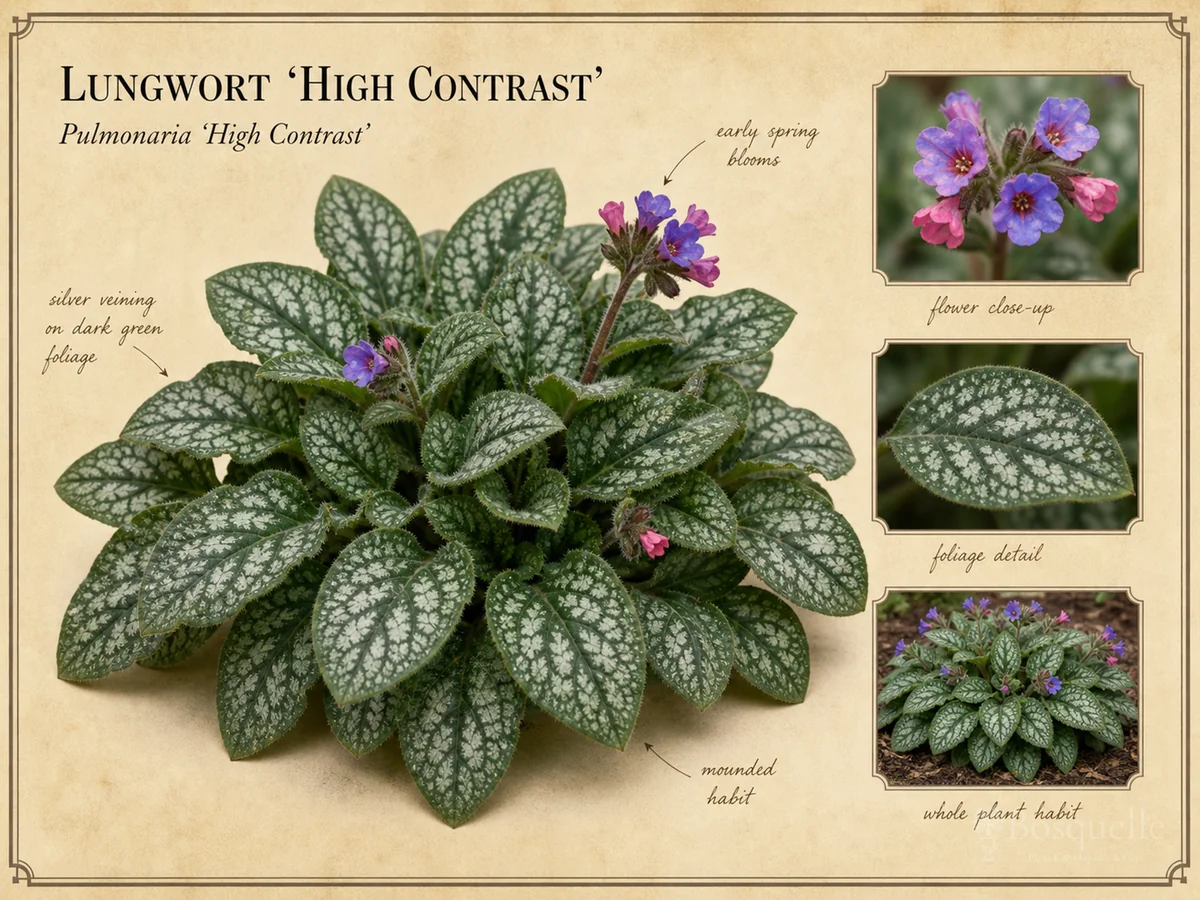
High-contrast spot lane: High Contrast and Trevi Fountain keep bold silver splash on green that reads from the path. Air between clumps matters for mildew watch.
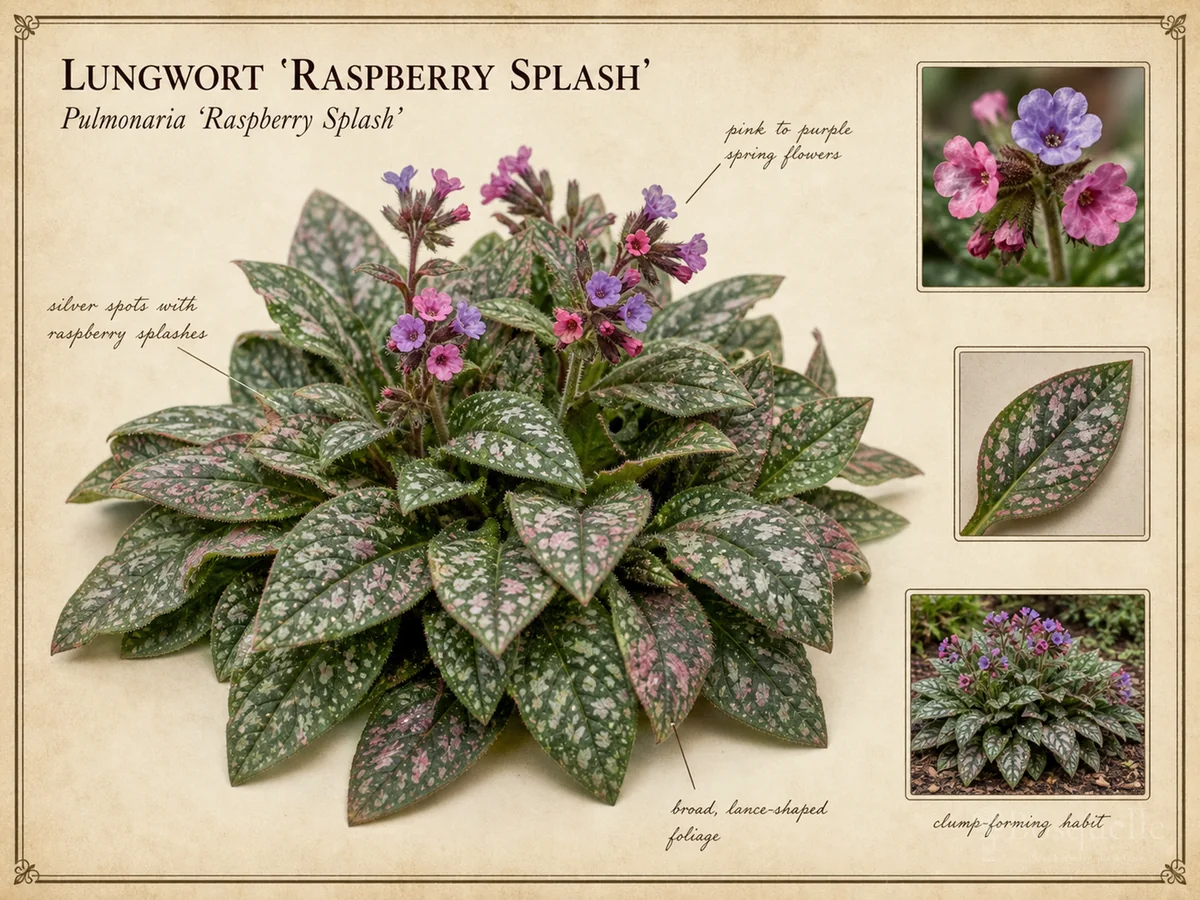
Pink and raspberry lane: Raspberry Splash, Shrimps on the Barbie, and Victorian Brooch own the cool-season pink-to-magenta flower story with spotted leaves under the same watering rules.
Shade partners that share moist shade: Pulmonaria Companion Plants. Plant and divide detail: Planting Pulmonaria.
- Classic early blue — Blue Ensign / Bertram Anderson
- Near-solid silver — Majeste / Silver Bouquet
- Bold spotted contrast — High Contrast / Trevi Fountain
- Pink or raspberry cool sprays — Raspberry Splash / Shrimps / Victorian Brooch
Success is moist shade, even moisture, and air at the crown. Failure is a hot dry edge, a sealed soggy crown in winter, no slug watch on soft spring growth, or expecting July foliage to look like May.
Buy Pulmonaria or lungwort on the tag, a moist-shade site, a foliage or flower job, and a plan to water through heat. Skip the plant if you needed dry-sun silver or a midsummer flower annual.
FAQ
Does Pulmonaria need shade?
Moist shade to bright part shade suits most spotted and silver selections. Hard all-day sun scorches thin silver leaves; deep dry shade stalls growth.
Why do Pulmonaria leaves get mildew?
Often after dry roots or crowded air. Restore even moisture, thin thatch, and water at the soil before reaching for a spray as the first fix.
Is Pulmonaria a perennial?
Yes. Pulmonaria is a hardy shade perennial in most temperate gardens. Clumps persist and can be divided every few years.
Is lungwort the same as Pulmonaria?
Yes — lungwort is the common name. Bethlehem sage is another. Tags here use Pulmonaria plus the cultivar.
Why do Pulmonaria leaves fade in summer?
Older leaves often yellow or thin in heat even when moisture is decent. Cut tired blades; keep watering. A full collapse usually means the roots dried out.
How do I stop slugs on Pulmonaria?
Hand-pick at dusk, keep thatch off the crown, and protect soft spring growth. The plant still needs moist soil — do not dry it out to deter slugs.
When should I plant or divide Pulmonaria?
Early spring or early autumn in cool, workable soil. Full calendar: Planting Pulmonaria.
Can I grow Pulmonaria in pots?
Yes, in a drained pot with moisture-retentive mix. Water when the top inch dries; empty saucers in cool weather.
What grows well next to Pulmonaria?
Brunnera, hostas, heucheras, and ferns that share moist shade. Role weave: Pulmonaria Companion Plants.
Where do I compare spot, silver, and flower types?
Types of Pulmonaria sorts Blue Ensign, silver leaves, high-contrast spots, and pink-raspberry bands. This page owns site, water, mildew, and slugs.
Related guides

Recommended plants




This note is part of Pulmonaria Guides.
More first-season notes by plant are gathered in How to Grow Guides.
Updated: Reviewed by Bosquelle Editors