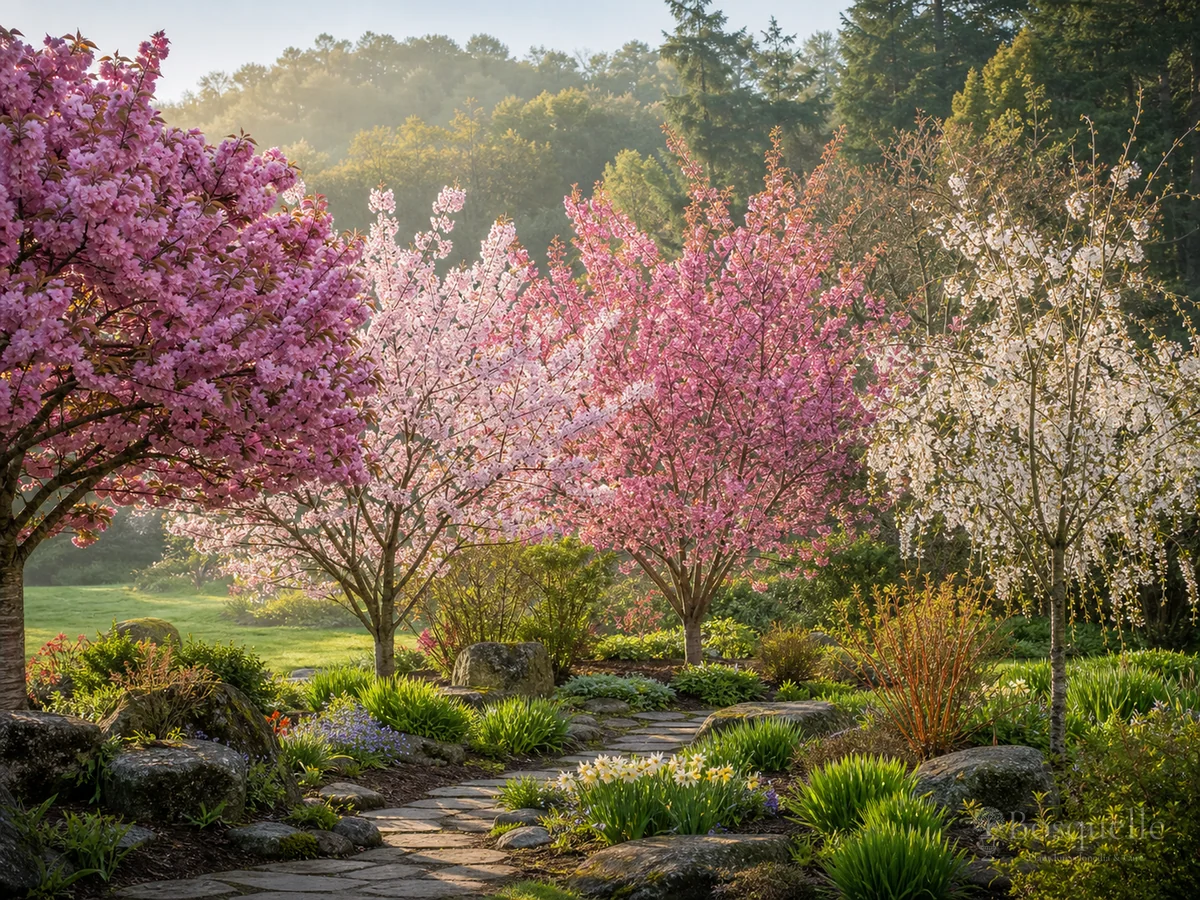
The same genus that gives you a spring cherry in bloom also gives you a plum on the breakfast plate and a dense evergreen hedge along the driveway — and those three plants do not take the same training. Figure out which class you bought first: a flowering ornamental, a stone fruit, or a cherry laurel. All three want full sun, soil that drains after rain, and a graft union (or root flare) sitting above finished grade. How to set a new tree is on Planting Cherry Trees. Prune windows by class are on Pruning Prunus; what to plant under the canopy is on Prunus Companion Plants.
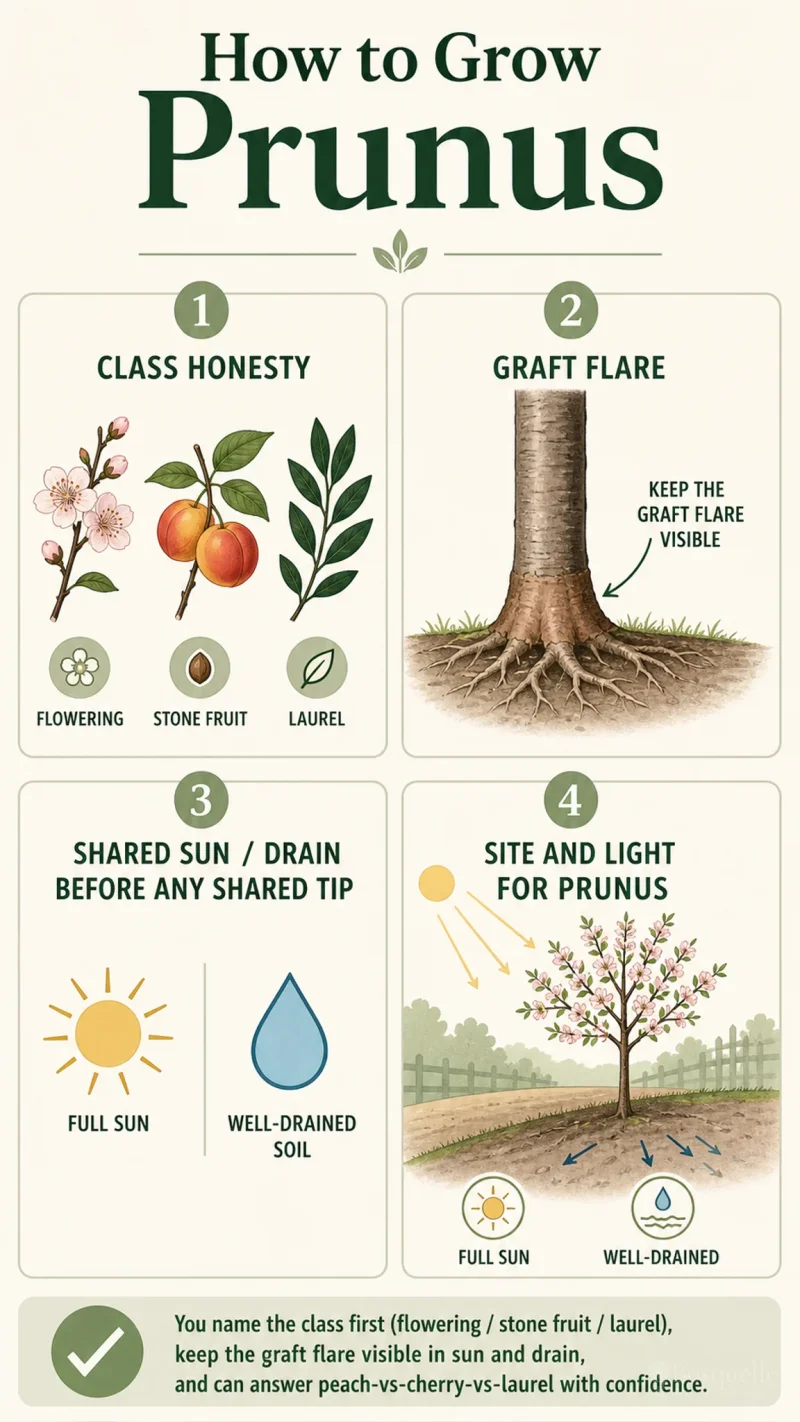
Know which class you bought
Read the tag for the job, not only the word cherry. A flowering cherry is grown for a short spring show and a natural outline. A fruit cherry, peach, plum, or apricot is grown for a crop, so it needs light into the canopy and a pollination plan. A cherry laurel is an evergreen hedge, not a blossom tree. Paste the wrong playbook and you spend years training for a harvest you will never pick, or shearing a flowering tree as if it were a screen. Once you know the class, the shared rules below apply to all of them.
| Class | Grown for | Do not copy |
|---|---|---|
| Flowering cherry | Spring bloom and form | Peach open-center fruit cuts |
| Stone fruit | Crop, light into the canopy | After-bloom ornamental tidy as the only prune |
| Cherry laurel | Evergreen screen | Blossom-tree or orchard training |
Sun, soil, and the graft union
| Factor | Recommended | Avoid |
|---|---|---|
| Light | Full sun, 6 or more hours | Deep shade that cuts bloom and softens fruit wood |
| Soil | Well-drained loam; slightly acid to neutral | A low spot that holds water after rain |
| Planting depth | Graft union or root flare visible above grade | Buried union or a mulch volcano against the trunk |
Most garden Prunus fail in wet feet or in shade, not from a missed spray. Japanese flowering cherries often hold in USDA zones 5 through 8; peaches and many apricots want a longer warm season — confirm the cultivar on its profile rather than one zone story for the whole genus. How to set a new tree — dormant window, hole, graft, and mulch — is on Planting Cherry Trees.
- Keep a grass-free circle at least 3 feet across so turf does not steal water at the trunk.
- Feed modestly in spring if growth is thin. Skip heavy late nitrogen going into cold weather — it pushes soft wood that winter and canker both punish.
- If clay holds a puddle overnight, raise the planting on a low mound rather than digging a deep, wet hole.
Flowering cherries — bloom, not orchard training
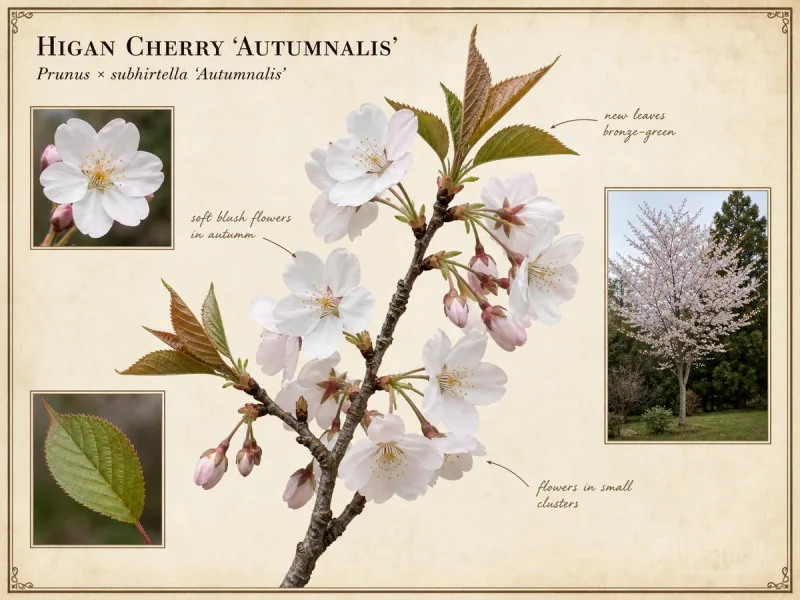
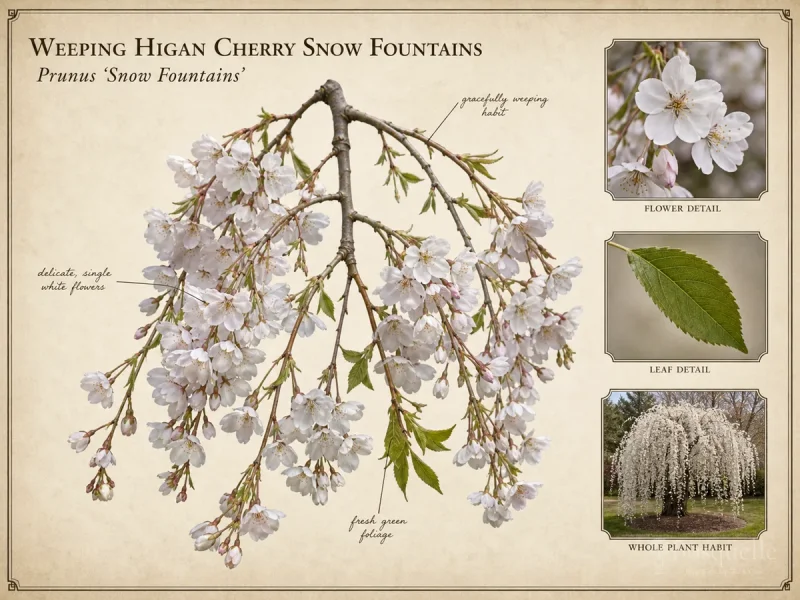
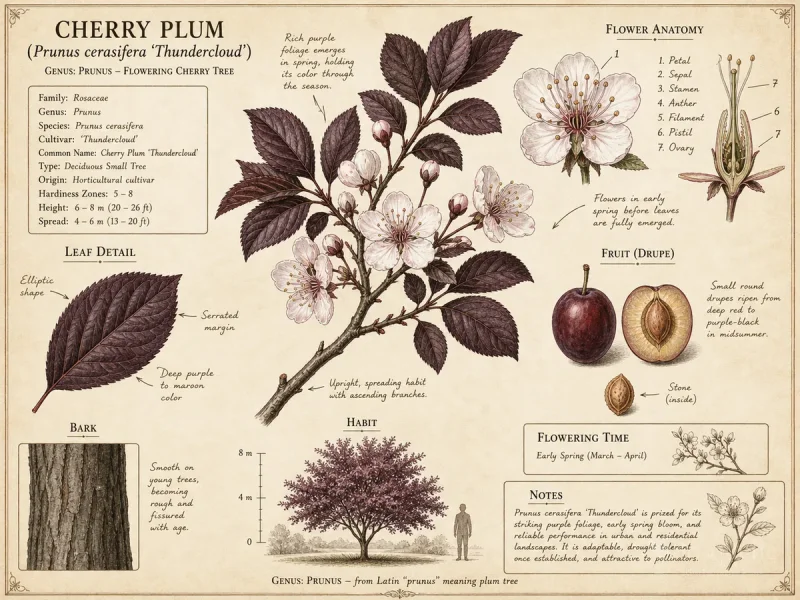
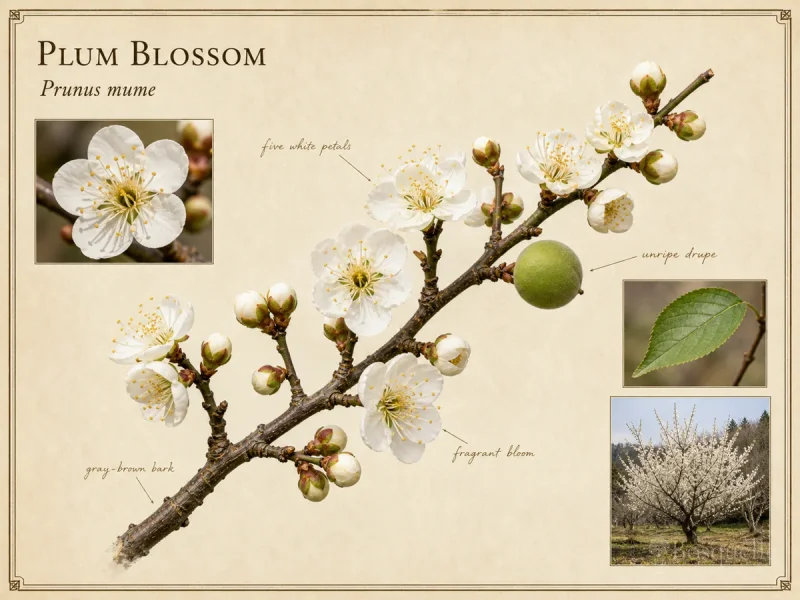
Ornamental cherries such as Kanzan and Akebono are grown for spring bloom. Give them open sun and room for the mature canopy. They are often shorter-lived than a fruit tree, so the care that matters is drainage, a visible graft, and a light hand after bloom — not an open-center peach frame. Autumnalis adds a lighter winter show on the same sun and drain. Weeping Snow Fountains and compact Kojo-No-Mai want that same site; they just take less space. Fragrant flowering plum such as Plum blossom and purpleleaf ornamentals such as Thundercloud still need light and air through the crown.
Okame is an early flowering cherry in the same ornamental class — prune it after bloom with the others, not on a fruit calendar. A handful of flowers in year one or two is normal. A full display usually settles once the framework is in, often by year four or five. Prune windows are on Pruning Prunus.
Stone fruits — sweet cherry, tart cherry, peach, plum, apricot
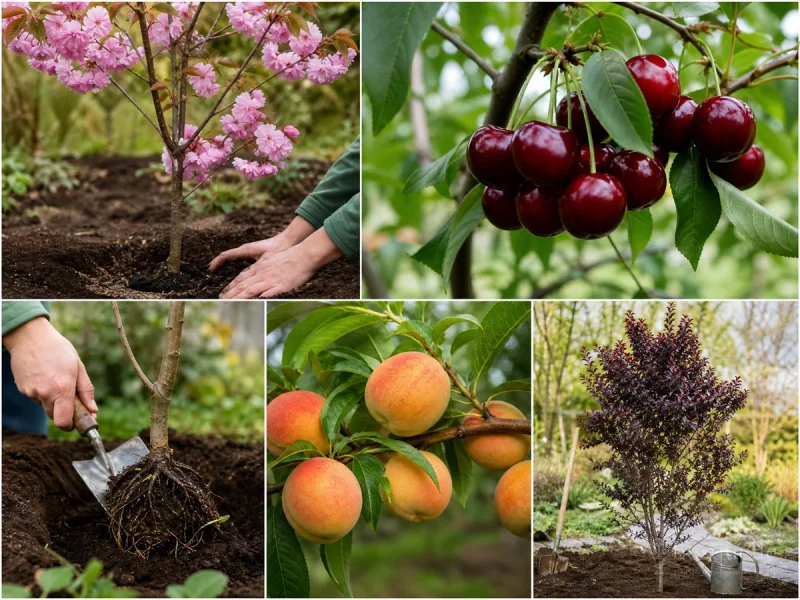
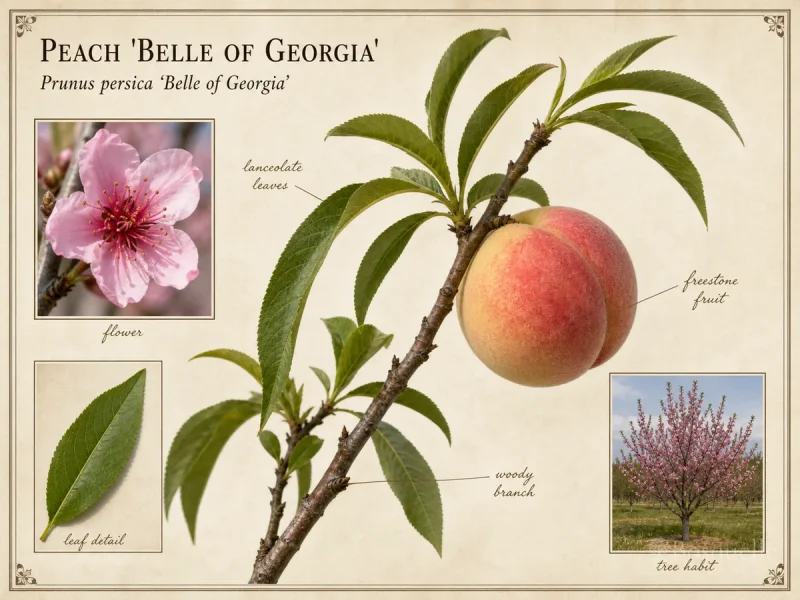
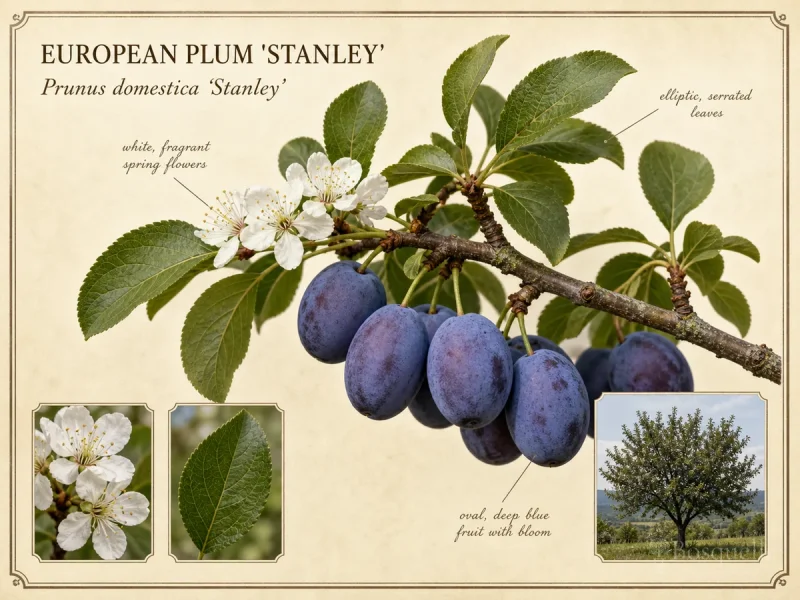
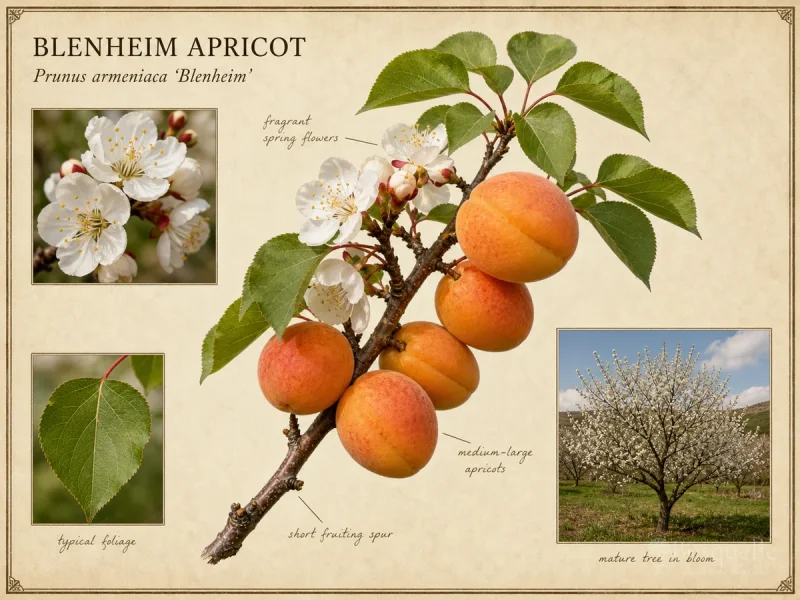
Fruit cherries such as Bing (sweet) and Balaton (tart) still want full sun and drainage, then a crop plan: pollination, thinning, and a canopy that light can reach. Peaches such as Belle of Georgia need that same site plus an open center so fruiting wood gets light. European plums such as Stanley and apricots such as Blenheim follow the fruit class, not the ornamental-cherry prune. Sweet cherries are usually not self-fertile — you need a compatible partner in bloom at the same time. Tart cherries are mostly self-fertile. Confirm the cultivar before you buy a second tree. This page stays high-level; harvest quirks live on the plant profile.
- Thin a heavy fruit set after the natural June drop so limbs do not break and the remaining fruit can size up.
- Water deeply while fruit is filling in a dry spell.
- Leave ladder space and a clear path to the trunk. Do not hide dropped fruit under a dense groundcover.
Evergreen cherry laurels — hedge plants
English laurel such as English Laurel and Carolina cherry-laurel such as Carolina Cherry-laurel are evergreen screens. They still want drainage and light on the face of the hedge. Do not train them as a spring blossom tree or an open-center peach. They establish faster than a flowering cherry in a moderate garden if summer water is steady. Leaves and wilted clippings are toxic — see the safety section before you leave trimmings on the lawn.
Seasonal jobs
- Spring: bloom on flowering cherries; set new trees while soil is workable; water new plantings; modest feed if last year's growth was thin.
- Summer: thin crowded fruit; water in drought; keep laurel hedges from drying out in heat; make needed cuts in dry weather.
- Fall: harvest on cultivar timing; ease late nitrogen; plant in milder zones after leaf drop.
- Winter: dormant shaping on fruit classes that call for it; flowering cherries wait until after bloom. Guard young trunks against rodents and sunscald.
Pests and diseases (basics)
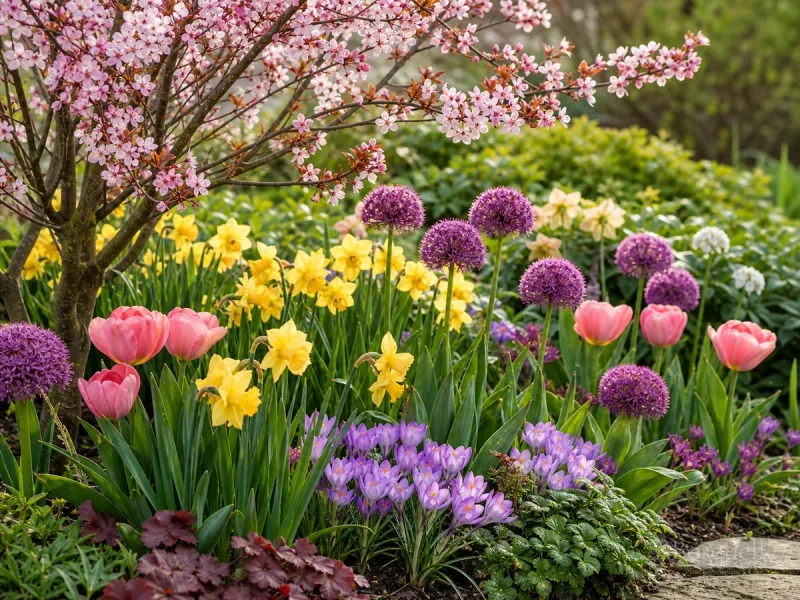
Expect fungal pressure in humid sites, borers on stressed trunks, birds on ripe fruit, and bacterial canker on fresh wounds in cool, wet weather. Start with culture: sun, air through the crown, and soil that drains. Silver leaf is the same class of wound infection in wet climates — do not leave large winter cuts open for months. Under-canopy partners that respect roots and harvest paths live on Prunus Companion Plants.
- Do not bury the graft or volcano-mulch the trunk.
- Do not paste flowering-cherry care onto peach training, or treat a laurel as a blossom tree.
- Rake diseased leaves; net fruit if birds beat you to it.
What to expect in years one to three
Flowering cherries spend the first season on roots. A handful of flowers on a young tree is not a failure. Stone fruit on a strong rootstock may carry a light crop in year two — thin it so the tree builds wood instead of a heavy load. Laurels usually fill a hedge fastest of the three classes: expect real density by year three with consistent summer water. Across all classes, the graft flare has to stay above soil from day one. You cannot fix a buried union two seasons later without digging the roots.
Safety — cherry laurel and other Prunus foliage
Evergreen cherry laurels are toxic. English laurel and Carolina cherry-laurel carry hydrogen cyanide precursors (prunasin) in leaves and seeds. Wilted foliage is more dangerous than fresh because damaged cells release the compound more readily. Dogs and livestock that graze fallen laurel leaves or eat the berries are at real risk; children should not chew leaves or berries. Collect clippings after a hedge trim — do not leave them where pets can reach them. Stone-fruit pits (cherry, peach, plum, apricot) contain the same class of precursor in the kernel. The flesh is the food; keep cracked pits and fallen fruit cleared if dogs roam the garden. Flowering ornamentals are not a food crop.
Give Prunus full sun and drainage, keep the graft flare clear, and treat flowering cherry, stone fruit, and evergreen laurel as three different jobs. Set a new tree on Planting Cherry Trees; prune windows and under-canopy partners are on the other child guides.
FAQ
Do Prunus / flowering cherries need full sun?
Full sun for best bloom and fruit on most garden classes. Light shade is tolerated on some ornamentals; deep shade cuts flower and softens fruit wood.
Are flowering cherries the same as fruit cherries?
No. Flowering cherries are bred for a spring show; sweet and tart fruit cherries are trained for a crop. They share full sun, drainage, and a graft union above soil, but prune timing and training differ.
Can I grow peach the same way as an ornamental Kanzan cherry?
No. Peaches need an open-center framework so light reaches fruiting wood. Ornamental cherries are bloom trees pruned lightly after flowering. Confirm the class on the plant profile.
When will my new cherry tree bloom for the first time?
A young grafted ornamental cherry typically shows a modest first flush in year two or three. A full display usually settles by year four or five. Stone fruits can carry a light crop in year two but should be thinned so the framework can build.
My cherry didn't bloom this year — what happened?
The usual causes are a late frost on swollen buds, less than six hours of sun, heavy late nitrogen that pushed leaves instead of flower wood, or root stress from poor drainage, a buried graft, or transplant shock. Check culture before blaming the variety.
Is cherry laurel toxic to dogs or children?
Yes. Cherry laurel leaves, seeds, and wilted foliage contain prunasin. Wilted leaves after pruning are more dangerous than fresh. Collect clippings after you trim a hedge.
Are Prunus stone-fruit pits (peach, plum, cherry) toxic?
The kernel inside the pit contains amygdalin, which releases hydrogen cyanide when chewed. The flesh is safe. Keep pits away from dogs and clear fallen fruit if animals roam the garden.
Do I need two trees for cherry fruit?
Sweet cherries are usually not self-fertile — two compatible cultivars are needed for a full crop. Tart (sour) cherries such as Morello are mostly self-fertile. Confirm pollination on the cultivar profile before you buy a second tree.
Is cherry laurel the same care as a flowering cherry?
No. Evergreen cherry laurels are hedge plants pruned for a dense screen. They share sun and drainage with flowering cherries but not the training goal or prune window.
How fast do flowering cherries grow?
Most ornamental cherries put on about 1–2 feet a year in good conditions. Weeping forms fill more slowly. Very fast leafy growth is a cue to cut nitrogen — over-feeding pushes extension at the expense of bloom.
Can I grow Prunus in a container?
Compact forms such as dwarf peaches and small flowering cherries can work in large containers with steady water and a spring feed. Full-size ornamentals and standard fruit trees outgrow pots in a few seasons. Read the rootstock on the label.
Why are my cherry tree leaves turning yellow?
Mid-season yellow on an otherwise healthy tree is often iron or magnesium shortage in alkaline soil, or overwatering. Patchy yellow with green veins points to iron chlorosis. Uniform yellow with wet soil points to drainage. Shot-hole and leaf scorch spot and brown before they drop — match the pattern, not one cause.
When should I plant a cherry tree?
Fall after leaf drop, or late winter to early spring while the tree is still dormant. In a cold yard, wait until you can work the soil in spring. The hole steps are on Planting Cherry Trees.
After bloom — when and how should I prune my ornamental cherry?
Shortly after bloom finishes: remove crossing wood, dead wood, and shoots that crowd the canopy. Avoid hard cuts into thick old wood unless you are renovating. Full class timing is on Pruning Prunus.
When do I prune each class of Prunus?
Flowering cherry after bloom; fruit cherry and plum in the dormant season (sweet cherry often after harvest); peach from bud swell through petal fall; evergreen cherry laurel after a flush. Detail is on Pruning Prunus.
Related guides

Recommended plants






This note is part of Prunus Guides.
More first-season notes by plant are gathered in How to Grow Guides.
Updated: Reviewed by Bosquelle Editors