
King protea fails most often from wet feet or phosphorus fertilizer — both burn the fine proteoid roots that evolved for lean, acidic ground. Give P. cynaroides full sun, a mound or grit bed that never puddles, and skip bone meal and high-middle-number feeds.
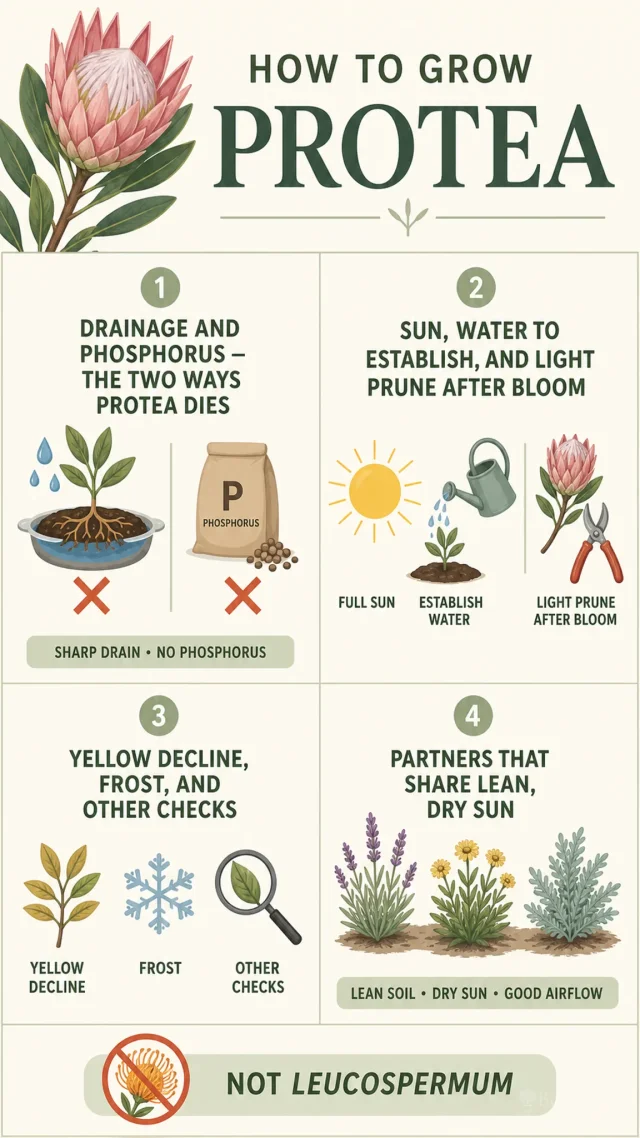
Huge goblet blooms come after drainage and chemistry are settled.
Drainage and phosphorus — the two ways protea dies
| Site habit | What you get | What fails |
|---|---|---|
| Full sun (about six-plus hours) with air movement | Sturdy growth and flower heads | Leggy yellow decline in shade |
| Sharp drainage — sand, decomposed granite, or a raised mound on clay | Alive roots through wet seasons | Crown rot in puddles and lawn strips |
| Lean, slightly acidic soil — no high-phosphorus fertilizer | Healthy proteoid feeder roots | Sudden burn from bone meal / high-P feeds |
| Water to establish, then sparse deep soaks | Drought toughness in mild-winter sun | Constant damp “flower bed” culture |
| Light prune after bloom — avoid heavy cuts into old wood | Bushier next season | Hard stubs that do not resprout |
California specialty growers treat drainage and low phosphorus as non-negotiable. Avoid old orchard soils with Phytophthora history and beds that stay damp for roses or annuals. Mulch to cool surface roots, but keep mulch off the stem.
- Pick full sun on ground that sheds water. On clay, build a wide mound (grower guidance often cites roughly eight inches high) and plant on the crest.
- Dig only as deep as the root ball and wider than it is; backfill with native mineral soil — skip rich compost “bathtubs.”
- Water thoroughly at planting, then deep soaks about weekly through the first season (adjust for heat and soil), letting the surface dry between.
- Do not apply fertilizers with a high middle number (phosphorus). If you must feed, use a low- or zero-P product labeled for natives / proteas.
- After flowering, tip-prune lightly and remove spent heads. Do not aggressively cut into thick old wood.
Sun, water to establish, and light prune after bloom
Site in full sun. Shade stretches plants and can turn foliage yellow before blooms ever appear. Warm days and cool nights suit many Proteaceae selections; containers with perlite or scoria help when garden soil is sticky.
Through establishment — often the first growing season or longer — keep roots lightly moist without waterlogging. Once established, king protea leans drought-tolerant: soak during long dry spells, then wait. Hard, salty irrigation water is a slow stressor in some coastal gardens; rain or low-salt water is kinder when you can choose.
Prune for shape right after the main flush. Light, frequent tip work beats rare hard chops. Spent flower heads can be cut for vases or dried; stripping lower leaves on cut stems is standard florist practice.
Frost is the outdoor limit. Mild-winter and coastal California gardens are the usual U.S. home; brief dips near freezing may only nick new growth, while hard freezes need cloth or greenhouse culture. Inland heat plus alkaline clay is a harder ask than a drained coastal slope.
Yellow decline, frost, and other checks
Yellowing or collapse: check drainage and recent fertilizer first. Phosphorus toxicity and wet roots look like “mystery decline.” Stop high-P products and improve aeration before adding more feed.
No bloom yet: youth, shade, or a plant still fighting wet soil. King protea also needs enough sun to load those large heads.
Frost damage: protect with frost cloth on forecast freeze nights in shoulder climates; do not expect Midwest hardiness.
Name confusion: “pincushion protea” in search often means Leucospermum, a related Proteaceae genus with different flower form. Shared family care (sun, drain, low P) overlaps; this page owns true Protea, especially king protea.
The king protea we cover
King protea (P. cynaroides) — cape artichoke flower / giant protea — is the South African national flower: a broadleaf evergreen shrub often about three to four feet (sometimes taller) with goblet heads that can span several inches across in pink, red, or cream.
Grow it for those heads and leathery foliage, not as a phosphorus-hungry border filler.
Partners that share lean, dry sun
Pair with other low-phosphorus, sharp-draining sun shrubs — other Proteaceae, Mediterranean drought plants — and keep irrigation zones separate from lawn and rose beds. Partners stay short here.
FAQ
Why is my protea turning yellow or dying?
Usually wet soil, poor drainage, or phosphorus fertilizer. Fix drainage and stop high-P feeds before adding more nutrients.
Can I fertilize protea?
Skip high-phosphorus fertilizers and bone meal. If you feed at all, use a low- or zero-P native/protea product sparingly.
How much sun does protea need?
Full sun — about six or more hours. Shade makes plants leggy and dull.
Can I plant protea in clay?
Only with drainage help — mound planting so roots sit above the wet zone. Flat clay bowls rot proteas.
Is pincushion the same as king protea?
Often no. Pincushion flowers are commonly Leucospermum. King protea is Protea cynaroides. Family care overlaps; flower form differs.
When should I prune protea?
Lightly after flowering. Avoid aggressive cuts into old wood that may not resprout.
Is protea frost hardy?
It needs a mild-winter or coastal climate outdoors. Brief light freezes may only tip new growth; hard freezes need protection or containers.
How often should I water?
Deep soaks while establishing (often weekly the first season, weather depending), then sparse watering once drought-tough. Never leave the crown in standing water.
Can I grow protea in a pot?
Yes in a gritty, acid, fast-draining mix with large drainage holes. Containers help where garden soil stays wet or cold.
How big does king protea get?
Often about three to four feet tall in gardens, sometimes taller, with very large flower heads. Read the tag for the selection.
What soil does protea want?
Lean, slightly acidic, and sharply drained — mineral sand or decomposed granite beats rich compost bowls.
What fails protea fastest?
Phosphorus fertilizer, puddled clay, and shade.
Recommended plants

More first-season notes by plant are gathered in How to Grow Guides.
Updated: Reviewed by Bosquelle Editors