
Grow obedient plant in moist sun with a footprint plan. Tags may also say Physostegia, or false dragonhead. It is not turtlehead.

Give it moist sun, and plan for rhizomes
| Factor | Recommended | Avoid |
|---|---|---|
| Light | Full sun to light afternoon shade | Deep shade that flops stems and thins bloom |
| Soil | Moist, moderately fertile ground that still drains. Rain-garden wet is fine | Bone-dry gravel, or a tiny formal pocket with no barrier |
| Water | Keep the root zone evenly moist through the growing season | Letting a new planting bake dry, then flooding the crown in winter |
Obedient plant is a native mint. Give it sun and even moisture and it holds 3 to 4 feet of late-summer spikes. [1] In rich, damp ground the rhizomes travel and form a colony. [2] A rain-garden margin or a meadow edge is a better home than a dry sage border. Stolons are shallow, so extra shoots pull easily while they are still soft. [3]
Does obedient plant need full sun?
Full sun to light afternoon shade gives the strongest spikes. Deep shade flops stems and thins bloom.
Is obedient plant invasive?
Rhizomes roam in moist, fertile soil. That is not the same as a listed noxious weed. Plan a barrier, a large space, or regular division.
What soil does Physostegia want?
Moist, average to rich ground that holds water without sitting flooded for weeks around the crown. Skip bone-dry gravel.
Pair it with other moist-sun meadow plants
Partners should want the same sun and even moisture: coneflower, late grasses, and other late-summer natives you can still reach to pull extra shoots. Leave a path so the colony does not erase the neighbours in two seasons.
Plant at pot depth after frost
Plant nursery starts after frost in spring, or in early fall with enough weeks for roots to take. Set the crown at the same depth it grew in the pot. Site it at the back of the border, or install edging before you plant. [4]
- Pick full sun to light shade and ground that stays moist.
- If the bed is small, sink a rigid collar or other edging before you plant, so rhizomes cannot run under the path.
- Dig a hole as deep as the pot and a little wider. Do not bury the crown in a compost collar.
- Set the plant at pot depth, backfill with the soil you dug, and water to settle.
- Mulch the root zone and keep mulch off the stems.
- Water through the first summer so the clump takes before it starts to roam.
When should I plant obedient plant?
Spring after frost, or early fall with enough weeks for roots to take. Crown at pot depth, with space or a barrier already decided.
Does obedient plant spread?
Yes. Rhizomes and stolons send up new shoots in moist ground. Pull extras while they are soft, or divide the clump.
Grow it in a pot if you cannot give it a barrier
A deep pot with drainage holes holds the spikes without handing the border to rhizomes. Keep the mix evenly moist. Empty the saucer after rain. Ground is easier if you have a meadow or a rain-garden edge that can take the roam.
Can I grow obedient plant in a pot?
Yes, in a deep pot that drains, kept moist. Ground is simpler if you have room or a barrier.
Divide the clump every year or two
Division in spring or fall keeps the stand in bounds. Roots are shallow, so unwanted shoots also pull by hand.
- Dig the clump when the soil is workable and not waterlogged.
- Split it into pieces that each have shoots and roots. Discard a tired woody center.
- Replant at the same depth, water in, and keep evenly moist until new growth takes.
- Through the season, pull extra shoots that appear past the edge you want.
How do I stop obedient plant from spreading?
Use edging or a sunk collar, site it where roam is welcome, and divide or pull runners every year or two while shoots are soft.
When should you divide obedient plant?
Every one to two years in spring or fall — or sooner if stems roam past their allotted space.
Cut dead stems in spring, and stake if it flops
Tops die back in winter. Leave the old stems until early spring, then cut them to the ground. Tall stems flop in shade, rich soil, or heat — stake early, or pinch in early summer for a shorter plant.
- In early spring, cut last year's dead stems to the ground before new shoots tangle in them.
- If last year's stems flopped, set a ring or stakes while new growth is still short.
- On a windy, very rich site, pinch stems back a few inches in early summer so they branch and stay shorter.
- Deadhead spent spike tips if you want a tidier plant and fewer seedlings. Leave seed heads if you want volunteers.
Should obedient plants be cut back in the fall?
You can leave the dead stems through winter and cut them in early spring. Either timing works. Spring cut is simpler if you want the stems to mark the clump.
Why are my obedient plant stems flopping?
Usually too much shade, too much feed, or heat. Move it into more sun, skip heavy fertilizer, and stake taller stems early.
Should I deadhead obedient plant?
Optional. Snip spent tips for a tidier spike, or leave seed heads if you accept seedlings.
Not turtlehead — and not bee balm
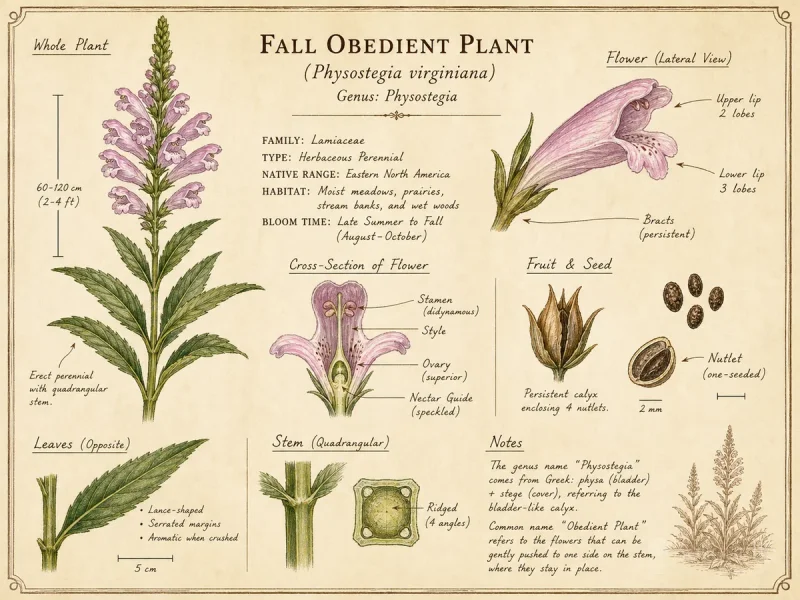
Turtlehead is Chelone, a different wet-site perennial with a closed, turtle-mouth flower. Obedient plant is Physostegia, a mint with square stems and flowers you can bend on the spike. Do not copy turtlehead care onto this plant.
Bee balm is Monarda, another mint with mildew-prone whorled heads. Obedient plant is not bee balm. Read the Latin on the tag before you copy either recipe.
Is obedient plant the same as turtlehead?
No. Turtlehead is Chelone. Obedient plant is Physostegia. The flowers look related from a distance, but the plants are different.
Is obedient plant bee balm?
No. Bee balm is Monarda. Obedient plant is a different native mint with hinged tubular spikes.
White spikes, pink spikes, or the species face
Culture is the same. Flower color is the choice. Do not treat a shop list of twenty names as a different plant.
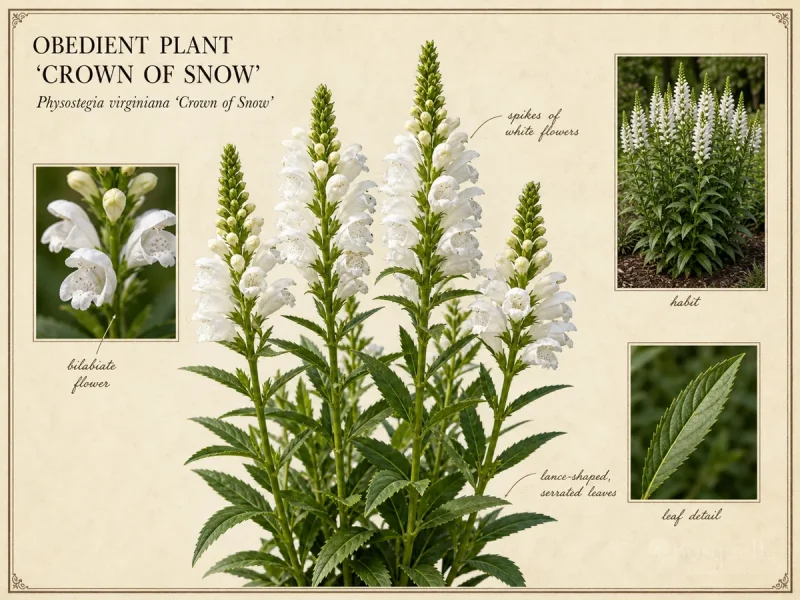
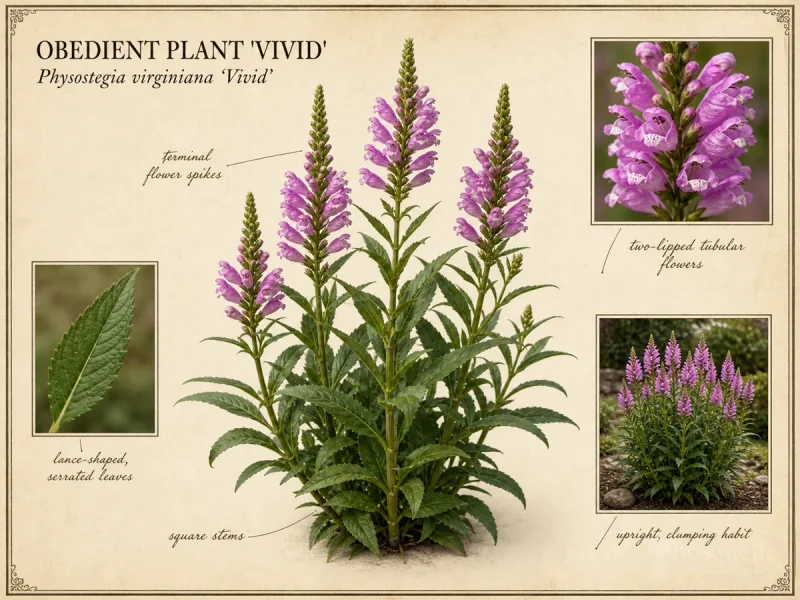
P. virginiana is the straight native — pink to lavender tubes on a roaming clump. ‘Alba’ and ‘Crown of Snow’ are white spikes on the same moist-sun contract. ‘Rosea’ and ‘Vivid’ are warmer pink to magenta; they still roam.
What is the difference between Alba and Vivid?
Flower color — white versus vivid pink — on the same moist-sun, roaming habit. Care and containment stay the same.
When does obedient plant bloom?
Typically mid to late summer into early fall, with upright tubular spikes that bees and hummingbirds work.
Set it in moist sun, plant after frost, divide or pull extra shoots every year or two, stake if it flops, and read the tag so you did not buy turtlehead.
FAQ
Why is it called obedient plant?
Fresh flowers on the spike often stay when you bend them sideways. That trick named the plant. Rhizomes do not stay put. Also called false dragonhead.
Is false dragonhead a different plant?
No. False dragonhead is another common name for obedient plant. Read the Latin on the tag so you did not buy turtlehead or bee balm.
Is Miss Manners a plant we hold?
No. That compact nursery name is not in this catalog. Same moist sun and rhizome plan if you bought one elsewhere.
Is Crystal Peak White a plant we hold?
No. Extra shop whites use the same site and water. This page covers Alba, Crown of Snow, Rosea, Vivid, and the species.
Is Pink Manners a plant we hold?
No. Extra shop pinks use the same moist sun and roam. Color on the tag is not a containment fix.
Recommended plants


References
- [1] NC State Extension -
https://plants.ces.ncsu.edu/plants/physostegia-virginiana/ - [2] University of Illinois Extension -
https://web.extension.illinois.edu/hortanswers/PlantDetail.cfm?PlantID=866&PlantTypeID=14 - [3] Penn State Extension -
https://extension.psu.edu/rain-garden-plants-obedient-plant - [4] University of Arkansas Division of Agriculture -
https://www.uaex.uada.edu/yard-garden/resource-library/plant-week/obedient-plant-10-05-07.aspx
More first-season notes by plant are gathered in How to Grow Guides.
Updated: Reviewed by Bosquelle Editors