
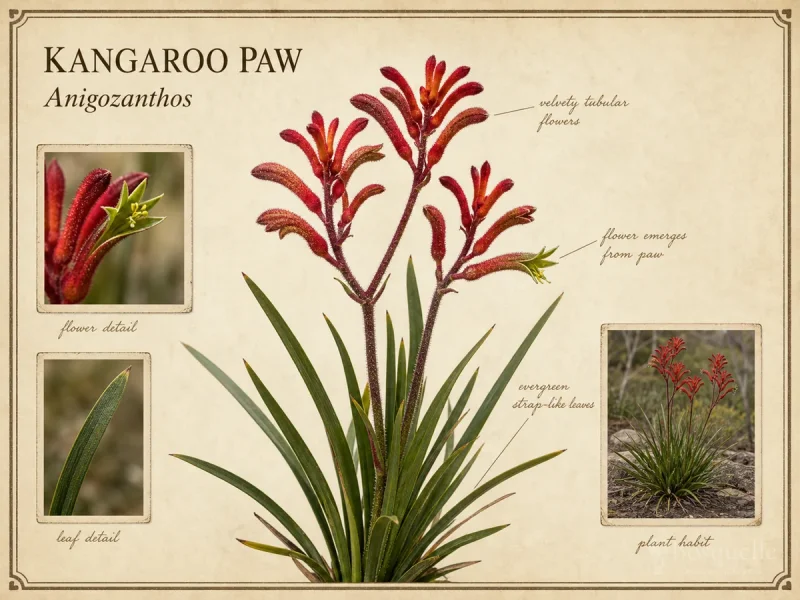
Grow kangaroo paw in full sun and sharp drainage. Anigozanthos is the Latin name for those fuzzy, tubular flowers — not a hardy northern border perennial.

Full sun, sharp drainage, and a frost plan
| Factor | Recommended | Avoid |
|---|---|---|
| Light | Full sun, six hours or more | Deep shade that weakens bloom and holds wet fans |
| Soil | Sandy or raised ground that drains after rain | A low clay pocket where rhizomes sit wet |
| Winter | Outdoors only where hard freezes are rare; a pot you can move farther north | Leaving a tender clump out for a northern winter |
| Water in bloom | Even moisture while buds form, water at the soil | Winter-wet saucers, or spraying the fans |
In much of the eastern United States this plant is a greenhouse or conservatory crop, or a container you move; it is widely grown outdoors in Southern California and is not a match for a wet North Carolina winter. [1] Give it a sunny, open site and excellent drainage. Water in a dry summer if the soil still drains, and keep phosphorus on the low side. [2]
Is kangaroo paw frost hardy?
Not as a general northern perennial. Warm, frost-light gardens keep it outdoors. Colder gardens use a pot, a greenhouse, or treat it as a warm-season plant.
Water in growth, cut spent fans, and watch for ink
Ink disease shows as large black blotches on leaves, worse in cool, moist, still air. It is hard to treat; vigorous plants resist it better, and tired clumps are often replaced after a few years. [3] Water the soil, not the fans. Cut spent flower stems. Each fan flowers once, so take old leaves down without nicking the new fans coming through.
- Water at the soil in spring and summer while buds form. Let the top dry slightly between waterings.
- Cut spent flower stems at the base after a flush.
- Remove old or blackened fans. Do not cut into the new fans.
- If black blotches spread after wet, humid weeks, cut the damaged growth, fix drainage and crowding, and ease off winter water — do not add more water.
What is ink spot on kangaroo paw?
A fungal leaf blotch that turns fans black, especially in cool moisture and poor airflow. Remove the damaged fans, open the site, and keep water off the leaves.
Why did my kangaroo paw turn black?
Often ink disease, or crown rot from wet soil. Black blotches on otherwise firm fans are ink. Mushy crowns are rot. Both start with drainage and airflow, not fertilizer.
Plant in the ground, pot for winter, or divide
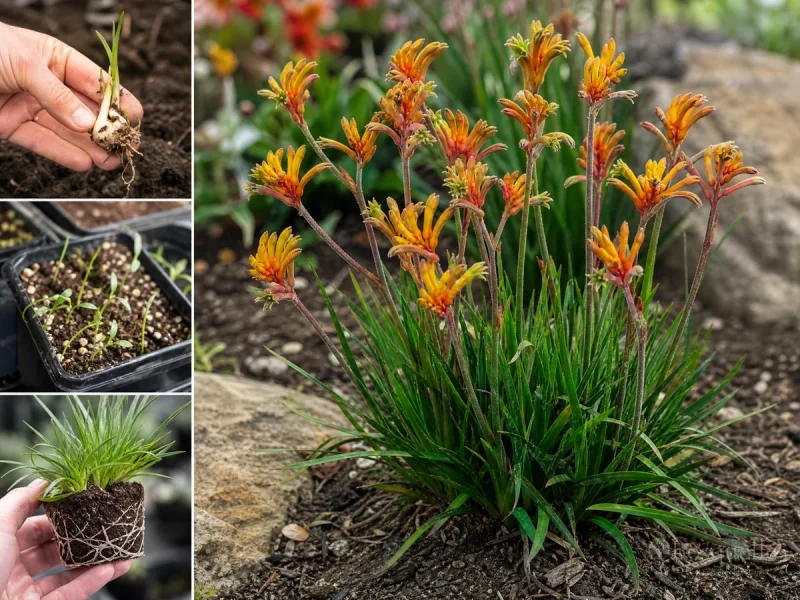
- Set a nursery plant in a raised or sandy bed — Planting Kangaroo Paw.
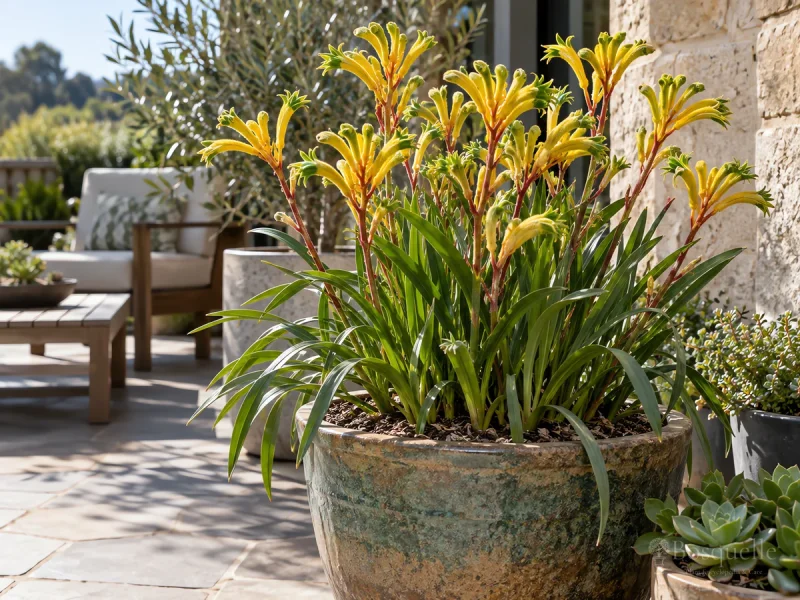
- Use a drained pot you can move before frost — Kangaroo Paw in Containers.
- Divide a clump in spring, or sow species seed — Propagating Kangaroo Paw.
Space clumps about 24 to 32 inches apart in sandy loam, and use drip or a careful soak so the crown does not sit wet. [4]
If the crown stays wet after rain, raise the bed or move the plant to a pot — do not answer rot with another watering.
FAQ
When should I cut back kangaroo paw?
After a bloom flush, cut spent stems. In a frost-free garden, a harder late-winter cut of old fans refreshes the clump once watering is already sensible.
How much sun does kangaroo paw need?
Full sun is the default for strong bloom and drier fans. Shade invites weak growth and more leaf blotch.
Does kangaroo paw need fertilizer?
A light feed after bloom is enough. Use a low-phosphorus native-plant fertilizer. Heavy phosphorus can blacken leaf tips and look like ink.
What else can I plant nearby?
Other sun plants that hate wet feet — lavender, agave, or a dry-summer salvia. Leave space so fans dry after rain. Keep mulch off the crown.
What pests hit kangaroo paw?
Snails and slugs chew new fans. Aphids can appear in spring — see the aphids hub. Black fans are usually ink or wet-crown rot, not a mystery insect.
Will kangaroo paw bloom the first year?
A nursery plant often blooms in season if sun and water during bud set are right. Seedlings usually wait until the next year.
Related guides


Recommended plants
References
- [1] NC State Extension Gardener -
https://plants.ces.ncsu.edu/plants/anigozanthos-flavidus/ - [2] San Marcos Growers -
https://www.smgrowers.com/info/anigozanthosTalk.asp - [3] Australian National Botanic Gardens -
https://anbg.gov.au/anigozanthos/index.html - [4] Harvest to Table -
https://harvesttotable.com/how-to-grow-anigozanthos/
This note is part of Anigozanthos Guides.
More first-season notes by plant are gathered in How to Grow Guides.
Updated: Reviewed by Bosquelle Editors