
Grow florist kalanchoe (flaming katy) in bright light in a mix that dries between waterings. It is a succulent. It is not mother of thousands planted in the yard.
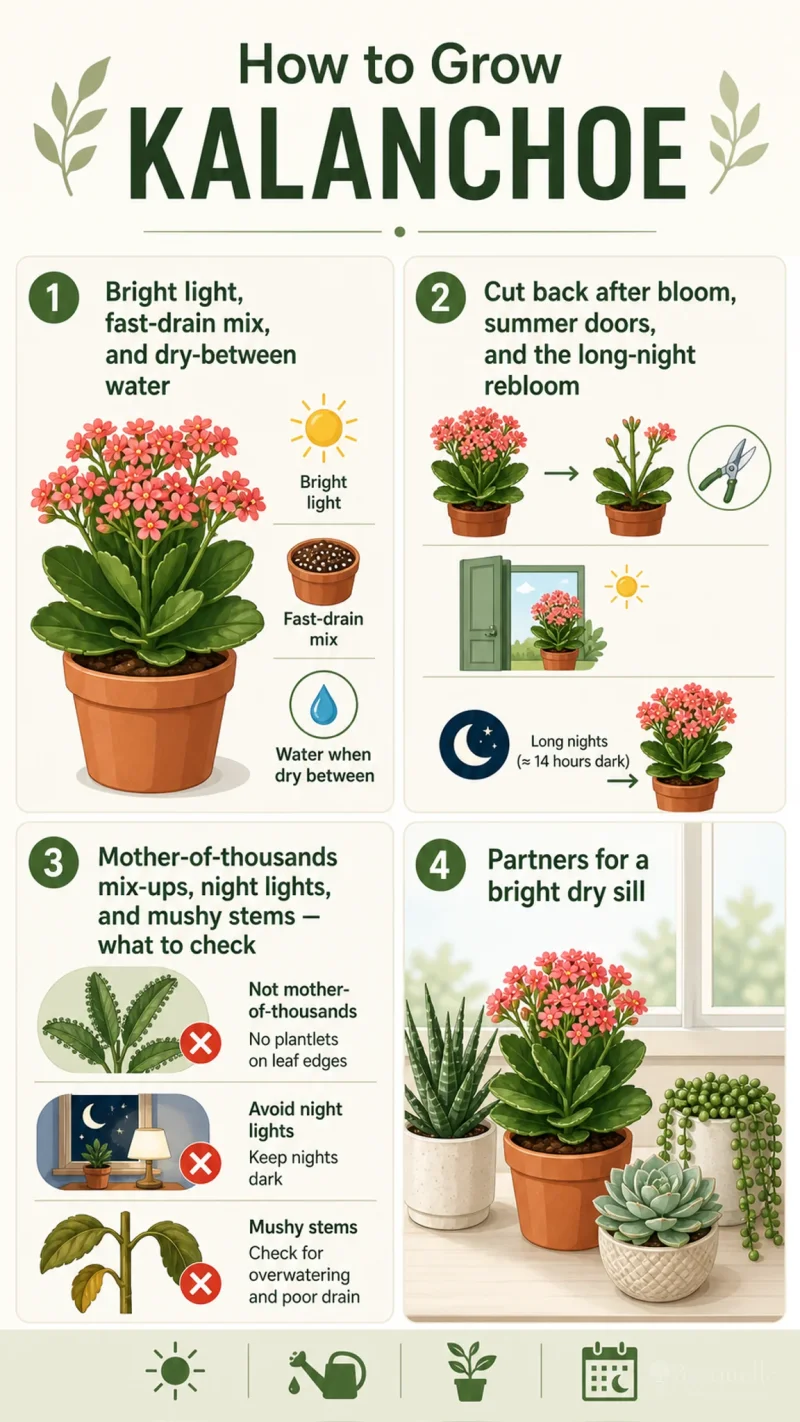
Bright light, drain mix, and dry between first
| Factor | Recommended | Avoid |
|---|---|---|
| Light | Bright window; afternoon shade if leaves scorch | A dim shelf that stretches stems |
| Mix | Cactus or peat–perlite that drains | Wet peat that stays soggy a week |
| Water | Soak, then wait until the mix has dried slightly | A full saucer overnight |
| Night while blooming | Cool, about 60°F | Hot nights that shorten the flowers |
Bright light keeps the plant compact. Dim rooms make it spindly. [1] A cactus mix, then a deep soak when the top has dried, beats a weekly splash into wet peat. [2] Hot afternoon sun can scorch; slide the pot back if the leaves bleach.
How much light does kalanchoe need?
Bright light — a south or west window, or bright indirect. Low light stretches the stems and cuts bloom.
How often should I water kalanchoe?
When the mix has dried slightly. Water less in winter or while you are running long nights for buds.
Cut back after bloom and long nights
- After the clusters fade, cut spent stems and tall growth.
- Give about six weeks of nights at least fourteen hours long, with no lamp or TV glow in that dark period. [3]
- Natural winter days from about October through March can do this if the room stays dark at night. A closet in late afternoon, then back to bright light each morning, works when the house stays lit.
- Keep nights near 60°F. Heat above about 80°F during the dark weeks delays buds.
- Once buds sit above the leaves, night lighting no longer ruins the cycle. Then grow the plant hard through summer in bright light.
How do I get kalanchoe to bloom again?
Six weeks of uninterrupted 14-hour nights, then bright days. A hallway lamp resets the clock. Cool nights help the flowers last.
Florist florist kalanchoe is the short-day plant. Mother of thousands is a different job. Summer the pot outdoors after frost risk, then bring it in before nights drop near 45°F. Feed monthly only while the plant is in active growth. Skip fertilizer during the dark weeks and while flowers are open. Rotate the pot so one side does not stretch toward the glass.
What fails kalanchoe
- Wet mix — stem and crown rot.
- Interrupted nights — no second bloom.
- Dim light — stretch, few flowers.
- Mother of thousands in warm ground — plantlets colonize. Keep it potted. [4]
Mealybugs wipe off with alcohol. The plant is toxic if chewed — keep it away from pets. Mushy stems are overwatering, not hunger. Do not fertilize a plant sitting in a swamp. If only the lower leaves yellow and drop, check that the mix still dries within a week; a pot without a hole is the usual cause.
Kinds, cuttings, and a new pot
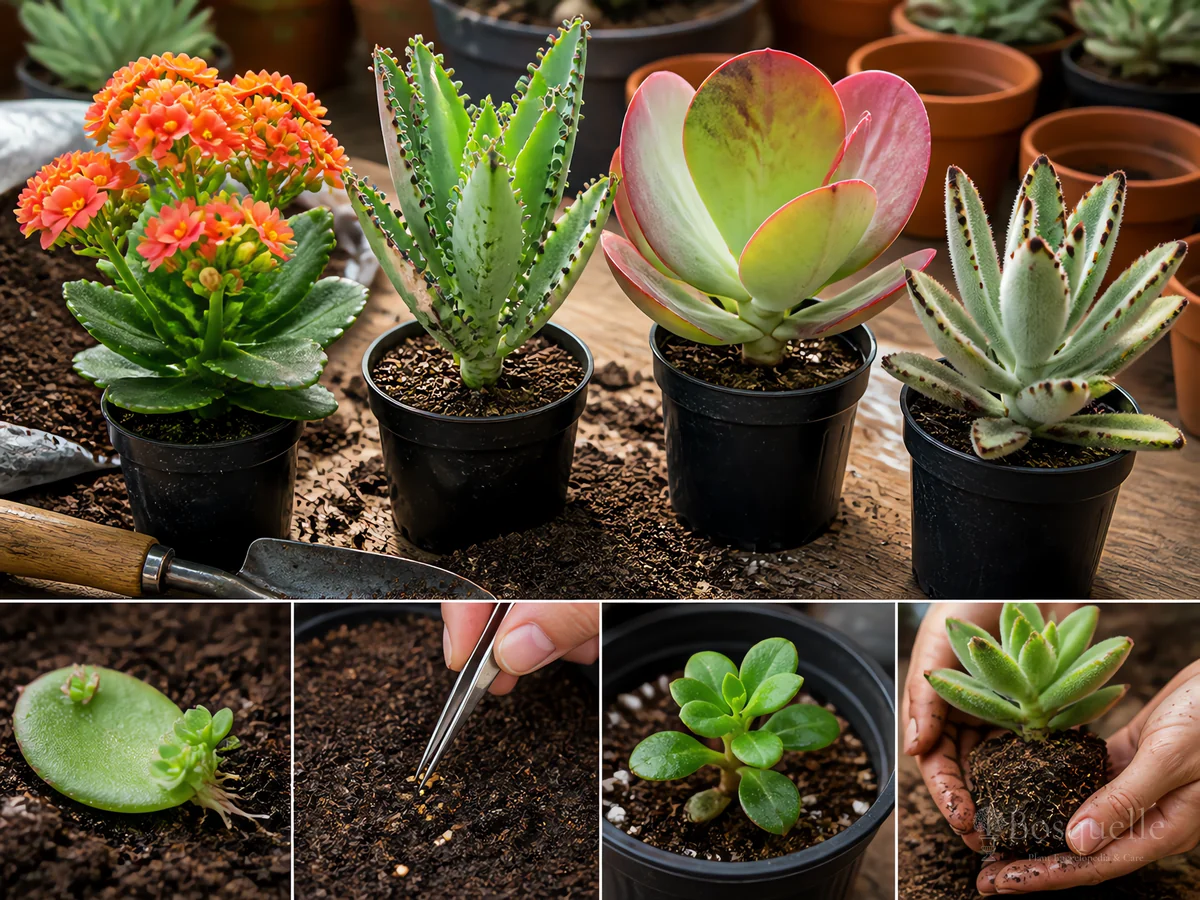
- Florist florist kalanchoe versus mother of thousands versus paddle plant — Types of Kalanchoe.
- A callused stem or MOT plantlets — How to Propagate Kalanchoe.
- After bloom, one to two inches up — How to Repot Kalanchoe.
Bright light, drain mix, dry between. Long nights for a second bloom. Size the kind on Types of Kalanchoe.
FAQ
Can kalanchoe live outdoors?
Year-round only where frost never hits. Elsewhere, summer the pot outside and bring it in before cool nights. Do not ground-plant mother of thousands.
Is kalanchoe toxic to pets?
Yes. Keep it away from dogs and cats that chew leaves or flowers.
Should I deadhead kalanchoe?
Yes. Cut spent flower stems after bloom so new shoots can take over.
How big does florist kalanchoe get?
About 6 to 18 inches as a houseplant. Compact and multi-branched in good light.
Related guides


Recommended plants




References
This note is part of Kalanchoe Guides.
More first-season notes by plant are gathered in How to Grow Guides.
Updated: Reviewed by Bosquelle Editors