
Hymenocallis is a summer bulb (Peruvian daffodil or ismene). Give it sun and even moisture while it is in leaf, and set the neck at soil level.

Most garden types are frost-tender: lift them before a hard frost, or grow them in a pot you can move.
This is not Lycoris. Types, companions, and planting depth live on Types of Hymenocallis, Hymenocallis Companion Plants, and Planting Hymenocallis.
Summer bulbs, sun, and moisture decide Hymenocallis
| Factor | Recommended | Avoid |
|---|---|---|
| Light | Full sun to light part sun | Deep shade that thins bloom |
| Soil | Fertile, evenly moist, free-draining in growth | Winter wet on tender necks; bone-dry gravel while leaves are up |
| Depth | Neck at soil level or just above | Burying the neck in wet soil |
| Identity | Hymenocallis / Peruvian daffodil / ismene | Lycoris sold as “spider lily” on a summer-wet calendar |
DutchGrown sites Hymenocallis in sun with the neck at soil level and good drainage. Soft bulbs and missing flowers usually mean wet soil or a neck planted too deep.
Hymenocallis ‘Tropical Giant’ is the Peruvian daffodil many catalogues start with. Coastal whites and native marsh species share the fragrant spider flowers, but they do not share one winter or moisture plan.
Lycoris is a different genus: late naked stems after a dry summer rest. That care lives on How to Grow Spider Lily (Lycoris). Prefer Hymenocallis, Peruvian daffodil, or ismene on the receipt.
Overwintering: lift tender bulbs before frost
While the leaves are up, keep the soil evenly moist, not in a sealed puddle. After the foliage yellows, most garden cultivars need a dry rest in storage if a hard frost will hit the bed. Native marsh types such as Hymenocallis liriosme and Hymenocallis occidentalis accept wetter soil in growth.
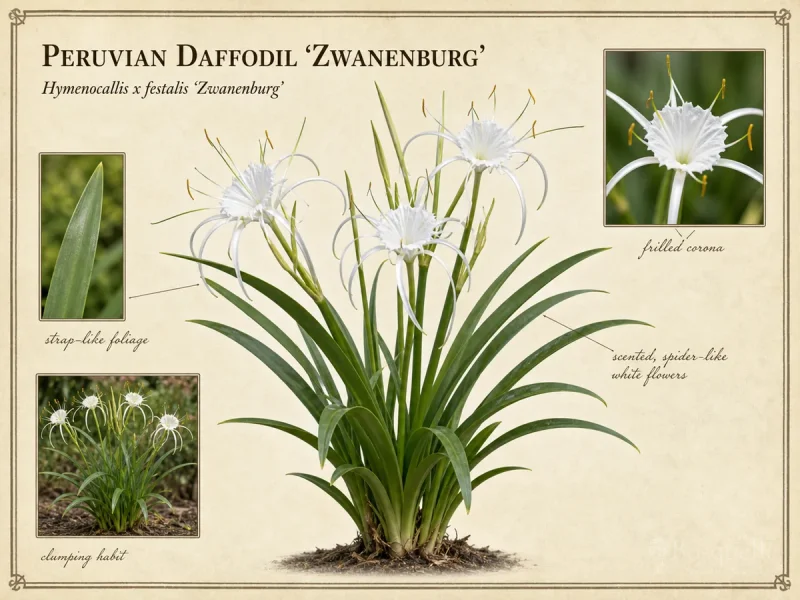
Ismene cultivars such as Hymenocallis ‘Sulphur Queen’ and Hymenocallis × festalis ‘Zwanenburg’ prefer moist loam, not a winter swamp on the neck.
Treat most garden cultivars and coastal species as frost-tender until your own winters prove otherwise. Lift before a hard frost, store cool and dry, and replant in spring — or grow in a large pot you can move. Afternoon shade can help in fierce heat if moisture stays even. Deep shade leans the leaves and thins bloom.
Feed lightly if at all. Compost at planting is enough. Heavy nitrogen invites soft growth and rot. Group with warm-border partners that share summer moisture: Hymenocallis Companion Plants.
Cultivar, coastal, and marsh types
Know which type you bought before you copy a neighbour’s calendar. Cultivars such as Hymenocallis ‘Tropical Giant’ and Hymenocallis × festalis are the Peruvian-daffodil group — often lift-and-store where winters freeze. Hymenocallis × festalis ‘Zwanenburg’ is the same Ismene group.
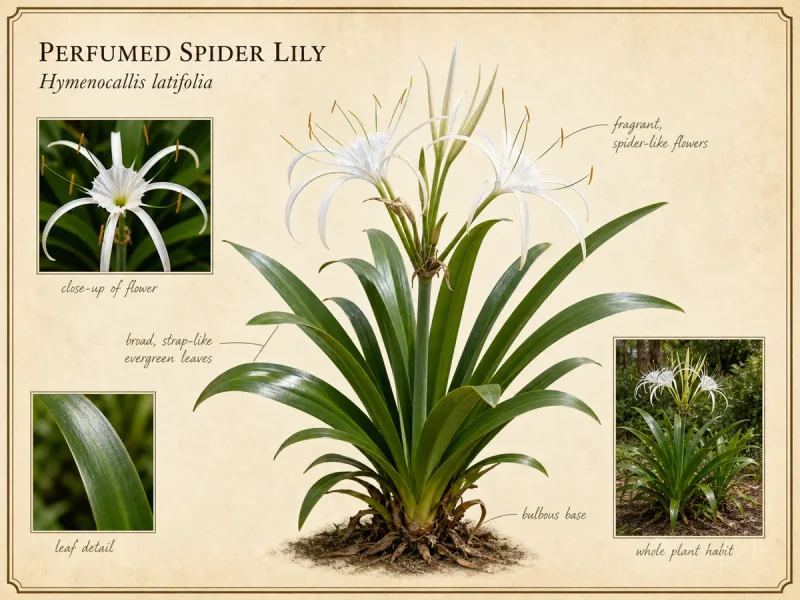
Coastal whites such as Hymenocallis caribaea ‘Variegata’ and Hymenocallis littoralis carry beach and Caribbean tags, with the same sun-and-moisture rule. Marsh natives such as Hymenocallis liriosme still want wetter ground in growth, not a dry rock strip. Hymenocallis latifolia follows the coastal rule.
After bloom, leave the leaves so they can feed the bulb. Cut only spent flower stems. Do not scalp green foliage early. The full type browse lives on Types of Hymenocallis.
Failure signs include soft, foul bulbs left in freezing wet mud, deep shade that leans the leaves, buying Lycoris under a spider-lily label, and expecting March daffodil bloom from a summer Hymenocallis.
Plant bulbs in spring — depth, moisture, and lift plan
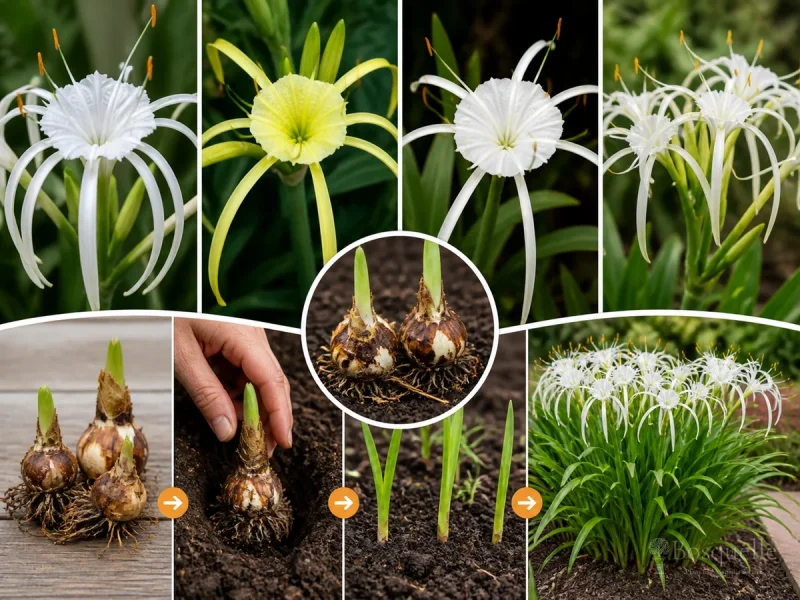
- Buy firm Hymenocallis bulbs with Latin on the packet.
- Choose full sun to light shade with even moisture in growth.
- Set the bulb so the neck sits at soil level.
- Space 10–12 inches (25–30 cm) so leaves and flowers have air.
- Water once to settle; empty any sealed saucer.
- Mark the spot and write the lift date before your frost date.
Marsh types still follow the neck-level rule. They change how wet the soil stays in growth, not how deep you bury the bulb. Full steps live on Planting Hymenocallis.
First-year bloom may be light until the bulb settles. Keep moisture even through the first summer. If leaves yellow on schedule, that is rest, not a missing fertilizer bottle.
Label the type the day you plant: Ismene, coastal, or marsh. If the tag only says spider lily, read the Latin before you copy a Lycoris calendar onto a summer-wet bed.
Winter wet on a tender neck kills more bulbs than a missed watering in growth. If your soil sits glossy after rain, raise the bed or use a pot you can move before you blame the cultivar.
Fragrant evening flowers are the point, so seat the clump near a path. Do not ask one plant to be both a marsh native and a dry-border Ismene. Height and moisture are type choices, not later prune tricks.
A pot is a way to overwinter, not a second genus method. Use a deep pot for the long roots, keep the neck at the mix surface, and move it under cover before a hard frost. Open ground is the default where winters stay mild.
Bloom is a summer job. Do not plant Hymenocallis as a March daffodil stand-in. Flowers open in warm weather after the leaves have had weeks of sun and even moisture. A quiet first summer is common while the bulb settles.
Divide only when offsets crowd the original bulb, usually after several years. Lift in spring as growth starts, or with the autumn crate. Keep the neck at the new soil line. Do not snap a blooming stem to harvest an offset.
Soil should be fertile and free-draining, not a sealed clay bowl. A compost dressing at plant-out is enough. Grit helps a winter-wet bed; it does not replace a lift plan on tender Ismene stock.
If buds abort while leaves stay lush, check shade and wet necks first. If leaves yellow early in a sealed pot, empty the saucer. If the bulb is soft, it is rot, not thirst.
Slug chew on new leaves is a site issue, not a reason to flood the neck. Keep mulch off the neck. Water the soil, not the flowers, in evening heat. If one spot stays glossy after rain, raise it before you add another bulb.
Do not stake the flower stem by default. A well-sited bulb in sun holds the bloom. If wind lodges a tall plant, add a discreet cane beside the leaves, not a tight tie on the neck.
Cut flowers mean the stem, not the foliage. Leave the leaves until they yellow. A vase of spiders is a bonus; the bulb still needs those leaves to recharge.
Store lifted bulbs cool, dry, and labeled. A sealed damp bag in a warm cupboard is rot. Check once in winter and discard anything soft before spring plant-out.
Cool and dry means a shed or closet that stays above freezing and well below a hot water-heater cupboard, with air around the bulbs. Mulch over a tender neck is not the same as lifting it. A few inches of mulch can buffer a light frost on stock you already know is hardy.
It will not save an Ismene neck through a hard freeze. If you are unsure, lift, or grow in a pot you can move.
After you replant in spring, water once to settle, then keep the soil evenly moist while leaves emerge. Do not leave the neck in a saucer of water. The first leaves may take weeks if the bulb was stored cool.
Even moisture in growth is not a bog: water when the top inch starts to dry, soak the root zone, and let extra water leave the pot or bed.
Fragrance is strongest in still evening air, so seat the clump where you walk at dusk. That is a placement choice, not a feed or prune trick, and partners for that scene live on the companions page.
If a neighbour grows Hymenocallis in open ground all winter, copy only after you know their frost date and drainage. Mild-winter ground storage is not a rule for a freezing clay bed. Write your own lift date on the stake the day you plant.
One firm bulb in the right spot beats a bargain tray of mixed unnamed spiders. Keep a simple year note: plant week, first bloom date, and lift date. That record tells you more than a new fertilizer bottle when the second summer is quiet.
If you buy a bag with no Latin, treat it as frost-tender until a catalogue or the living plant proves otherwise. Write the lift date on the stake the day it goes in. A cheap mixed spider-lily crate is how the wrong calendar enters the bed, so refuse stock you cannot name before you dig.
Flowers usually open weeks after the leaves have had sun, not in the same week you plant. If the first summer is mostly foliage, keep moisture even and wait. Cutting green leaves to “tidy” the bed is how you steal next year’s bloom, so leave them until they yellow on their own. Keep the lift-date stake readable through summer.
Give Hymenocallis sun and even moisture, keep the neck at soil level, lift tender bulbs before hard frost, and keep Lycoris on its own page — then open types, partners, and planting.
FAQ
Is Hymenocallis the same as spider lily?
Commerce uses spider lily for several genera. This page is Hymenocallis (Peruvian daffodil / ismene). Lycoris is a different plant with a different season — see How to Grow Spider Lily (Lycoris).
How much sun does Hymenocallis need?
Full sun to light part sun for the densest bloom. Deep shade thins bloom. Afternoon shade can help in fierce heat.
How deep should I plant the bulb?
Set the neck at soil level or just above. Burying the neck in wet soil is a common rot fail. Full steps: Planting Hymenocallis.
Do I lift Hymenocallis for winter?
Yes for most garden cultivars north of mild winters. Lift before hard frost, store cool and dry, replant in spring. Or grow in a pot you can move.
Should I cut the leaves after bloom?
No. Leave the leaves until they yellow so the bulb recharges. Cut only spent flower stems.
Can I grow Hymenocallis in a pot?
Yes in a deep pot with the neck at the mix surface. Water in growth, then move under cover before frost.
Why didn’t my bulb flower?
Often too deep, too little sun, or a first-year settle. Keep the neck at soil level and moisture even in growth.
Is Texas spider lily a Hymenocallis?
Hymenocallis liriosme is a marsh native in this catalog. It wants wetter ground in growth than many Ismene cultivars. It is still not Lycoris.
Where do types and planting live?
Types of Hymenocallis for cultivar vs coastal vs marsh; Planting Hymenocallis for depth, spacing, and overwintering.
Should I fertilise Hymenocallis?
Usually no. Compost at plant-out is enough. Heavy nitrogen softens growth and invites rot.
Related guides


Recommended plants





This note is part of Hymenocallis Guides.
More first-season notes by plant are gathered in How to Grow Guides.
Updated: Reviewed by Bosquelle Editors